We were in the midst of a warm spell, which always comes as a welcome surprise this time of year. I needed a morning walk before singing with the choir Saturday afternoon in a memorial service for a beloved choir member. It was cloudy but not too windy, and warm enough for turtles to emerge.
I saw only a few of the usual suspects, but everybody was singing, like this Song Sparrow.
Red-winged Blackbirds have been about for over a month now, but they still fulfill their purpose as official spring arrivals.
Red-winged Blackbird
I was delighted to see a Brown Creeper. I never tire of seeing this bird.
And there were a couple White-tailed Deer, one of which posed nicely
Then on Sunday morning, with a promise of sunshine and continued warmth, I went out again, although it was extremely windy and passerines were simply not available. But I hedged my bets, so to speak, and after walking the trail without seeing much of anything, I decided to sit on the picnic table bench by the water and wait a few minutes to see what might occur. After a moment or two, I saw my first Turkey Vulture of the season, albeit at a distance.
A moment or two later, a male Belted Kingfisher dropped in and back out again.
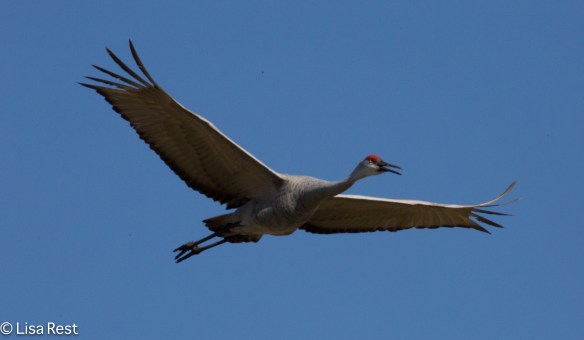
I had checked the wind direction on my cell phone weather app and it seemed that I had a good chance to see some Sandhill Cranes. Sure enough, a group of eight Sandhills flew over, in silence, but low enough for the camera to record them.
I am still recuperating from the sudden loss of my internet connection which occurred yesterday afternoon. After figuring out that my router had died, I was lucky enough to call tech support and visit a store to exchange the dead device for a new one. Everything is working fine again, but it was just such an exhausting spell of adrenaline, I never got around to eating anything substantial until dinner. But what a lovely meal it was.
Our brief flirtation with spring weather is over and we are anticipating stormy weather as the temperature drops. I did go out for a brisk walk this morning to clear my head for attending to some boring-but-important tasks ranging from vacuuming to passport renewal… To be continued.
There wasn’t an awful lot going on at McGinnis on my last visit, but the sight of two Sandhill Cranes foraging in the lawn right off the parking lot automatically made it a special day.
I guess McGinnis is always good for a Great Blue Heron or two. But I’m surprised I haven’t seen any Great Egrets lately.
It’s really dry..
Not a lot of swallows that day but I managed to capture this Tree Swallow.
Not sure I have seen these Irises here before. Nice.
This Song Sparrow was almost completely hidden. We compromised.
Common Grackles are here and there.
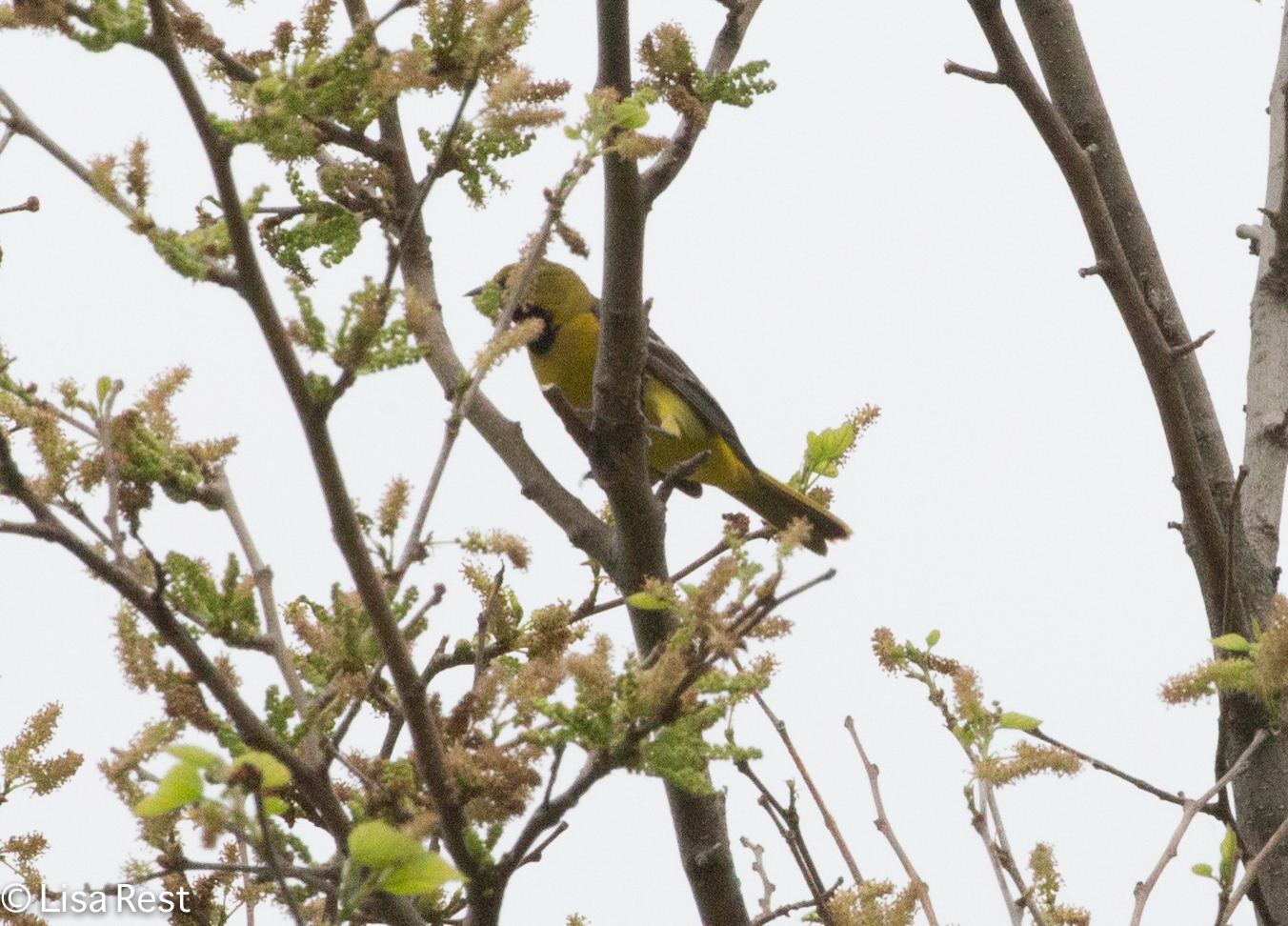
Perhaps the second nicest surprise was to see a first-year male Orchard Oriole right before I left.
The lack of light didn’t offer much contrast with these raptors flying overhead.
Red-Tailed Hawk
Osprey
While I was kind of hoping to see a colt or two with the Sandhills, which I never have here, I did see two Canada Geese in the same spot as the Sandhills were earlier – and they were carefully watching one lone gosling.
Providing additional interest, a Red-Winged Blackbird trying to make sense of a piece of ice cream cone.
I am always impressed by a Robin taking a pose.
I haven’t been able to think about much besides work lately. That – and the burrowing rats in my yard. I just removed all the feeders except for the hummingbird and oriole feeders – for 10 days. The city has provided an exterminator to discourage the rats, and I can only hope for elimination as up until the pandemic, they were never around. But adding insult to injury is the drought. I take it personally, I don’t know why – but the thought of weather like Phoenix, Arizona has never been attractive to me. Nothing against anyone who loves hot, dry weather. It has its place. But not here.
Thanks for letting me rant. I do have more cheerful posts in store and what should be a fun event I will share with you in the next few weeks.
The weekend before last was warm – but very windy. I went up to the Hebron Trail/Goose Lake Natural Area anyway to see if I could find any Yellow-Headed Blackbirds. I did eventually see them as tiny little yellow-headed black dots far away. It was almost too windy to see any birds well at all.
Farm buildings adjacent to the trail…The view going…
Where there was a break in the trees, I was surprised to see this one Eastern Kingbird sitting quietly for me to take its picture. I had to think a bit about its identification at such close range!
There were several Blue-Gray Gnatcatchers but they were hard to see.
I don’t know why I make a fuss about Brown-Headed Cowbirds but I still think the males are beautiful.
I had heard Indigo Buntings the day before at the Portage but this was the first one I saw. The closer photographs below are from last year. I will likely get more opportunities this year after the birds establish their territories and start defending them.
Red-winged Blackbirds are easy to see at this location, even on a windy day.
Although it was a hard day for warblers, it was still warm enough for bugs and worms, and I managed to see this Nashville Warbler.
On the trail, coming and going, I saw a Brown Thrasher.
After I had exhausted my patience with the Yellow-headed Blackbirds heard but not seen from the observation deck, I walked a few feet past and stood – only to see a Sandhill Crane take to the air a few yards away. There is nothing quite like seeing a bird with a 77″ wingspan coming toward you.
A few more views…
I was surprised to see a Gray Catbird sitting and calmly looking at me. They are usually quite secretive.
Playing the hiding game was a Yellow Warbler.
Even Song Sparrows were laying low…
A little more Sandhill Crane action…
One more warbler – a Palm Warbler…
Canada Geese are easily dismissed, but they are still striking looking birds.
We are not on the Brood X Cicada a/k/a 17-year locust map this year, but here is a cooperative Cicada from last summer. It hitched a ride into my post with the Indigo Bunting photos.
I have as many more photographs to share as I have other obligations preventing me from doing so. I hope the space between posts will narrow a bit in the not-too-distant future. Hope for the promise of spring.
On that warm weekend nearly three weeks ago – I write this as we chill again after a bit of April Snow yesterday morning and into freezing overnight – I went to McGinnis Slough for a few birds and was greeted by a lot of singing in the sunshine. Thankfully, there was not a lot of traffic noise from LaGrange Road. The primary contributors to the recording are Red-Winged Blackbird males.
Birdsong at McGinnis Slough
This time I got to see one of the Sandhill Cranes that I missed the weekend before. I have to wonder if they are nesting there…
No shortage of Red-Winged Blackbirds showing off.
And not showing off…
A male Wood Duck managed to swim by my lens.
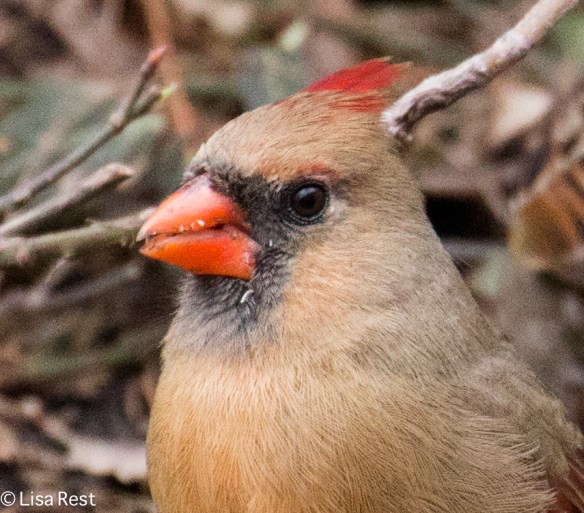
Northern Cardinals didn’t offer many looks, but I managed to add these two for the record.
The iridescence of this Common Grackle’s neck caught my eye first.
This was the best I could do for a Song Sparrow, even though I heard a few singing. The song of one is below the picture.
Song Sparrow
This view overlooking a part of the slough perhaps conveys the feeling evoked by the toad chorus below it.
American Toads, I think
Never at a loss for American Coots this time of year. But I was most impressed with the one standing on a log poking out of the water, preening and showing off its pretty green legs.
Mallards… one hen very comfortable in her chosen spot.
It wouldn’t be an authentic visit to the Slough without a Great Blue Heron flying somewhere.
I was excited to see an Osprey, however briefly.
One male Blue-Winged Teal was close enough to capture.
Perhaps my most thrilling bird sighting that day was this lone Tree Swallow. It was actually warm enough for it to catch bugs in the air.
I always have hope to be back to this page sooner than later. Here’s to more sunshine, warmer weather and more reasons to treasure longer days while they last.
After groveling about making the long drive all the way up to McHenry County around Memorial Day, I went back on July 5th to celebrate my birthday and then again on July 25th. Needless to say now I’m getting used to the drive and the trail and I may have a hard time staying away before October which is when I plan to go back for Sandhill Cranes that purportedly congregate in the fallow farm fields.
I feel like I could start giving some of the individual birds names, like the Willow Flycatcher at the top of the post. I even heard a confirming “fitz-bew” on the last Saturday.
Yellow-headed Blackbird (female)
Yellow-headed Blackbird (male)
I expected to see more Yellow-headed Blackbirds. On the fifth, the males were really too far away for decent photographs, but I did get to see a female close to the observation deck. I went back on the 25th because I wanted to see many juveniles like I did years ago, but I couldn’t find one Yellow-headed Blackbird anywhere. I must have just missed them. But that’s okay, because I saw some other interesting birds, and it’s just so peaceful to be there. In fact on the second visit when I got there, I had the whole place to myself. I didn’t stay long though because it was very hot.
Pied-billed Grebe
I found the Gallinule below in my photographs from both visits. This is a great place to go if you carry a spotting scope. But I don’t have the energy to carry a scope and a telephoto lens. Perhaps I should rethink my philosophy of cutting corners. For instance, the combination of two visits in this blog post – it’s becoming evident as I write it that it’s entirely too long.
Common Gallinule
I did see a pair of Sandhill Cranes on each visit. I have not seen any with offspring, which is a bit disappointing.
Sandhill Cranes
Another “only in my photos” discovery – a last Black Tern seen on the 5th. Well, my camera saw it.
Black Tern
Here’s the turtle covered with duck weed that appeared in the background of one of the Yellow-headed Blackbird photos above. If you click on the pictures you can see how the duck weed makes it look like something from another planet.
There are still a lot of Red-winged Blackbirds here and everywhere. They are in no hurry to leave, I suppose, because they won’t have so far to go in the fall.
Red-winged Blackbirds (mostly juveniles)
Not a Red-winged Blackbird but a juvenile Cedar Waxwing
I was hoping I would find a Yellow-headed Blackbird when I blew this up but it turned out to be a Red-winged Blackbird. That’s okay, it’s kind of nice to see the feather pattern, albeit faded. Below the photo, two different Red-winged calls I heard on these visits.
A Killdeer in flight…
The “other” blackbird – Brown-headed Cowbirds.
Dragonflies like this place.
On both occasions there were swallows, but in particular on the 25th there seemed to be a lot of them. It was nice to see the Bank Swallows – I don’t see them very often.
Barn Swallow
Bank Swallow
The Song Sparrow below was on the 5th. There are two more individuals further down the post whose songs I recorded and put underneath their photographs.
This Yellow Warbler was the last one I saw, on the 5th.
Yellow Warbler
I am quite sure this is probably the same Great Blue Heron, although the photos are from both occasions.
I always seem to startle this Great Egret, which must have been right by the viewing platform as I approached.
A Green Heron flew by twice on the 25th.
Here’s Song Sparrow No. 1 and Song Sparrow No. 2. Song Sparrows reportedly have thousands of songs so it’s not unusual that they were singing different tunes…
And another singer I was happy to record – and manage to photograph, as they are often elusive in the marsh – a Marsh Wren.
My most cooperative subject at this location has been a Willow Flycatcher.
Willow Flycatcher
There were a couple distant Wild Turkeys hanging out not far from the Sandhills on the 25th.
Always happy to see a Monarch Butterfly… – I stand corrected. The two on the left are Viceroys!
I think it might be a ground squirrel on the left… there are holes on the trail that look perfect for a ground squirrel. But they could both be Chipmunks…
I found this feather interesting on my walk back to the car on the 25th. I thought it might belong to a hawk or a turkey, even, but none of the extensive feather identification webpages have given me the answer. My first thought was a crow, actually. Maybe I should go with that…
My reward for showing up on the later visit was to see these two Black-crowned Night-Herons arrive and perch not far from the viewing platform. One is an adult, and the other a juvenile.
Black-crowned Night-Herons (adult and juvenile)
Many thanks for making it to the end of this long post. As hot as it was a week and a half ago, as I finish writing this, we have dropped down into fall-like temperatures for a couple days. A reminder. I suppose, that nothing stays the same, as if I needed it. No, honestly, it’s absolutely delightful to have the windows open: I feel less confined and it’s delightful. Stay safe and I will see you again soon in another post. 🙂
A goal for the last two years has been to get up to Goose Lake Natural Area and the Hebron Trail in October to see Sandhill Cranes. October weekends were flying by with other commitments and I kept hoping for decent weather, should I attempt the trip on the last Sunday of the month. I was rewarded with available sunshine and went to investigate. I saw only 18 Cranes eventually, when there had been a few hundred reported earlier in the week, but I was lucky to have three calling raucously and flying right overhead.
My start down the eastward Hebron Trail, which is a gravel trail built on an old railroad bed, yielded a flurry of Cedar Waxwings, Robins and Starlings at the start.
Hebron TrailCedar WaxwingEuropean Starling
The more often I visit this place, the more I fall in love with it. But it takes me an hour and a half to drive up there, no matter which way I go. The first time or two I wasn’t sure I was ever going to find it, but now I know the route and the landmarks and it’s easy – just a long haul.
Not long after I reached the end of the tree-lined part of the trail, I saw this male Northern Harrier fly across the field and then maybe twenty minutes later it flew by right in front of me.
Northern Harrier
Sparrow migration is in full force and I saw plenty of sparrows to prove it. It was especially nice to see the Vesper and Savannah Sparrows. Also this was my first American Tree Sparrow of the season. Since I’m already over seeing Juncos come back, I see no problem welcoming the Tree Sparrows, as both species herald the return of colder months.
Song Sparrow
Swamp Sparrow
Vesper SparrowSavannah SparrowAmerican Tree Sparrow
There weren’t a lot of birds in the water, mainly American Coots. There were some Pied-Billed Grebes, but they were too far away to capture adequately.
American Coots
As I went through my photographs last Sunday, I realized I still had photos from my last visit back at the end of July, when I wondered if there were any Yellow-Headed Blackbirds left. I’m including some of those photos below.
Willow Flycatcher
Willow Flycatcher with Red-Winged Blackbird
Yellow-Headed Blackbird (female)
Yellow-Headed Blackbird (male)
Song SparrowAmerican Goldfinch
Marsh Wren
This Halloween Pennant would have been much more appropriate if I’d managed to post this last week!Another reason why I like this place – I always see Crows!Widow Skimmers look even better in retrospect.
A couple more of the Sandhills… My resolution for next year is to visit this place more often, maybe even closer to the peak times for certain species. Either way, it’s a beautiful place and I am happy to share it with you.
Goose Lake Natural Area and the Hebron Trail, in McHenry County up by the Wisconsin border, was on my list of places to revisit this year and I was so happy to be accompanied by my friend Susan who had a Yellow-Headed Blackbird in her sights as a species to add to her life list. I checked with ebird and confirmed the blackbirds had been seen in late July last year, so there was a good chance of seeing them still. These photos are from last Sunday.
On the way up, Susan spotted two Sandhill Cranes walking near a fence by the road.
It was cloudy and threatening rain, although we managed to avoid downpours. The sun did peek out a little bit later. Greeted by a Cedar Waxwing…
Cedar Waxwing
And a bedraggled-looking Yellow Warbler on the trail to the marsh…
Yellow Warbler
And a juvenile Song Sparrow.
Song Sparrow
The Yellow-Headed Blackbirds were suddenly in view in numbers and they dominated the landscape. Susan definitely added this bird to her life list. We did not see an Black Terns, a species that also breeds here. Perhaps we were too late in the day or the season.
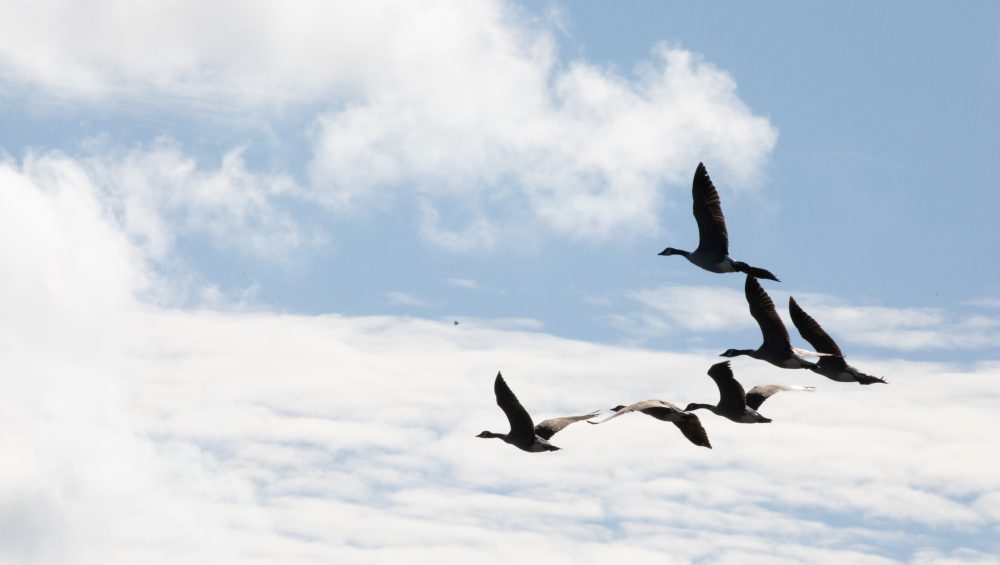
At some point a flock of Canada Geese flew over.
Below, flying Yellow-Headed and Red-Winged Blackbirds.
One particular Tree Swallow kept flying around a distinctive dead tree, tempting me to try to capture it. The tree it perched on is a favorite stopping place.
Below, a Common Yellowthroat and a confusing young sparrow. It’s likely a Song Sparrow but this time of year is tricky with identifying the youngsters. I’d like to say Grasshopper but the head isn’t “flat.”
Not at all confusing were the distinctive sounds of singing Marsh Wrens, but it was getting hard to find one sitting up until we encountered this one close to a platform overlooking the marsh. Some of its song is at the link below (you will also hear Common Yellowthroat singing first).
The water level was exceptionally high, but the area was not flooded as were other parts of the county. We saw many Pied-Billed Grebes with young, although they were at quite a distance.
Pied-Billed Grebes
Nice to see a Monarch Butterfly. Would have been nicer to see several. I’m intrigued by the yellow flowering plant on the upper right, which I do not recognize, and the Purple Prairie Clover below it, which I later realized is also blooming in my front yard. Imagine that.
It was nice to see a Ruby-Throated Hummingbird, even in lousy lighting, and a robin with food for young.
We met a very nice man who lives nearby and checks out the marsh regularly. He used to teach environmental science so he was full of good information and stories. He’s holding the crayfish below which he rescued from the gravel path. He encouraged us to come back at different times of the year. I think we should take him up on it.
More Yellow-Headed Blackbird photos. Missing are the distinctive white patches on the wings of adult males, which makes me think these are all juveniles.
The little trio below leaves me stumped as to who the sparrow is, again. Since all juvenile sparrows tend to be on the streaky side no matter how they wind up as adults, I think this one has the look of a juvenile Field Sparrow but I’m not going to bet on it.
Great Horned Owl on nest, Salt Creek Forest Preserve, Cook County
I started writing this post on March 1. WFMT’s Carl Grapentine kicked off March 1’s morning program by playing, what else? Various marches. I was just getting over February.
The end of February was sufficiently balmy to lock it into the record books with January as being the first time both months went without snow in Chicago.
I birded with my friend Susan last Sunday. We went to Bemis Woods South and the Salt Creek Forest Preserve. It was so quiet I didn’t bother to do a list. We were about to give up on the Salt Creek portion when a man walking in the opposite direction told us to look for an owl, so we continued. The Great Horned Owl at the top of this post made the day. Its nest was easily seen from the trail, and it sat and watched as people went by.
Two more birds from Bemis below, a White-Breasted Nuthatch and Red-Bellied Woodpecker.
March came in like the proverbial lion, returning to chilly, windy temperatures. My reward for venturing out of the office last week was to see my first Yellow-Rumped Warbler in Millennium Park. Nothing rare, but an earliest first for me.
It’s a busy time of year for the birds, as they prepare for spring. Today I visited the Chicago Portage, and although by the time I got there the sunny start was disappearing, and the number of Canada Geese and Mallards was increasing, and there were some more unusual visitors in the air, like the Bald Eagle below with nesting material and a small flock of Sandhill Cranes. The Sandhills were oddly quiet.
The Bald Eagle was flying east, but I have no idea where the nest might be. That direction was industrial, with the Sanitary and Ship Canal.
Saw and heard my first male Red-Winged Blackbirds today at the Portage, where they have come to establish territories.
There were maybe 40 Mallards spread out wherever there was water, and 5 pair of Canada Geese were checking out nesting spots. I haven’t seen any banded geese this year.
Other than the Red-Winged Blackbirds there were very few passerines, with the exception of a few American Robins and European Starlings. I heard a Song Sparrow, Chickadees, Killdeer, and a couple Downy Woodpeckers were flitting about.
The last Downy Woodpecker I photographed was last week in Millennium Park.
Also present that day, a couple Northern Cardinals and the White-Throated Sparrows who literally yelled their calls from the bushes when they saw me approach our favorite spot.
More Portage views…
I hope to be back once more if possible, with an update on my indoor crowd – before I leave for a quick trip to Panama. I’ve been planning this trip for months and unbelievably, all of a sudden it’s here.
Thanks to you all for checking in. Until next time… Peace and Think Spring.
I saw a couple birds at the Portage a few weeks ago that reminded me of Yellow-Headed Blackbirds although they were most likely not, but the light was so bad I couldn’t determine what they were, even after enhancing bad pictures. They were definitely large blackbirds but not Grackles.
(For clarification – the pictures above are all Yellow-Headed Blackbirds and were taken at Goose Lake Natural Area in McHenry County.)
I then thought that by the time I get back from Ecuador next month, it could be too late to see the Yellow-Headed Blackbirds that nest in McHenry County close to the Wisconsin border. I went to this area last year for the first time and vowed to go back. So Sunday morning I picked up my friend Lesa and we headed up north into ensuing thunderstorms. By the time we got all the way up there about an hour and a half later, the rain was nearly over, so it was perfectly timed.
On our way out to the marsh through the wooded trail, we saw a distant Ring-Necked Pheasant and light at the end of the tunnel.
There were other things happening on the gravel trail. Like feeding time for a fledgling Common Grackle.
And birds drying off after the rain.
Common Grackle on the left, Brown Thrasher on the right.
And Empidonax flycatchers, likely Alder or Willow, but unless they say something we can never be really sure.
The other rarity I lured Lesa with was Black Tern, and we definitely saw them.
Red-Winged Blackbirds were predictably everywhere.
The marsh had Pied-Billed Grebes (below, top), and some downy Hooded Mergansers (three pictures below) which I needed help to identify, not seeing any parents and forgetting that ducks other than Mallard are a possibility. I should have recognized the behavior of the Mergansers which was what drew our attention to them anyway. One had caught a fish and the others were chasing him or her.
Perhaps the nicest surprise were two Sandhill Cranes. We heard them for the longest time but could not see them until they decided to fly over us.
Predictably we saw American Goldfinch and Eastern Kingbird.
American Goldfinch
Eastern Kingbird
After wishing we’d brought our scopes and maybe even lawn chairs, we finally came to a little deck-like overlook with a bench, near the Song Sparrow pictured below who was sitting with a dragonfly waiting for us to quit paying attention so he could go feed someone at an undisclosed location.
Song Sparrow
We were enjoying the cool cloudiness after the rain but the sun started to break through the clouds and the heat started to build, so it was time to retreat. Next time I think we have to find a way to carry a scope with us as it’s likely we missed a few birds. All in all we had about 33 species on our list.
I wish I’d thought to bring my recorder because the male Yellow-Headed Blackbird below gave us a few brief but beautiful spurts of song. Well, maybe beauty is in the ear of the listener. He sounded perhaps like a rusty crank turning. But it’s complex and probably musical to females. Here’s a link to the Cornell website if you want to hear what one sounds like. I’m entranced by the orange-colored crown on this bird.
The last bird we counted was a Red-Tailed Hawk. We saw another accipiter fly over the trail on the way back but could not identify it quickly enough.
I had intended to do much more posting before my trip, but found I was still going through photos I took weeks ago! Time has flown and soon I must fly to my vacation destination.
I leave Friday for Quito, going to the Amazon and then the Galapagos. This is likely my last big trip. Although I may have said that before. So unless I manage the unthinkable and post once more before I leave, I’ll be back next month to share photos from my trip.






 The little trio below leaves me stumped as to who the sparrow is, again. Since all juvenile sparrows tend to be on the streaky side no matter how they wind up as adults, I think this one has the look of a juvenile Field Sparrow but I’m not going to bet on it.
 Summer simmers on. I’ll be back soon.


 I hope to be back once more if possible, with an update on my indoor crowd – before I leave for a quick trip to Panama. I’ve been planning this trip for months and unbelievably, all of a sudden it’s here.
 Thanks to you all for checking in. Until next time… Peace and Think Spring.


