Down by the River After the Rain

These photos are from two visits to the Riverside trail on October 20 and 27 – both after periods of some significant rain. Although the Des Plaines is nowhere near flood stage, it is good to see it looking more like a river.

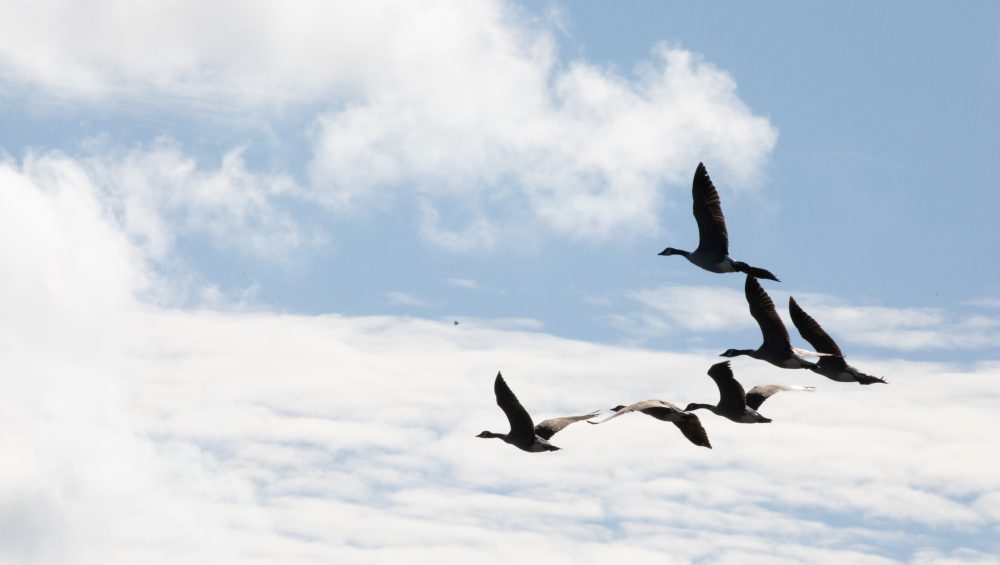
Activity around the Hofmann Tower on 10-20 consisted of two flock bursts – the expected Rock Pigeons and also a flock of Blackbirds, mostly Red-Winged.

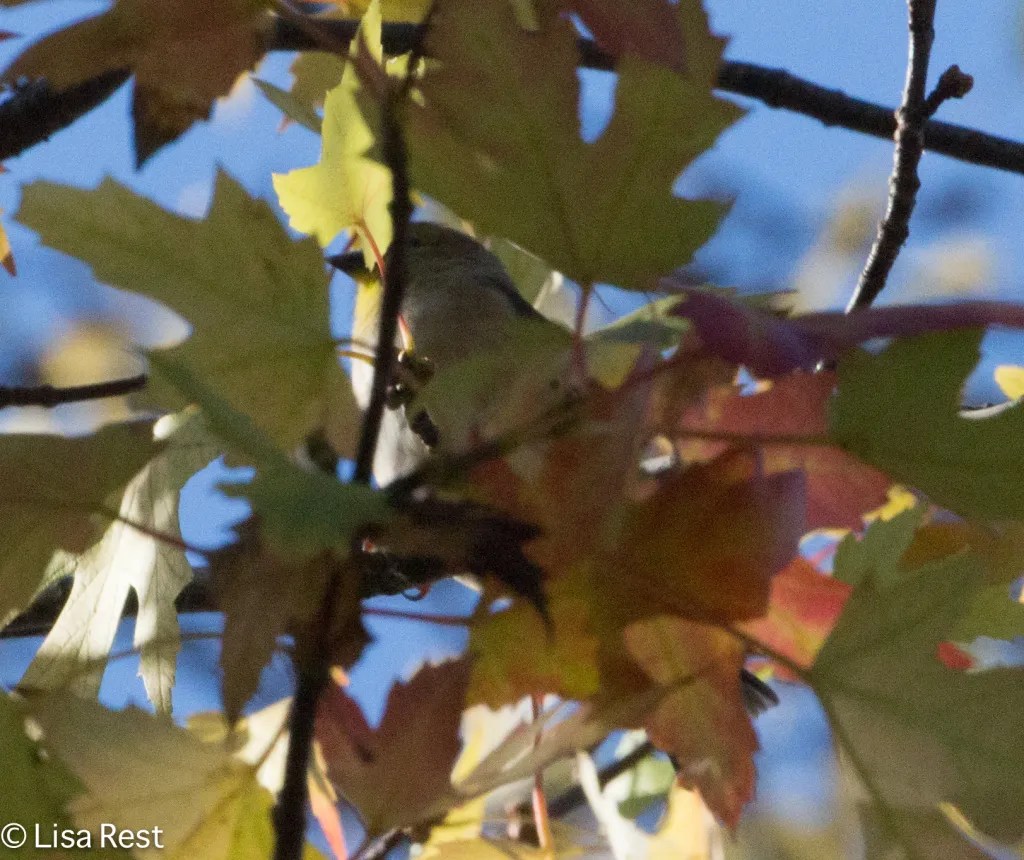
I saw an Orange-crowned Warbler on both occasions.

Below is a Nashville Warbler I saw on the 20th.

It was hard to get a good photo of this Double-Crested Cormorant through the trees but still nice to see on the 20th. I saw one flying a week later and wonder if it was the same bird…

It’s somewhat easier to get Northern Cardinals to sit still for a photo this time of year. As long as they feel somewhat shielded by a twig…

I saw Brown Creepers on both occasions, and was lucky to photograph this one on the 27th.

A Mallard here and there…

European Starlings are in groups, as usual.

One of those Red-winged Blackbirds still hanging around.

Below on the left is the sign posted at either end of the trail in Riverside that runs along the river. On the right is a sign opposite the western end of said trail, which denotes the Plank Road Meadow which features a boat launch.

House Finches are more visible now.

A tree full of Mourning Doves…

I expect to see more White-Throated Sparrows, but managed to capture only the one below.

I was going to simply add the photo directly below and call it a Tennessee Warbler – even though the face looked a little suspect to me. Then this morning when I flipped over the Audubon calendar hanging over the kitchen sink to November, the photograph of the bird on it looked like the one below, only it was identified as a Pine Warbler. So I took out The Warbler Guide to confirm – because now it was showing up as “rare” on my ebird checklist – and went to the bill shape again. That’s what made the face of this bird not look at all like a Tennessee.

Just to elaborate, I rescued the photos below from my external hard drive and found a few more clues to the Pine Warbler identification. There’s ever-so-slightly a hint of wing-bar showing on a couple photographs, but best of all is the one I brightened up a bit, where the bird is looking directly at me. That’s a Pine Warbler face if I ever saw one. I have to be more careful going through all these photos!

Below is a lovely little Song Sparrow.

The remaining Great Blue Heron is not as visible now from the bridge.

Catalpa tree seed pods on the left, and well-eaten Pokeweed on the right.

An American Robin for good measure…

Not sure whose web this is but I found it interesting.

I saw the Red-tailed Hawk flying below before it landed in the tree.

A few more scenes of this location as the late fall progresses.

We are flirting with overnight freezing temperatures. Indeed, this morning I had to scrape the frost off the windows of the car before I went for a walk at the Portage. Today I will be draining as much water as I can store into empty vinegar gallon bottles, to be used in the now-heated birdbaths all winter.

And as the days get shorter and I see fewer birds… take fewer photographs… maybe I can start revisiting the reason why I started this blog in the first place: my fascination with bird song and the birds’ reactions to music. For the moment, I would like to share with you a funny incident I happened to record way back on August 29th. I was playing piano – I have been revisiting Schumann’s “Kinderszenen” – and perhaps that day it had become a bit of drudgery – I was likely distracted by the fact that my effective retirement date was 2 days off. In any event, I struck a wrong chord while playing the 9th piece of it (“Ritter vom Steckenpferd”) and my indoor crowd IMMEDIATELY let me know that was not acceptable. Which not only proves they were right, but also that they are always listening! Below is the clip. Enjoy. 🙂

Great Blue Heron

Catching Up

Here it is the end of September and I am just getting around to photos from the 10th taken at – where else? – the Chicago Portage. The activity seemed to die down a bit that day so there aren’t quite so many to sift through. Magnolia Warbler above and directly below.

I’m not 100% sure but I think the bird directly below is a Pine Warbler. One of those confusing fall warblers…

This was the first time I had seen a Northern Parula in a while. A not-so-common warbler around here.

A few other birds seen that weren’t warblers…

Red-eyed Vireo
For the record, a Ruby-Throated Hummingbird…
Swainson’s Thrush

Blackpoll Warblers have been everywhere, or so it seems. Below is another.

Never confusing, a Black-and-White Warbler below. I suppose if you couldn’t see them well you might mistake one for a nuthatch as they behave the same way.

This Nashville Warbler could have been in better light…

The other ubiquitous warbler that is easy to confuse with the Blackpoll is the Bay-breasted Warbler, below.

Chipmunks are everywhere too – it seems like a bumper crop this year.

One more of the Northern Parula.

I’m afraid I will be back shortly with another surfeit of something. This birding every morning to make up for not being able to do it while I was working is…almost like going to work. But I am enjoying myself and it seems imperative to pay attention and keep track of the birds while I still can. Learning how to navigate retirement with…a sense of purpose.

Spring Slowly Unfolds

The weekend before last was warm – but very windy. I went up to the Hebron Trail/Goose Lake Natural Area anyway to see if I could find any Yellow-Headed Blackbirds. I did eventually see them as tiny little yellow-headed black dots far away. It was almost too windy to see any birds well at all.

Farm buildings adjacent to the trail…
The view going…

Where there was a break in the trees, I was surprised to see this one Eastern Kingbird sitting quietly for me to take its picture. I had to think a bit about its identification at such close range!

There were several Blue-Gray Gnatcatchers but they were hard to see.

I don’t know why I make a fuss about Brown-Headed Cowbirds but I still think the males are beautiful.

I had heard Indigo Buntings the day before at the Portage but this was the first one I saw. The closer photographs below are from last year. I will likely get more opportunities this year after the birds establish their territories and start defending them.

Red-winged Blackbirds are easy to see at this location, even on a windy day.

Although it was a hard day for warblers, it was still warm enough for bugs and worms, and I managed to see this Nashville Warbler.

On the trail, coming and going, I saw a Brown Thrasher.

After I had exhausted my patience with the Yellow-headed Blackbirds heard but not seen from the observation deck, I walked a few feet past and stood – only to see a Sandhill Crane take to the air a few yards away. There is nothing quite like seeing a bird with a 77″ wingspan coming toward you.

A few more views…

I was surprised to see a Gray Catbird sitting and calmly looking at me. They are usually quite secretive.

Playing the hiding game was a Yellow Warbler.

Even Song Sparrows were laying low…

A little more Sandhill Crane action…

One more warbler – a Palm Warbler…

Canada Geese are easily dismissed, but they are still striking looking birds.

We are not on the Brood X Cicada a/k/a 17-year locust map this year, but here is a cooperative Cicada from last summer. It hitched a ride into my post with the Indigo Bunting photos.

I have as many more photographs to share as I have other obligations preventing me from doing so. I hope the space between posts will narrow a bit in the not-too-distant future. Hope for the promise of spring.

Grateful

Not always sure where I’m coming from with one-handed typing, but the slowness with which I have had to express myself has given berth to more measured thoughts, perhaps, and, like bird-watching, there is something almost meditative in it.

Before I stray further, I want to dedicate this post to my dear friend Linda Rios and her husband Ed who got me through my awful post-injury and surgery situation with loving aplomb. It occurred to me after I struggled to finish the last post that I was bereft in my focus and needed to at least acknowledge how much my friends have meant to me during this blotch on my existence.

These photos are from August 29th, mostly taken at the Portage. After I was done there I checked out what the Army Corps of Engineers has done to the part of Ottawa Trail that runs along the Des Plaines River, expecting there wasn’t much to photograph there except for the habitat destruction.

Below, a very cooperative White-breasted Nuthatch.

The Chestnut-sided Warbler below was pretty well-hidden but now that I can’t take any photographs for a while I am glad I managed to get these when I did.

The bird below is a Nashville Warbler.

Red-winged Blackbird

The last of the Baltimore Orioles. I had one visit my feeder later that afternoon…

A juvenile American Robin

There were a few Indigo Buntings still around as late as September 19, which was the first bird walk I led after my surgery. Most of them looked like the two below.

On my way out of the Portage on August 29, I spotted this Cooper’s Hawk who just sat, and sat, and I took way too many pictures expecting that it would do something interesting. I was too exhausted by the time it finally took off.

A little Portage flora – I am always amazed at the height of the trees so maybe the cell phone conveys them somewhat. Then there are parts of the trail that are lined with blooming flowers now – a vast improvement over the burdock from years past.

Juvenile Northern Flicker

So this is what Ottawa Trail is looking like now that the levee has been finished on one side of the Des Plaines. It was relatively devoid of birds but I expected that. Others have told me, though, that the levee affords great looks at the Des Plaines River when there are water birds present, so I shall have to check that out another time.

I was able to capture a few signs of life.

On my way out of Ottawa Trail, over the parking area, a Red-Tailed Hawk flew overhead.

Elbow-wise, the cast is gone, stitches removed, and I have 12 weeks of physical therapy ahead. I actually had one physical therapy session on Friday and was reassured I had chosen the right location when I heard a crow calling as I went back to my car. As I mentioned, I managed to lead bird walks these past two Saturdays and I am so grateful to the participants who showed up and helped me feel alive again. I didn’t master the one-handed binocular skill, but now that I am cast-free, I am able to raise my left arm enough so maybe I can go looking for a few more birds this fall even if I cannot commemorate the sightings in photos. In these uncertain times it’s all the more grounding to continue one’s connection with the natural world.

Back to the Portage

It’s all I can do to keep up with migration this spring, let alone the pictures I have taken…So I’m attempting to do this in chronological order but it won’t be easy. This past Saturday started out cool but sunny. I decided to start my walk in the opposite direction of what I normally do. Then I realized that I had forgotten to put my little portable stool in my backpack so I decided to walk back to the car to get it. As I walked, I heard the Great-Crested Flycatcher, and then saw him in one of the Redbud trees bordering the lawn behind the statue. The morning had promise.

Great-Crested Flycatcher
I have decided to photograph the statue every time I go to the Portage now to gauge the light conditions.

Last Saturday was a riot of colorful birds. I counted a dozen male Indigo Buntings. They were everywhere and they were not particularly shy, so I took advantage of their fearlessness. You can see how the light affects the hue of the blueness, when actually their feathers are all black.

I ventured out to the gravel road that runs along the MWRD property and found two male Scarlet Tanagers. They were trading songs.

But I discovered a glimpse at a Summer Tanager later in my pictures.

For all the male Baltimore Orioles singing and displaying these last few weeks, I have seen only one or two females so far. But that’s because they’re busy tending the nest.

Yellow Warblers may stay and breed at the Portage. Invariably I hear them but don’t always see them. So I was glad to capture this one.

White-Breasted Nuthatches are present all year, but are not seen or even heard frequently now.

The female Rose-Breasted Grosbeak below is the last one I have seen. I am not aware of any starting families at the Portage, but it could happen.

We have had a lot of rain, and even more after these pictures were taken. There were two Canada Geese trying out the newly flooded waters.

So this time of year of course I’m looking for warblers wherever I can find them. I just calculated that over the last couple of weeks I have seen 21 species total. I haven’t been able to photograph them all, but most, sometimes discovering them in my photographs. I will try to post as many as possible. They won’t always be textbook-looking photos. For example, the Golden-Winged below I barely captured but it was the details from the photographs that I was able to identify it as a likely female.

One more Magnolia Warbler

Then there are the flycatchers. They can be confusing. I have since seen the Eastern Wood-Pewee again in the same location looking more like himself so I am guessing he was having an off day (typically he would look more pointy-headed).

Eastern Wood-Pewee
I think this is a Willow Flycatcher…passing through.

On this day I saw this Turkey Vulture being escorted away by a Red-Winged Blackbird.

Song Sparrows are present, singing, and likely staying to raise families.

i keep hearing and sometimes seeing Chestnut-Sided Warblers every time I have been to the Portage since my first intimate encounter with one last Tuesday.

Chestnut-Sided Warbler

There’s a little rapids under the first bridge where the water runs out of the Portage. No water ever runs into the Portage, as far as I can tell, but It’s still nice to see the flow over the rocks.

More often heard than seen, Blue Jays are out and about but rarely available for photos, so it was nice to see this one.

I found this female Common Grackle to be attractive in her own way.

I had noticed this nest before but wasn’t sure anyone was using it until I managed to capture these two Goldfinches. You will probably have to click on the first photo to see the female poking her head out of it. I have since not been able to find the nest, which was not far from the trail, but it could still be there and hidden in all the plant growth that has occurred since.

Sadly, Black-Capped Chickadees are getting harder and harder to find. Long taken for granted, I am convinced they are in decline, at least locally. I caught this one in a hurry.

Here’s my Robin photo of the post.

As the leaves are finally coming out, it’s interesting to see how the spaces change.

Below is one of my favorite birds, a Blue-Headed Vireo. I have seen them a couple times this spring which is surprising to me, as I don’t think I have seen one for years.

Woodpeckers are busy everywhere.

Red-Bellied Woodpecker

And last for the moment, I finally was able to catch the male Eastern Bluebird in focus. He has a habit of posing in difficult places, but he sat long enough this time. And although I think I heard him this past week, I haven’t seen him since. I hope the pair is still nesting and I will be looking for baby bluebirds this summer.

I have been to the Portage four times since last Saturday! I am beginning to feel like I live there. Every time I have gone, there has been a different species or a special encounter with one I’ve seen so far this spring. As many people have remarked, the cool start has been difficult for the birds migrating to their breeding grounds. I can only hope those who have visited the Portage are finding what they need in this little hotspot and will survive and flourish on the rest of their journey.

I will be back with lots more. Thanks for checking in, and I hope you are safe, well, and able to get out and enjoy this spring.

Half a Well Day Off for Migration

Chestnut-sided Warbler

After last Sunday’s chilly, gloomy rain, I had my eye on Tuesday morning and notified the work team that I was taking it off. Tuesday came, starting out cool but sunny, and I went to the Portage to see if any warblers I barely glimpsed at on Sunday were there for a better view.

The green-up is in progress and the treetops are full of tiny bugs and worms we can’t see, but the birds know where to look for them.

After hearing and then eventually seeing a couple Chestnut-sided Warblers, I was lucky enough to have an intimate moment with this individual. We exchanged thoughts about spring and sunshine.

I always hear five or more House Wrens, but rarely see them. Tuesday morning was a special day, though, because it seemed like all these guys were out and showing off. The very last photograph below shows one going into his nest.

Another very vocal group rarely seen are the Warbling Vireos. I followed this one around with the camera.

There were still a couple Ruby-Crowned Kinglets here and there. Only now, like the Blue-gray Gnatcatchers, when you’re looking for warblers, these birds become “distractors,” to quote one of my favorite guides, Mitch Lysinger.

Even Blue Jays seem to be more visible. I’ve had one in my yard all week, too, although he leaves the minute he sees me.

On this beautiful morning I was delighted to find one of my favorite sparrows, Lincoln’s.

There were still a few Blue-Winged Warblers. It’s been a good year to see them.

Female Goldfinches never get much press so I thought I’d share these two photos.

I always hear White-Throated Sparrows’ little chip notes before I see them. It was nice to have one posing.

In the Big Bird Flyover Department, it’s been quite a while since I’ve seen an Osprey. I used to see one flying over the Des Plaines River when I visited Ottawa Trail, but that location is no longer available. I haven’t been back since they built a levy. It will be interesting to see what happens with the river, with all the rain we are getting this week.

Osprey

A rare glimpse of Mrs. Bluebird Tuesday morning.

Eastern Bluebird

Early on I saw this Least Flycatcher from the bridge, at quite a distance.

Most of the warblers were distant and high in the trees, so much so that I didn’t always know what I was looking at until I processed the photos.

Black-and-White Warblers have been a bit evasive this year.

Something about the cool, slow start to spring has made the moss look happier.

Here’s a bird I never thought I’d see. It was really far away so I had no idea what it was until later.

Palm Warblers are still around but blending in too well with their surroundings.

One of my favorites, Canada Warbler, was down low but in the shade.

Here’s one of two female Rose-breasted Grosbeaks I saw together in the same location.

Rose-breasted Grosbeak (female)

I first saw the man below a couple weeks ago, I think. He was playing loud music from that speaker thing he’s got in his right hand. Keeping my social distance, I cupped my hands over my ears. The next time I heard him coming, he was playing “Scotland the Brave”. I thought about whatever PTSD he was suffering from, it was too bad he had to foist it on other people, but I decided not to let him bother me and maybe it was a good thing he was walking his dog in the woods. Anyway, it’s likely he’s been out every day since the lockdown began.

Red-bellied Woodpeckers are challenging to spot, but it’s often rewarding when I do see them.

Red-bellied Woodpecker

Below you can barely see a Spotted Sandpiper in the shadow of the bent log.

I actually saw a flock of thirty or more Common Grackles fly in on Tuesday.

There are a lot of Brown-headed Cowbirds this year.

Brown-headed Cowbirds

Here’s one of those surprise warblers I found later in the photographs. I had to do some thinking about this one. When I think of a Blackburnian Warbler I always imagine the males. This is a female. It took me a while to figure her out.

Magnolias are usually easier to see than this one, but migration isn’t over yet.

Distant but distinguishable Black-throated Green Warblers.

I don’t see Hairy Woodpeckers half as often as Downies. I find though that I’m getting to be able to distinguish them by their feather pattern first.

I had been waiting for the Indigo Buntings to show up. I was to see about a dozen of them yesterday. These two were the first I saw on Tuesday.

Baltimore Orioles are setting up their territories.

Thanks for making it to the end of this long post! After I kept adding birds to the ebird list, I reported 51 species for Tuesday morning. I went back to the Portage Saturday and found some more beautiful birds. I’ll be back as soon as possible. Hope you are safe and well as can be, wherever you are.

Saturday’s Spring Bird Count and Mother’s Day Rain

Yesterday I was fortunate enough to participate in the Spring Bird Count in DuPage County. I have done this count for a number of years, but this time, with social distancing, it was different. We split up so we each covered one area. I was assigned the Silver Lake part of Blackwell Forest Preserve, a location I was not familiar with, but was easy to navigate with the map Jody gave me, and I can get lost anywhere. Since I could only do the morning and there was no time limit, I had a wonderful experience listening for and spotting all the birds I could identify at a leisurely pace.

One of several Yellow-Rumped Warblers

I felt especially privileged because under the current New Normal, I would not have been allowed to visit DuPage County preserves because I am not a resident. The county decided last month to limit parking to its residents. We speculated there was an overflow of people from Cook County, where I live, due to the closing of the lakefront. So I don’t know when I’ll be able to revisit this lovely place, but now that I am more familiar with it, I plan to do so when restrictions end.

Eastern Bluebird (male)

I was beginning to feel like I am the only person on earth who hadn’t seen a Rose-Breasted Grosbeak yet so I was happy to find one singing high up in a tall tree.

Love was definitely in the air, albeit chilly after freezing temperatures overnight, for local breeders. I usually can’t get a glimpse of a Blue Jay long enough to photograph, but this pair united for some courtship behavior, exchanging some tiny seeds you might be able to see if you click on the images below.

And when it was all over I somehow managed to catch this Blue Jay in flight.

Yellow-Rumped Warblers are usually quite common, however brief the period of spring migration, so it’s easy to overlook how truly beautiful they are. This one was happy to display all his yellow parts except for his namesake.

I have no idea what was going on with this European Starling but I could swear he was dancing and singing.

This Tree Swallow was saving his energy for later when the sun would start warming up the ground and the air and there would be bugs to catch.

At some point Blue-Gray Gnatcatchers are going to become impossible to find, let alone photograph, but that hasn’t quite happened yet.

Here’s two more of the goldfinch pair featured at the top of this post.

This distant Northern Flicker would have been impossible to capture were it not for the bright, clear sunshine.

I kept hearing this Common Yellowthroat and he was confusing me by not singing his “witchety-wichety” song, only a slow trill, if you will. So finally he came and sat right in front of me and continued singing. I have never had a Common Yellowthroat volunteer to be photographed. He must be a novice. Anyway, you can see in the third photo how windy it was.

Another warbler, only this one was harder to capture. Black-throated Green Warbler.

Robins are predictably everywhere but they get short shrift. I try not to take them all for granted and capture at least one.

A less-frequently-seen bird, also in the thrush family – a handsome Veery.

Song Sparrow taking a break.

This Canada Goose flew right in front of me so I couldn’t resist.

I heard the Orchard Oriole before I saw him. What a lovely tune.

Palm Warblers become commonplace too, but they are still pretty birds.

I miss seeing spectacles like 150 White-Crowned Sparrows or more on the lakefront, but am glad I was able to report the only White-Crowned Sparrow seen in our area on Saturday.

There were at least four Baltimore Oriole males. These two got into a little bit of a stand-off.

The victor for this spot.

Downy Woodpeckers are busy this time of year and not quite so visible.

Here’s another one of the Bluebird.

So this morning I wasn’t planning on going out at all because of the forecast for all-day rain, but the rain stopped, so I went to the Portage to see if I could find anything. The cloudy sky was a more dramatic backdrop than usual.

I took a snapshot of Pere Marquete from the parking lot sculpture to see what kind of exposure settings I might be able to use.

Just my luck – the male Bluebird who has been at the Portage now for weeks happened to be hanging out. The exciting news which I meant to report a couple weeks ago is that we have a breeding pair. I saw his mate with nesting material a couple weeks ago. As long as I have been going to the Portage, Bluebirds have never nested there. Apparently they found a log or a tree stump with a suitable cavity for a nest. So I will be watching for their offspring in the coming weeks.

It started to rain, and I had to decide what to do – go back to the car, or keep walking? I put my camera in my backpack, kept walking, and then ran into a flock of warblers high up in the trees. Oh great – no light, it’s raining, and the tiny warblers are nearly impossible to see. These few images are what I could capture.

Palm Warbler

Tuesday morning I am going to try to go to the Portage early in the morning – when there is sunshine and warmer temperatures – and come home to work in the afternoon. I hope I get permission to do this because the forecast from Wednesday through the weekend is for rain and thunderstorms. My hope is to see more warblers. You’ll hear about it if I do!

House Finch

The Road to San Blas

Streak-backed Oriole

We had beautiful weather for the entire trip, which made the drive from Puerto Vallarta to San Blas, Mexico, along the Pacific coast in the state of Nayarit, that much better. It’s a long drive, and we made several stops along the way to look for birds. Some were familiar, like Yellow Warbler, Nashville Warbler, and Summer Tanager which visit my habitat during spring and summer.

Nashville Warbler
Summer Tanager (in a too-shady spot!)

We had San Blas Jays and Golden-Fronted Woodpeckers in abundance. The Golden-Fronted are common in Texas, but the San Blas Jays are endemic to Mexico.

We encountered some doves and Painted Buntings foraging along a dirt road…

Inca Doves, Ruddy Ground-Dove, Common Ground-Doves
White-Winged Dove – in a non-characteristic view

I don’t know where I saw this heron, but the camera doesn’t lie, so we must have encountered it on that day. I don’t see Yellow-Crowned Night-Herons very often, especially juveniles.

Juvenile Yellow-Crowned Night-Heron

At some point it was temporarily cloudy along the way. So you may wonder why I am including these very dark pictures. The Cinnamon-Rumped Seedeater is of some significance in that it has been split from the White-Collared Seedeater, which makes it an endemic species. And such a close encounter with some Black Vultures seemed friendly enough.

One of many Grayish Saltators on the trip.

Grayish Saltator

We would see Sinaloa Wrens again. Which didn’t stop us from searching for a species called “Happy Wren” which we heard quite often, but hardly saw it once.

This could have been our only Gila Woodpecker. I had thought it was already on my life list but it turns out I haven’t seen it before, except in a field guide, so I am glad I have proof.

Gila Woodpecker

We would see Rufous-bellied Chachalacas again, but for a large bird they are amazing difficult to capture.

Our first Citreoline Trogon. I was surprised to find I actually got a fairly decent picture.

Citreoline Trogon

Later in the day, we were on the beach, and this lone Willet gave us good, if distant, views as it expertly navigated the shore.

Great-tailed Grackle Tree
a perched Magnificent Frigatebird

An assortment of beach bums were gathered – Brown Pelicans, Black Vultures, Magnificent Frigatebirds, various Herons – I think a man had left them some food.

Not to be forgotten, a proud Turkey Vulture

We were assured all cormorants would be Neo-tropical…and most of the terns were Royal.

Before we checked into our hotel, we stopped at a historical site, El fuerte de la Contaduria, when we arrived in San Blas. It’s situated on a cliff overlooking the ocean. I wish I had paid more attention to the historic significance which our guide, Steve, was trying to impart to us, but I was pretty tired from traveling by then. I believe the statue is of Don Jose Maria Mercado.

One thing I do remember is Steve reading the Henry Wadsworth Longfellow poem, The Bells of San Blas.

A version of what happened at the fort is nicely summarized here.

I hope to make some progress over the weekend. I am fading into the sunset to process more pictures.

Big Bend: The Big Hike to Boot Springs

Colima Warbler

The third day of my trip to Big Bend National Park, the group started the hike up the mountain trail to Boot Canyon. In spite of the fact that my right knee issues had slowed me down, I intended to do the entire hike, which was advertised as a ten-hour expedition up and back, but I’m sure it took me longer than that! The decision whether to continue down to Boot Springs was at the halfway mark with the spectacular view of the “Boot”, and I figured I wasn’t coming back to do this again, so the only way to go was onward.

The object of what is always lovingly referred to as a “forced march” in birding was to see the elusive Colima Warbler. As it turns out, those of us who made the trip to Boot Canyon saw four or five of these individuals, but I don’t remember encountering any on the way up to the decision point, so my election to go the entire hike was fortuitous.

Chisos Basin, with the lodge in distant view…

On the way, we encountered this Black-Crested Titmouse, a species seen almost on the entire trip, but nevertheless a bit challenging to capture, so I was glad to have a picture of this individual.

Black-Crested Titmouse

One thing I discovered, though, on this hike, was that my decision to take the biggest lens may not have been wise. Actually, the Tamron lens barely survived the trip: by the end, the rubber gasket on the focus wheel was loose to the point where I could barely take a picture. I ordered a replacement, but I haven’t attached it yet. Instead, ever since I got back from the trip I’ve been using my Canon 100-400mm lens and, combined with my best camera, I think this is the way to go, so I’m reluctant to pick up the Tamron again although I’m sure I will before I decide what its ultimate fate will be.

But the biggest problem on this particular day was that somehow, on the way down to Boot Springs, my settings on the camera changed, and I was oblivious to the fact that I was shooting on “M” which I guess is the manual setting I never use, until long after the stop at Boot Springs where we encountered all these delightful warblers availing themselves of the water feature. In effect I had nice photographs of some rocks because they required no attention to shutter speed. So there I was in heaven at least looking at these amazingly beautiful birds, but not capturing them entirely with the camera. I am surprised that I was able to salvage the photographs you see here, which are certainly not of high quality but at least you can see what the birds look like. Something to learn from an exhausting hike situation. Be Over-Prepared. Or don’t forget to check your camera settings after: adjusting your pack, tying your boots, grabbing your water…

Anyway, in addition to the Colima, the Lucy’s and the Hermit were lifers for me.

Lucy’s Warbler

Some other species I’ll likely not see again…

Rock Squirrel
Threadleaf Phlox

The Slate-throated Redstart was a very hot item, and I’m sorry I didn’t get a decent picture of it, but it’s here anyway as a memory. Apparently this bird is more common south of the Rio Grande.

Variable Dancer
Eastern Fence Lizard

So all in all it was an exhaustingly beautiful experience, one I will always treasure, and I survived! Now if I can just get through the rest of my pictures from this trip before I go on the next one. More to come. Summer is upon us.

Last Saturday at Columbus Park

GBHE Columbus Park 10-6-18-2039

Great Blue Heron with prey

Columbus Day has come and gone for another year. Even after suggestions that we rename it Native American Annihilation Day, it would be cumbersome to re-label everything presently Columbus. Columbus Park has been around for a long time. According to the Chicago Park District, it is considered the finest example of landscape architect Jens Jensen’s output and was designated a National Historic Landmark in 2003.

RCKI Columbus Park 10-6-18-2005

Ruby-Crowned Kinglet

I’ve been too busy looking for birds to photograph the landscaping but I’ll try to keep it in mind since I have one more planned visit next Saturday. After that I will be free to go anywhere or not. The morning started out cloudy and wet but improved. We park in the golfers parking lot, where there were many intrepid golfers by the time I arrived. Early on, the birds were not easy to spot last Saturday. They were either too far away to see clearly and/or tangled in dense multicolored foliage. Above is a Ruby-Crowned Kinglet. Below is a photograph that may or may not have a bird in it, to give you an example…

Puzzle Columbus Park 10-6-18-1997And then when I did eventually find a bird and tried to enlarge the photograph enough for identification purposes…

Baypoll Warbler Columbus Park 10-6-18-1955

This is a Bay-Breasted Warbler. Even after ebird insists nobody can tell a Bay-Breasted from a Blackpoll this time of year, the configuration of the wing bars, the faint rosy wash on the flank and the facial pattern all tell me it’s a Bay-Breasted.

PIWA Columbus Park 10-6-18-2047

This is a Pine Warbler that we actually glimpsed better naked eye than with the camera.

For one thing I have been able to exercise my desire to see a Yellow-Bellied Sapsucker the last week or so. Below is one from Columbus Park…

YBSA Columbus Park 10-6-18-1779and a couple days earlier, from the park at 311 South Wacker, a block away from my office. Notice all the sap-holes in the bark!

YBSA 10-4-18-1747Even though Red-Winged Blackbirds don’t migrate far, I think we’ve seen the last of them in these parts until they return to nest in the spring.

RWBL Columbus Park 10-6-18-1968Another off-site but maybe not off-topic bird is the Ovenbird below. One or two of these have been hanging out at 311 South Wacker. I think I had eight of them at one time in the spring.

I would be remiss if I didn’t include a Nashville Warbler…

NAWA Columbus Park 10-6-18-1982And the large pond that attracts so much waterfowl…

MALL Columbus Park 10-6-18-1823Then I was intrigued by the fungus that had adopted a tree stump.

Fungus Columbus Park 10-6-18-2010We saw the Great Blue Heron early on and then later when it was trying to negotiate a slippery fish.

Our last bird was perhaps the nicest surprise. A Cooper’s Hawk perched directly overhead.

COHA Columbus Park 10-6-18-2055I am going to Thatcher Woods tomorrow morning for the last walk there, and I have absolutely no idea what to expect. We are currently experiencing cold, cloudy weather. The forecast for tomorrow is sunny and moderately cool. I plan to get in as much birding as possible before I tend to my weekend chores because Sunday is going to be challenging. The choir sings in the morning, and in the afternoon I’m attending a “Soul Connections” group I joined several months ago, then directly after that, my first attendance at a writer’s workshop, led by one of the SC group’s participants – an activity I haven’t attempted in many, many years. I think I’ve come to the conclusion that we have to connect with each other on multiple levels if we’re going to get through this. 🙂