Sunday at the Chicago Portage

Sunday morning was full of sunshine and the temperatures were warmer than the cold cloudiness of previous days. I decided that a visit to the Chicago Portage was in order and it turned out to be fruitful. I had 39 species on my eBird list. One in particular was the Blue-headed Vireo at the top of the post.

That said, things started out a bit slowly as I stood by the same Box Elder Maple tree as last time, watching for movement. A male Northern Cardinal sat patiently.

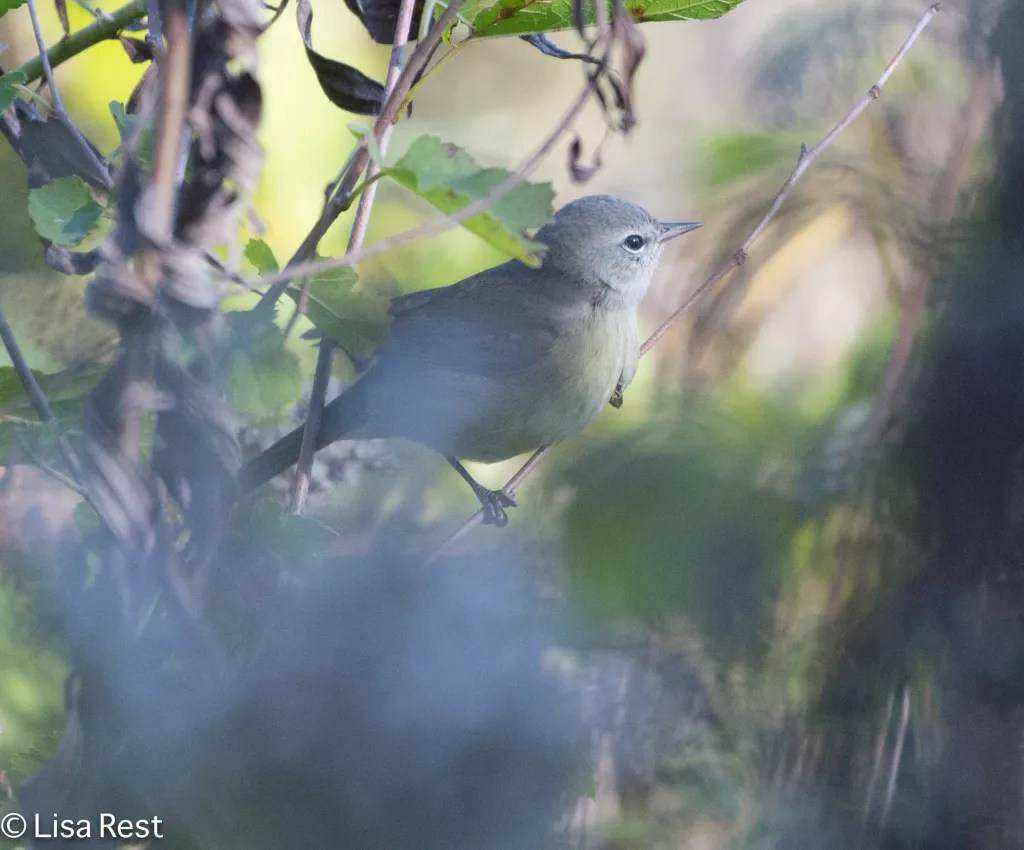
Then I barely saw a Warbling Vireo, but they are nearly always elusive, so I settled for a small photos anyway.

I spotted a Pine Warbler.

A Yellow-rumped Warbler appeared and disappeared into the foliage.

I caught a female Red-winged Blackbird in a furtive moment.

There was only one Blue-winged Teal in the open water, but I later discovered some in the flooded marshy area, although they were too far away and obscured by vegetation to photograph properly. For what it’s worth, there was also a Solitary Sandpiper. So the Blue-winged Teal are still present.

Here’s what I saw later from the paved trail looking out onto the marshy area.

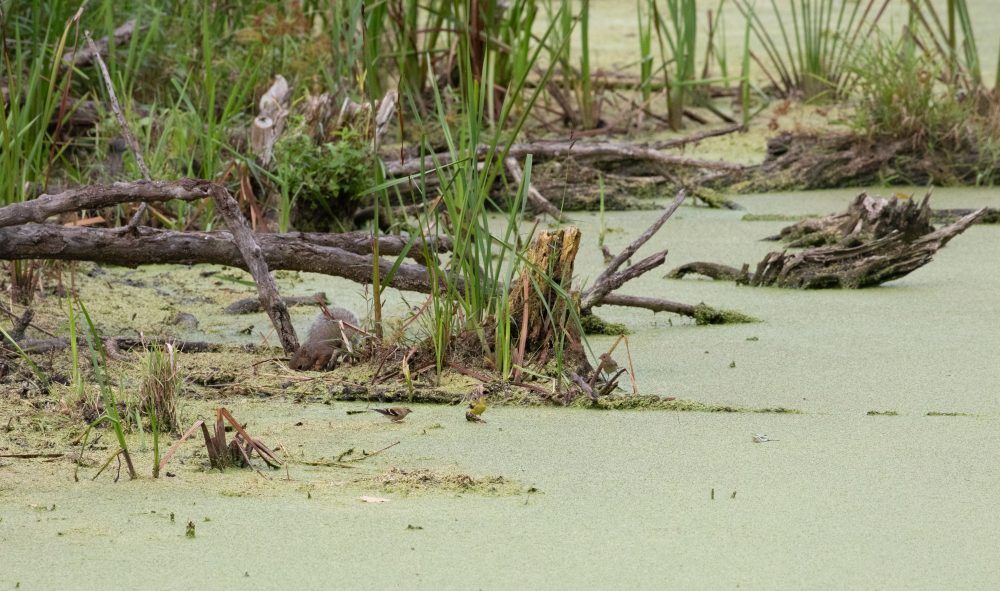
Solitary Sandpiper and Blue-winged Teal in the background

And a close-cropped view of two Blue-winged Teal.

Solitary Sandpiper with Blue-winged Teal

I heard and saw several Blue-gray Gnatcatchers.

Then I was pleasantly surprised to see my first Black-throated Green Warbler of the season, even if I had only obscured views.

It took me a while to find a Yellow Warbler, but I managed to capture one rather distant individual.

The turtles were enjoying the abundant sunshine.

I barely saw an American Kestrel as it flew in the distance.

Here’s another Blue-gray Gnatcatcher.

And I found a Ruby-crowned Kinglet – with just a tiny bit of red in the third photo

One more Blue-gray Gnatcatcher. They will quickly become increasingly difficult to see.

Next, I found a Black-and-White Warbler foraging on a Hackberry Tree.

Then a couple Orange-crowned Warblers appeared. They became more evident in my photo review later.

Another Orange-crowned Warbler.

And another Black-and-white Warbler appeared.

I was quite happy to see a Nashville Warbler.

One more Orange-crowned Warbler. They are sometimes confused with other “drab” warblers, such as the Tennessee Warbler. One definite clue to an Orange-crowned is the yellow undertail coverts. Don’t bother looking for an orange crown…

I took a photo of a nearby Palm Warbler, even as I already feel like I have seen enough of them. They don’t try to hide themselves too well, which probably encourages our tendency to dismiss them, but they are still beautiful.

There was yet another Black-and-White Warbler.

My last Ruby-crowned Kinglet of the morning…

As I started to walk along the paved trail toward Harlem, a male Eastern Bluebird came to see me. I wonder if it was my turquoise windbreaker that attracted him.

I went down to the picnic tables by the water and sat down on the one directly under the tree. As I sat there, a Blue-headed Vireo flew into the branches above me.

A male Red-winged Blackbird displayed close to the shore.

On my way back out on the paved trail, I spotted a Field Sparrow.

And the next-to-last bird I photographed was a male Baltimore Oriole.

I apologize for the photo overload. It’s just been so long since last spring. I went back to the Portage this morning and it was warm, cloudy and windy. My Merlin app heard more warbler species than I saw. But the week is young and more birds will continue to appear. To quote Emily Dickinson, “Hope is the thing with feathers.” Indeed.

Here’s the last bird!

Blue-gray Gnatcatcher

More Birds at the Chicago Portage

In my usual fashion, I have been trying to write this post for a few days. I haven’t even gone out every morning for more observations as I was either cowed by the weather (wind, possible rain) or the complaints of my right knee. The rainy forecasts weren’t panning out so much, but the wind gusts have been awful. My knee is better as I took refuge in the swimming pool and managed my mile, which helped a lot. If by some chance we don’t get drenched by the current forecast, I look forward to walking tomorrow and Tuesday, if for no other reason than to escape screens.

These photos are from October 26th and 27th at the Chicago Portage. Just about a week ago, but it already seems far away now that we’ve set our clocks back.

A glimpse of the statue this fall season

I have been seeing deer lately close to the trail.

For some unknown reason, House Finches appear more often in fall, here and there. This one’s a female.

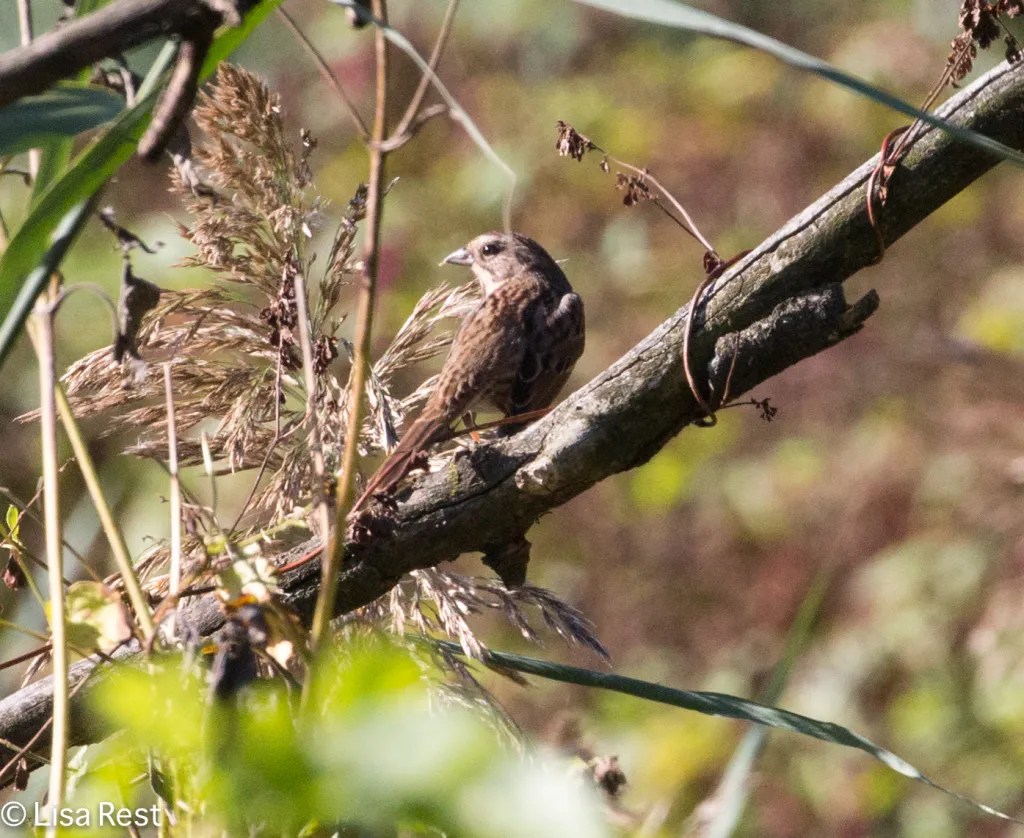
Song Sparrows are blending in with the browns of fall. A few younger birds try singing.

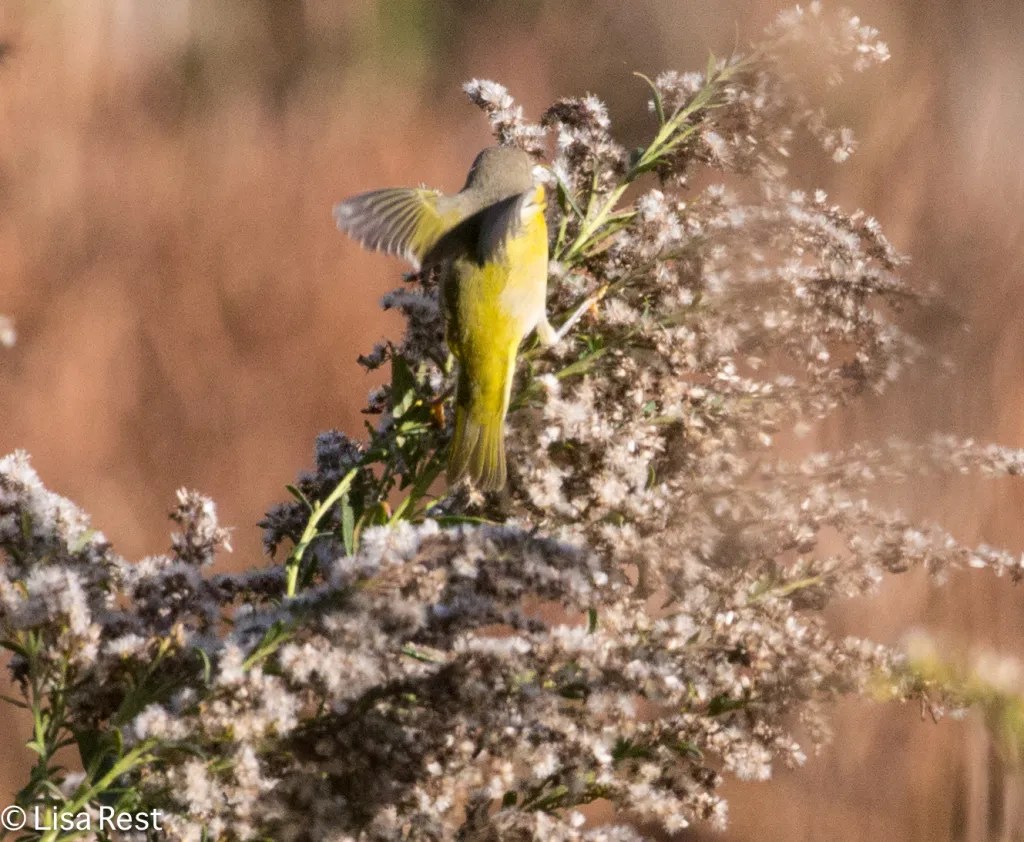
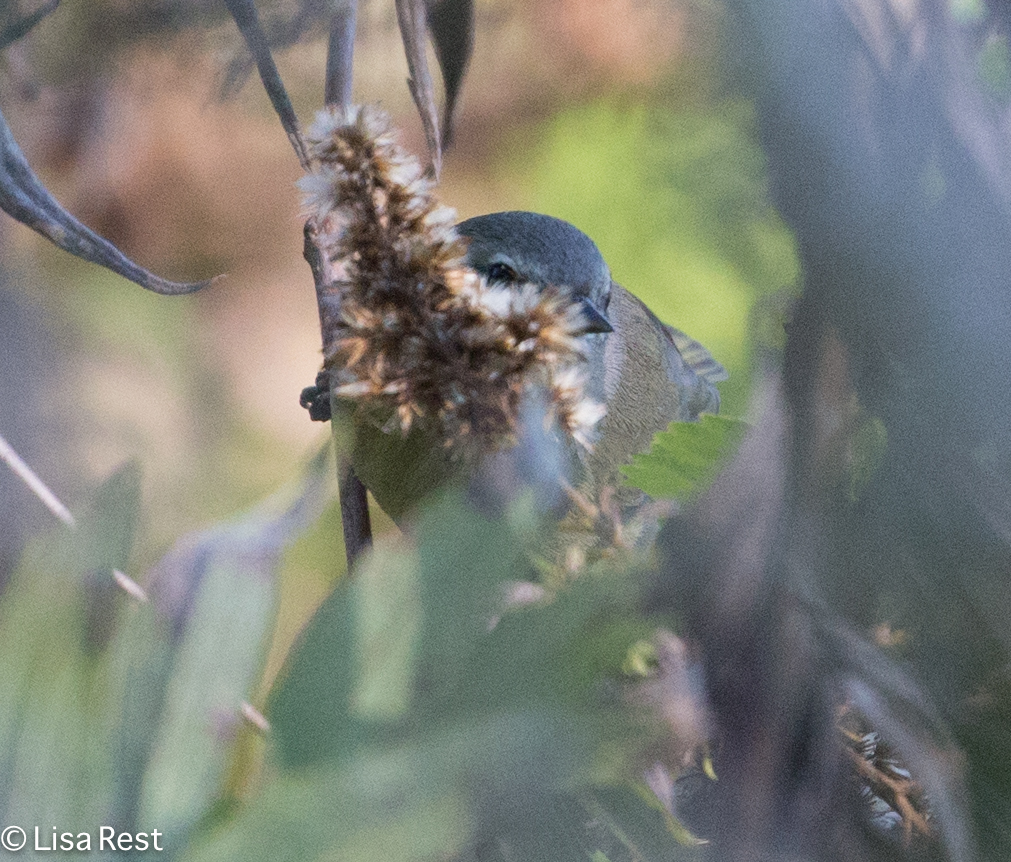
it’s a challenge to focus on the birds foraging in the dried stalks, but I managed to catch glimpses of one or two Orange-crowned Warblers, which always tend to show up toward the ends of each warbler migration. Don’t be fooled by the common name as it is no clue to what the bird looks like.

Here and there, I saw a Ruby-crowned Kinglet.

I even saw parts of a Nashville Warbler that day.

I think this was my first American Tree Sparrow of the season. If past years are any indication I will see many more of them throughout the fall and winter.

Black-capped Chickadees are around all year and now it’s easier for them to command my attention.

Downy Woodpeckers are easier to see as well.

The Red-shouldered Hawk we had been seeing was farther away, perched in a tree.

I found a female Hairy Woodpecker.

And a Northern Cardinal stopped near the paved trail.

Another Song Sparrow was attempting a song.

The next day, on the 27th, I saw another House Finch, only a male this time.

Mallards were hanging out near the Harlem Avenue bridge.

And after looking for a Muskrat all summer long and into the fall, finally I spotted one.

American Goldfinches are still around, but with a more scattered presence. It will soon be time for me to put out nyjer feeders for them in my backyard.

I was pleased to find a Swamp Sparrow in my photos.

And another Ruby-crowned Kinglet emerged.

There was also another Song Sparrow or two.

More Mallard photos. The two in the background of the first photo are covered in duckweed.

I found a White-throated Sparrow in good light.

And a somewhat distant Northern Cardinal was not too shy.

If the predicted rain pans out for the next two days, I will try to clean up some more photos from recent walks. It’s still possible to see some different species before the winter doldrums settle in. It’s hard to focus on much of anything given our national distraction, but birds are a good place to start.

Tennessee Warblers Plus

Tuesday morning at the Chicago Portage was so full of Tennessee Warblers, I simply have to celebrate them and the other birds we saw. Fall warbler migration is waning, sparrow species are moving in, and the leaves are turning and falling from the trees. Fall is on full-blast.

Somehow I’m not seeing so many Yellow-rumped Warblers lately.

Every once in a while an American Robin catches my eye and sits long enough for a photo.

White-crowned Sparrows have been here and there.

A while later I managed to get a distant photograph or two of a first-winter White-crowned Sparrow.

There were a couple Mourning Doves. No surprise, but they were enjoying the cloudless sky.

After that, I walked back a bit to meet Bob at the bridge near Harlem. When we walked the trail not too far past the bridge, we encountered a feeding frenzy of several Tennessee Warblers. The abundant sunshine lit up their green backs in the leaves.

So what were they eating? I think they were picking at the galls that cover the undersides of the hackberry leaves. I have found this to be an important and favorite food source for fall migrating warblers. It certainly makes me appreciate hackberry trees!

Not to be confused with the Tennessee Warblers were some young American Goldfinches like the one below, acquiring its adult plumage. The third photo is an adult.

Black-capped Chickadees were busy as usual.

This proved to be a good morning for Golden-crowned Kinglets.

We also had a few Ruby-crowned Kinglets.

Another late-fall warbler showing up is the Orange-crowned Warbler. Often mistaken for a Tennessee, it is yellower toward the tail underneath.

We observed an interesting-looking Red-winged Blackbird from the bridge near Harlem and decided its darker plumage designated it a young male bird.

After my Merlin app kept telling me for weeks that it heard Swamp Sparrows, we are finally starting to see them. They look more generally rufous in color and are grayer in the face than White-throated Sparrows.

The yellow lores and darker-brown plumage of White-throated Sparrows can be seen below, for comparison.

Here are a few more photos of another Tennessee Warbler.

There were more Swamp Sparrows and Orange-crowned Warblers this morning. I will try to be back soon with a quick update. Until then, here’s one more of the Golden-crowned Kinglet with its mouth open.

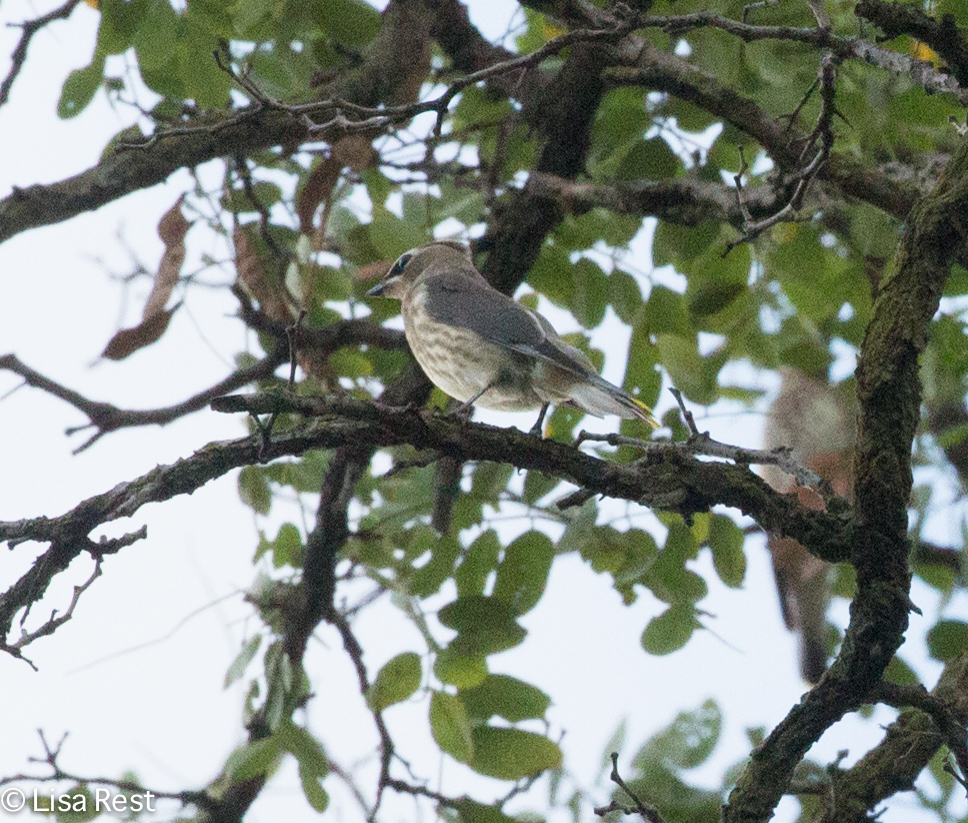
I’m adding a Cedar Waxwing for good measure.

Two Chilly Portage Mornings

I’ve been to the Portage several times lately, and that includes a few times since these photographs which were taken November 26 and 28. I managed to get a few pictures of an American Tree Sparrow, which was my main motivation to go out into the cold the second day. I will likely see more of this species in the coming weeks.In fact I saw three this morning. But it’s also been relatively quiet at the Portage lately.

For whatever reason it was harder to get the bird posing below in focus than the one mired in the stalks.

The usual cast of characters were present on one or both days. I was fortunate enough to have four woodpecker species on the first day: Red-bellied, Downy, Northern Flicker and Hairy.

Red-bellied Woodpecker
Downy Woodpecker

What’s really interesting about the photos below is that I didn’t realize until I started processing them that next to the Flicker on a separate branch was an Orange-Crowned Warbler. I enlarged the image of the warbler below.

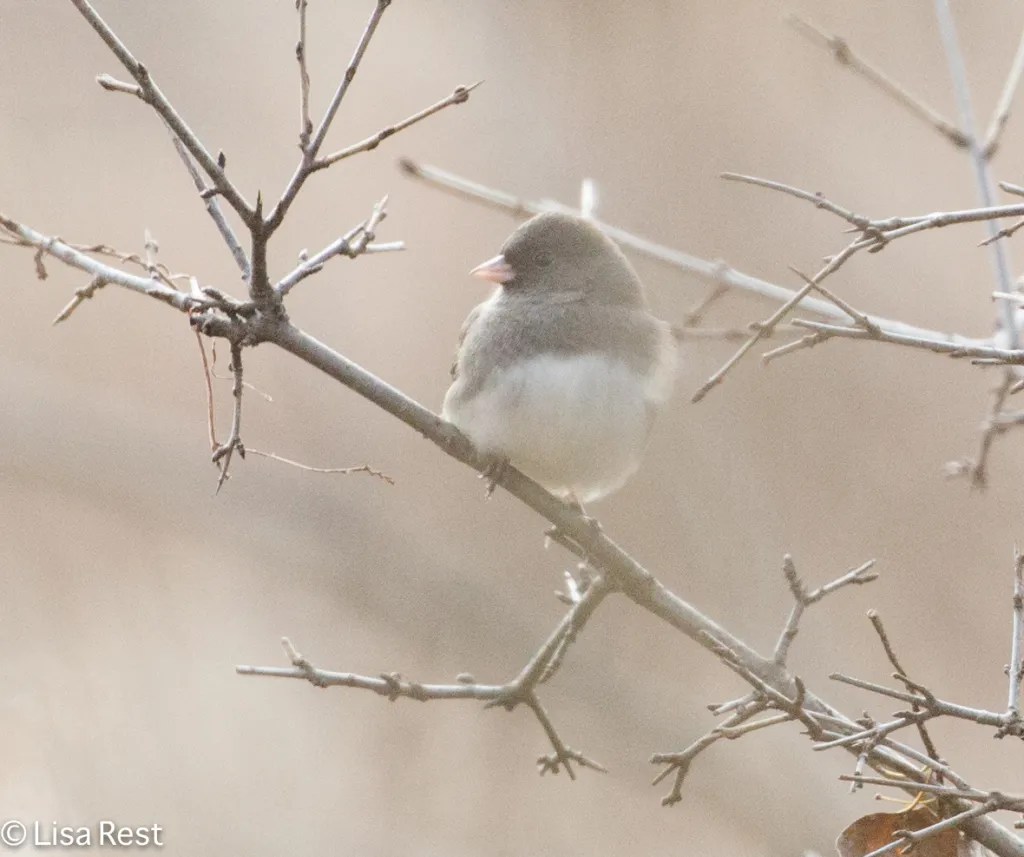
This is Dark-eyed Junco season. I have been encountering flocks usually foraging on the path, along with Northern Cardinals.

There are still some American Goldfinches about all though not as many as I was seeing a couple weeks ago.

It’s always a nice surprise to see a Brown Creeper.

Here’s what the Portage was looking like on those cold, cloudy days.

I think the Fox Sparrow below is the last one I have seen.

There have been one or two Red-tailed Hawks every time I have gone to this location. Sometimes I only hear the hawk, but usually if I am still around by 10:00 I get to see one. This is a particularly dark-colored individual.

More washed-out Portage pics.

I usually see or hear at least one White-breasted Nuthatch.

Canada Geese on the Des Plaines River
Dark-eyed Junco

I hope to be back sooner than later. It’s getting harder and harder to pack a full day into the space of reduced daylight. I have been living with birds for a long time, but now that I spend even more time with them, the consequence could be thinking more and more like a bird!

Going Back a Bit

I have been out locally the past two weeks and there is much to post about, but I thought it might be time to take a historical break. These pictures are all from October 19th at the Portage. Only a little over a month ago, there was still more color among the birds than the leaves. I spent a lot of time with this Nashville Warbler.

Perhaps in the instance below the leaves outshone the bird – a pretty drab-looking American Goldfinch.

The other late fall warblers were on hand. Below is a Yellow-rumped Warbler.

And the one I kept seeing later and later into the season, an Orange-crowned Warbler…

Barely visible but I would know that face anywhere (Orange-crowned Warbler)

Not a lot of sparrows on hand but I managed to capture these two.

White-throated Sparrow
Lincoln’s Sparrow

And the Kinglets – Golden-crowned and Ruby-crowned…

It’s been wonderful to see Brown Creepers on so many occasions.

Always glad to see a Black-capped Chickadee who seems to return the sentiment.

This could have been the only Great Blue Heron I saw here for months since the drought caused the water level to drop so drastically.

Not a wonderful place for a Hermit Thrush to pose but I was glad to see it.

It wasn’t quite woodpecker “season” yet but I managed to see this female Downy Woodpecker.

There are lots more historical visits to make sense of – indeed a flurry of fall warblers that I was so busy taking pictures of I barely have barely had time to go through them, so they may periodically provide a little visual warmup during the cold.

I am mourning the death of my beloved singer/songwriter/implacable musician Zebra Finch male to whom I gave the name of Arturo Toscanini. He died Thursday morning. I found him on his back, on the floor of the dining room by the windows. He was still warm when I picked him up. He had been singing a lot lately, and I think perhaps he had been telling me his time was coming because I found myself thinking about how old he had to be, even though he had no signs of aging or impairment, other than it seemed his little goatee was getting whiter and whiter. The blessing in all of this is that I have one of his offspring who is singing an abbreviated version of his Arpeggio Song and an even shorter memory of his TaTaTaTaTAH Song. Also, other birds have taken up the actual Toscanini Song that he used to sing a long time ago. And there are many more songs among them to catalogue and follow. At some point I hope to go through the years of recordings (I determined I must have gotten Arturo sometime in late 2014) to see if I can put together a timeline of his compositions. In the meantime, I am incredibly thankful for all the avian musicians I still have with me. Singing is their raison d’etre, and music is life.

October at the Portage

Fox Sparrow

A brief but driving squall of freezing rain in the yard yesterday morning supported my decision to not go for a walk. More snow and wind on the way today. A good day to take stock of my indoor life.

Yesterday morning also produced a brief sighting of a Cooper’s Hawk and the appearance of the large gray tomcat I scolded out of the yard as I was refilling the birdbaths before the rain started. I have perhaps 30 or more gallons of water stored in the basement and my rain barrels are still quite full. But we are due for more serious overnight freezing temperatures so I have made this my outdoor project for the weekend, draining the rest of the water and covering up the rain barrels for the winter. If predictions prove correct, we will be getting a little preliminary snow that won’t accumulate but will get us in the mood for winter.

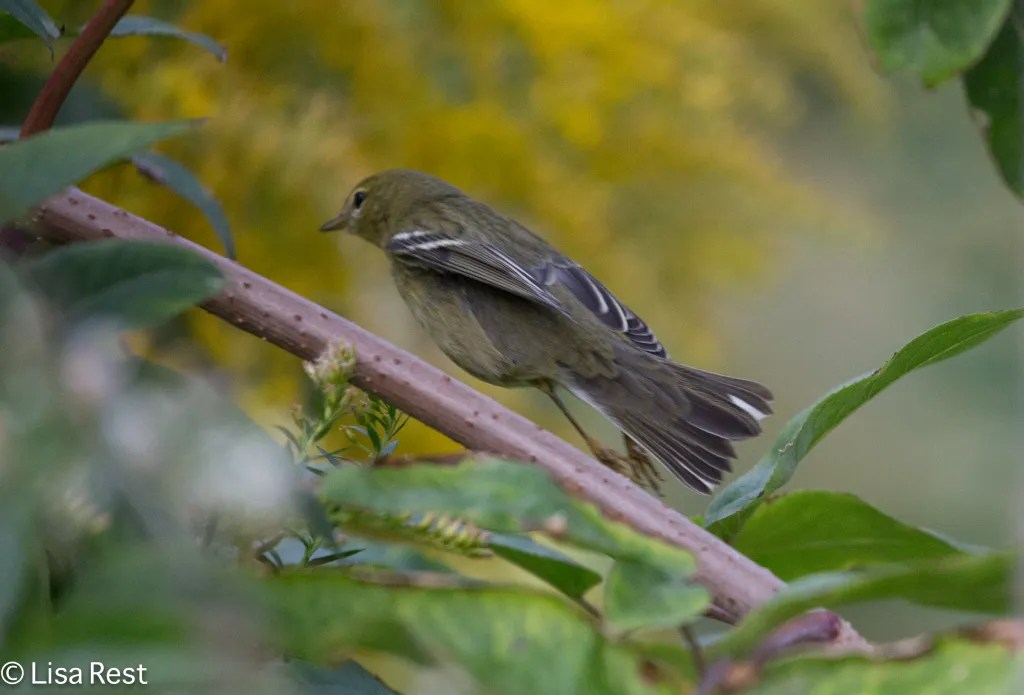
These photographs are from October 17. I was not too surprised to discover I hadn’t processed many of them. I did find another confusing fall warbler which I didn’t report. It appears to be a first-year likely female Black-throated Blue Warbler (below).

Much easier to recognize and still pretty plentiful were Yellow-rumped Warblers.

The bird immediately below appears to have fused with the hackberry leaves.

Then there were the tree-climbing Yellow-rumpeds…

I don’t know why it’s been so hard to get a decent picture of a White-throated Sparrow, but I keep trying.

The Song Sparrow below was a more accommodating.

And another Song Sparrows popping up from the vegetation…

A reminder of how dry it still was in mid-October.

In general, Ruby-crowned Kingets were less prevalent than the Golden-crowned this fall.

Then House Finches started to emerge…

A well-seen Hermit Thrush below…

A momentarily present Northern Cardinal…

Below is an Orange-crowned Warbler… I have yet to see the orange crown on any of these but from what I understand it is barely visible.

Woodpeckers!

Red-bellied Woodpecker
Hairy Woodpecker
Downy Woodpecker

It was not easy to get a picture of the Brown Creeper below but this is just further testament to how often I saw at least one almost every time I went out.

And then there were the almost daily White-tailed Deer…

European Starlings were exceptionally striking in the light that day.

I finally broke down and started cleaning up my second bedroom yesterday. It will likely take me the rest of the year – but it’s a wonderfully freeing thought as I plow through an accumulation of treasures and junk. The first and most important motivation seems to be organizing and having one place for all the camera equipment. But hot chocolate seems more important at the moment…

Down by the River After the Rain

These photos are from two visits to the Riverside trail on October 20 and 27 – both after periods of some significant rain. Although the Des Plaines is nowhere near flood stage, it is good to see it looking more like a river.

Activity around the Hofmann Tower on 10-20 consisted of two flock bursts – the expected Rock Pigeons and also a flock of Blackbirds, mostly Red-Winged.

I saw an Orange-crowned Warbler on both occasions.

Below is a Nashville Warbler I saw on the 20th.

It was hard to get a good photo of this Double-Crested Cormorant through the trees but still nice to see on the 20th. I saw one flying a week later and wonder if it was the same bird…

It’s somewhat easier to get Northern Cardinals to sit still for a photo this time of year. As long as they feel somewhat shielded by a twig…

I saw Brown Creepers on both occasions, and was lucky to photograph this one on the 27th.

A Mallard here and there…

European Starlings are in groups, as usual.

One of those Red-winged Blackbirds still hanging around.

Below on the left is the sign posted at either end of the trail in Riverside that runs along the river. On the right is a sign opposite the western end of said trail, which denotes the Plank Road Meadow which features a boat launch.

House Finches are more visible now.

A tree full of Mourning Doves…

I expect to see more White-Throated Sparrows, but managed to capture only the one below.

I was going to simply add the photo directly below and call it a Tennessee Warbler – even though the face looked a little suspect to me. Then this morning when I flipped over the Audubon calendar hanging over the kitchen sink to November, the photograph of the bird on it looked like the one below, only it was identified as a Pine Warbler. So I took out The Warbler Guide to confirm – because now it was showing up as “rare” on my ebird checklist – and went to the bill shape again. That’s what made the face of this bird not look at all like a Tennessee.

Just to elaborate, I rescued the photos below from my external hard drive and found a few more clues to the Pine Warbler identification. There’s ever-so-slightly a hint of wing-bar showing on a couple photographs, but best of all is the one I brightened up a bit, where the bird is looking directly at me. That’s a Pine Warbler face if I ever saw one. I have to be more careful going through all these photos!

Below is a lovely little Song Sparrow.

The remaining Great Blue Heron is not as visible now from the bridge.

Catalpa tree seed pods on the left, and well-eaten Pokeweed on the right.

An American Robin for good measure…

Not sure whose web this is but I found it interesting.

I saw the Red-tailed Hawk flying below before it landed in the tree.

A few more scenes of this location as the late fall progresses.

We are flirting with overnight freezing temperatures. Indeed, this morning I had to scrape the frost off the windows of the car before I went for a walk at the Portage. Today I will be draining as much water as I can store into empty vinegar gallon bottles, to be used in the now-heated birdbaths all winter.

And as the days get shorter and I see fewer birds… take fewer photographs… maybe I can start revisiting the reason why I started this blog in the first place: my fascination with bird song and the birds’ reactions to music. For the moment, I would like to share with you a funny incident I happened to record way back on August 29th. I was playing piano – I have been revisiting Schumann’s “Kinderszenen” – and perhaps that day it had become a bit of drudgery – I was likely distracted by the fact that my effective retirement date was 2 days off. In any event, I struck a wrong chord while playing the 9th piece of it (“Ritter vom Steckenpferd”) and my indoor crowd IMMEDIATELY let me know that was not acceptable. Which not only proves they were right, but also that they are always listening! Below is the clip. Enjoy. 🙂

Great Blue Heron

My Reward for Taking Too Many Pictures

I went to the Riverside trail on October 15. It was extremely cloudy and I had no idea what I could muster photographically under such conditions. I walked as far as I was going to go in one direction along the river and then turned back, and found a very green-looking warbler foraging low in front of me. When I got home to review my photographs, I could not for the life of me figure out what it was. I could only surmise what it wasn’t. The pale-looking eyebrow, the darker green primaries didn’t fit the Orange-crowned Warblers I was used to seeing.

After a good night’s sleep it occurred to me that perhaps the way to approach the bird’s identity was to look closely at the bill shape and size. Color and feather arrangement might seem changeable in a photograph but the bill shape would be constant. And that led me to thinking this was a Mourning Warbler.

As it turned out, when I opened my copy of The Warbler Guide, I found one small photograph that exactly matched my bird. She is a first-year female Mourning Warbler. I was excited as it has been years since I’ve seen a Mourning Warbler altogether. I added some of my photos to my ebird report and made the email-generated Cook County Rare Bird Alert (“RBA”) – I guess she’s a little late making her way south.

A distant Northern Flicker accented the cloudy background.

I have really become familiar with Orange-crowned Warblers this fall. And while I’m looking at bill size and shape, this species has a distinctly small, sharply-pointed bill. Some photos of an Orange-crowned Warbler are below.

For comparison, below are some more photographs of the Mourning Warbler.

Fall is a good time for woodpeckers.

Red-bellied Woodpecker
Orange-crowned Warbler

Fall is also a good time for squirrels and nuts…

A cloudy sky.

I have really enjoyed seeing Great Blue Herons here.

And Great Egrets were present too.

Only Mallards are showing up in the waterfowl department.

There are always some Northern Cardinals but this was not a good day to capture one.

The other bird that made the RBA was the Gray-cheeked Thrush below.

Golden-crowned Kinglets have been fun to follow the past couple weeks.

A fall tangle of leaves.

The river looks a little fuller than it did. I envision being unable to do this trail when we start getting a lot of rain…

Here are a few more photographs of the Orange-crowned Warbler who was my best model.

Below is a female House Finch.

I thought the Great Blue Heron against the clouds was worth capturing.

One more of a Northern Flicker…

I have been back to the Riverside trail twice since this cloudy day. We are finally starting to cool off. This morning the Great Egrets were all gone. To be continued… but now, I need to get ready for choir rehearsal.

Leading Myself

I had been envisioning all week what it would be like, yesterday, to get out of bed at 4:00 a.m. and go through my normal routine of waking up my body, preparing and serving breakfast to my indoor flock, filling the feeders and changing water in the bird baths for the outdoor flock, and then getting ready to leave in time to arrive at Columbus Park and lead a walk that was to start at 7:00 a.m. I don’t organize the walks. I have been asked to “lead” this and other Saturday walks that alternatively go to Thatcher Woods in River Forest through the first Saturday in November. Leading basically means showing up, in case the organizer can’t make it. That will be the end of the “fall migration walks” and the same schedule will restart in April for spring migration.

I made several discoveries yesterday. Perhaps most important was the conclusion that I managed to arrive on time after the organizer had already advised me he couldn’t make it, I had a few moments to spare, which means I might be able to sleep maybe 20 more minutes before Saturday morning’s visit to Thatcher Woods.

So I arrived on time. And started talking to one of the golfers who use the same parking lot for access to the adjacent golf course. And I waited. I watched for cars with people getting out of them bearing binoculars. But all the cars arriving produced golf clubs. I soon came to the conclusion that I was the only person showing up for the walk. Below is a picture of what the sky looked like at that time. Maybe with the combination of clouds and no organizer, I was not enough of a draw.

Those little black dots in the clouds are Chimney Swifts.

I figured I may as well check out the park for birds anyway, all dressed up with my gear as I was, so I started walking across the lawn to the water where there were only a few Mallards. It was still quite cloudy and beyond my desire to compensate for the lack of light.

I confess I was a little leery of walking through the park so early alone. Although it has always been a safe place with others, I was not familiar enough with the spot to feel entirely confident. But then it started to lighten up, and I was hearing birds, and I figured well, I could see what was there. And I’m glad I did, because instead of following a group around – some “leader” I am – I now feel like I actually could lead a walk through Columbus Park.

Below is a video I took with my phone of Chimney Swifts flying over – it starts out mainly hearing them but then when I realized I could zoom in a bit you can actually see them. There’s also a Red-winged Blackbird singing in the beginning, for good measure.

Chimney Swifts

It began to brighten up a little, which helped the photo taking situation. It was difficult capturing the Blackpoll Warbler below in the shady portion of the park, however, but I kept trying.

I agonized over the pictures below as I was sure it was a Bay-breasted Warbler but for some reason ebird insisted it was a rare sighting for this date. I submitted my photographs and so far they have not challenged me.

I wasn’t seeing a lot of birds in the water, so I looked forward to going to the native plant garden next to a portion of it where I would likely see more birds, and I did.

Palm Warblers like the one below were expected.

I haven’t seen a lot of Tennessee Warblers this year – so it was nice to find this one.

And below, a very young-looking American Goldfinch.

On the way out I managed to capture a sneaky picture of a Wood Duck drake through some tangled branches. Also saw the resident Great Blue Heron in a well-camouflaged spot.

One more of the Tennessee Warbler

At 8:30 a.m. I felt as if I had covered the area – even though I missed a raptor I barely saw flying over. I encountered a birder who was waiting on someone to start her walk through, and we exchanged notes. Columbus Park is her go-to spot, like the Portage is mine. She may join us at Thatcher next week. I am no longer dreading these early Saturday morning rises.

I was tired, especially after having gone swimming the night before, so I took a long nap when I got home. But I am glad I managed the early start and stayed for the birds. I’m sure I would have seen more birds if I had company, but I encountered some nice, smiling runners and walkers and felt more connected to Columbus Park, which is really a beautiful place.

Two Days of Retirement

To celebrate August 31st being my last official day of work, I went to the Portage two mornings in a row, to look for the first signs of fall migration. I didn’t see an awful lot of species on either visit, but there were some nice looks. Best of all was feeling really free to take my time and not worry about checking my work email. I still have to get used to waking up in the dark, though, because I have walks to lead every Saturday in September and October.

Of course the obvious draw this time of year is the fall warblers passing through on their way south from their breeding grounds in the north. I didn’t see a lot of species and missed a couple, but so far I have seen a few warblers each day. They behave differently on their way back to their wintering grounds. They are not foraging in flocks and they are in less of a hurry. So while they may be harder to spot at times, it’s easier to concentrate on one bird at a time. Below are a couple American Redstarts.

I felt lucky to find this Bay Breasted Warbler in my photographs.

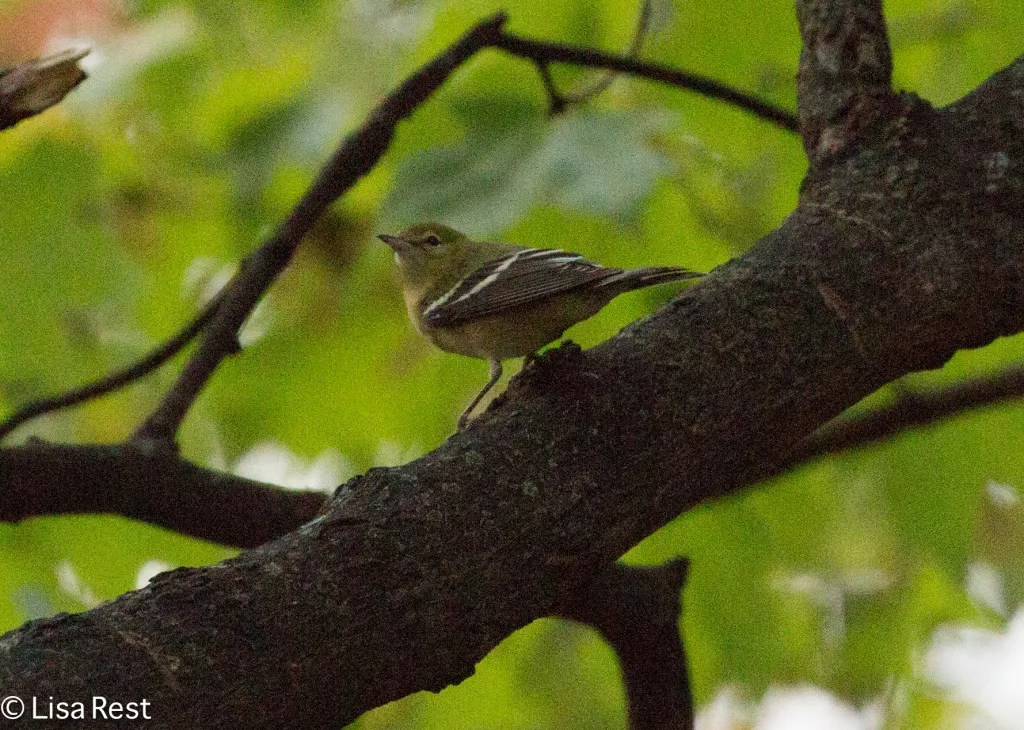
Magnolia Warbler, also at the head of this post

One of my favorites, a Chestnut-Sided Warbler, was being rather coy.

Not a warbler, but a nice to see Red-Eyed Vireo both days. The bottom photograph was taken the second day when the Vireo was eating poke berries with the Cedar Waxwings.

Thursday morning I managed to capture enough photographs of the Orange-Crowned Warbler below to justify my claim that I had seen one, since it’s very early for this species.

I just barely captured this Nashville Warbler.

Wednesday was cloudy.

Large flocks of Cedar Waxwings were present on both days.

Some closer views of the Waxwings Thursday, when they were busy eating poke berries.

Below is a beautiful wasp’s nest. I have a slightly smaller one in my crabapple tree this year as well…

Something else that I had a lot of in my yard before I removed nearly all of it, below, is Common Beggar Ticks which is native, and an annual – but doesn’t bloom until now.

On the first day I did manage to capture the Swainson’s Thrush below. I also saw a Wood Thrush but that photograph isn’t presentable.

Robins are looking scruffy this time of year. Most of them are juveniles.

When I first walked in on Thursday, there was a deer at the end of the paved path, and then a Cooper’s Hawk with prey landed in a tree above me, but I didn’t see what it had captured.

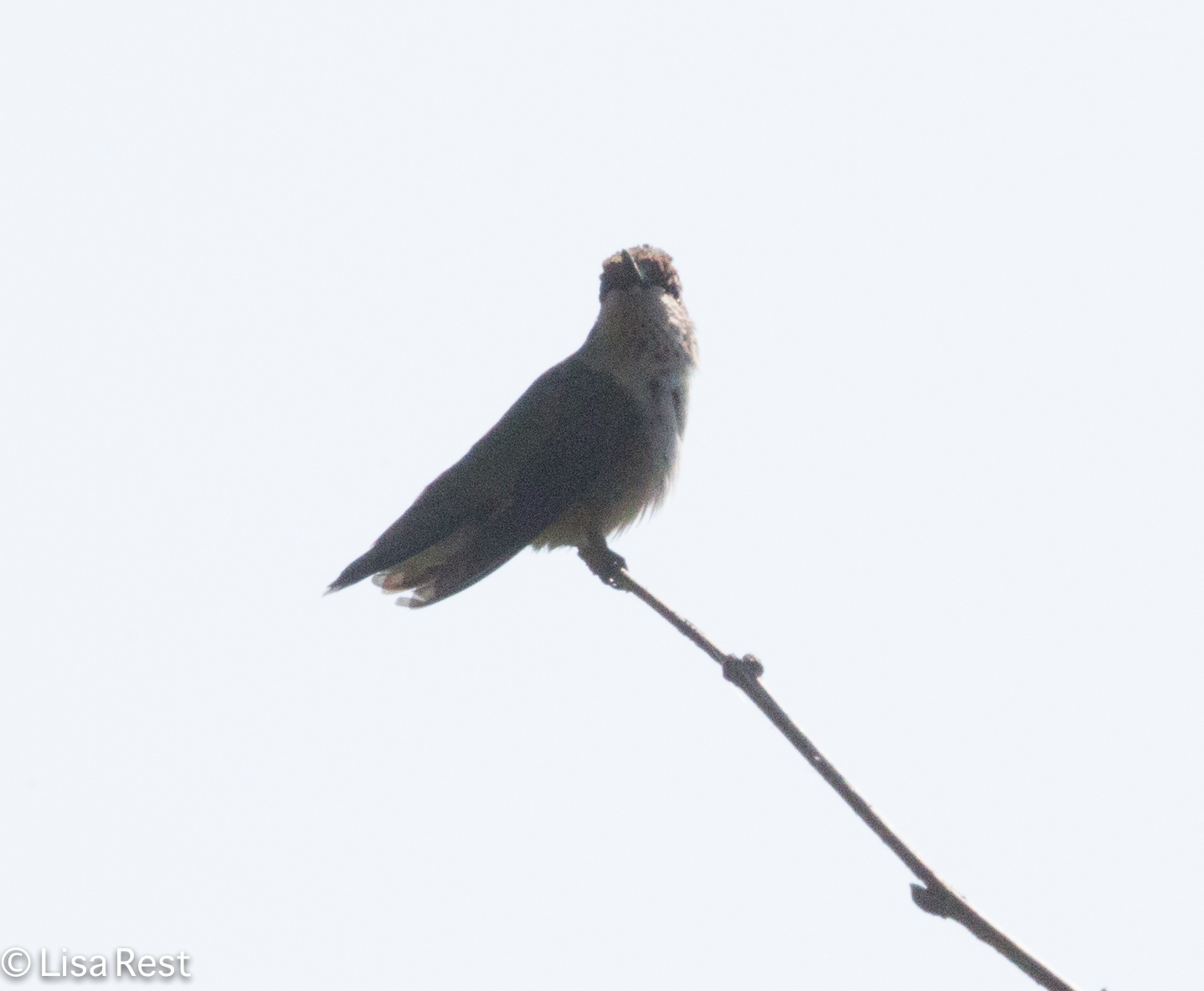
Unfortunately this Ruby-Throated Hummingbird was completely backlit in bright sunshine but it was still nice to see it perch right in front of me.

There were still a couple Indigo Buntings around.

Female Indigo Bunting

For once, there were more than one or two Monarch Butterflies. I realize this is probably the last I will see of them but it was nice while it lasted.

Below is a Chipmunk foraging in a tree.

A few scenes of the Portage and one quick look at the Des Plaines River where not much is happening at the moment.

Black-capped Chickadees are around all year but I don’t always see them. Sometimes I don’t even hear them. This one didn’t mind being seen or heard.

I am trying to navigate this new feeling of almost endlessness. Well, it doesn’t last for long. There is much to do, but less of a feeling of urgency or hopelessness as my work duties have all but vanished. I have agreed to remain with the firm as an independent contractor to help out with various projects while they still try to find and train my replacement. My stipulation was to assume any given morning with nice weather would be off limits for my attention as I will likely be out looking for birds somewhere.