We were scheduled to start our Saturday walks at Thatcher Woods, but the flooding from recent downpours will make walking, not to mention parking there, prohibitive for quite a while. So we went to Columbus Park. It was a chilly and windy morning, but we saw a lot of birds anyway. I found it especially nice to have good views of a Pine Warbler, the bird at the top of the post.
We always start off walking across the big lawn to the edge of the water to see what’s up. There were Wood Ducks and a Black-crowned Night-heron, for starters.
There was also a very chilly-looking Tree Swallow.
Ruby-crowned Kinglets are still happening.
This Brown Creeper was not daunted by the weather,.
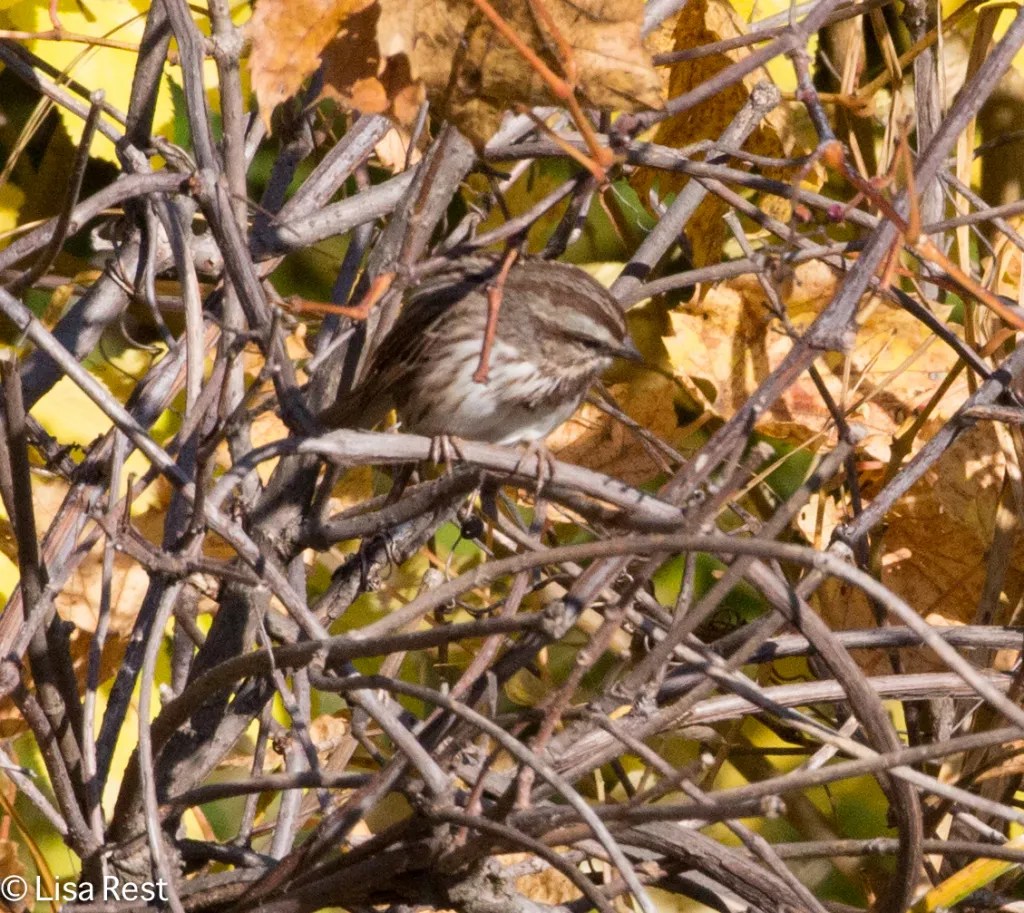
White-throated Sparrows are to be expected.
Here are a couple more photos of the Pine Warbler.
Palm Warblers are comparatively easy to see, so maybe that’s why we tend to pass them over later in the season, but I still find them beautiful.
I caught the Black-crowned Night-heron relocating to another spot.
It was a treat to see two Greater Yellowlegs toward the end of the walk.
For what it’s worth, we had some Yellow-rumped Warblers.
We got nice looks at a Great Blue Heron and a Pied-billed Grebe.
As spring always tests my memory for vocalizations I haven’t heard for months, I invariably learn something new. I now recognize the chattery calls of female Red-winged Blackbirds, in addition to the various vocalizations that the males produce.
I will be back with more spring migration photos as the birds start showing up. For the moment, my focus is on preparing for and playing in the annual Spring Music Festival this Saturday night with Linda Rios on flute and Ray Holdsworth and Kate Burch on percussion. I’m looking forward to playing and also to hearing the other performers, especially those I have never heard before. It will be a fun evening for all.
The Oak Park Migration Bird Walkers convened for three consecutive Saturday walks at Columbus Park this fall. It wasn’t the original plan, but that’s how it turned out when we canceled our scheduled walk at Thatcher Woods because a festival event promising lots of noise and people was planned for September 27, the same day some of us were also participating in a “Big Sit” sponsored the Illinois Audubon Society. Here are some photos from the three Saturday walks and some from my participation in the Big Sit, beginning with September 20.
I teamed up with an engaging Gray Catbird early on September 20. It’s usually impossible to get one of these birds to show off its fancy orange undertail, but this bird was not shy at all.
Northern Flickers were beginning to emerge everywhere.
There were still some flycatchers around, like this Eastern Wood-Pewee.
There were a couple Wood Ducks lurking in the shadows.
We always see one Great Blue Heron somewhere.
Yellow-rumped Warblers were starting to show up that week, heralding the beginning of the end of fall warbler migration.
We found a Black-crowned Night-heron perched in a tree.
On September 27, we started to see more Yellow-rumped Warblers.
Gray-cheeked Thrushes have been numerous this fall.
Palm Warblers are another later fall warbler species, and we have been seeing some of them.
Another Yellow-rumped Warbler…
We got good looks at a Red-breasted Nuthatch and I couldn’t decide between the two shots.
This time the Great Blue Heron was first seen sunning in a “flasher” pose, and later scratching an itch.
American Goldfinches love this time of year when the flowers have gone to seed.
I found a Bay-breasted Warbler.
I also managed to capture a Blackpoll Warbler.
After the walk, I joined the Big Sit participants and got some nice looks at a male Common Yellowthroat. This is the same bird at the top of the post.
A Ruby Meadowhawk dragonfly came to visit.
Another Gray-cheeked Thrush…
This time we saw a few more Wood Ducks.
The last walk was on October 4. We started seeing Ruby-crowned Kinglets.
Sparrows are starting to show up, like these juvenile White-crowned Sparrows.
As common as Yellow-rumped Warblers are, I am still glad to see them.
I found an Orange-crowned Warbler.
We got brief looks at White-throated Sparrows.
I am always up for a Red-bellied Woodpecker.
This might be the last Blackpoll Warbler I have seen this year.
We saw a young Cooper’s Hawk here and there.
I had brief views of a Tennessee Warbler in the leaves.
Here’s a couple more Yellow-rumped Warblers.
There were more birds, but this is a general overview. I am leaving the last word to the Great Blue Heron.
Oh one more thing – I should probably explain the “Big Sit” for those unfamiliar with the concept. Birders sign up to be in teams and pick a spot to sit and watch for birds over a 24-hour period. I think the teams were up to 5 people at any particular time. It’s another way to experience birdwatching. When I am out on a regular walk, I sometimes stop briefly to do what I guess you could call it a “Tiny Sit” – and let the birds come to me instead of trying to find them. It’s very peaceful, and often quite rewarding.
I was hoping to make this post manageable and not too long. These are some of the birds from the last three spring migration walks of the Oak Park Migration Bird Walkers, starting with Thatcher Woods on Thursday, May 30. We got a glimpse of the Great Blue Heron by the Trailside Museum.
Last Thursday was yet another challenge in flycatcher identification. If only it were possible that when these guys all show up at once, they at least announce themselves vocally. We got very distant looks at what turned out to be an Alder Flycatcher. Henry actually heard it.
There was also a Willow Flycatcher.
And I am thankful for Eastern Wood-Pewees having long, fluted tails.
For the record, an American Robin and a Northern Cardinal.
A pair of Blue Jays showed up and put on a little show.
It was a cool and cloudy morning but the lack of light did not dim the plumage of an Eastern Bluebird.
The now-Northern House Wren blended into its preferred surroundings.
We had a somewhat obscured view of a Great-crested Flycatcher, matching the colors of the branches and leaves.
The next day we were at Miller Meadow. Ir’s a huge expanse dominated by non-native, extremely invasive teasel. Somehow the birds tolerate it, even if it frustrates us. We saw one or two Willow Flycatchers.
The wide open expanse often makes this location a favorite of raptors. We had a pair of American Kestrels. They appeared to be using a nest box.
An Indigo Bunting provided a brief glimpse in the teasel.
Wide open spaces are good for Eastern Kingbirds as well.
And a Song Sparrow serenaded us as we walked by.
We had an Eastern Bluebird here too. This is the same individual at the top of the post.
I followed a Killdeer as it flew by.
Someone’s excellent spotting led to the discovery of a female Orchard Oriole by a nest, which I did not see, but I did manage a couple photos of the male when we caught up with him.
And a Red-shouldered Hawk made an appearance at the end of the walk.
The last gathering was on May 31 at Columbus Park. I saw a rather conspicuous Great Egret.
There was a Red-shouldered Hawk here too, perched on the fishing line recycling station by the larger body of water.
A Double-crested Cormorant was drying off its feathers.
We had a first-summer Black-crowned Night-heron in addition to a few adults.
The Great Egret started flying and landed in a tree.
We found a Black-crowned Night-heron in a tree as well.
We had a Least Flycatcher, conveniently identified after the Merlin app heard it first.
Here are two more Black-crowned Night-herons.
We will resume the Oak Park Migration Bird Walks at the end of August. Now that Henry is back in town, I will get a break from leading most of the Saturday walks, but I will likely join the group for most of them.
We are experiencing pleasant temperatures, but have also been under an air quality alert due to the Canadian wildfires. I try not to think about the added pressure on the migrants heading in that direction.
In spite of the anticipated quiet during breeding season, there are still a lot of birds we don’t get to see in the colder months, and I will continue to try to keep up with them. To be continued.
I kept trying to get caught up with April, but it’s already May and there are more birds showing up despite some really chilly, windy weather. The other thing is the days keep getting longer and yet there aren’t enough hours in one day. But I can stay inside today after singing two services with the choir this morning, and take some time to recap the last two days of birding before they too become ancient history.
Yesterday morning, the Oak Park Area Migration Bird Walkers (that is such a mouthful, but I think this is the Official Name) met at Columbus Park. It was chilly and partly cloudy, but we found birds. Here are a few photos of some of the birds we saw.
As we stood on the lawn looking over the larger water area, the Great Blue Heron at the top of this post flew in for a landing. Its choice of location was too close to a pair of nesting Red-winged Blackbirds, and I caught some of the action as the male blackbird tried to get the heron to relocate.
I then captured the top photo and the one below as the heron left for another location.
We saw a few Tree Swallows. They were easier to capture perched. I suspect they weren’t catching much for taking so many breaks.
While we saw Palm Warblers in numbers, it took a while before we started to see a few other species across one of the tributaries of landscape architect Jens Jensen’s “Prairie River.” As birds were foraging around near the bank, it was nice to see a male Black-throated Blue Warbler in particular.
A male Common Yellowthroat was more difficult to see.
There were a few Yellow Warblers. Although we heard some singing, I believe the bird below is the first female Yellow Warbler I have seen this season.
Blue-gray Gnatcatchers were showing off for us.
And we heard and saw at least two individual male Baltimore Orioles.
Here’s a token Palm Warbler.
I noticed a singing Warbling Vireo.
A pair of Canada Geese swam by with goslings in tow.
Toward the end of the walk, we got some furtive glimpses of a Cape May Warbler.
I will team up again with the Oak Park group in two weeks. As for now, looking back to Friday morning in Riverside, my walk was pretty tame but eventually rewarding. It only takes one unexpected sighting to make my day. Starting off more predictably, I got close views of a Mourning Dove and a Common Grackle.
As I walked on the paved Swan Pond trail, a Yellow-rumped Warbler was busy trying to catch bugs.
A Pine Warbler sang and sat rather still.
A sidewalk Chipping Sparrow appeared.
I saw a Hermit Thrush after a while.
After I crossed the river and started walking in Riverside Lawn, I was pleased to see a Great Egret across the river and a Double-crested Cormorant as it flew by.
Then suddenly, almost out of nowhere, my surprise bird showed up: a female Ruby-throated Hummingbird. She appeared to have some nesting material in her bill.
I caught a glimpse of a Nashville Warbler, and then the Nashville with a Tennessee Warbler. I didn’t realize I had captured the Tennessee until I developed my photos.
I expect things to get much crazier in the days ahead. That said, yesterday morning around 6:00 AM I was delighted to see one, and then another, beautiful, healthy-looking opossum in my backyard. I went back inside the house to grab the camera and the opossums apparently felt safe enough hanging out by the fence while I took their pictures. You can barely see the second opossum on the left of the third photo.
I know I always say this, but I will try to be back soon with some older photos before I whisk them away to make room for more spring migration.
We had the last official fall migration bird walk of the Oak Park Bird Walkers at Columbus Park on Saturday, so it seems like a good time to do a little roundup of the visits. This time, as if for a grand finale, a Black-crowned Night-heron greeted us right away. We have missed seeing one on all our other visits this fall. Then it wasn’t long before we heard the chattering call of a male Belted Kingfisher as it flew around over the water, then perched in a tree near the refectory.
After checking the trees and lower growing vegetation for anything moving, we started to walk around and inadvertently flushed the Black-crowned Night-heron.
It seemed as if all the Yellow-rumped and Palm Warblers we have been seeing elsewhere the past week had all left. There was also a lot of wind to deal with, which made it harder to see anything moving besides leaves in the trees. We did manage to spot a Golden-crowned Kinglet or two and a Lincoln’s Sparrow.
Golden-crowned KingletLincoln’s Sparrow
And we also had our token Dark-eyed Junco to officiate the change of seasons.
Red-winged Blackbirds are few and far between these days, but we did hear one and then saw a few more. I admit I had to think for a second after hearing the call. It’s hard to believe I could forget a Red-winged’s song after the constant serenade a few months earlier.
As we walked around through the quiet Bird and Butterfly area, we noticed a clearing had been cut, leading to the water, and on the other side we saw a lot of Wood Ducks, many of them taking cover in the low-lying branches which made them difficult to see, but a few were out swimming for better views.
And then we saw a young Cooper’s Hawk surveying the area.
While we watched the Cooper’s Hawk to see what it would do, a Belted Kingfisher flew by and perched distantly. It seemed to have some red coloring on its flank which indicated it was either a juvenile or a female. When I was able to crop and blow up the photos later I discovered it was indeed a female, so we had a pair.
Then the young Cooper’s Hawk decided to chase squirrels. One of its potential prey was a Black Squirrel, which I have not seen very often.
I tried to capture the hawk as it went after squirrels but it was too quick for me.
The squirrels were too quick for the Cooper’s Hawk, but it got a lot of practice.
Going back to our previous visit on September 28, we saw the Great Blue Heron that hangs out here. I am not sure I’ve ever seen it on the lawn before, though.
It was a good day for Northern (Golden-shafted) Flickers.
We got partial views of a Red-tailed Hawk.
A pair of Rusty Blackbirds were distant and hard to identify until I reviewed my photos.
We had a young White-crowned Sparrow that posed nicely.
And we caught brief looks at a Yellow-bellied Sapsucker.
There were a few Yellow-rumped Warblers and some Palm Warblers too, but I didn’t get good photos of the latter.
Yellow-rumped Warbler
The Squirrel of the Day was a Fox Squirrel posing on a park bench
On September 17, the only birds of note were a Cooper’s Hawk and a Northern Waterthrush.
Perhaps the most warblers we found at Columbus Park were on September 14, which was our first walk there this fall. Not great views, but I managed photos of a Bay-breasted Warbler and a couple Blackpoll Warblers.
Bay-breasted WarblerBlackpoll Warbler
Another Blackpoll…
Here’s one more of the Great Blue Heron in the flowers.
Fall migration isn’t totally over yet, but we are now cold and windy and less likely to see warblers. I expect to see more sparrows, a thrush or two, and more leaves falling off the trees.
On the home front, I am settling in a bit after a successful, fun flute-and-piano recital with Linda on flute yesterday afternoon, at our friend Margaret’s lovely home. It feels like a milestone of sorts, so I guess it’s never too late!
I am also putting my life back together after the theft of my wallet organizer Thursday morning while grocery shopping at Whole Foods. I now suspect the strange couple who seemed to be following me around in the produce section, organic produce being the main reason why I’m in that store altogether. I will return to my former more-paranoid-but-definitely-more-secure method of carrying only my bankcard on me when I go grocery shopping. Still living and learning – ha! I might have never come down from Peter Mayer Cloud Nine.
Replacing the most important things like cards and my driver’s license has been fairly easy so far. I guess this happens enough to people, unfortunately, that the systems are in place. When my favorite UPS driver delivered three new cards to me this afternoon and I told him my wallet had been stolen, he said, “Oh, I get that a lot.” I am just glad I managed a walk and a swim before he arrived. I activated the UPS App on my phone this morning: it has a cute little map with a truck moving around on it so you can track your delivery visually. It’s been a good day.
We began the Oak Park Bird Walks on August 24 at Thatcher Woods. The second Saturday walk was on August 31 at Columbus Park. We will continue to alternate between these two locations on Saturday mornings through October 12.
The birds were far away at Thatcher Woods, which made it necessary sometimes to rely on the telephoto lens to identify some of them, like this Northern Flicker perched high on a dead tree.
We saw a Red-headed Woodpecker. Apparently they have been seen here with some regularity, so that’s nice to know. It was too distant for a great photo, but since I haven’t seen one in quite a while it was nice to have some image.
We saw some Red-bellied Woodpeckers.
Eastern Wood-Pewees like this one have been easy to see this summer.
I got a lousy photograph of an Eastern Bluebird.
But my reward later standing in the same field was looking up at a young Ruby-throated Hummingbird perched on a branch.
I stopped by the Chicago Portage before I went home, but there wasn’t an awful lot happening there either.
Juvenile House Wren
Then, on August 31, after some serious numbers of migrants were reported by the Birdcast, I expected we would see more birds at Columbus Park. With 12 people spread out over the trail, there were more birds on the list than I saw, but I did manage a few interesting captures. Also of note, Jackson Boulevard, which runs adjacent to the northerly border of Columbus Park from which we enter, was blocked off for what I now see was the 45th Annual Back to School Picnic and Parade that morning which made access challenging, but we all managed to park and start looking for birds.
A male American Goldfinch was feeding his offspring. These birds are strictly seed eaters, so their breeding season starts and extends much later than the other birds.
We spotted a Belted Kingfisher perched across the water. I did not capture its dive, but it returned to its perch with its catch and ate it.
A couple Warbling Vireos turned up in my photos.
We enjoyed looking at a Swainson’s Thrush in the dogwood berries.
I couldn’t resist a Pearl Crescent Butterfly.
A juvenile Cedar Waxwing was perched way above with its back toward us. The yellow band on the tip of its tail gave away its identification.
Tennessee Warblers were on hand.
We had an Eastern Wood-Pewee here too.
Then someone spotted a hawk perched in a tree. We couldn’t see the whole bird, but it turned out to be a juvenile Red-shouldered Hawk very busy with its feathers.
Wood Ducks made a brief appearance.
Instead of seeing a Great Blue Heron by the water near the refectory, we only saw the heron fly in quite late. I suspect the parade had driven it elsewhere.
Finally we began to see some warblers. Tennessee Warblers below.
Cape May Warblers were on hand as well.
Another Tennessee Warbler is below.
Then in the planted prairie area, we found a Cape May Warbler eating pokeberries.
Beyond that, I saw one more Cape May Warbler. And then we had a Pied-billed Grebe, a Gray-cheeked Thrush and a distant Red-shouldered Hawk flying over.
Cape May WarblerPied-billed GrebeGray-cheeked ThrushRed-shouldered Hawk
Northerly winds seemed to be making it easier for warbler migration the last few days, and I have taken many more photos to share. The winds have shifted again, however, and will be southerly until, it looks like. Thursday night. Still, anything can appear anywhere this time of year and I will be out looking for more migrants, especially while we have a break from hot weather.
This is a little roundup of two Saturday walks at Columbus Park in which I participated. At the beginning of the walk on April 27th, first we saw Goslings.
But that was nothing compared to this past Saturday, May 11.
On April 27, there were still several Palm Warblers.
We also had a Black-and-White Warbler.
It was really difficult to capture a Nashville Warbler adequately as it was quite far away, but I tried anyway.
Yellow Warblers are everywhere.
And it may have been the last of the Yellow-rumped Warblers.
We had an American Robin on a nest.
And a beautiful Northern Rough-winged Swallow posed for us in the cloud cover. I don’t know how, but at first I mistook it for an Eastern Phoebe. I was off my game that morning, which was also the day of the Spring Music Festival. Or at least that’s my excuse.
I got a good look at a Red-tailed Hawk flying over us that day.
And I was happy to find a Savannah Sparrow later in my photos.
Here’s a Song Sparrow for comparison. The heavy malar stripe on the throat is sometimes the best clue to determine a Song Sparrow quickly.
I caught a Tree Swallow in flight.This turtle was up for a photo.
On May 11, we saw a couple Black-and-White Warblers again.
And a Black-throated Green Warbler
Now that it was two weeks later, the Palm Warblers appeared to be females.
There were Yellow Warblers again, if not necessarily in the best light.
I had close views of a Warbling Vireo.
And not so close views of a Red-eyed Vireo.
When someone said they saw a Great-crested Flycatcher, I thought I did too but it turned out to be an Olive-sided Flycatcher which is a bird I have seen only twice (in my photos) and now I will never mistake it for any other flycatcher ever again. The yellow on the belly and the crested look threw me off, but that dark vest is unmistakable, as is the white throat and a shorter tail (not at all rufous in color) than the Great-crested.
The icing on the cake last Saturday was the appearance of a Black-crowned Night-heron just as we were walking toward our cars.
Other birds stopping long enough for photos were a Gray Catbird and a couple Baltimore Orioles.
It’s been kind of a slow start with warbler migration, as far as it goes on the ground, anyway. A lot of birds have been flying over at night. I also wondered if the solar flares producing northern lights would throw off the birds. I found a reference to a study suggesting that could be a factor, although I haven’t read it yet.
But just as things were terribly slow-going yesterday at the Chicago Portage, this morning in Riverside was promising. I will be back soon. Even without a lot of activity I have catching up to do.
With beautiful weather in our favor, 15 enthusiastic souls gathered yesterday morning for the first spring migration bird walk of the Oak Park Bird Walkers in Columbus Park.
I had somehow missed Golden-crowned Kinglets in the last couple of weeks so I took too many photographs of those that I could get to stay still for a fraction of a second.
We located one Ruby-crowned Kinglet later but I barely captured it.
There were not very many birds on the water, and we were a bit dismayed that we didn’t have a Great Blue Heron yet. But we had a few Wood Ducks and Blue-winged Teal.
It was hard to resist a shiny green Mallard drake.
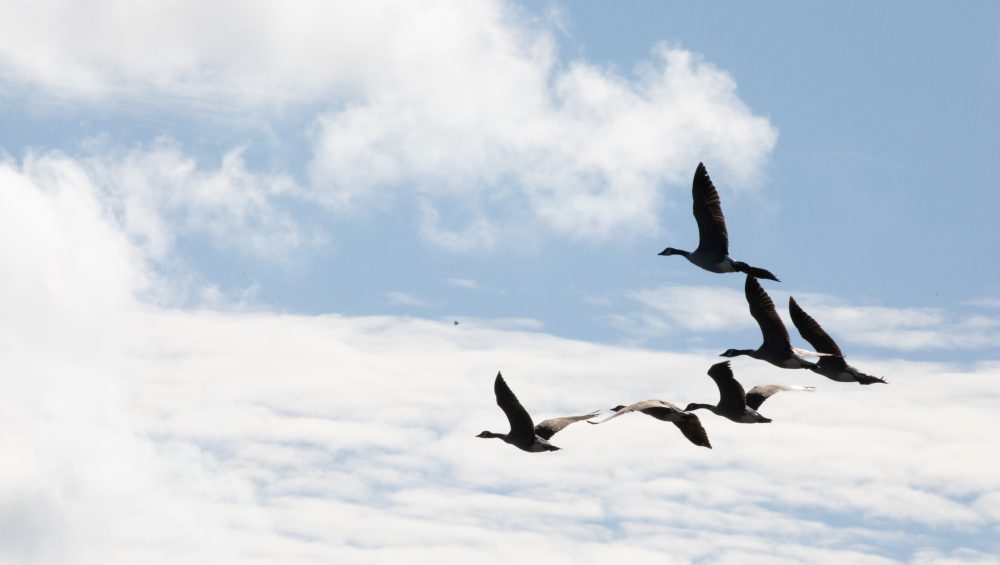
Canada Geese were overhead and in the water.
On land we had two pairs of Northern Flickers but they were too distant to capture well. Here’s a token photo.
There may have been more than one Yellow-rumped Warbler but the one I captured was not close. I kept the photo for the list.
I think we had two enterprising Brown Creepers, one of which I photographed.
A male Downy Woodpecker made a brief appearance.
A couple Gray Squirrels were enjoying the sunshine.
We had a preening Red-tailed Hawk and a flying Cooper’s Hawk.
We had Red-winged Blackbirds in both sexes.
At one point a Belted Kingfisher flew past us. I barely captured it as it left its next perch.
I think I had the most fun with the Tree Swallows.
Next Saturday we will be at Thatcher Woods and with the warm, southerly winds we have had lately, I hope there will be more species to document.
I am pretty worn out from singing this morning. I think the choir did well. After I fell in deep love with the piece, Sacred Place, while practicing and listening to it over the last few days and finding the second movement evocative of a dawn chorus, I was holding back tears through much of the performance. Driving home, I felt a deep sense of loss that it was over, never to be repeated. I managed to assuage that feeling by tuning in later to watch the video and reassuring myself that we had done justice to the work.
I will be back soon with whatever screams to be expelled from one hard drive or another.
We Oak Park bird walk people got together twice more to visit Columbus Park on October 15 and 29 respectively. The 15th was definitely birdier with plenty of Golden-crowned Kinglets showing off.
A rather familiar sight in the pond at Columbus Park is a gaggle of Canada Geese and that day was no exception.
You may remember the Great Blue Heron at the back door of the Refectory from the last time we were there. It was back in the same spot again.
The leaf color was a factor on that sunny morning, making nice backgrounds for the birds.
Yellow-rumped Warbler
I was delighted to find this series of photos of a Golden-crowned Kinglet.
We had several sparrow species that day too. Unfortunately they weren’t always that easy to see. Below is a Swamp Sparrow and then beneath it, a Clay-colored Sparrow.
I got several photos of a Song Sparrow in a thicket trying hard not to be seen.
And I nearly missed photographing this Fox Sparrow.
There were Dark-eyed Juncos, with this one being the only one I managed to capture. Sometimes all you see of a Junco is its white tail feathers flashing.
We also had a Brown Creeper. I think it’s the last one I have seen this fall.
At some point perhaps over 200 Canada Geese flew overhead and then landed in the water.
Here are some more photos of the Golden-crowned Kinglet at the top of the post.
A Palm Warbler was present in the wildflower garden.
Sometimes an American Robin can be interesting, as I found this one flying over the water.
The next time we met on October 29, the water looked like this. It’s a beautiful reflecting pool. Notice there were no birds in it.
We saw hardly any birds at all that morning after covering our usual bases. However, a Great Blue Heron did us a favor and landed right in front of us.
It was only around 9:15 AM when we decided to call it quits. I had an errand to run and then decided to go over to the Chicago Portage to see what was happening there. Being the last Saturday of the month, the volunteer crew was on hand, noisily sawing trees somewhere off the inside trail. So that part of the preserve was off limits. But logic told me the birds might be somewhere else and I did find quite a few on the outside trail.
There were White-throated Sparrows.
And a few American Goldfinches.
And some House Finches were present too.
One of several busy Downy Woodpeckers.
A Dark-eyed Junco was foraging on the second bridge.
Milkweed seed pods caught my eye.
I found another late Nashville Warbler.
Of course there were some Golden-crowned Kinglets. This was the only one I managed to capture in a pensive moment. There were other species as well, but the photos aren’t worthy of your attention.
The weather kept me reluctant to walk the trails the last two mornings. This morning was a study in fog and drizzle. I look forward to going a bit farther tomorrow. We are promised sunshine. And we are still well above freezing. I will be back.
The spell was finally broken at Columbus Park on Saturday. We actually saw some migrants. It began with a couple Cape May Warblers that I simply could not take my lens off of.
Another individual almost looked like a different species altogether, he was so stripey.
They were both busy in the center of the same tree with a Yellow-rumped Warbler or two. A Yellow-rumped is in the first three photos below and the last photograph in the series shows a Cape May Warbler and a Yellow-rumped Warbler together on the same branch.
There was a Nashville Warbler later on.
A Yellow-bellied Sapsucker was in the same area as the Cape May Warblers but it was moving so quickly from tree to tree, I barely captured the image below.
When we first arrived, there were Mallards tooling around in the shallow water by the Refectory.
Later across the pond on the other side we spotted a juvenile Great Blue Heron standing at the back door of the Refectory.
I made a quick visit to the Chicago Portage after our walk to see if there was any extra activity there. I was going to include those photos in this post but I think I will just do a separate post as I went back there again Sunday morning and found more birds sort of in the same spot.
And actually I simply have way too many photographs of the Cape Mays at Columbus to make room for anything else. I couldn’t help myself. I was surprised to see the bug also making an escape in the first photo below.
I managed to capture a Ruby-crowned Kinglet. There were Golden-crowned Kinglets too but they were elusive this time around.
At one point someone noticed a hawk in the middle of a bare tree with grackles and robins perched all around keeping an eye on it. It turned out to be a Red-tailed Hawk. None of the photos were good with all the branches in the way.
However many Yellow-rumped Warblers were present, they weren’t always easy to photograph. But I kind of like how this one blended into the background in these two shots. The bird was fairly distant so these have been cropped considerably.
Of course I have a few more of the Cape Mays. I will be back very soon with the last two visits to the Portage – before I try to get caught up again with the other visits that preceded them.
We have been blessed with the gift of beautiful fall weather the past few days. That makes it easier to get up and out earlier. With the days getting shorter and the nights getting colder, the time to observe fall migration seems precious and limited. I am grateful.