Back from Nicaragua III

We left Reserva Montibelli for Granada, and paid a visit to the Volcan Mombacho, with a view of the cloud forest. There is an extensive canopy tour at the top, which we did not do, but there was plenty to look at on a trail closer to the bottom.

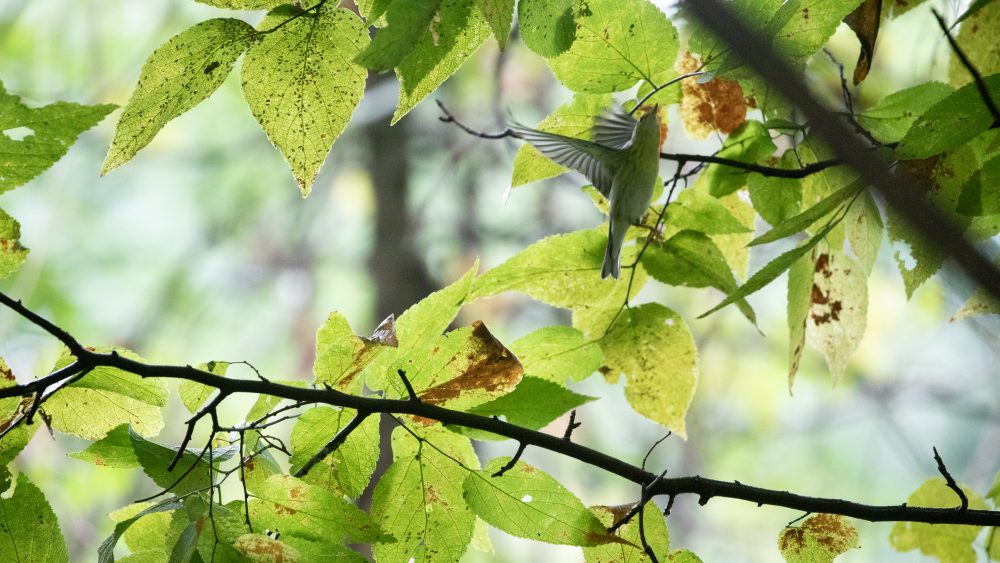
Three views of a Yellow Warbler foraging about in a beautiful tree. Unfortunately my brain is only big enough to handle a few bird species but I want to start paying more attention to the botanical elements, even if it’s in my next life…

Also in this beautiful tree were two Black-Headed Saltators.

Continuing with the magical atmosphere of the cloud forest…

It’s perhaps a good thing that the weather back home has been raw and rainy. Nothing (except maybe Bernie) is distracting me from paying attention to Nicaragua in my head.

I don’t seem to have many bird pictures from this day. Earlier in the morning before we left Montibelli, I guess I took pictures of a Melodious Blackbird bathing.

Melodious Blackbird 02-23-2016-4315

I’ll be back again with another short post. I have two more days’ worth of photographs to choose and then it will be time to pay attention to spring here.

One more photograph of the Yellow Warbler. 

I have tried to reconstruct this post as I lost much of the original.

Birding the Hood

AMRO Berwyn 5-24-15-3391A combination of unpredictable weekend weather and outright curiosity caused me to spend some time in the last few weeks walking around the block, so to speak, to see what birds were present. Other factors also pushed me over the edge: reading John Marzluff’s Welcome to Subirdia (still reading it but like three or four other books I’ve started who knows when I’ll finish it), hearing Red-Eyed Vireos singing on my way to work, seeing Rose-Breasted Grosbeaks at my feeder, and not wanting particularly to get up in the middle of the night so I could arrive somewhere farther by daybreak.

AMRO Berwyn 5-24-15-3357

American Robin, 5-24-15

Of course the Robins have been on territory for quite a while, and they pretty much act like they own the place, but they’re still fun to watch.

WODU Berwyn 4-27-15-8748

Wood Ducks, April 27, 2015

One evening I got home from work and saw the two Wood Ducks in the picture above when they landed on top of a chimney across the street. They looked as surprised to be there as I was to see them.

RBGR Berwyn 5-10-15-9739

Rose-Breasted Grosbeaks on the feeder 5-10-15

RBGR Berwyn 5-10-15-9736The three Rose-Breasted Grosbeaks sampling sunflower seeds above appeared to be an adult male, a female and a somewhat immature male (the guy sitting on top of the feeder in the first picture). Maybe the pair were showing junior his first trip north.

RBGR Berwyn 5-16-15-2133

Male Rose-Breasted Grosbeak 5-16-15

A week later there was still a male in the neighborhood. Rose-Breasted Grosbeaks breed in this area, but I think they still prefer the forest preserves.

On May 16 I found two Red-Eyed Vireos but they wouldn’t pose for pictures. However I did manage to engage the cooperative, hungry female Black-and-White Warbler below. She was just down the street from my house.

Black and White Warbler Berwyn 5-16-15-1993

Black-and-White Warbler, 5-16-15

Black and White Warbler Berwyn 5-16-15-1975

Also not far away was the Yellow Warbler below. These are not unusual species but to see them not far from the house is unusual for me, since it never occurred to me that if I was just patient and looked a little harder, I could likely find some warblers in the neighborhood.

YEWA Berwyn 5-16-15-2056

Yellow Warbler, 5-16-15

Blue Jays tend to be heard and rarely seen, but I did get good looks at this one. He probably thought I was a curious sight, walking around with binoculars and a camera.

BLJA Berwyn 5-16-15-2019

Blue Jay, 5-16-15

BLJA Berwyn 5-16-15-2017

Maybe most surprising was seeing a Hermit Thrush dash out from underneath a parked car. I had been seeing one in my neighbor’s yard, so it’s likely the same individual.

HETH Berwyn 5-16-15-2113

Hermit Thrush, 5-16-15

The flowers are all gone now from my Horse Chestnut but that day the bees were enjoying the bounty.

Bee on Horse Chestnut Berwyn 5-10-15-2154Now I’m looking forward to fall migration to see if I can repeat the experiment on those iffy mornings when I don’t necessarily feel like going “somewhere.” It’s certainly easier to take a stroll around the block, and I don’t have to worry about finding my way back to where I started.

RBGR Berwyn 5-16-15-2084Spring migration is pretty much over, although late-comers and late-leavers are still surfacing here and there. Now my focus will turn to breeding birds and, whenever possible, finishing my review of photographs from trips I’ve already taken before I set off for somewhere else…

Three Weeks: Chicago Portage

Red-Bellied Woodpecker, Chicago Portage, 5-25-15

Red-Bellied Woodpecker, Chicago Portage, 5-25-15

Back on the 10th of May I was at the Chicago Portage and counted 52 species. On the 17th of May, visiting with two friends, we counted 35 species. This afternoon, after gale winds in the morning and some rain, I went over to see what was up and counted 29 species.

Chicago Portage 5-10-15

Chicago Portage 5-10-15

Cape May Warbler, Chicago Portage, 5-10-15

Cape May Warbler, Chicago Portage, 5-10-15

Eastern Phoebe, Chicago Portage, 5-10-15

Eastern Phoebe, Chicago Portage, 5-10-15

Three weeks ago was the height of spring migration, and already by last weekend it was slowing down.

Canada Geese at the Chicago Portage 5-10-15

Canada Geese at the Chicago Portage 5-10-15

CAGO Chicago Portage 5-17-15-2361

Gosling, Chicago Portage, 5-17-15

Last week the goose family had dwindled to four goslings and today I was told by a woman I talked to on the trail that they were down to three. I did run into the geese today, but they were foraging in the grasses and I did not want to bother them, as they were pretty well hidden. So I am taking her word for it.

Red-Eyed Vireo, Chicago Portage, 5-10-15

Red-Eyed Vireo, Chicago Portage, 5-10-15

Lincoln's Sparrow, Chicago Portage, 5-10-15

Lincoln’s Sparrow, Chicago Portage, 5-10-15

Veery, 5-10-15

Veery, 5-10-15

The Red-Eyed Vireos are still present and singing, so they probably breed here, but all the thrushes except for American Robin have left, and the sparrow species as well. There was quite an influx of Veerys this year, I don’t usually see them.

WCSP Chicago Portage 5-10-15-0022

White-Crowned Sparrow, 5-10-15

GRHE Chicago Portage 5-10-15-9934

Green Heron, 5-10-15

But as the last of the sparrows were getting ready to leave, the Green Herons were returning. I believe there are two although I have not yet seen them both on the same visit. I think they also hang out at Ottawa Trail Woods which is also where we went last weekend. I have included a few pictures here are from Ottawa Trail Woods, as it is basically part of the same ecosystem.

SOSA Chicago Portage 5-10-15-9921

Solitary Sandpiper, 5-10-15

SPSA Chicago Portage 5-10-15-9908

Spotted Sandpiper, 5-10-15

Spotted at the Chicago Portage 5-10-15-9854

Spotted Sandpiper at the Chicago Portage, 5-10-15

On the 10th I saw both Spotted and Solitary Sandpipers, not on sandbars or mudflats but on dead wood in the water. The water levels were a bit lower though. I have not seen or heard any shorebirds since.

SCTA Chicago Portage 5-10-15-0145

Scarlet Tanager, 5-10-15

The Scarlet Tanager above basically flew down and sat right in front of me. I was so surprised I barely got his photograph.

YRWA Chicago Portage 5-10-15-0389

Yellow-Rumped Warbler, Myrtle female, 5-10-15 – You cannot see the yellow rump but this is the first year I have noticed they also have yellow on the crown

YEWA Chicago Portage 5-10-15-0350

Yellow Warbler, 5-10-15

The only warblers willing to pose were the most common ones. The Yellow-Rumped Warblers are gone, but the Yellow Warblers stay for the summer.

Chicago Portage 5-17-15-2312

Chicago Portage, 5-17-15

INBU Ottawa Trail 5-17-15-2379

Indigo Bunting, Ottawa Trail Woods, 5-17-15

BASW Chicago Portage 5-17-15-2243

Barn Swallows, Chicago Portage, 5-17-15

BEKI Portage 5-17-15-2256

Female Belted Kingfisher, Chicago Portage, 5-17-15

Indigo Buntings are everywhere. I have not seen the females yet but the Portage has at least four males singing on territory. I have also seen many Barn Swallows, Tree Swallows and Northern Rough-Winged Swallows.

Chicago Portage 5-25-15-3512

Chicago Portage, 5-25-15

BAOR Chicago Portage 5-25-15-3661

Baltimore Oriole, 5-25-15

GRHE Chicago Portage 5-25-15-3640

Green Heron, 5-25-15 – Not as visible today as three weeks ago.

Eastern Kingbird, Portage 5-25-15 - There were two today, sallying for prey over the slough

Eastern Kingbird, Portage 5-25-15 – There were two today, sallying for prey over the slough

TRSW Chicago Portage 5-25-15-3534

Tree Swallow, 5-25-15

Red Admiral Chicago Portage 5-25-15-3562

Red Admiral on a wildflower I have yet to identify – I should know it! But I have never seen it at the Portage before. Is this some kind of monarda?

I included the butterfly picture because to me it signals the end of spring migration and the beginning of summer, when butterflies and dragonflies vie for my attention.

WODU Chicago Portage 5-17-15-2349

Wood Duck, Ottawa Trail Woods, 5-17-15

I didn’t see any ducks today at the Portage. In years past there have always been a breeding pair of Wood Ducks, so I hope they are busy nesting.

A Mallard mom with eleven ducklings (they can't be all hers?)!

A Mallard mom with eleven ducklings (they can’t be all hers?)! (Ottawa Trail, 5-17-15)

I hope to be back soon with a short report on birds in Berwyn. I just saw a Ruby-Throated Hummingbird at my hummingbird feeders this evening, which gave me the perfect reason  to clean and refill the feeders. While I was out in my yard my neighbor appeared and told me he saw the hummer yesterday! Maybe I’ll get a picture this year before September.
Eclectic Mix

Black-Capped Donacobius

Black-Capped Donacobius

I keep coming up with lots of valid excuses for not finishing anything. I seem to have everything half-started and that of course includes the project of going through the pictures from Colombia… But I am including a few pictures here although I am nowhere near done cropping and identifying everyone.

Yellow-Green Vireo

Yellow-Green Vireo

I have succumbed to the addictive distraction of the new BirdsEye app on my phone, which I downloaded before I went to Colombia along with the collection of Colombian bird songs. I added the monthly world-birder subscription (why not?) which automatically tells me where a bird was reported if I have an Internet connection. Another feature of the app is that it allows me to enter my life list without asking all the annoying questions like what day, what time, where were you precisely when you saw this bird…while at the same time syncing with whatever has been entered in ebird…so at last count I was somewhere around 1,236 with 5 or 6 countries to go… I still don’t consider myself a lister but I am just getting curious about the tally.

Blackburnian Warbler

Blackburnian Warbler, wintering in Colombia, now thinking about Boreal Forest breeding grounds

You will eventually hear more about the home birds, but Blue the Last Budgie died of ripe old age last week and Dudlee Ann the Diamond Dove did not stop talking to me or perhaps to his memory, so I promised to get her a new budgie (not wanting to cross the line and try to find her a mate of her own species…!) and since Saturday we have been getting used to Jer (short for Jeremy or Jerry, we haven’t decided yet what’s going to stick) and he to us. He is a lovely green and yellow youngster. I wanted to go with traditional color even as the PetSmart attendant tried to push a pure white or yet another blue budgie on me.

Yellow Warbler

Yellow Warbler

While we’re on distraction, how about that weather, huh? Warm one week and cold, raining and windy the next (presently). If I were migrating I wouldn’t be venturing north at the moment.

As you may be able to tell, we ran into some familiar species like the Neotropical migrant warblers above, in addition to those not so familiar.

Speckled Tanager

Speckled Tanager

Speckled Tanager

Speckled Tanager

I promise there will be more tanagers when I get them all organized. These just snuck in with the Yellow-Green Vireo when I forgot to change the name as I processed the photos (either before or after I fell asleep?).

I leave you with two more photos of the Black-Capped Donacobius which seemed so thrilled to see us they posed for a lot of pictures, making it that much harder for me to choose!

Black-Capped Donacobius 04-2-15-5511 Black-Capped Donacobius 04-2-15-5505

A Bird in the Hand

Mourning Warbler

Mourning Warbler

As I start to go through the pictures from Costa Rica, some of the best bird images are invariably closeups of birds shown to us by Dr. Bill Hilton Jr. These were invaluable teaching moments on the part of Bill and the birds themselves.

Female Indigo Bunting

Female Indigo Bunting

Although the focus of the Operation Rubythroat trip to chayote fields in Ujarras Valley, Costa Rica, was ultimately to trap, band and release as many Ruby-Throated Hummingbirds as possible over six days in the field (more about all this in a future post), invariably, other birds sometimes got trapped in the nets. Any bird trapped was a potential teaching opportunity. Neotropical migrants were retained for banding. But after we had seen a species native to Costa Rica once at the banding table, which is where we gathered for these demonstrations, all future caught birds of that species were immediately released.

Bananaquit

Bananaquit

With field guides in hand, we studied the birds until we were able to identify the species. Bill would only help by pointing out various field marks, but he also elaborated on other features you might never see unless you had the bird in your hand. Some species were familiar, but the opportunity to study them so closely was absolutely phenomenal. For those who are squeamish about the trapping and handling, I admit I once was too, but Bill treats the birds with the utmost respect and care. You can go to a museum and study skins, but for color and presence there is nothing like a live bird.

Blue-Grey Tanager

Blue-Grey Tanager

I have seen Blue-Grey Tanagers virtually every time I have visited the American tropics. They are ubiquitous and easy to identify. But I have never seen a Blue-Grey Tanager like this before.Blue-Grey Tanager 11-10-14-9026

The afternoons invariably turned cloudy and sometimes rainy, which made taking pictures of other birds anything from challenging to impossible. Nevertheless I managed to get some good photographs, and I will be back with many more.

These are just a sampling of some of the earliest birds we saw in the hand, and I will be back with others, as well as eventually adding pictures to my flickr page.

House Wren - the same species, but not the same population we have at home

House Wren – the same species, but not the same population we have at home

As for the timing of this post, I woke up in the middle of the night thinking about the past week. Sleep has been erratic at best, and I’ve been emotionally exhausted. I went to bed early last night, so I guess it’s not altogether strange that I am awake at 3:00 a.m. Trying to go back to sleep I started reviewing the past week, and that wasn’t all good, so I shifted my thoughts to things I want to accomplish, which woke me up even more. When I started thinking about this post which I started to work on last night before I conked out on the futon, it seemed prudent to just wake up and finish the post. I apologize for any detectible grogginess. I think I’ll grab a drink of water and go back to sleep for a couple hours.

Yellow Warbler

Yellow Warbler

Yellow Warblers and Tennessee Warblers were the most-frequently-caught neotropical migrants. At some point, we had caught so many Tennessee Warblers, we released them from the nets without banding them.

Tennesee Warbler

Tennessee Warbler

Tyrant Flycatchers can be confusing.

A Yellow-Bellied Elaenia, looking every inch the Tyrant Flycatcher it is

A Yellow-Bellied Elaenia, looking every inch the Tyrant Flycatcher it is

Yellow-Bellied Elaenia

Yellow-Bellied Elaenia

One more of the Blue-Grey Tanager, up close and personal.

Blue-Grey Tanager 11-10-14-9068


Spring Bird Count

Yellow Warbler, McKee Marsh

Yellow Warbler, McKee Marsh

Saturday was a beautiful day for a bird count. Even though the sun was often shining in our eyes, we saw some great birds at McKee Marsh which is part of the Blackwell Forest Preserve in DuPage County, Illinois.

Baltimore Oriole

Baltimore Oriole

Even though much of the time the birds were too far away or backlit. it was still worth it to take photographs to document the effort.

Chestnut-Sided Warbler

Chestnut-Sided Warbler

In one case, the photographs helped clarify an ID. We couldn’t see the eye-ring on this bird below, and called it a female Mourning Warbler…

Nashville Warbler

Nashville Warbler

Nashville Warbler

But the photographs taken as the bird moved around in the top of the tree proved the bird did indeed have an eye-ring, and so it is a Nashville Warbler.

Although I have done the Christmas Bird Count for years, this was my first Spring Bird Count. I don’t exactly know why I never did one before, but I suspect I was never asked before this year and I never volunteered because Saturday mornings still sometimes carry that sacred sleep-for-the-week designation after an exhausting work week.

Identifying the Plastic Bag Bird

Identifying the Plastic Bag Bird

But this spring has been so long in coming, it’s hard to resist getting out every chance I get, and so far the last two weekends have been rescheduled around birding.

Eastern Kingbird

Eastern Kingbird

Finally we are warming up with spring-like weather and the trees are starting to leaf.

Scarlet Tanager

Scarlet Tanager

Common Yellow-Throat

Common Yellow-Throat

We split into two groups to cover different areas. I’m not sure if my group had Bay-Breasted Warbler on the list, but I found the female below in my photographs. Sometimes it seems prudent to focus on capturing an image before the bird disappears and figuring it out later. I know there are purists who look down on this method, but the photographs help me pay attention to detail I might miss while trying to follow the bird’s movements with my binoculars.

Bay-Breasted Warbler

Bay-Breasted Warbler

The other half of the group likely saw more waterfowl than we did when they took off in the direction of the marsh (we headed towards the woods), but at some point we came around to open water and a flotilla of American Coots seemed to appear suddenly out of nowhere.

American Coots

American Coots

Busy Red-Tailed Hawks were presnet too. One was carrying nesting material in its talons, and another had what appeared to be a snake.

Red-Tailed Hawk with Nesting Material

Red-Tailed Hawk with Nesting Material

Red-Tailed Hawk with Snake

Red-Tailed Hawk with Snake

Toward the end of the morning we found a marshy area which had a few shorebirds. Compare the similarities and differences between Lesser Yellowlegs and Solitary Sandpiper.

Lesser Yellowlegs

Lesser Yellowlegs

Solitary Sandpiper

Solitary Sandpiper

We stopped at a shelter with picnic tables for lunch, and there were Barn Swallows waiting patiently on the grill for us to finish getting settled so they could get back to tending their nest.

Barn Swallows

Barn Swallows

Barn Swallow Nest McKee 5-10-14.jpg-1259I managed to do only the first half day of the count. But I will be better-prepared next year, maybe even take off from work the afternoon or the day before so it will be easier to get up early and last all day.

When I got home after grocery shopping, I took a nap. Later in the afternoon after I got up, I noticed White-Crowned Sparrows in the yard and decided to take my chances at photographing one of them.

White-Crowned Sparrow - Yard Bird

White-Crowned Sparrow – Yard Bird

After taking pictures of one foraging on the ground by the feeders as I sat still on a bench, a White-Crowned Sparrow landed in the tree right in front of me and posed.

White-Crowned Sparrow

White-Crowned Sparrow

Yesterday when I returned from more errands, there were four White-Crowned Sparrows bathing in the bird baths. I’m glad they like my bird-and-breakfast. This morning however there are no signs of them so they may have finally decided to go north to their breeding grounds.

Photos of more spring visitors to come soon. Click on any picture to see an enlargement. 🙂

A Bird in the Hand…

White-Eyed Vireo

White-Eyed Vireo

If anyone knows how much birds hate to be handled, it’s me. My indoor birds remind me of this constantly, and I don’t pick them up unless I absolutely have to. I’m not trying to offend anyone by posting these pictures.

Ovenbird

Ovenbird

But before I get on to writing in a future post about the primary reason for why I was in Belize–which was to be part of a group of 7 volunteers that helped Operation Rubythroat set up mist nets to catch and band Ruby-Throated Hummingbirds and transcribe banding data…and all the reasons why they are doing this…

Black-and-White Warbler

Black-and-White Warbler

I wanted to share some pictures of other birds banded that I never could have seen so closely.

Hooded Warbler

Hooded Warbler

Suffice it to say I learned a lot in 8 days.

Northern Parula

Northern Parula

For those of you still uncomfortable with the handling of the birds, we checked the nets constantly, moving birds still captive and waiting to be banded or shown out of the sunlight, and they survived well. I believe there was one casualty in a net on our last day, which was cut short due to inclement weather. I suppose the biggest testimonial to survival was the birds, already banded, recaptured from previous years.

Northern Waterthrush

Northern Waterthrush

Louisiana Waterthrush

Louisiana Waterthrush

The Northern Waterthrush was one of perhaps three or more we banded, but the Louisiana Waterthrush was the first one ever seen at Crooked Tree in Belize. See if you can tell the difference this close up. The distinguishing features are still subtle, but the Northern looks more “yellow” than the Louisiana and has denser streaking.

Tennessee Warbler banded 3-9-14

Tennessee Warbler banded 3-9-14

Tennessee Warbler banded 3-10-14

Tennessee Warbler banded 3-10-14

Compare the difference between these two Tennessee Warbler individuals. The one above is a male not finished with his molt and the one below is most likely a female. Banders can consult The Identification Guide to North American Birds: Part 1 and Part 2 by Peter Pyle to help distinguish between the sexes by length of the wing and tail feathers.

Male Yellow Warbler

Male Yellow Warbler

You may have noticed that all the migrant warblers are not quite as decked out as they will be by the time they reach us. This Yellow Warbler was just developing his rufous streaks.

Clay-Colored Thrush, National Bird of Costa Rica

Clay-Colored Thrush, National Bird of Costa Rica

The last bird on this post is not a neotropical migrant and therefore was not banded. But I thought it best expressed any indignation at being handled, for all the other birds banded on this page. And I probably never would have seen the beautiful streaking on its throat, in the field.

Paul Douglas Part II

Song Sparrow

Song Sparrow

No surprise there were many Song Sparrows singing on Sunday, so while I can’t be sure whether the recorded song belongs to the bird above, it could be.

Savannah Sparrow

Savannah Sparrow

There were several Savannah Sparrows too, but traffic noise made it difficult to record them singing. I managed to get a little song here.

Northern Rough-Winged Swallows

Northern Rough-Winged Swallows

Early into the walk, I saw these two Northern Rough-Winged Swallows resting.

Double-Crested Cormorant

Double-Crested Cormorant

While several Great Blue Herons and finally one Great Egret flew over, I liked this Double-Crested Cormorant, perhaps because it’s easier to get away with a silhouette and less detail.

Dragonfly

Dragonfly

I think the Dragonfly above is a Female Widow Skimmer, but I could be wrong, so if there are any dragonfly enthusiasts out there, please weigh in!

Cabbage White

Cabbage White

Cabbage Whites seem to be the dominant butterfly species of the week. Up until last week I seemed to be seeing Mourning Cloaks frequently.

Yellow Warbler

Yellow Warbler

This Yellow Warbler was singing but I didn’t manage to get a decent recording. I only have two hands, and while I sometimes try to balance the camera in one hand and the recorder in the other, it’s usually futile, not to mention I wind up recording a lot of shutter clicks. The warblers were moving fast, and they don’t sing continuously. The photo option won out.

Brown Thrasher

Brown Thrasher

As far as I can tell, the Brown Thrasher above is a juvenile bird.

Bobolink

Bobolink

Near the end of my walk, I ventured way down to the end of the parking lot to see if anything different was going on the opposite side of the marsh which I had walked past on the trail. It was getting hotter and later so I did not have much hope for anything new. Then, as I turned to go back toward my car, I realized I was hearing birds in the grassland directly beside me. So I stopped to listen, and heard the Bobolink above, a Meadowlark which I didn’t see until later, and what would prove to be a Grasshopper Sparrow.

Female Bobolink

Female Bobolink

I have not seen many Female Bobolinks and so was stumped for a while by the above image, but after a lengthy process of elimination it occurred to me who she was.

Eastern Meadowlark

Eastern Meadowlark

The Meadowlark finally showed up, although he would not come close enough for a good picture.

Grasshopper Sparrow

Grasshopper Sparrow

And here is my surprise bird, the Grasshopper Sparrow. I have longed to see this bird for years. They are endangered in Illinois, so it is always a thrill to find one. And to see one, who seemed to be so comfortable sitting out there…maybe he’s a youngster. Anyway, below is a recording of all three birds and probably a few more singing along.

Bobolink

Bobolink

Confusing Fall Warbler

Mystery Bird

I went downtown early yesterday to see what the wind blew in. There were predictably a lot of sparrows, although most evaded my lens. However I ran into this warbler at the Lurie Gardens in Millennium Park and took several pictures without really thinking about it until I downloaded them and started getting confused. So I drag out the books: The Sibley Guide to Birds, Warblers of the Americas, the Peterson Field Guides Warblers.  There is such a thing as too much information.

There are a lot of drab-looking birds with yellow on the vent and throat this time of year. Well, at least a few came to mind. Could this be a female Common Yellowthroat?

Or even a juvenile Yellow Warbler? Wait, brownish maybe, but not all the feathers are edged in yellow…

Too much of an eye-ring for a Yellow. But it doesn’t look like a Nashville either… and then, the bird gave me my best clue in a subsequent frame.

The only warbler with yellow in the tail is…a Redstart. This is a first year Female American Redstart. I’ve never seen one with hardly any color on the wing before. Wow. Learn something every time I go out. I think I’ve been paying closer attention this fall.

First-year Female American Redstart

Now that smirky little face makes sense to me…I recognize that look. How could I ever forget this is a Redstart? The gizz starts to fill in immediately. But just in case I forget, she reminded me one more time.

Breeding birds at the Chicago Portage

Young Rabbit

I dropped by the Portage early this morning trying to beat the heat – we went up to 97 degrees today. After I was greeted by this rabbit, I saw 39 species. Not remarkable, but not bad given the strange weather we’ve been having. There has been no rain lately, so the water level is way down at the Portage and the nearby Des Plaines River.

But breeding birds have returned, and I managed to get some pictures of a few. Almost from the very beginning I heard Red-Bellied Woodpeckers calling, so perhaps it was inevitable that one would be available for a photograph.

Red-Bellied Woodpecker

The House Wrens are back in full force too.

House Wren

A female Wood Duck sat on a log with her seven ducklings. I imagine the youngest was staying closest to mama.

A Great Blue Heron flew over faster than I could get its likeness clearly. But down below, one of the two Green Herons that I have seen here every summer was trying to stay cool.

Green Heron

Indigo Buntings were singing everywhere, and doing their best to elude the camera. Here’s one not completely hidden.

Male Indigo Bunting

I have been awaiting the return of Cedar Waxwings.

Cedar Waxwings

Song Sparrows are on their territories, singing, of course.

Song Sparrow

It’s sad when I think of this beautiful Yellow Warbler…

Yellow Warbler

being a favorite prey species of the female Brown-Headed Cowbird. Cowbirds lay their eggs in other birds’ nests so the other birds can raise them, often at the peril of their own offspring. Note how this Cowbird matched the twig she’s behind so well, it looks like part of her.

Female Brown-Headed Cowbird

On my way out I stopped on the north bridge, where I saw the other Green Heron in the distance, but my attention was drawn to two Great-Crested Flycatchers setting up housekeeping. Look carefully and you can see the male sitting below left and the female hanging out from a cavity at the right of the frame.

Great-Crested Flycatchers

The male flycatcher remained on lookout while his mate investigated the cavity in the dead tree for nesting possibilities.

Great-Crested Flycatcher