Breeding Birds

PRWA IDSP 05-29-2016-2349Passerine migration is over for all practical purposes. Birds have taken to their breeding grounds and are getting down to business. Here are some photos from the last couple weekends, starting with the Prothonotary Warbler above, seen at Indiana Dunes State Park.

Yellow Warblers are common summer residents around here. The one on the left above was hanging out at IDSP and the one on the right was the first bird I encountered at the Chicago Portage last Sunday on a late, gloomy morning.

Even with a lot more light going on at the Indiana location, backlighting was a constant challenge. Above, compare an adult male Scarlet Tanager on the left with what was determined to be a first-year male of the same species.

There were several Red-Headed Woodpeckers at IDSP. I don’t see them too often so they were a nice surprise.

Perhaps the most exciting find was the hardest to photograph. Above is a male Acadian Flycatcher, not far from where his mate is sitting on a cleverly positioned nest underneath a leaf.

Two looks at Eastern Wood-Pewees above.

We had two Pileated Woodpeckers, and the one above was in the best light but this species still eludes my camera, monster lens and all.

Cedar Waxwings above, at IDSP on the left and the other one from the Chicago Portage.

The Portage had at least four male Baltimore Orioles, and I was able to spot a female not entirely hidden on the right, above.

To add to my list of not-often-seen woodpeckers, I had a Hairy Woodpecker at the Portage. Usually I see Downies everywhere, but this was the only woodpecker that I was able to photograph.

Tree Swallows were abundant. And below, it was a good day for turtles at the Portage.

And for Mallard ducklings…looking almost full grown.

Below, a newly fledged American Robin and an adult.

One more look at the Red-Headed Woodpecker.

RHWP IDSP 5-29-2016-2453I’ve been busy writing silly songs, working, gardening and starting to get ready for a trip that will begin on July 1. I am now glad I inadvertently planned to be away before the Democratic National Convention. I’m growing weary of the daily drama and it will be good for my head to be totally oblivious to politics for a couple weeks.

I’ll try to get back to this page a few times before I go. Thanks for stopping by!


Spring Bird Count

EATO McKee Spring Ct 5-7-2016-9567

Eastern Towhee

Here are some pictures from last Saturday’s Spring Bird Count. I did the morning half at McKee Marsh. I have yet to manage lasting long enough to do the afternoon half at Blackwell. It’s hard to get up at 3:00 AM on Saturday after working all week. Maybe next year I can take some vacation days to coincide with migration.

There was still not much going on with warblers, although the storms we have had since have caused considerable fallout along the lakefront and likely this area too.

It was a pleasant surprise to get to the observation deck over the largest portion of water and see a contented looking Bald Eagle, who later reappeared in flight.

BGGN McKee Spring Ct 5-7-2016-9225

Blue-Gray Gnatcatcher

Another Blue-Gray Gnatcatcher on yet another gray day. And there were more gray birds in and around the water…most everything was too far away to focus.

Tree Swallows were abundant.

And it’s always special to see the return of Bobolinks.

Red-Winged Blackbirds are getting down to business.

We were lucky to accomplish as much as we did in spite of periods of rain. The Song Sparrow below did not let the lack of sunshine dampen his song.

SOSP McKee Spring Ct 5-7-2016-9426Except for brief warm spells, the weather is unseasonably cool, but the rain has caused the trees to leaf out in abundance, offering cover for many migrants while making them that much harder to see! I’ll be back soon with a small migration report from downtown Chicago.

Another Goose Lake

YHBL Goose Lake NA 7-12-15-7145

Yellow-Headed Blackbird, Goose Lake Conservation Area, McHenry County, Illinois

Somewhat ironically, shortly after I visited Goose Lake Prairie in Grundy County, the local list-serve was on fire about another Goose Lake Conservation Area in McHenry County, not far from the Wisconsin border, where Yellow-Headed Blackbirds and Black Terns were easy to find. Both species are rare in this area. Reading constant reports about it all last week while at work, I decided if the threat of rain was not severe I would just have to drive to this Goose Lake Natural Area on Sunday morning. I had several days to talk myself into getting up no later than 3:30 AM so I could leave the house by 6:00, seeing as how it would take me over an hour and a half to get there.

I plugged a theoretical address into the GPS on my car and got within striking distance. After that it was easy enough to find and I parked in a tiny parking lot that fits about three small cars. No sooner did I park than I was joined by another Prius driver. Diane had her camera with her too and we birded the trail together.

YHBL Goose Lake NA 7-12-15-7156

There is a Goose Lake on the map but as far as I can tell there is no public access. Thus I saw no lake and no geese. However there was more to explore (we perhaps went in 3/4 of a mile) on a 7-mile trail and some day I will have to make a return trip.

Hebron Trail MapThe Hebron Trail has been made from an abandoned railroad bed, specifically the Kenosha Division Railroad which made its last run in 1939. Just off the parking lot where the wide gravel trail starts is a wooded area that was brimming with hungry mosquitoes. We had been forewarned but it made stopping to look at anything we heard prohibitive. Perhaps after a quarter of a mile we were out of the woods and into the marshy area which was miraculously pretty bug-free. It was cloudy but it did not rain.

Ground Squirrel

Ground Squirrel – I’m not sure I’ve seen these before!

There were at least a dozen Yellow-Headed Blackbirds, and when they became active they made dramatic displays.

YHBL Goose Lake NA 7-12-15-7157

The other species we were excited to see was Black Tern. Although not less visible, they were very difficult to photograph from far away, in the poor light, and they never sat still.

Black Tern

Black Tern

I never thought of Red-Winged Blackbirds as small before but compared to the Yellow-headed Blackbirds they are dainty looking.

RWBL Goose Lake NA 7-12-15-7042Plenty going on with other breeders too. Like the Tree Swallow condominium tree below, and then when a Green Heron decided to sit on one of its branches the Tree Swallows started mobbing it.

TRSW Condo Goose Lake NA 7-12-15-7108GRHE Harrassed Goose Lake NA 7-12-15-7307GRHE Goose Lake NA 7-12-15-7276

Song Sparrows were singing everywhere. Also many Marsh Wrens but I did not get a picture of one suitable to post.

SOSP Goose Lake NA 7-12-15-6888There were so many Common Yellowthroats they could have had a singing competition.

COYT Goose Lake NA 7-12-15-6912One Common Yellowthroat male was feeding its foster child, the Brown-Headed Cowbird juvenile below, but it was too hard to get the actual feeding shot with all the branches in the way.

BHCO and COYT Goose Lake NA 7-12-15-6951My only regret is that the Yellow-Headed Blackbirds were not singing, because it would have been a wonderful sound to reproduce for you here. Maybe next year I can get up here when they’re setting up territories.

YHBL Goose Lake NA 7-12-15-7130

Yellow-Headed Blackbird

It’s hard to believe but the Red-Winged Blackbirds were nearly silent as well. Definitely the juveniles below had nothing to say.

RWBL juveniles Goose Lake NA 7-12-15-7407

It took me two hours to get back home. There is no easy way to get to this place, but I guess that’s what makes it a favorite for some birds we rarely see.

Goose Lake NA 7-12-15-7389

Three Weeks: Chicago Portage

Red-Bellied Woodpecker, Chicago Portage, 5-25-15

Red-Bellied Woodpecker, Chicago Portage, 5-25-15

Back on the 10th of May I was at the Chicago Portage and counted 52 species. On the 17th of May, visiting with two friends, we counted 35 species. This afternoon, after gale winds in the morning and some rain, I went over to see what was up and counted 29 species.

Chicago Portage 5-10-15

Chicago Portage 5-10-15

Cape May Warbler, Chicago Portage, 5-10-15

Cape May Warbler, Chicago Portage, 5-10-15

Eastern Phoebe, Chicago Portage, 5-10-15

Eastern Phoebe, Chicago Portage, 5-10-15

Three weeks ago was the height of spring migration, and already by last weekend it was slowing down.

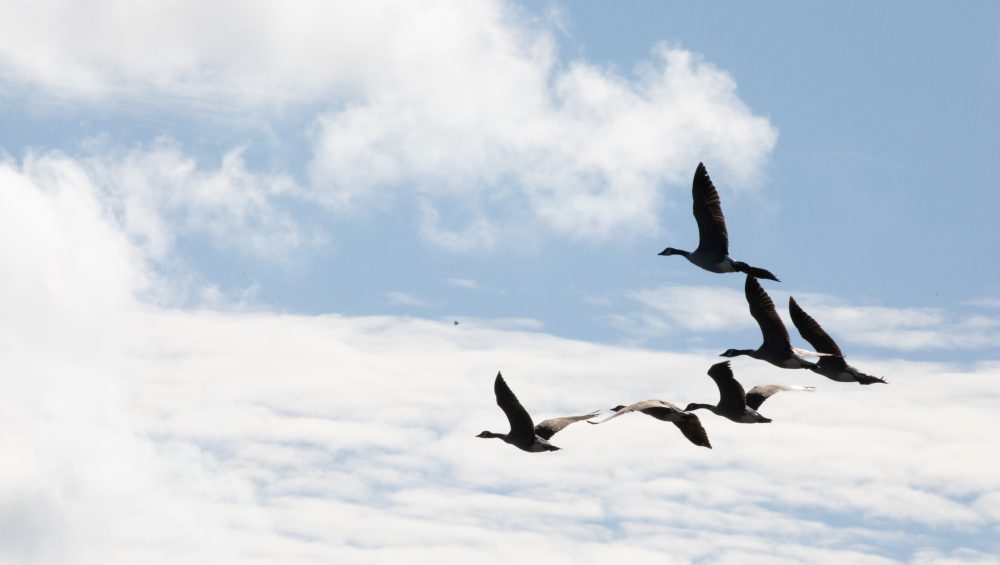
Canada Geese at the Chicago Portage 5-10-15

Canada Geese at the Chicago Portage 5-10-15

CAGO Chicago Portage 5-17-15-2361

Gosling, Chicago Portage, 5-17-15

Last week the goose family had dwindled to four goslings and today I was told by a woman I talked to on the trail that they were down to three. I did run into the geese today, but they were foraging in the grasses and I did not want to bother them, as they were pretty well hidden. So I am taking her word for it.

Red-Eyed Vireo, Chicago Portage, 5-10-15

Red-Eyed Vireo, Chicago Portage, 5-10-15

Lincoln's Sparrow, Chicago Portage, 5-10-15

Lincoln’s Sparrow, Chicago Portage, 5-10-15

Veery, 5-10-15

Veery, 5-10-15

The Red-Eyed Vireos are still present and singing, so they probably breed here, but all the thrushes except for American Robin have left, and the sparrow species as well. There was quite an influx of Veerys this year, I don’t usually see them.

WCSP Chicago Portage 5-10-15-0022

White-Crowned Sparrow, 5-10-15

GRHE Chicago Portage 5-10-15-9934

Green Heron, 5-10-15

But as the last of the sparrows were getting ready to leave, the Green Herons were returning. I believe there are two although I have not yet seen them both on the same visit. I think they also hang out at Ottawa Trail Woods which is also where we went last weekend. I have included a few pictures here are from Ottawa Trail Woods, as it is basically part of the same ecosystem.

SOSA Chicago Portage 5-10-15-9921

Solitary Sandpiper, 5-10-15

SPSA Chicago Portage 5-10-15-9908

Spotted Sandpiper, 5-10-15

Spotted at the Chicago Portage 5-10-15-9854

Spotted Sandpiper at the Chicago Portage, 5-10-15

On the 10th I saw both Spotted and Solitary Sandpipers, not on sandbars or mudflats but on dead wood in the water. The water levels were a bit lower though. I have not seen or heard any shorebirds since.

SCTA Chicago Portage 5-10-15-0145

Scarlet Tanager, 5-10-15

The Scarlet Tanager above basically flew down and sat right in front of me. I was so surprised I barely got his photograph.

YRWA Chicago Portage 5-10-15-0389

Yellow-Rumped Warbler, Myrtle female, 5-10-15 – You cannot see the yellow rump but this is the first year I have noticed they also have yellow on the crown

YEWA Chicago Portage 5-10-15-0350

Yellow Warbler, 5-10-15

The only warblers willing to pose were the most common ones. The Yellow-Rumped Warblers are gone, but the Yellow Warblers stay for the summer.

Chicago Portage 5-17-15-2312

Chicago Portage, 5-17-15

INBU Ottawa Trail 5-17-15-2379

Indigo Bunting, Ottawa Trail Woods, 5-17-15

BASW Chicago Portage 5-17-15-2243

Barn Swallows, Chicago Portage, 5-17-15

BEKI Portage 5-17-15-2256

Female Belted Kingfisher, Chicago Portage, 5-17-15

Indigo Buntings are everywhere. I have not seen the females yet but the Portage has at least four males singing on territory. I have also seen many Barn Swallows, Tree Swallows and Northern Rough-Winged Swallows.

Chicago Portage 5-25-15-3512

Chicago Portage, 5-25-15

BAOR Chicago Portage 5-25-15-3661

Baltimore Oriole, 5-25-15

GRHE Chicago Portage 5-25-15-3640

Green Heron, 5-25-15 – Not as visible today as three weeks ago.

Eastern Kingbird, Portage 5-25-15 - There were two today, sallying for prey over the slough

Eastern Kingbird, Portage 5-25-15 – There were two today, sallying for prey over the slough

TRSW Chicago Portage 5-25-15-3534

Tree Swallow, 5-25-15

Red Admiral Chicago Portage 5-25-15-3562

Red Admiral on a wildflower I have yet to identify – I should know it! But I have never seen it at the Portage before. Is this some kind of monarda?

I included the butterfly picture because to me it signals the end of spring migration and the beginning of summer, when butterflies and dragonflies vie for my attention.

WODU Chicago Portage 5-17-15-2349

Wood Duck, Ottawa Trail Woods, 5-17-15

I didn’t see any ducks today at the Portage. In years past there have always been a breeding pair of Wood Ducks, so I hope they are busy nesting.

A Mallard mom with eleven ducklings (they can't be all hers?)!

A Mallard mom with eleven ducklings (they can’t be all hers?)! (Ottawa Trail, 5-17-15)

I hope to be back soon with a short report on birds in Berwyn. I just saw a Ruby-Throated Hummingbird at my hummingbird feeders this evening, which gave me the perfect reason  to clean and refill the feeders. While I was out in my yard my neighbor appeared and told me he saw the hummer yesterday! Maybe I’ll get a picture this year before September.

Tri-County Revisited

Barn Swallow

Barn Swallow

Here are a few more pictures from two weeks ago that I never got around to. Like the one above, where the Barn Swallows were close to the bridge, but I was not tall enough to take a complete picture. (Age creeps up slowly until you notice… I don’t feel shorter, but certain things are suddenly out of reach!)

I did get a shot of a couple nestlings in their shelter mud nest.

Barn Swallow Nestlings IMG_4081_1

This Gray Catbird could not have picked a less colorful background…

Gray Catbird

Gray Catbird

or the Mourning Dove below. A lot of gray tones going on here. But the morning light gives the dove its pinkish color anyway.

Mourning Dove

Mourning Dove

I confess I am presently too lazy to figure out this wildflower. If you know this blossom, please chime in.

Wildflower

Wildflower

Widow Skimmers are pretty common, though. Enough to be readily identified.

Male Widow Skimmer Dragonfly

Male Widow Skimmer Dragonfly

Then there was the Red-Winged Blackbird that took on the Red-Tailed Hawk.

Red Tail with RWBB IMG_4348_1

The hawk was not happy.

Red-Tail with RWBB IMG_4347_1

Click on the pictures if you want to see them larger (I just figured out how to do this, it’s only been 2 years).

Red Tail with RWBB IMG_4353_1

Even this Tree Swallow, which is normally quite blue-looking, looks gray here as it naps.

Tree Swallow taking a nap

Tree Swallow taking a nap

To make identification of Empidonax flycatchers easier on us, ebird allows us to check off “Willow-Alder” instead of making it definitely one or the other. While I heard a Willow and I believe this is probably a Willow, I’m not so sure because I did not see it in conjunction with hearing its call.

Willow-Alder Flycatcher

Willow-Alder Flycatcher

And the most noble gray bird is also blue…and always a welcome sight.

Great Blue Heron

Great Blue Heron

More to come from the field soon. I also have some recordings coming up. But tomorrow’s early rise calls.

Meanwhile Back at the Portage

White-Tailed Deer

White-Tailed Deer

I visited the Chicago Portage on Sunday. Not as early as I wished, but I went out Saturday night and couldn’t get up before dawn. While I suspected by 8:00 a.m. I missed quite a bit not being there at sunrise, it was still nice to hear a lot of birds and even see a few now and then. The surprises were more the omissions: only a few Canada Geese flying over, no ducklings or goslings, not one Mourning Dove, no raptors. Yet the place was brimming with life. The deer came closer to the lens than most of the birds.

Cedar Waxwing

Cedar Waxwing

Cedar Waxwings often appear in flocks. But this was the only one I saw.

Tree Swallow

Tree Swallow

This Tree Swallow let me take his picture while he caught a breath in between sallies for insects.

Song Sparrow

Song Sparrow

This Song Sparrow was… not singing.

Gray Catbird

Gray Catbird

But this Catbird was. Actually, the song clip below is from another Gray Catbird that serenaded me but never showed his face.

Everything is so green, including the carpet of duck weed, after all the rain.

Chicago Portage IMG_2468_1

Painted Turtles were sunning themselves here and there.

Painted Turtles

Painted Turtles

Deadly Nightshade, also known as Beladonna, is in full bloom. I pull a lot of this stuff out of my yard every year, even if the bumblebees seems to like its pretty flowers.

Deadly Nightshade and the Bumblebee

Deadly Nightshade and the Bumblebee

Most cooperative was this beautiful damselfly, an Ebony Jewelwing.

Ebony Jewelwing

Ebony Jewelwing

I start out counting Red-Winged Blackbirds and then give up. It’s impossible to tell if this is the same one I heard over there..I estimated the entire preserve had about 40 total.

RWBB IMG_2456_1

And below is a fledgling Red-Winged Blackbird, stuck on a dry spot, waiting to see what happens next.

RWBB Fledgling IMG_2606_1

I might not have seen the Green Heron below if a Red-Winged Blackbird had not chased him into this tree.

Green Heron

Green Heron

This sole female Mallard Duck looks like she’s got a secret. Maybe I’ll see ducklings on my next visit.

Female Mallard IMG_2658_1

Portage IMG_2643_1

It’s hard to believe this little preserve, sandwiched in between the Chicago Metropolitan Water District, railroad tracks and an Interstate, has room for young deer.

WT Deer IMG_2605_1

WT Deer Young Buck IMG_2618_1

A female and a young buck, just beginning to grow antlers. Growing season for everything.

After the Flood: Part One

White-Tailed Deer

White-Tailed Deer, Ottawa Trail Woods

The weather has suddenly changed to hot, humid and sunny, and with it the landscape, but I don’t want to forget the last two weeks entirely as all the water has officially taken us off the drought list.

Flooding IMG_5793_1

So two weekends ago, I went to Ottawa Trail Woods after having been detoured in that direction, trying to get to the Chicago Portage. These pictures are some that I took on that expedition.

Yellow-Rumped Warbler

Yellow-Rumped Warbler

Yellow-Rumped Warblers were everywhere, enjoying the flooding. The trail was intact, but there was water everywhere else! There were also still a lot of Kinglets.

Golden-Crowned Kinglet

Golden-Crowned Kinglet

It was a great day for swallows, and I managed to get some flight pictures, which I always consider a worthy challenge. Both Northern Rough-Winged Swallows…

Northern Rough-Winged Swallow

Northern Rough-Winged Swallow

Northern RW Swallow IMG_5985_1

and Tree Swallows

Tree Swallow IMG_5964_1

Tree Swallow

Tree Swallows IMG_5955_1

Tree Swallow IMG_5953_1

Tree Swallow IMG_5945_1

Sapsuckers have mostly moved on, but they can still be seen here and there. The one below is a brightly-colored male. You can almost see the yellow on the belly…?

Yellow-Bellied Sapsucker

Yellow-Bellied Sapsucker

Always room for a Black-Capped Chickadee and another Yellow-Rumped Warbler.

BC Chickadee IMG_6056_1

YR Warbler IMG_5888_1

And this Robin looks relieved to have a dry spot to sit in.

American Robin IMG_6105_1

Perhaps my bird of the day was the Blue-Gray Gnatcatcher. With no leaves up high in the trees to hide in, he was very accessible for a second or two.

Blue-Gray Gnatcatcher IMG_5897_1

Blue-Gray Gnatcatcher

I look forward to visiting here again, when it’s a little less flooded…

Flooding IMG_5991_1

Easter Sunday Birding

This morning was beautifully sunny and clear, although a brisk north wind kept things rather chilly most of the morning. I started out kind of late, around 9:00 a.m., and went to the Chicago Portage to see if anything had changed.

Tree Swallow

There were more Tree Swallows than a couple weeks ago, perhaps a dozen or so. But there were no new birds. I had hoped to see at least a Yellow-Rumped Warbler, and maybe a few different sparrows. Maybe the wind was blowing from the wrong direction to bring in new migrants. I managed to get a few nice photos of the current residents anyway.

A couple Canada Geese got into a disagreement which caused the water to fly.

A Northern Cardinal was singing to the right of the path.

I heard Song Sparrows singing and finally found one.

And of course there were a lot of robins.

Around midday it was much warmer but the wind picked up. I went to McGinnis Slough to see some different birds. There were several species shared between the two locations such as Red-Winged Blackbirds, Black-Capped Chickadees, American Robins, Tree Swallows, House Finches and Mallards. Generally McGinnis has more water birds, although for the most part they are hard to photograph because they are usually too far away.

On the other hand, this Red-Winged Blackbird was more cooperative than the ones at the Portage.

I got lucky with this Great Blue Heron, one of seven I saw fishing in various shallows.

Great Blue Heron

There were perhaps 250-275 American Coots. This one was swimming around with something wrapped around its body. Looks like a water plant pulled up from a dive.

There were 20 or more Pied-Billed Grebes but they were too far away to photograph. As it is this Horned Grebe eating a fish it had caught is barely recognizable.

This might be the year I figure out digiscoping. Or not. There will always be birds too far away.