I parked in Lyons on September 27th and got out of the car, assembled my gear, and started walking barely a few steps when I looked up and saw this juvenile Osprey perched in a dead tree right above me. That was an auspicious beginning to a nice walk.
I crossed the bridge after not seeing any other birds on that side of the river. A fellow blogger, Tootlepedal, has suggested my last mention of the bridge was illegal without a photograph of it, so I did my best to frame it, but between my big lens and no way to get far enough away to capture it at a distance, this was the best I could do. I will keep trying, but I haven’t found this bridge’s aesthetic value yet…
Right off the bridge there has been a Great Egret, this time on the rocks that have been exposed due to the lack of water in the Des Plaines River.
The Great Blue Heron close to it was in a much wetter-looking spot. Actually this is right around the spot where there once was the Hofmann Dam, which has been removed.
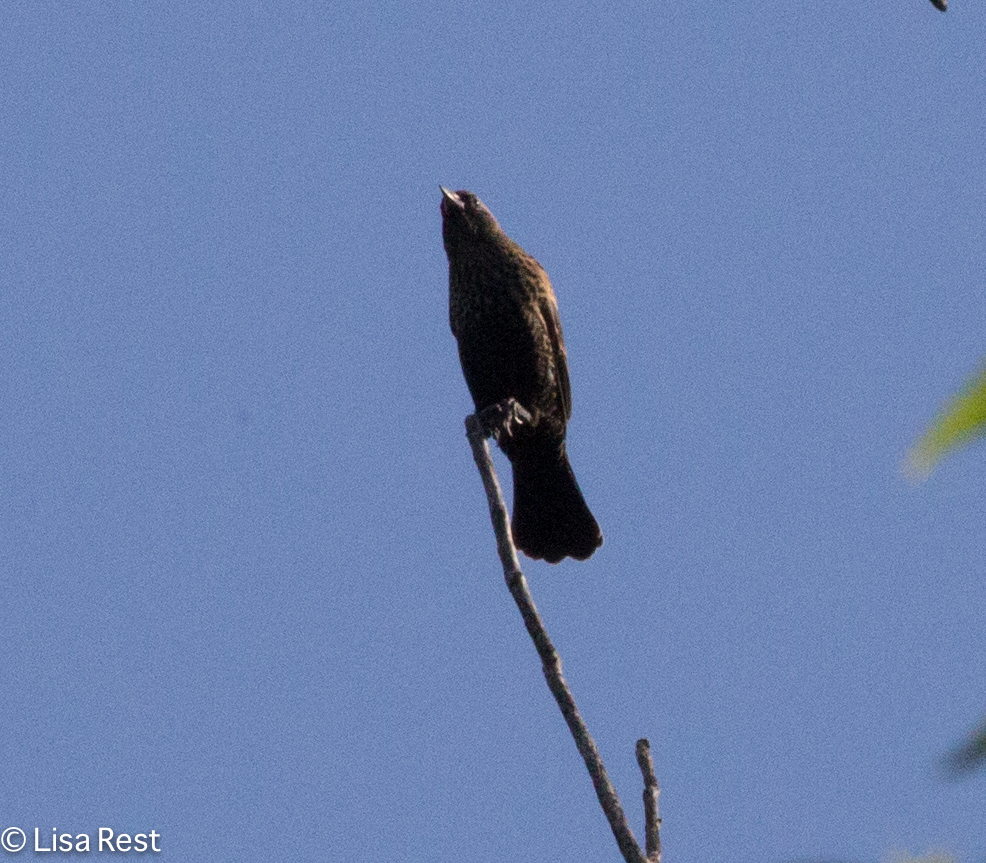
The Red-winged Blackbird below could barely keep his perch.
Magnolia Warblers were still visible and this one was posing.
A handsome Turkey Vulture flew over, enhanced by a clear sky.
Two different species with the same color palette: they were both in the pokeweed.
It’s somewhat comforting to know the water is still deep enough in a few places for Double-Crested Cormorants.
I was very happy to see a Golden-crowned Kinglet well. They usually don’t sit still for too long.
A couple more of the juvenile Osprey. There were actually two of them flying around but I didn’t get photos of the action.
I went back two days later and got more pictures that I still have to process. Migration is slowing down a little bit, but I’ve also had a lot of work to do. I will be back with another report soon.
I am happy to note that we are finally getting some rain. It’s not going to make much of a difference in the water levels of the river, but it’s appreciated nonetheless.
My last visit to the Portage was on a cloudy Saturday morning. My attention was drawn to creatures other than birds and flora since there were not a lot of birds visible. In fact this was the first time I don’t recall seeing an Indigo Bunting well and I barely heard a few singing.
When I first checked the beebalm there was a male Ruby-throated Hummingbird but I was unable to capture him clearly and he took off. I then noticed a Clear-winged Sphynx Moth and managed to get a few pictures of it instead.
European Starling taking a break.American Robin showing off his catch.
I turned my attention to grasses that are new or more noticeable. In order of appearance, Squirrel- Tail Grass, Canada Wild Rye and Bottlebrush Grass.
It always looks like a peaceful time for the Red-winged Blackbirds as they tend to their offspring and hang out in the marsh.
This House Wren was pretty far away but he was very vocal and somewhat visible.
I barely managed to capture this Green Heron flying high above the Portage.
Scenes of green.
Butterfly of the morning was an Eastern Comma.
I am stumped by this pretty little white flower with the magenta center and lobed leaves – and welcome identification if you recognize it. I have never seen it before this year. I will also continue to look for it on the Illinois wildflower webpage. Invariably anything I see at the Portage has a 10% chance of showing up in my yard eventually.
Tall Bellflower seems to crop up here and there.
The last creature I tried to capture on my way out was a deer – I just barely managed the last photograph as it left and I was too close to fit it entirely in the frame.
Not sure where I’m going or when this weekend, as I constantly check the weather and my email to see if I have other obligations. But I intend to be back soon, as long as the lazy, hazy days of summer continue, anyway.
We had quite a bit of rain and it was welcome. We also had a couple very cool nights. The water level in the river improved, even if the trees still appeared a bit dried out. I went to the Portage on July 3rd to see what the birds were up to. Perhaps the most welcome sighting was of two Ruby-throated Hummingbirds arguing over some Red Beebalm a/k/a monarda didyma that I had never noticed blooming at the Portage before. Indeed, I was drawn to the color first before realizing there were hummingbirds in it.
Des Plaines River
So below is a little series of what photos I was able to get. Unfortunately the bright light was not favorable to capturing the male’s gorget but it was still fun to watch the hummers. The second bird sitting in the plant was perhaps a young male…
It was getting a bit hot and humid, if I recall, so the Red-winged Blackbirds were relaxing.
And after what seemed like months of never seeing or hearing a Downy Woodpecker, they are visible again.
The Goldfinch below is heavily cropped – it was sitting quite far away. I’m beginning to think all I need is a new prescription. I finally made an eye-doctor appointment. Anyway, bright sunshine helped in this case.
And a rabbit trying to hide…
While I am happy to see Monarch Butterflies, I never see more than one at a time. This makes me very sad, to be on the verge of losing them altogether.
I generally hear a White-breasted Nuthatch every time I go, but this is one of the first I have seen in a while. It was busy scratching an itch…
Come to think of it, I hardly ever see more than one butterfly of any species these days except for Cabbage Whites…
Silvery Checkerspot
I am splitting this up into two posts because as usual I have entirely too many photographs. It was such a nice day after all the unpredictable weather and hectic social schedule made weekend birding iffy. I shall return with Part 2 shortly.
But first, a Song Sparrow that somehow didn’t make it into the last post. I have heard Song Sparrows on occasion at the Portage but have not seen many this year.
This is my birthday weekend and if my memory serves me correctly, also the anniversary of this blog although I don’t remember how many years it has been and am too lazy to look it up. I did manage to visit the Portage on Saturday morning and will be back with that report later, but since I started this post two (?) weeks ago I feel obligated to finish it. I just checked. The photos below are from June 13. We were hot and dry. We have since had a lot of rain and flooding, but not quite enough to take us out of the “abnormally dry” category on the Illinois Drought Monitor.
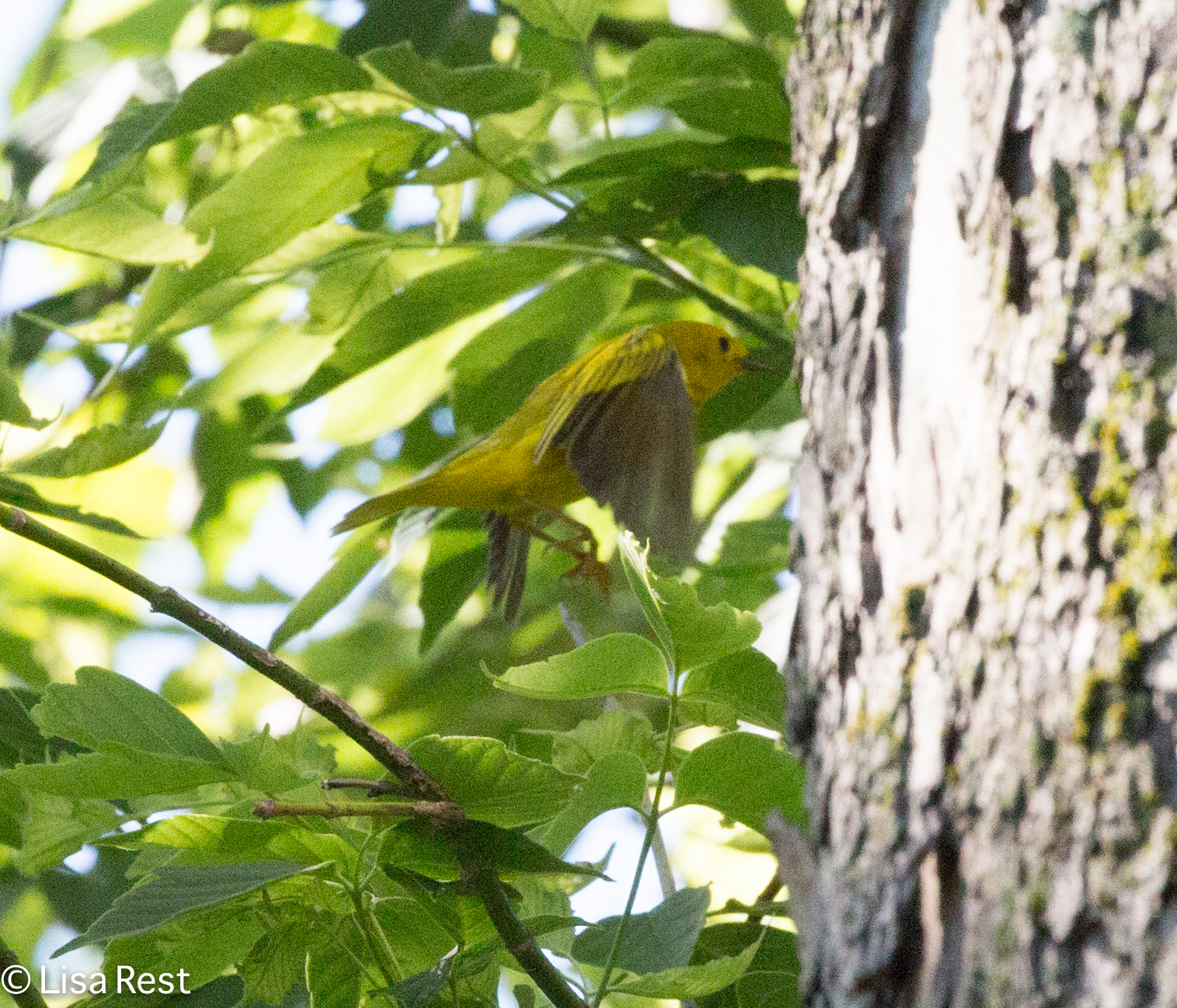
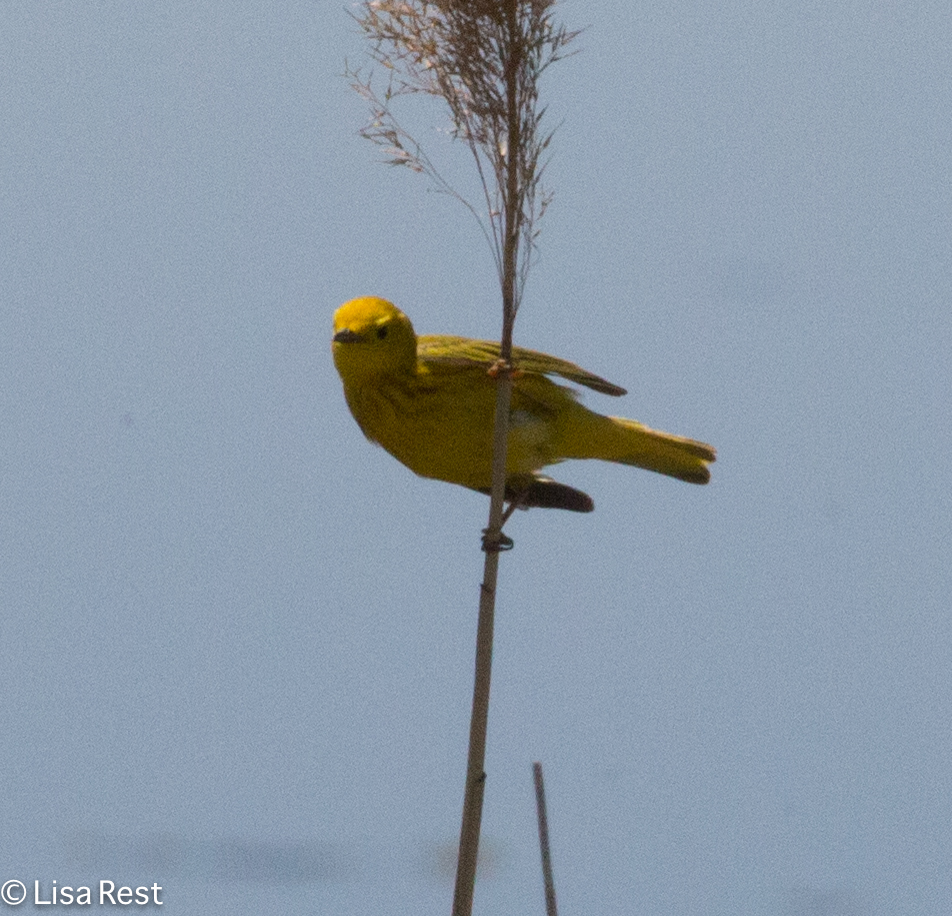
Yellow Warblers nest here and were pretty elusive but I did finally manage to capture this one.
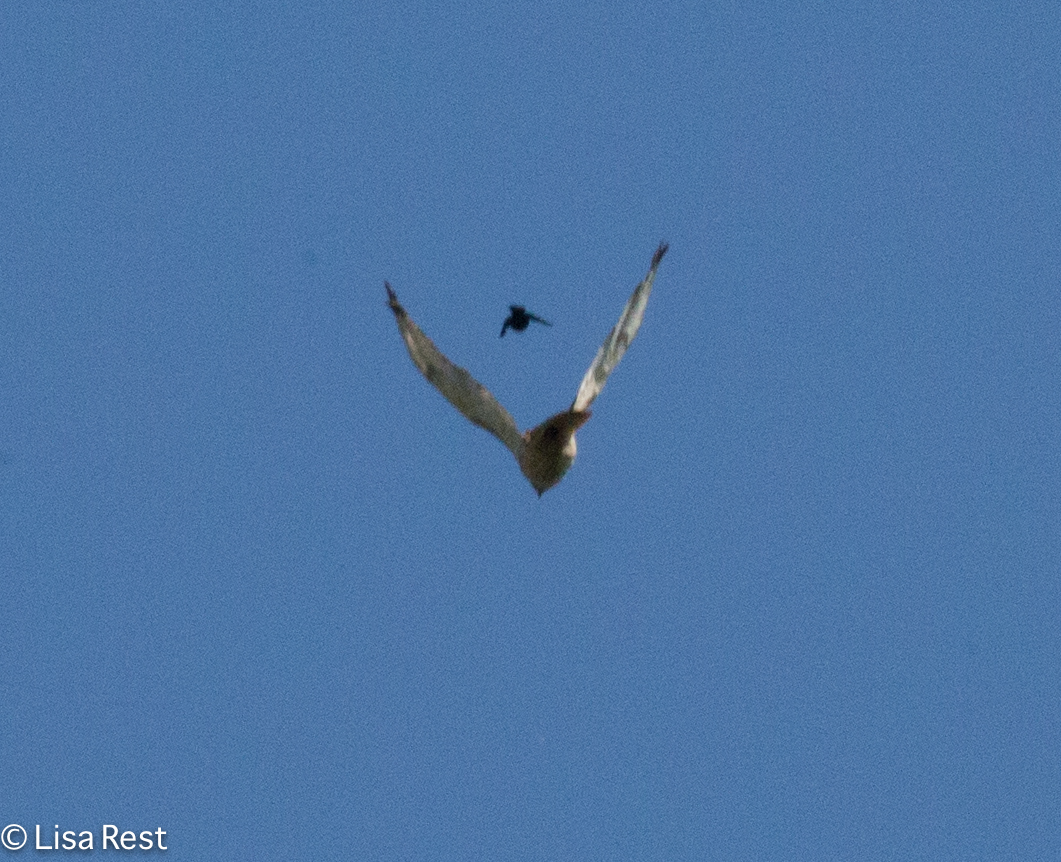
I am always intrigued by the sight of a Red-winged Blackbird chasing a Red-tailed Hawk…
Insects are sparse, which is not news, but makes the few individuals one sees that much more precious. I think I may have identified the two below. I haven’t had to resort to bug spray yet this year, although I do have a few bites I occasionally scratch to remind me it’s not over yet. The effect of insects being sparse, however, is bad news for the dragonflies and birds that eat them.
Hobomok SkipperLikely a female Variable Dancer.
Cabbage White butterflies have been the most prevalent, and even they seem sparse. They are an introduced species.
For what it’s worth, the volunteers at the Portage have been busy reducing invasive plant species, and it is gratifying to see the natives return. Last time I saw them at work they were cutting away massive swaths of hemlock. Unfortunately it was in flower so it will likely return. But a lot of the burdock from years ago is gone. It’s a slow process.
Hemlock
New arrival – as yet unidentified
Raspberries
More often heard than seen – a Blue Jay.
The male Brown-headed Cowbird below intrigued me by the light-colored throat feathers. It might just be a trick of the light.
Below is what I believe is a young Northern Flicker peering out of a nest hole.
The Indigo Buntings are still going strong with their songs and territories and it’s hard to resist them. I have to quit taking them for granted. They weren’t here in these numbers ten years ago.
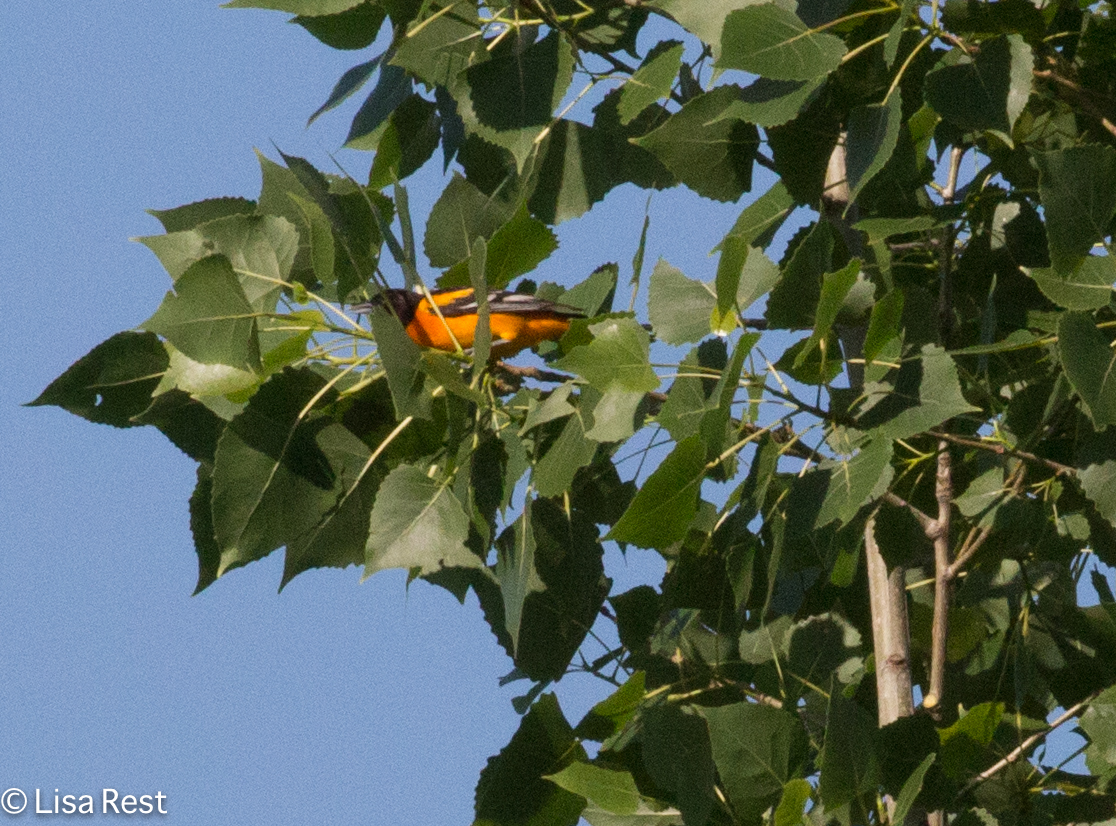
The Baltimore Orioles have been harder to spot as they tend to their broods, but I got lucky and watched this one as he visited the nest.
Baltimore Oriole nest
So I hope to be back later today with a little yard report. If I could have one thing on my birthday (while it’s still quiet and getting too hot to be outside for very long), it would be to have time to write another blog post.
My best friend from junior high is in town from California for her mother’s 100th birthday and has chosen to stay with me and the birds. Luckily there is a relatively comfortable finished attic – I call it my people space. I bought a new room air conditioner which seems to be keeping it cool enough up there. So I am foregoing my traditional visit to Goose Lake Prairie this year. Maybe I can take off for that grassland later in the month. Today I will enjoy hanging out with my friend and trying to be lazy.
I went up to Goose Lake Natural Area in McHenry County over the Memorial Day weekend to see if I could get any closer looks at Yellow-headed Blackbirds. Unfortunately, due to the drought, the birds were too far away from the trail side or the viewing platform. But I did get some nice looks at Yellow Warblers.
The easiest bird to capture, of all things, was Willow Flycatcher. I can remember having a hard time seeing these guys whenever we heard them years ago on our birding class walks – but at this location I can always count on seeing them well.
It was so hot and dry, this Killdeer looked desperate.
On the wooded part of the trail I spotted a Red-Eyed Vireo.
Even the Red-winged Blackbirds didn’t feel much like showing off.
I think this must be a female Red-winged Blackbird taking in some shade.
A Green Heron flew by.
I will never tire of seeing Sandhill Cranes, and there were two.
So I’ve been kind of in perpetual motion, or so it seems. Last Saturday’s Berwyn Historical Society inaugural Garden Walk was great fun. I never considered that I was doing much planning or had any theme at all for my backyard but it stood out because of all the trees I planted almost 20 years ago. People were calling it a sanctuary! Who in their right mind plants a small forest in a postage-stamp sized yard? I didn’t want the grass that was there, and I wanted birds, so I planted trees, especially as they were offered to me by the Arbor Day Society the moment I moved in. In retrospect, I’m even happier I did this because I lost the original Ohio Buckeye years ago – so I could have been without any trees at all.
The week in preparation for the walk was hot and somewhat hectic but I loved working outside in the yard almost every day. I also had fun discovering the names of many plants I had never managed to identify. Best of all was the day itself. I had a fabulous time talking to people and in the process learned more about myself and my gardens. Maybe it wasn’t so haphazard after all. I look forward to having the time to really take care of the yard through all the seasons and continue to learn what the plants can teach me.
I will be back. I haven’t been birding for over a week, but I did manage to visit the Portage a couple times prior to the garden walk. Now we are in line for thunderstorms, making up for some of the rain we didn’t get in April, so that might curtail my birding activity this weekend. Life goes on, sometimes to my amazement.
If my memory serves me correctly, last year we were complaining of too much rain. I remember the tall plants in my backyard towering over everything and wondering if perhaps I should have discouraged them earlier. As it turns out, the tall plants seem to be growing up just as much without rain, but I am in no mood to discourage anything.
Anyway, Saturday I went to the Portage early and encountered John as I pulled into the parking lot. He leads discussions and walks on Saturdays at 10:00 AM regarding the history of the place. He had arrived early, said he was getting into birding but had forgotten his binoculars and wanted to know if he could tag along with me. We had a good time talking and walking along the trail, and he told me the history of the early explorers and how the Des Plaines River was diverted to feed the Chicago Sanitary and Ship Canal. So initially the little bit of water now left to the Portage is part of the original Des Plaines River bed, but nothing feeds it except rain. With that knowledge I am amazed that when I first started coming here, there was enough water to support herons feeding and even a pair of Green Herons nesting. I haven’t seen the Green Herons here for several years now.
This year there doesn’t seem to be water to make it buggy enough to support Eastern Phoebes or Eastern Kingbirds like last year. We do have Eastern Wood-Pewees and Great Crested Flycatchers.
When John and I started up the trail we encountered that large painted turtle featured at the head of this post, on the gravel path. I wonder if it was a female looking for a place to lay her eggs. There haven’t been many turtles visible this year. The drought is affecting them as well.
But then we saw an Eastern Wood-Pewee, who even sang for us. I love these little guys – I often hear them clear across the woods but don’t always see them.
While we paused on the back trail on the other side of the fence, an Osprey flew over.
I was able to show John my most reliable Indigo Bunting whose territory is on the East side of the North bridge. The bunting was happy to pose and sing for us. A recording of his song is below the photos.
John had to leave to get ready for his tour/talk so we parted ways. I will have to attend one of his presentations. I confess I used avoid the Portage on Saturday mornings because of all the extra people, but now I’ve gotten used to it after the pandemic brought in a lot of new visitors.
I continued along the trail in the direction I usually take. The rest of these photos are not in order but they are the only birds I was able to capture. Below is a Red-Belled Woodpecker on the dark side of an oak tree.
I caught this Northern Flicker inspecting a nest hole.
Whatever you may think of Brown-headed Cowbirds, they can still be attractive.
Male Brown-headed Cowbird
Below is the first butterfly I have seen except for a Monarch here and there. It’s a Skipper, but I haven’t been able to identify it precisely. It was very tiny.
There was a Bald Eagle flying over.
There were very few swallows – this was the only Tree Swallow I saw.
Even the Red-winged Blackbirds were lying low.
I sat on the bench by the parking lot before returning to my car and caught this male Baltimore Oriole foraging around in the low trees at the edge of the lawn.
I decided to forego birding again on Sunday morning and opted to do a little yard work in anticipation of more to come. The Berwyn Historical Society this year decided to start an annual garden walk event on June 19, and my crazy garden, a/k/a postage-stamp-sized wildlife refuge, has been selected. The idea was pandemic-inspired because normally the BHS would be offering a bungalow tour, but since that wasn’t possible, the idea for an outdoor event occurred. My front yard still appears somewhat organized even though its creator, who has since passed, would likely have issues with all the Common Milkweed and other aggressors overtaking his original plan. It was just my luck that a Monarch visited the milkweed a week and a half ago and seemed to be laying eggs so I don’t dare remove any of it. I also have discovered some new visitors, such as Narrow-leafed Blue-eyed Grass.
My backyard is a small forest with a lot of native plants and grasses that need more control than I have been able to do. I am taking the week off before the walk to make as much sense out of it as I can and also to make sure I can identify everything – or almost everything – that’s growing. I have stopped feeding the birds and squirrels, except for the occasional hummingbird or oriole that might stop by, so the rat control project can succeed. The only thing I have to contend with is weather and stamina. So working in the yard is what I am looking forward to next week.
In the meantime I hope to be back with some pictures from previous outings this spring.
There wasn’t an awful lot going on at McGinnis on my last visit, but the sight of two Sandhill Cranes foraging in the lawn right off the parking lot automatically made it a special day.
I guess McGinnis is always good for a Great Blue Heron or two. But I’m surprised I haven’t seen any Great Egrets lately.
It’s really dry..
Not a lot of swallows that day but I managed to capture this Tree Swallow.
Not sure I have seen these Irises here before. Nice.
This Song Sparrow was almost completely hidden. We compromised.
Common Grackles are here and there.
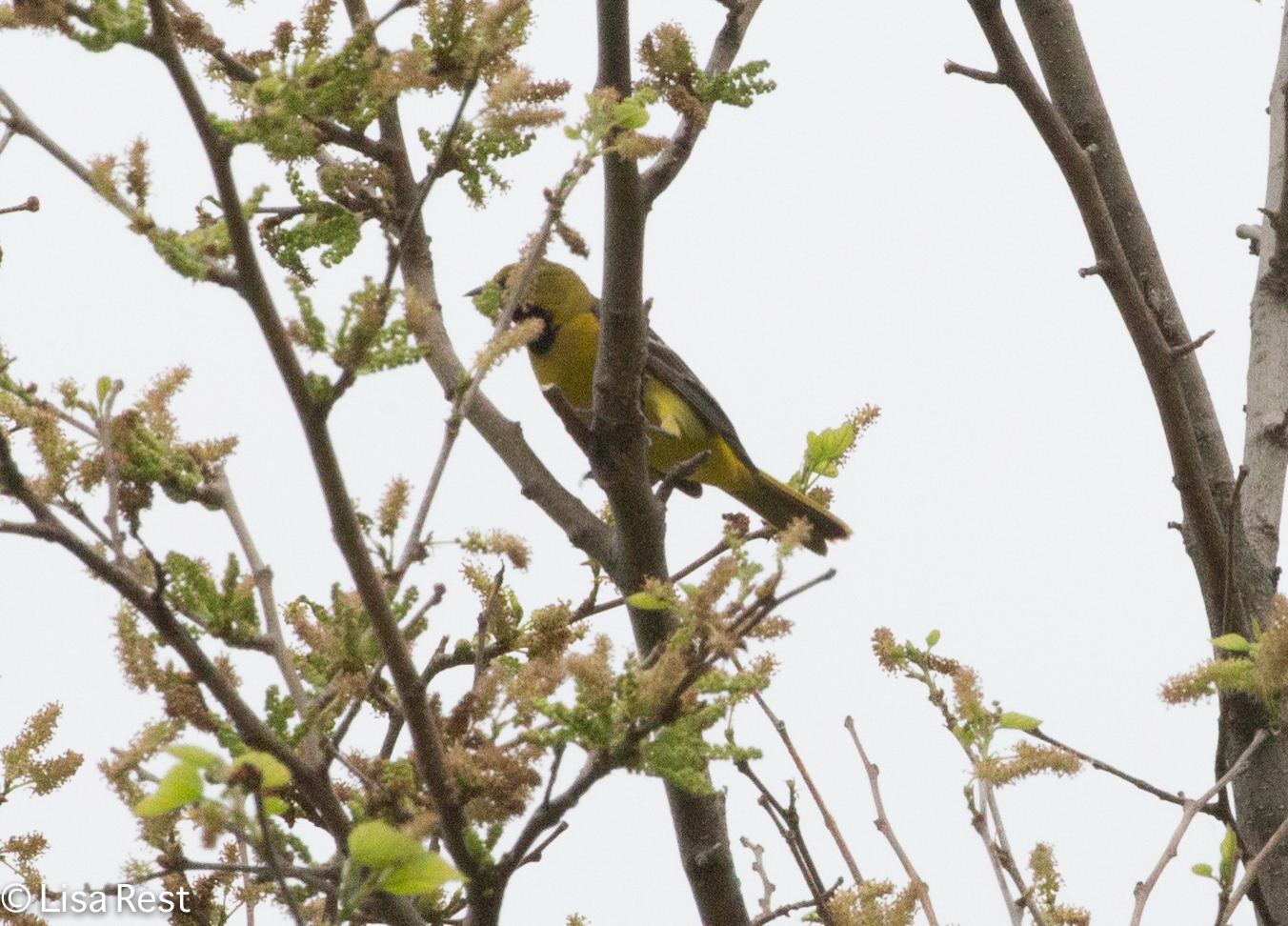
Perhaps the second nicest surprise was to see a first-year male Orchard Oriole right before I left.
The lack of light didn’t offer much contrast with these raptors flying overhead.
Red-Tailed Hawk
Osprey
While I was kind of hoping to see a colt or two with the Sandhills, which I never have here, I did see two Canada Geese in the same spot as the Sandhills were earlier – and they were carefully watching one lone gosling.
Providing additional interest, a Red-Winged Blackbird trying to make sense of a piece of ice cream cone.
I am always impressed by a Robin taking a pose.
I haven’t been able to think about much besides work lately. That – and the burrowing rats in my yard. I just removed all the feeders except for the hummingbird and oriole feeders – for 10 days. The city has provided an exterminator to discourage the rats, and I can only hope for elimination as up until the pandemic, they were never around. But adding insult to injury is the drought. I take it personally, I don’t know why – but the thought of weather like Phoenix, Arizona has never been attractive to me. Nothing against anyone who loves hot, dry weather. It has its place. But not here.
Thanks for letting me rant. I do have more cheerful posts in store and what should be a fun event I will share with you in the next few weeks.
I went back to the Portage Sunday to see if abundant sunshine would allow me to see more birds. As it turned out, it was harder to capture most of the birds – except for the Indigo Buntings who were readily available – but in going through my photographs later I discovered the camera saw more birds than I did and I found some unexpected species. Nothing rare – it’s spring migration, so just about anybody can show up.
Vesper Sparrow
Not only was the Vesper Sparrow unexpected, but I was also surprised to see a Black-Billed Cuckoo, although I have seen them at the Portage on occasion before.
Black-billed Cuckoo
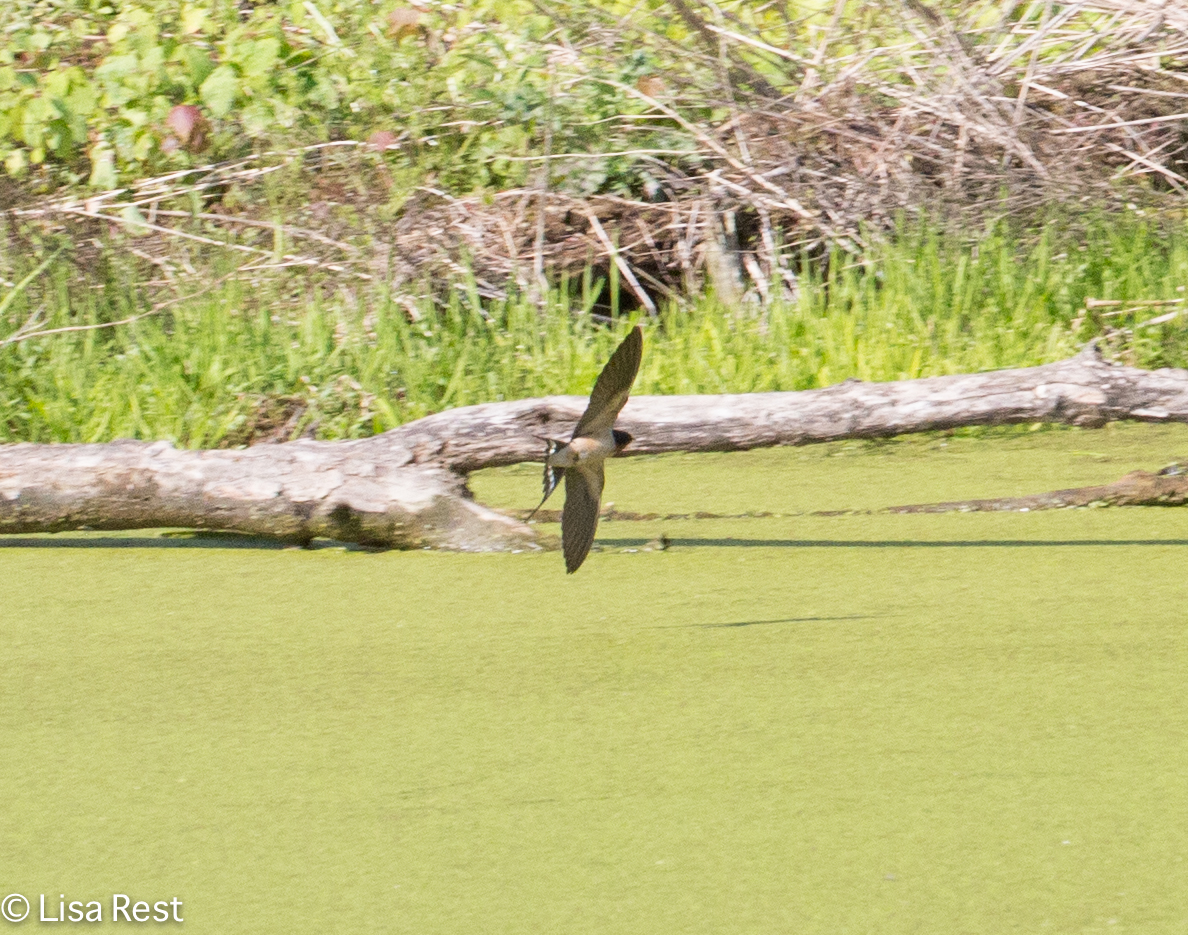
There were swallows like the day before, although not as many. I have concluded that the Northern Rough-winged Swallows fly in a more deliberate fashion which makes them easier to capture. Still I managed to snap one photo of a Barn Swallow in the lower right-hand corner.
So the Indigo Buntings were busy singing in the sunshine. I am convinced they have an artistic sense of the best places to perch for photos. I love the way this one was initially framed by the split of the tree trunk.
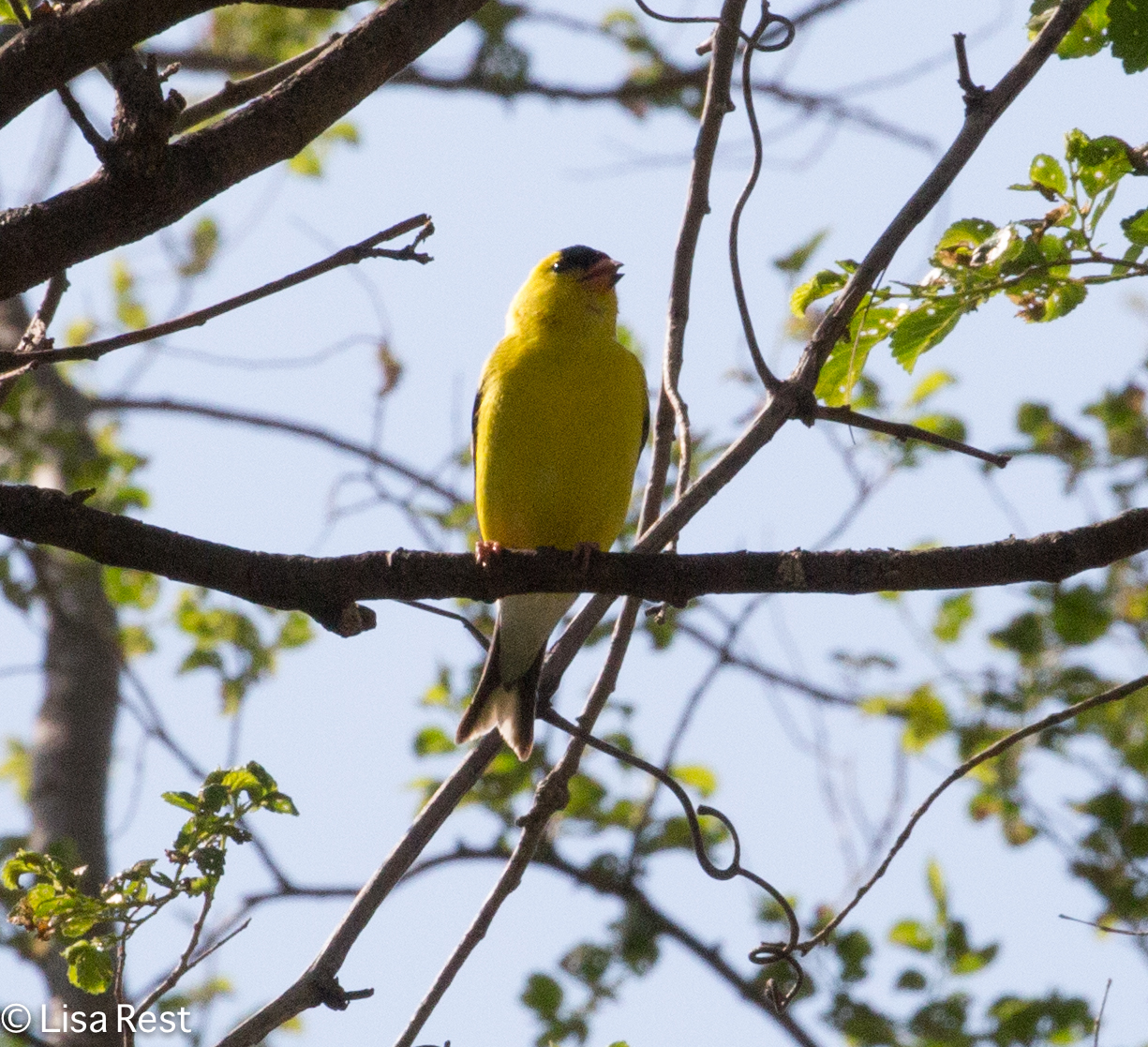
Male American Goldfinches are in full bloom too.
The Red-winged Blackbirds are looking a little tired of it all already.
Gray Catbird
I thought I was hearing the tail end of an Eastern Towhee’s song – and then I spotted one way up high (used to seeing them closer to the ground). Below the shots of the male is a partially visible female Eastern Towhee.
I was also hearing an Eastern Wood-Pewee for the first time this spring. I barely captured a picture of one below.
Red bird of the day turned out to be a male House Finch.
The Baltimore Orioles are busy gathering nesting material. Both female and male birds are below.
This is a really unfortunate place for a Lincoln’s Sparrow to show up but I’m glad one was on site anyway.
I walked around back by the water reclamation district and saw three Killdeer. Below is one of them.
There were quite a few Brown-headed Cowbirds. I got closer shots of the female in the grassy area by the parking lot on my way out.
So we really, really need some rain. This is how the Des Plaines looked on Saturday. You can walk down to it easily because the bottomlands are all dried out. Unfortunately because of the lack of water, there were no birds by the river.
So it wasn’t a great day for warblers, but I did manage a few pictures of a female Bay-breasted Warbler.
Can’t leave without a Robin. It’s got to be getting harder and harder to find those worms. The Robin below has a not-so-tasty-looking worm in its bill.
With a little luck I will be back with the prelude to all this before the weekend when I will likely be outside again. There is rain in the forecast but I have learned to become skeptical of the outcome. At least it is still fairly cool, but that will change too. This is all affecting my mood, to say the least. I am looking forward to swimming tonight – a sure antidote to depression.
The weekend before last was warm – but very windy. I went up to the Hebron Trail/Goose Lake Natural Area anyway to see if I could find any Yellow-Headed Blackbirds. I did eventually see them as tiny little yellow-headed black dots far away. It was almost too windy to see any birds well at all.
Farm buildings adjacent to the trail…The view going…
Where there was a break in the trees, I was surprised to see this one Eastern Kingbird sitting quietly for me to take its picture. I had to think a bit about its identification at such close range!
There were several Blue-Gray Gnatcatchers but they were hard to see.
I don’t know why I make a fuss about Brown-Headed Cowbirds but I still think the males are beautiful.
I had heard Indigo Buntings the day before at the Portage but this was the first one I saw. The closer photographs below are from last year. I will likely get more opportunities this year after the birds establish their territories and start defending them.
Red-winged Blackbirds are easy to see at this location, even on a windy day.
Although it was a hard day for warblers, it was still warm enough for bugs and worms, and I managed to see this Nashville Warbler.
On the trail, coming and going, I saw a Brown Thrasher.
After I had exhausted my patience with the Yellow-headed Blackbirds heard but not seen from the observation deck, I walked a few feet past and stood – only to see a Sandhill Crane take to the air a few yards away. There is nothing quite like seeing a bird with a 77″ wingspan coming toward you.
A few more views…
I was surprised to see a Gray Catbird sitting and calmly looking at me. They are usually quite secretive.
Playing the hiding game was a Yellow Warbler.
Even Song Sparrows were laying low…
A little more Sandhill Crane action…
One more warbler – a Palm Warbler…
Canada Geese are easily dismissed, but they are still striking looking birds.
We are not on the Brood X Cicada a/k/a 17-year locust map this year, but here is a cooperative Cicada from last summer. It hitched a ride into my post with the Indigo Bunting photos.
I have as many more photographs to share as I have other obligations preventing me from doing so. I hope the space between posts will narrow a bit in the not-too-distant future. Hope for the promise of spring.
On that warm weekend nearly three weeks ago – I write this as we chill again after a bit of April Snow yesterday morning and into freezing overnight – I went to McGinnis Slough for a few birds and was greeted by a lot of singing in the sunshine. Thankfully, there was not a lot of traffic noise from LaGrange Road. The primary contributors to the recording are Red-Winged Blackbird males.
Birdsong at McGinnis Slough
This time I got to see one of the Sandhill Cranes that I missed the weekend before. I have to wonder if they are nesting there…
No shortage of Red-Winged Blackbirds showing off.
And not showing off…
A male Wood Duck managed to swim by my lens.
Northern Cardinals didn’t offer many looks, but I managed to add these two for the record.
The iridescence of this Common Grackle’s neck caught my eye first.
This was the best I could do for a Song Sparrow, even though I heard a few singing. The song of one is below the picture.
Song Sparrow
This view overlooking a part of the slough perhaps conveys the feeling evoked by the toad chorus below it.
American Toads, I think
Never at a loss for American Coots this time of year. But I was most impressed with the one standing on a log poking out of the water, preening and showing off its pretty green legs.
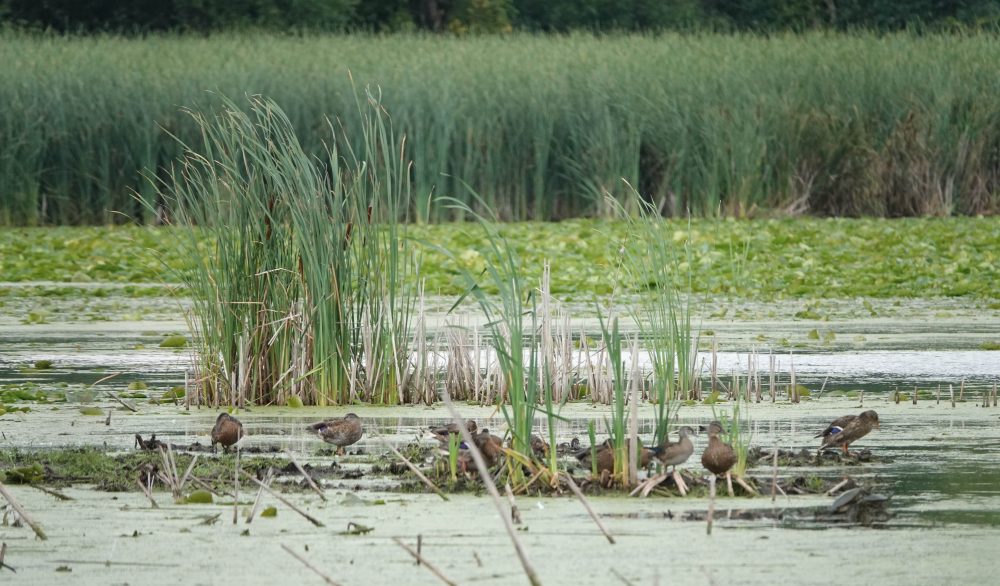
Mallards… one hen very comfortable in her chosen spot.
It wouldn’t be an authentic visit to the Slough without a Great Blue Heron flying somewhere.
I was excited to see an Osprey, however briefly.
One male Blue-Winged Teal was close enough to capture.
Perhaps my most thrilling bird sighting that day was this lone Tree Swallow. It was actually warm enough for it to catch bugs in the air.
I always have hope to be back to this page sooner than later. Here’s to more sunshine, warmer weather and more reasons to treasure longer days while they last.