Falling Back

Blizzard conditions are keeping me inside and I am tired of winter, so now I have some photographs from last September 16 at the Chicago Portage.

Before I continue, here’s what it looked like yesterday late afternoon in my yard. The birds quickly got over their spring fever and came back to the feeders in the driving snow.

The sun is shining almost too brightly this morning and the freshly-fallen snow is reflecting it. After putting the feeders back out and shoveling the accumulation that was left, I was not eager to go out for a walk in the bitter cold. I will get enough cold tomorrow at the Gull Frolic.

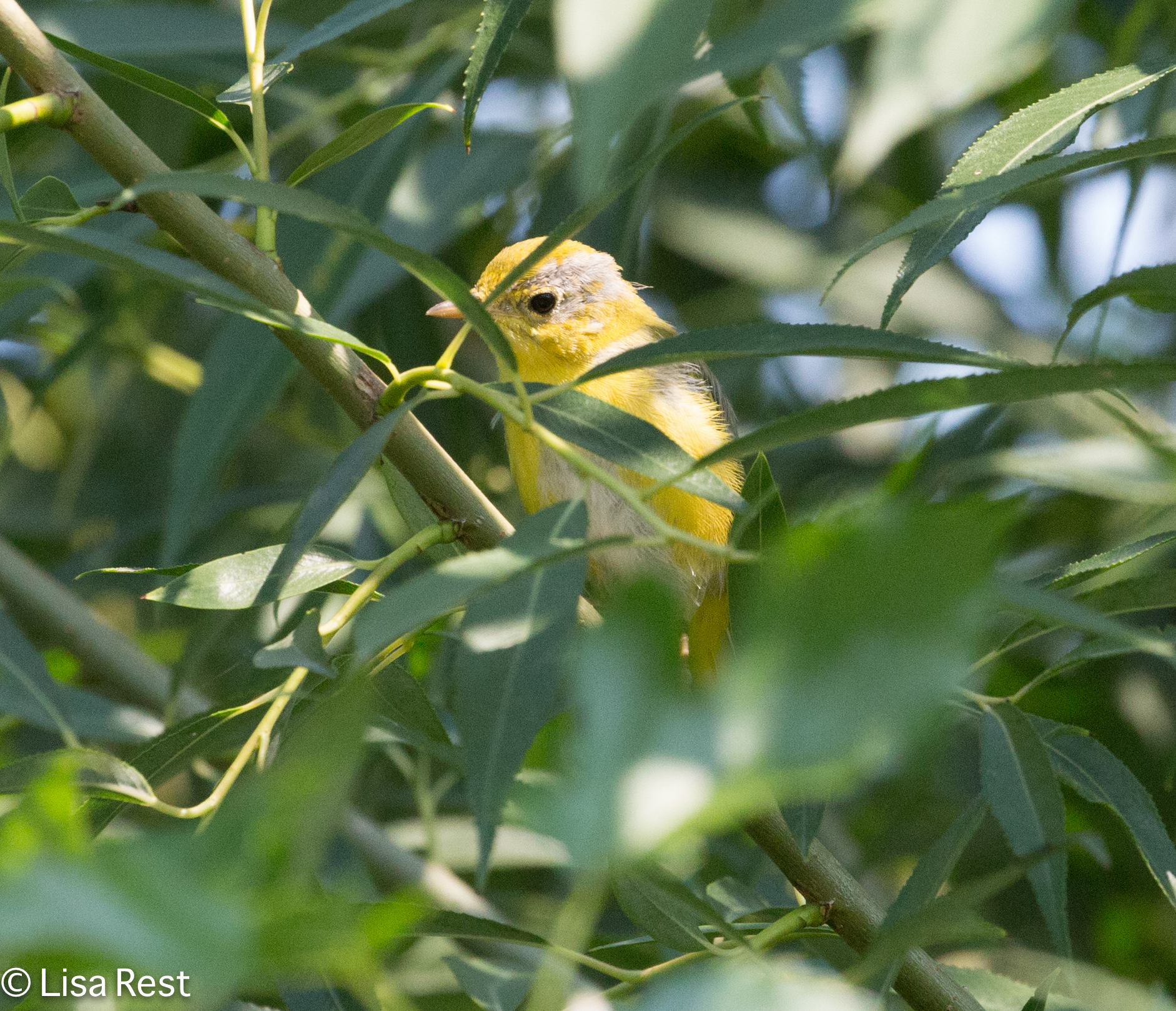
Back in September, there were some fall warblers, like the Nashville Warbler below complementing the Goldenrod.

Even the “regulars” looked better in September.

Cedar Waxwings were all over the pokeberries.

Looking forward to the transformation back into this below.

I was a bit amused by this Red-eyed Vireo who seemed to be contemplating making lunch out of what I think was a spider.

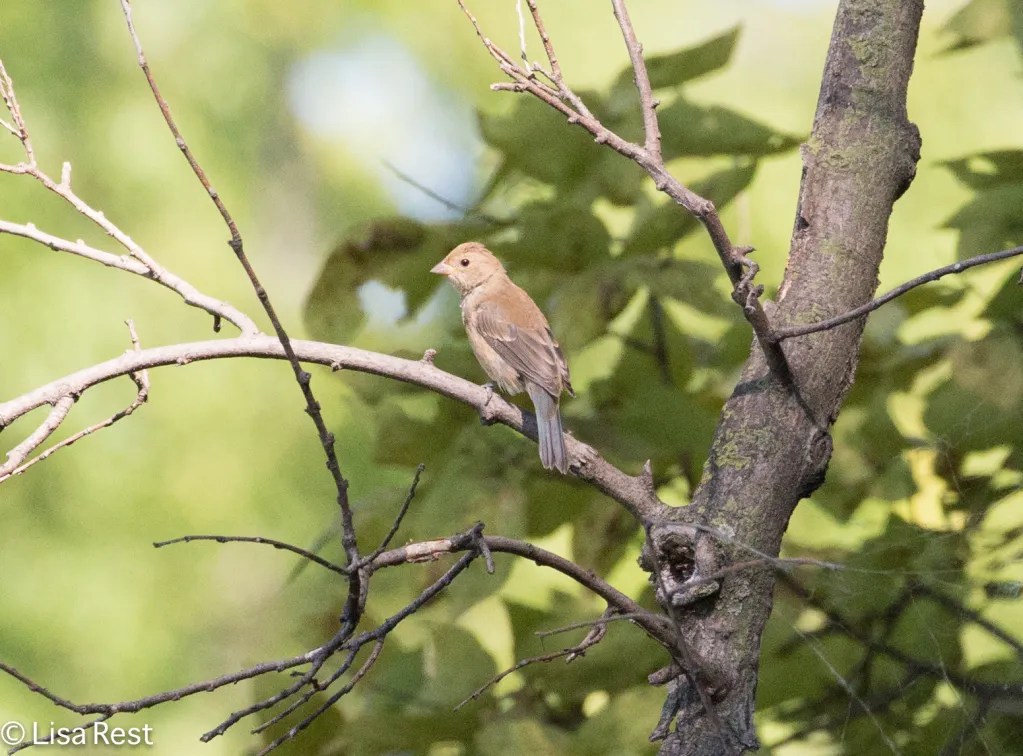
Indigo Buntings below – a female, and then what appears to be a transforming male.

I am curious to see what warbler species will predominate this year. There were a lot of Bay-breasted Warblers last fall.

I can expect to see American Redstarts this spring.

Swainson’s Thrush

After trying to no avail to convince myself that I should be feeling better, go out, brave the sunshine for a brief walk and maybe swim earlier, something seemed to be pulling me back. A few aches and pains? Maybe, but that hardly ever stops me. I sat down on the futon with some coffee to assess my mood and continue with this post. Then I heard a thud as a Zebra Finch fell out of a hut onto the top of a cage. This is not normal. Birds don’t fall. It was a hen who seems to be unwell and she will likely go quickly. It didn’t take the males long to figure out she was compromised and they tried to take advantage of her. I jumped up to rescue her and scooped her up easily enough by hand as she wasn’t really able to fly. I held her close to my heart for a moment and then put the poor girl in the bottom of the former budgie cage which is a smaller space for her to rest in peace, so to speak. Maybe my lack of resolve this morning was a response to her waning energy. Whatever it is, I was glad to save her from torture in her last hours. She has since left the cage but is defending herself against assault: I will keep my eye on her. My coffee is getting cold.

Leading Walks

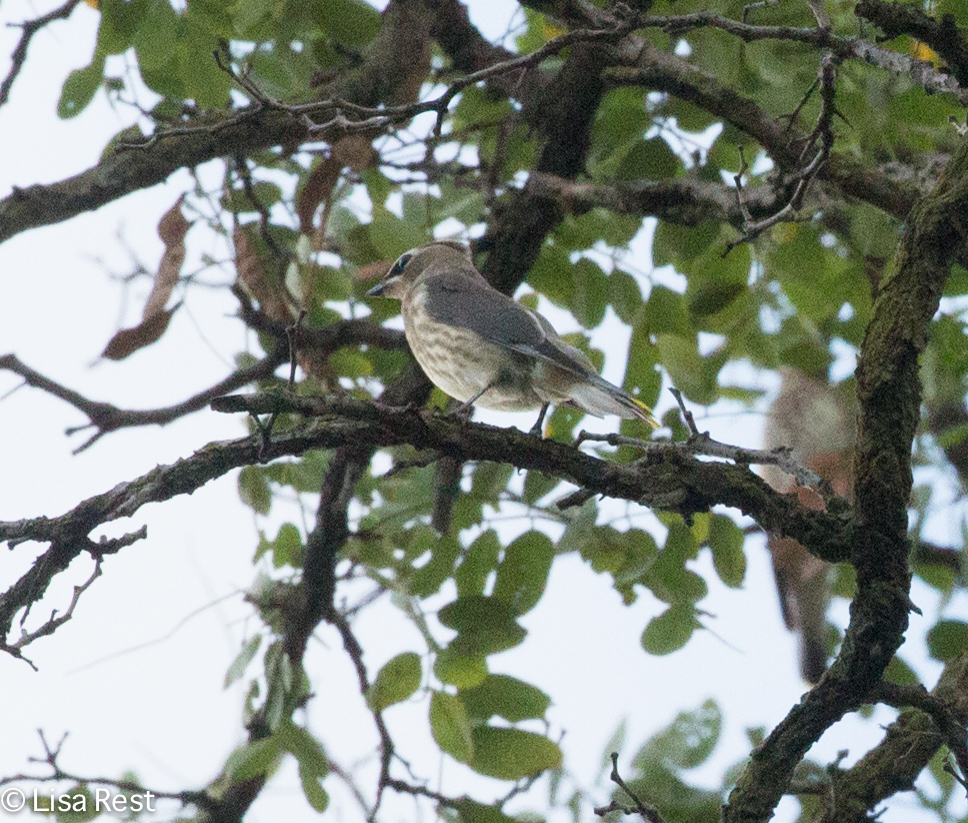
I led two walks for the Unity Temple Unitarian Universality Congregation (UTUUC) auction again, on September 11 and September 25 this year. I didn’t take a lot of pictures, even though I was in much better shape than I was last time with the broken elbow. The pictures from the 11th are first and the ones from the 25th start with the Yellow-Rumped Warbler.

More than anything, it was good to get out with people from the congregation, most of whom I had not previously connected with, which was the whole point, beyond raising money, of offering a walk as an auction item. We had great conversations and the weather was good on both days, so I find myself looking forward to doing this again. And again.

Not quite the last Indigo Bunting (a juvenile).

I managed to capture this Chestnut-sided Warbler with a bug.

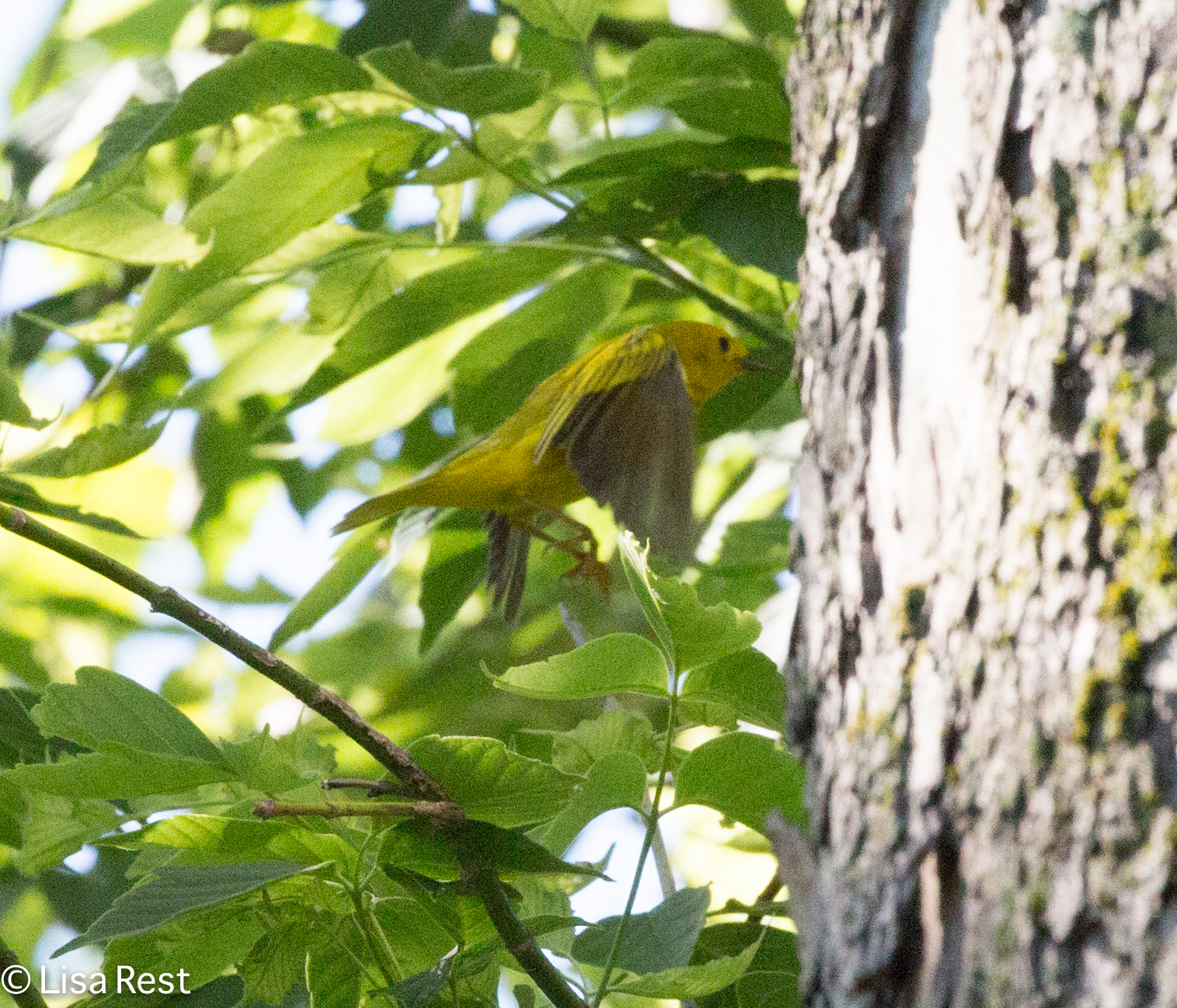
The Yellow Warbler below was deemed “rare” in that it was late to be seen on September 11, so perhaps I developed too many photos of it to prove I had seen it.

A Red-tailed Hawk flew over.

It was nice to see yet another Eastern Wood-Pewee.

I am always grateful to the bees that remind me the Canada Goldenrod, however strident in taking over spaces, is needed and appreciated by them.

A closeup of some galls that attach themselves to hackberry leaves.

Not a representative photograph at all, but below was my first of many Yellow-Rumped Warblers to come.

Below is a somewhat hard-to-see Blackpoll Warbler. You can always click on the image to see it better.

For a few days there was a juvenile Rose-breasted Grosbeak or two.

Finally started seeing some Ruby-crowned Kinglets on September 25th like the one below. I have since captured more – to follow eventually.

Magnolia Warblers just kept popping up all month.

One more of the delicately decorated Swamp Darner also at the top of the post. It was on its way somewhere on September 25th,

I led a walk this morning at Columbus Park – I was the only participant. I think I might return shortly with that adventure before I continue to plow through the accumulated backlog: for instance, I wound up going back to the Portage before and after the second walk and found it to be very birdy, so be forewarned.

Two Days of Retirement

To celebrate August 31st being my last official day of work, I went to the Portage two mornings in a row, to look for the first signs of fall migration. I didn’t see an awful lot of species on either visit, but there were some nice looks. Best of all was feeling really free to take my time and not worry about checking my work email. I still have to get used to waking up in the dark, though, because I have walks to lead every Saturday in September and October.

Of course the obvious draw this time of year is the fall warblers passing through on their way south from their breeding grounds in the north. I didn’t see a lot of species and missed a couple, but so far I have seen a few warblers each day. They behave differently on their way back to their wintering grounds. They are not foraging in flocks and they are in less of a hurry. So while they may be harder to spot at times, it’s easier to concentrate on one bird at a time. Below are a couple American Redstarts.

I felt lucky to find this Bay Breasted Warbler in my photographs.

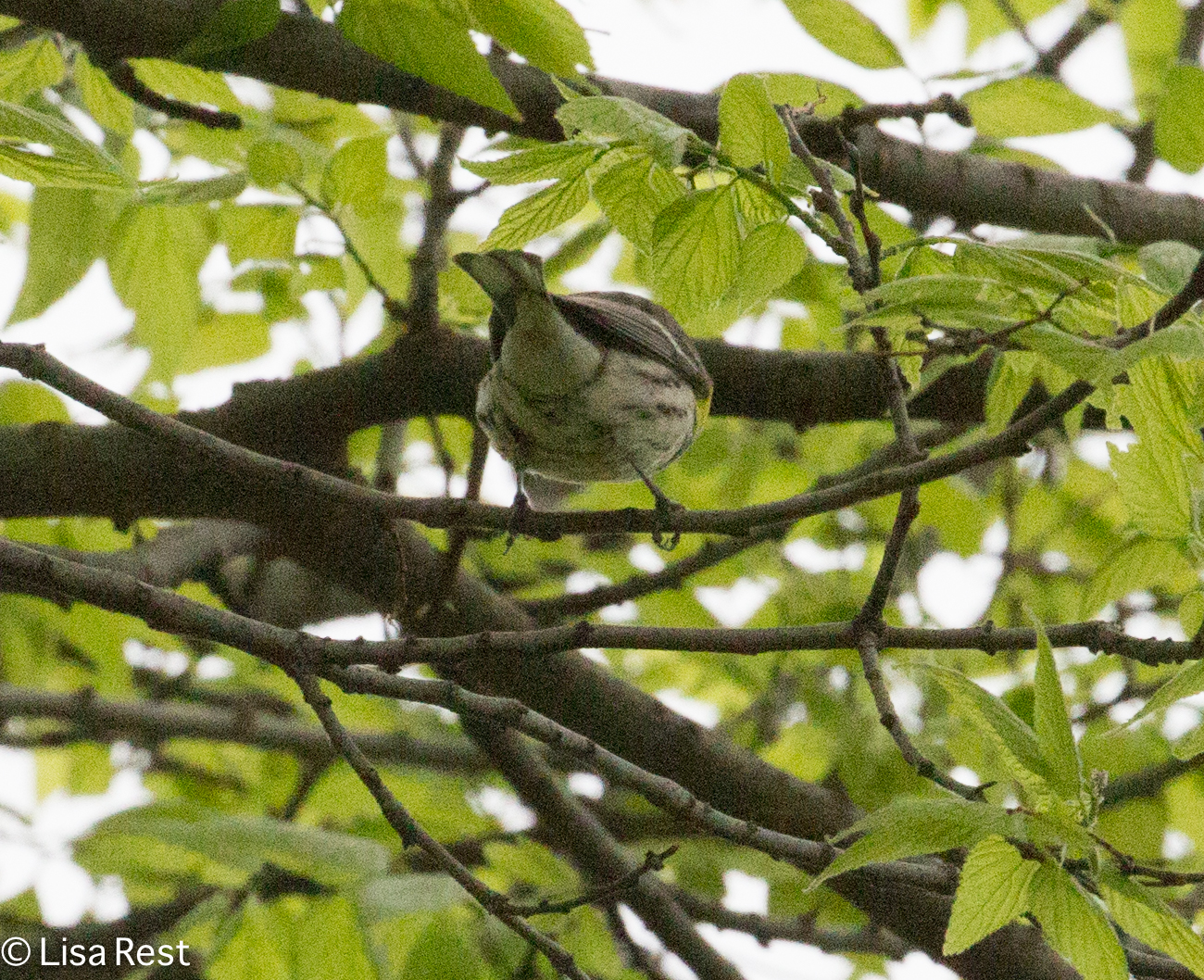
Magnolia Warbler, also at the head of this post

One of my favorites, a Chestnut-Sided Warbler, was being rather coy.

Not a warbler, but a nice to see Red-Eyed Vireo both days. The bottom photograph was taken the second day when the Vireo was eating poke berries with the Cedar Waxwings.

Thursday morning I managed to capture enough photographs of the Orange-Crowned Warbler below to justify my claim that I had seen one, since it’s very early for this species.

I just barely captured this Nashville Warbler.

Wednesday was cloudy.

Large flocks of Cedar Waxwings were present on both days.

Some closer views of the Waxwings Thursday, when they were busy eating poke berries.

Below is a beautiful wasp’s nest. I have a slightly smaller one in my crabapple tree this year as well…

Something else that I had a lot of in my yard before I removed nearly all of it, below, is Common Beggar Ticks which is native, and an annual – but doesn’t bloom until now.

On the first day I did manage to capture the Swainson’s Thrush below. I also saw a Wood Thrush but that photograph isn’t presentable.

Robins are looking scruffy this time of year. Most of them are juveniles.

When I first walked in on Thursday, there was a deer at the end of the paved path, and then a Cooper’s Hawk with prey landed in a tree above me, but I didn’t see what it had captured.

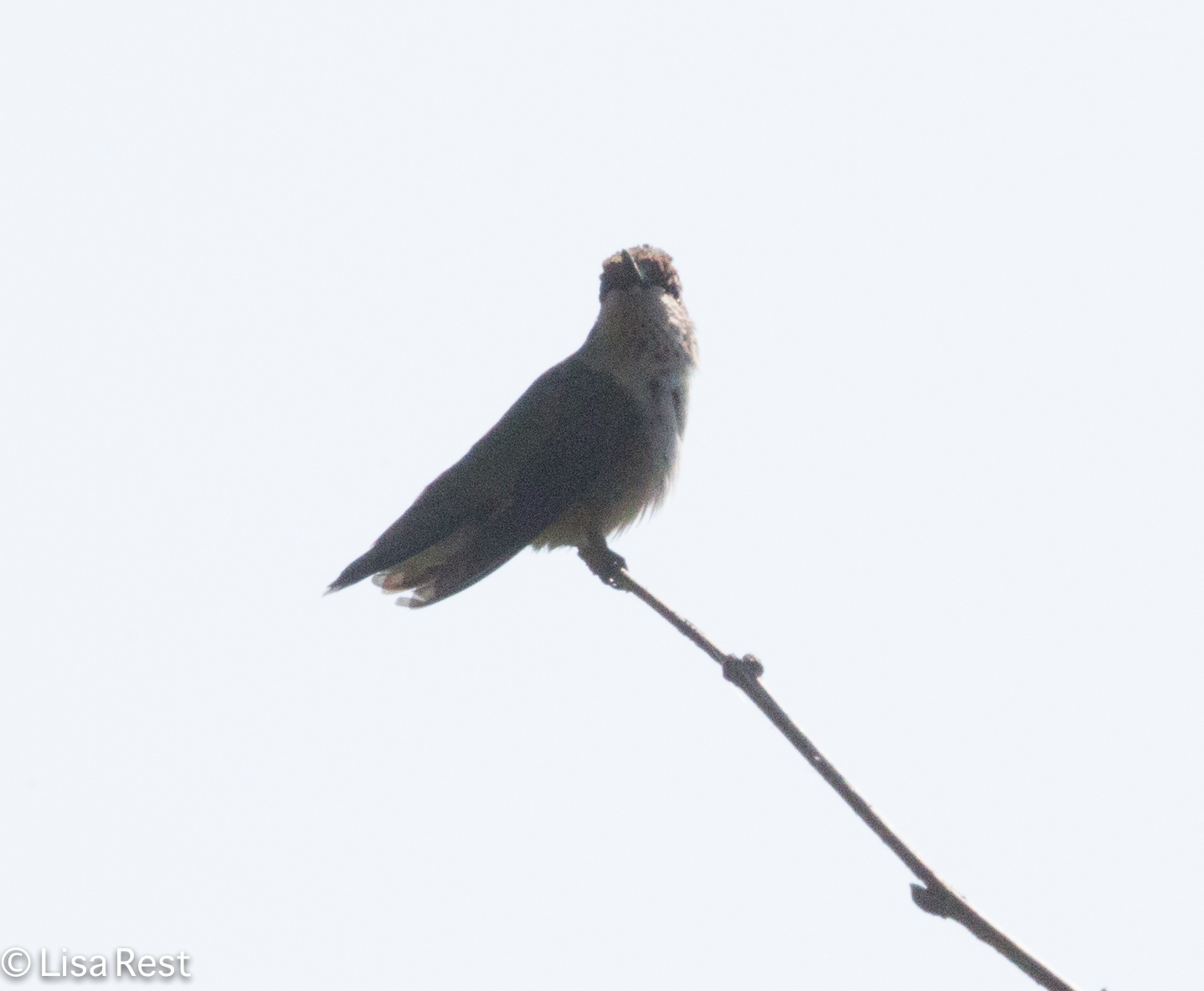
Unfortunately this Ruby-Throated Hummingbird was completely backlit in bright sunshine but it was still nice to see it perch right in front of me.

There were still a couple Indigo Buntings around.

Female Indigo Bunting

For once, there were more than one or two Monarch Butterflies. I realize this is probably the last I will see of them but it was nice while it lasted.

Below is a Chipmunk foraging in a tree.

A few scenes of the Portage and one quick look at the Des Plaines River where not much is happening at the moment.

Black-capped Chickadees are around all year but I don’t always see them. Sometimes I don’t even hear them. This one didn’t mind being seen or heard.

I am trying to navigate this new feeling of almost endlessness. Well, it doesn’t last for long. There is much to do, but less of a feeling of urgency or hopelessness as my work duties have all but vanished. I have agreed to remain with the firm as an independent contractor to help out with various projects while they still try to find and train my replacement. My stipulation was to assume any given morning with nice weather would be off limits for my attention as I will likely be out looking for birds somewhere.

Goose Lake Prairie

Cragg’s Cabin

I missed my annual visit to this place on the July 4th weekend. Then two Sundays ago, I decided to see what it looked like two weeks later. Weather conditions were favorable and I had no other plans, so it seemed like a good thing to do after I psyched myself up for the nearly hourlong drive. How spoiled I have become zipping over to the Portage in five minutes every weekend.

I got my yearly Dickcissel fix…

I don’t know why I have never bothered to look at the signs before but this time I paid more attention to them. The one below, however, is the only one the birds did not decorate. The rest, which explained more about the plants and the history of the place, were too messy to include here.

The parking lot was empty. However I was greeted by a Killdeer. If I remember correctly, there was a Killdeer here last time I visited. I suspect they nest near the Visitor Center. Also below is a recording from the parking lot.

I always count on seeing and hearing Dickcissels here and I was not disappointed. Except there seemed to be fewer individuals to photograph. The one below, perched and singing which is how you normally find them, was still farther away than I would have preferred. The Dickcissel’s song is below the pictures and there is also a Field Sparrow singing in the background.

Field Sparrows are lovely little birds and I was happy to see and hear them.

I got a closer look at this Field Sparrow with a worm.

View of the Visitor Center from the trail

I heard more Common Yellowthroats than I saw, which is typically the case. This one would not turn around and face me.

It took me quite a while to find a Song Sparrow, of all things.

I decided that the prairie plants were as spectacular as the birds and easier to photograph. I was a little disappointed to find the Purple Loosestrife as it is not a native species.

Below, a Monarch Butterfly enjoying a Compass Plant flower.

Compass Plant

I couldn’t stop taking pictures of this tiny Northern Crescent butterfly.

On a small piece of remaining boardwalk. I found a Red Admiral trying to blend in with some coyote scat. The other individual was more discretely checking out the gravel trail.

There didn’t seem to be many Indigo Buntings but in general, the birds were busy nesting and not displaying. I did manage to capture this one.

Great Blue Herons flew past, but I missed seeing any up close. There was one barely visible when I reached the Goose Lake, such as it is, but I did not want to disturb it so I reversed course.

Most of the trails are mown grass, which is where I eventually encountered the Dickcissel on the ground.

Shortly before I started to turn back, I encountered two guys who flushed a female Ring-necked Pheasant. Below are a couple not-very-clear flight photos.

The sun’s glare on the trail map below makes it even harder to see

There weren’t many Red-Winged Blackbirds visible. I settled for this one.

Over the pond by Cragg’s Cabin, I managed to capture a Cliff Swallow.

On the way out, I stopped the car to let two Wild Turkey hens cross the road. I got out of the car to take a few pictures of one. She seemed unconcerned by my presence but didn’t volunteer for a better view.

A Plastic Bag Bird too far away to capture and discard
Another Great Blue Heron in the clouds
A Great Egret

Overall I am very happy that I made it back to this beautiful place. I am a little sorry that it has taken me two weeks to report on it. But here we are at the end of July already. One confusing day leads to the next. On that note, I’m going swimming tonight for another slice of temporary ecstasy.

Almost forgot the Raspberrries!

After the Rain – Part 2

In celebration of my announced retirement to the firm yesterday – my last day at work is scheduled to be August 31st – I am publishing Part 2 tonight.

The last time I saw my friendly Indigo Bunting whose territory was around what I like to call the second bridge, he was claiming the sign as his territory as well, singing “And this is My Sign.” He then hopped over to the end of the bridge and started singing “And this is My Bridge” but when I raised the camera to capture him there, he took off.

More water, but the stream is almost all overgrown.

When I was walking around the back trail by the MWRD property, I encountered a couple juvenile Yellow Warblers, which could explain why I haven’t heard or seen any singing males lately.

There aren’t a lot of dragonflies either.

A bedraggled-looking Common Whitetail female.

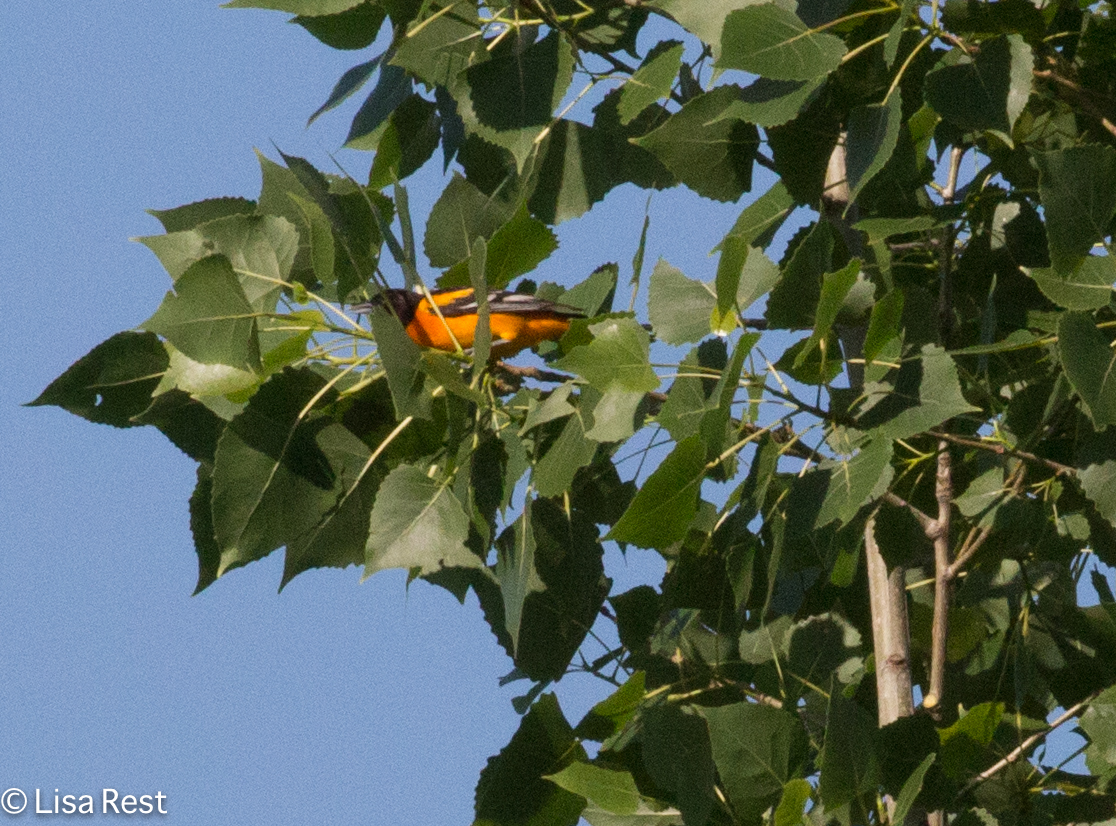
I did catch a glimpse of a female Baltimore Oriole.

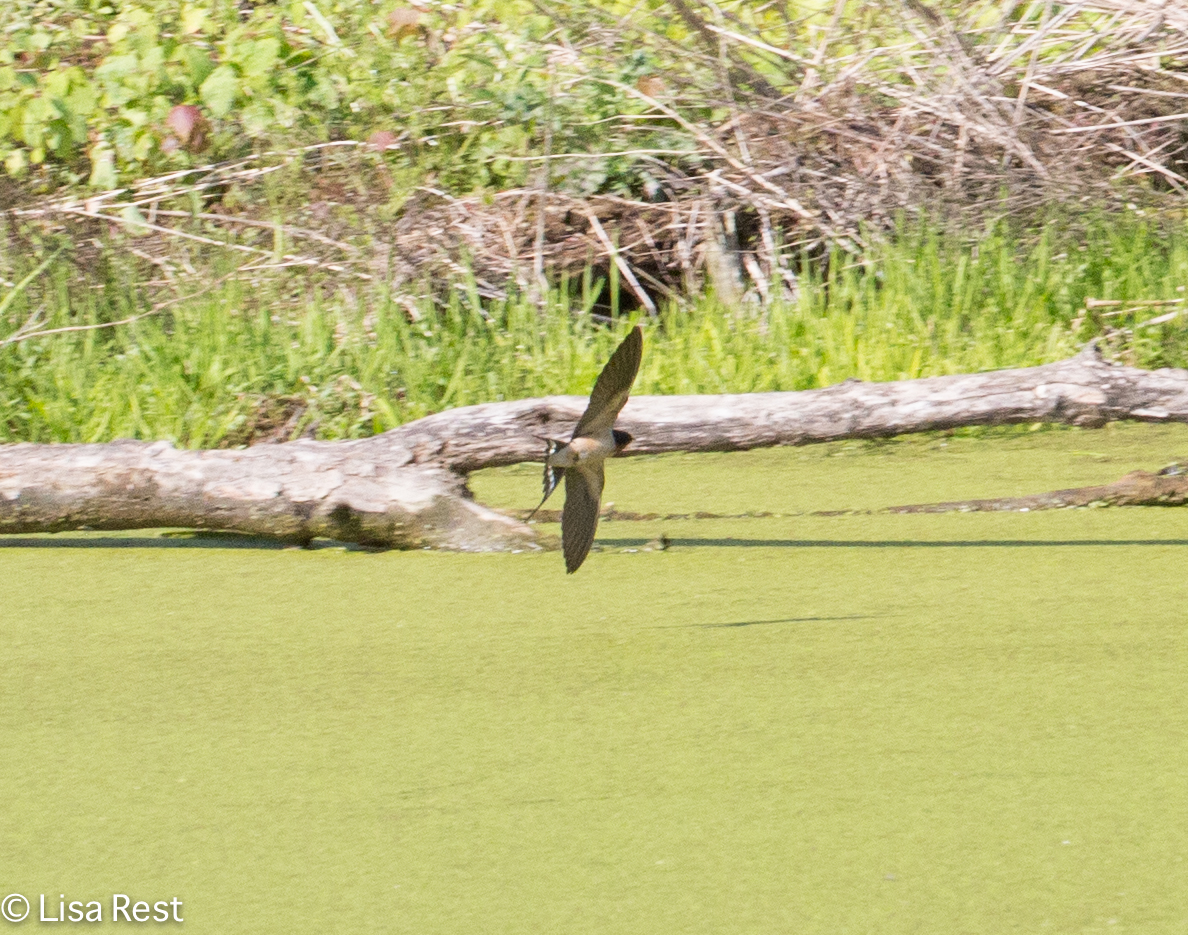
I started taking pictures of this swallow from a great distance by the parking lot when I first got out of the car – and upon blowing them up later found it flying upside down.

Robins are ubiquitous now and their numbers have increased, thanks to a successful breeding season. Worms are plentiful now with the rain.

Another Indigo Bunting…or two. They’re not singing constantly anymore.

Turkey Vulture

A few more scenes from the Portage…

The second bridge spans over very little water.

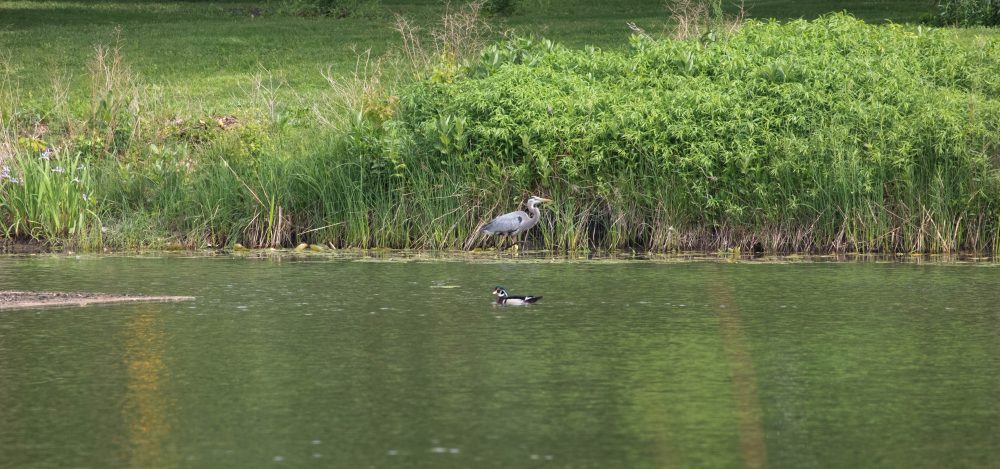
The bottomlands by the Des Plaines River were flooded, affording a Wood Duck hen a place to shelter her babies. I saw them but it was impossible to capture them in the dark shadows as their mom moved them quickly away.

This looks like a Common Grackle
One more song…

I went back this past Saturday when it started out quite cloudy and cool. Fewer birds posed but I had some interesting observations. I’ll try to round them up before the weekend. Midsummer is quiet in its abundance.

Back to the Portage

But first, a Song Sparrow that somehow didn’t make it into the last post. I have heard Song Sparrows on occasion at the Portage but have not seen many this year.

This is my birthday weekend and if my memory serves me correctly, also the anniversary of this blog although I don’t remember how many years it has been and am too lazy to look it up. I did manage to visit the Portage on Saturday morning and will be back with that report later, but since I started this post two (?) weeks ago I feel obligated to finish it. I just checked. The photos below are from June 13. We were hot and dry. We have since had a lot of rain and flooding, but not quite enough to take us out of the “abnormally dry” category on the Illinois Drought Monitor.

Yellow Warblers nest here and were pretty elusive but I did finally manage to capture this one.

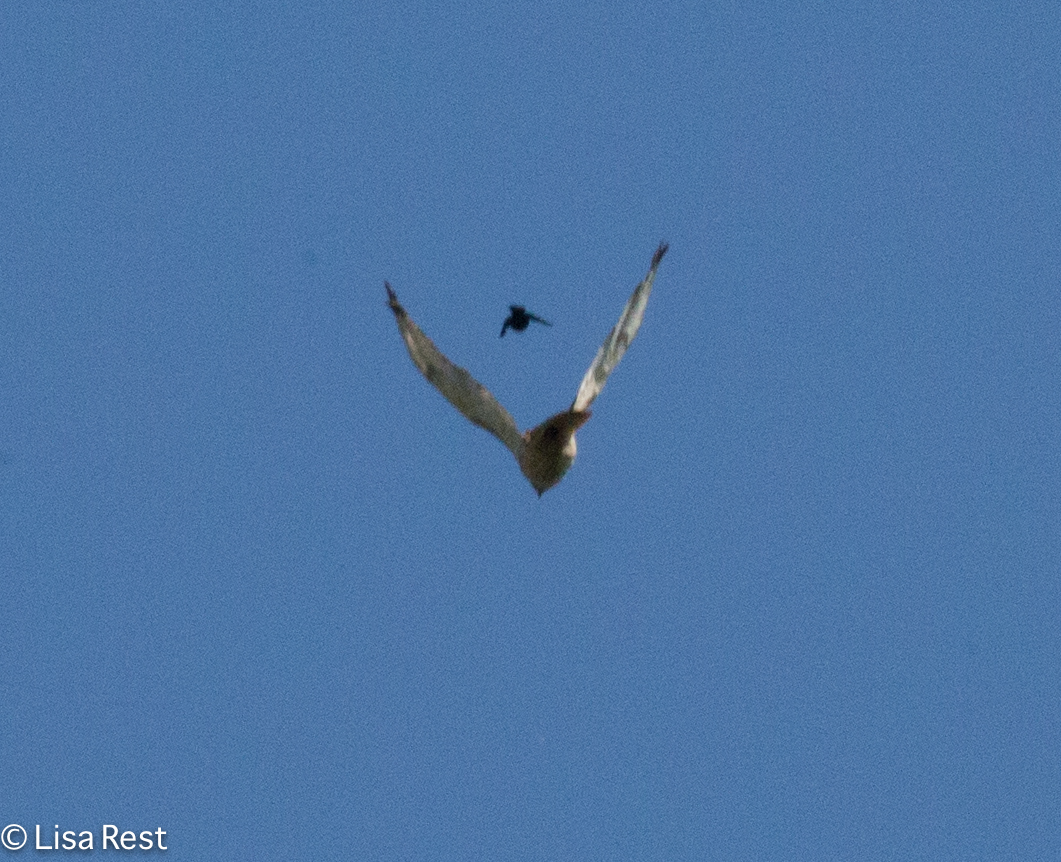
I am always intrigued by the sight of a Red-winged Blackbird chasing a Red-tailed Hawk…

Insects are sparse, which is not news, but makes the few individuals one sees that much more precious. I think I may have identified the two below. I haven’t had to resort to bug spray yet this year, although I do have a few bites I occasionally scratch to remind me it’s not over yet. The effect of insects being sparse, however, is bad news for the dragonflies and birds that eat them.

Hobomok Skipper
Likely a female Variable Dancer.

Cabbage White butterflies have been the most prevalent, and even they seem sparse. They are an introduced species.

For what it’s worth, the volunteers at the Portage have been busy reducing invasive plant species, and it is gratifying to see the natives return. Last time I saw them at work they were cutting away massive swaths of hemlock. Unfortunately it was in flower so it will likely return. But a lot of the burdock from years ago is gone. It’s a slow process.

Hemlock

More often heard than seen – a Blue Jay.

The male Brown-headed Cowbird below intrigued me by the light-colored throat feathers. It might just be a trick of the light.

Below is what I believe is a young Northern Flicker peering out of a nest hole.

The Indigo Buntings are still going strong with their songs and territories and it’s hard to resist them. I have to quit taking them for granted. They weren’t here in these numbers ten years ago.

The Baltimore Orioles have been harder to spot as they tend to their broods, but I got lucky and watched this one as he visited the nest.

Baltimore Oriole nest

So I hope to be back later today with a little yard report. If I could have one thing on my birthday (while it’s still quiet and getting too hot to be outside for very long), it would be to have time to write another blog post.

My best friend from junior high is in town from California for her mother’s 100th birthday and has chosen to stay with me and the birds. Luckily there is a relatively comfortable finished attic – I call it my people space. I bought a new room air conditioner which seems to be keeping it cool enough up there. So I am foregoing my traditional visit to Goose Lake Prairie this year. Maybe I can take off for that grassland later in the month. Today I will enjoy hanging out with my friend and trying to be lazy.

Hot and Dry at the Portage

If my memory serves me correctly, last year we were complaining of too much rain. I remember the tall plants in my backyard towering over everything and wondering if perhaps I should have discouraged them earlier. As it turns out, the tall plants seem to be growing up just as much without rain, but I am in no mood to discourage anything.

Anyway, Saturday I went to the Portage early and encountered John as I pulled into the parking lot. He leads discussions and walks on Saturdays at 10:00 AM regarding the history of the place. He had arrived early, said he was getting into birding but had forgotten his binoculars and wanted to know if he could tag along with me. We had a good time talking and walking along the trail, and he told me the history of the early explorers and how the Des Plaines River was diverted to feed the Chicago Sanitary and Ship Canal. So initially the little bit of water now left to the Portage is part of the original Des Plaines River bed, but nothing feeds it except rain. With that knowledge I am amazed that when I first started coming here, there was enough water to support herons feeding and even a pair of Green Herons nesting. I haven’t seen the Green Herons here for several years now.

This year there doesn’t seem to be water to make it buggy enough to support Eastern Phoebes or Eastern Kingbirds like last year. We do have Eastern Wood-Pewees and Great Crested Flycatchers.

When John and I started up the trail we encountered that large painted turtle featured at the head of this post, on the gravel path. I wonder if it was a female looking for a place to lay her eggs. There haven’t been many turtles visible this year. The drought is affecting them as well.

But then we saw an Eastern Wood-Pewee, who even sang for us. I love these little guys – I often hear them clear across the woods but don’t always see them.

While we paused on the back trail on the other side of the fence, an Osprey flew over.

I was able to show John my most reliable Indigo Bunting whose territory is on the East side of the North bridge. The bunting was happy to pose and sing for us. A recording of his song is below the photos.

John had to leave to get ready for his tour/talk so we parted ways. I will have to attend one of his presentations. I confess I used avoid the Portage on Saturday mornings because of all the extra people, but now I’ve gotten used to it after the pandemic brought in a lot of new visitors.

I continued along the trail in the direction I usually take. The rest of these photos are not in order but they are the only birds I was able to capture. Below is a Red-Belled Woodpecker on the dark side of an oak tree.

I caught this Northern Flicker inspecting a nest hole.

Whatever you may think of Brown-headed Cowbirds, they can still be attractive.

Below is the first butterfly I have seen except for a Monarch here and there. It’s a Skipper, but I haven’t been able to identify it precisely. It was very tiny.

There was a Bald Eagle flying over.

There were very few swallows – this was the only Tree Swallow I saw.

Even the Red-winged Blackbirds were lying low.

I sat on the bench by the parking lot before returning to my car and caught this male Baltimore Oriole foraging around in the low trees at the edge of the lawn.

I decided to forego birding again on Sunday morning and opted to do a little yard work in anticipation of more to come. The Berwyn Historical Society this year decided to start an annual garden walk event on June 19, and my crazy garden, a/k/a postage-stamp-sized wildlife refuge, has been selected. The idea was pandemic-inspired because normally the BHS would be offering a bungalow tour, but since that wasn’t possible, the idea for an outdoor event occurred. My front yard still appears somewhat organized even though its creator, who has since passed, would likely have issues with all the Common Milkweed and other aggressors overtaking his original plan. It was just my luck that a Monarch visited the milkweed a week and a half ago and seemed to be laying eggs so I don’t dare remove any of it. I also have discovered some new visitors, such as Narrow-leafed Blue-eyed Grass.

My backyard is a small forest with a lot of native plants and grasses that need more control than I have been able to do. I am taking the week off before the walk to make as much sense out of it as I can and also to make sure I can identify everything – or almost everything – that’s growing. I have stopped feeding the birds and squirrels, except for the occasional hummingbird or oriole that might stop by, so the rat control project can succeed. The only thing I have to contend with is weather and stamina. So working in the yard is what I am looking forward to next week.

In the meantime I hope to be back with some pictures from previous outings this spring.

Once More with Sunshine

I went back to the Portage Sunday to see if abundant sunshine would allow me to see more birds. As it turned out, it was harder to capture most of the birds – except for the Indigo Buntings who were readily available – but in going through my photographs later I discovered the camera saw more birds than I did and I found some unexpected species. Nothing rare – it’s spring migration, so just about anybody can show up.

Vesper Sparrow

Not only was the Vesper Sparrow unexpected, but I was also surprised to see a Black-Billed Cuckoo, although I have seen them at the Portage on occasion before.

There were swallows like the day before, although not as many. I have concluded that the Northern Rough-winged Swallows fly in a more deliberate fashion which makes them easier to capture. Still I managed to snap one photo of a Barn Swallow in the lower right-hand corner.

So the Indigo Buntings were busy singing in the sunshine. I am convinced they have an artistic sense of the best places to perch for photos. I love the way this one was initially framed by the split of the tree trunk.

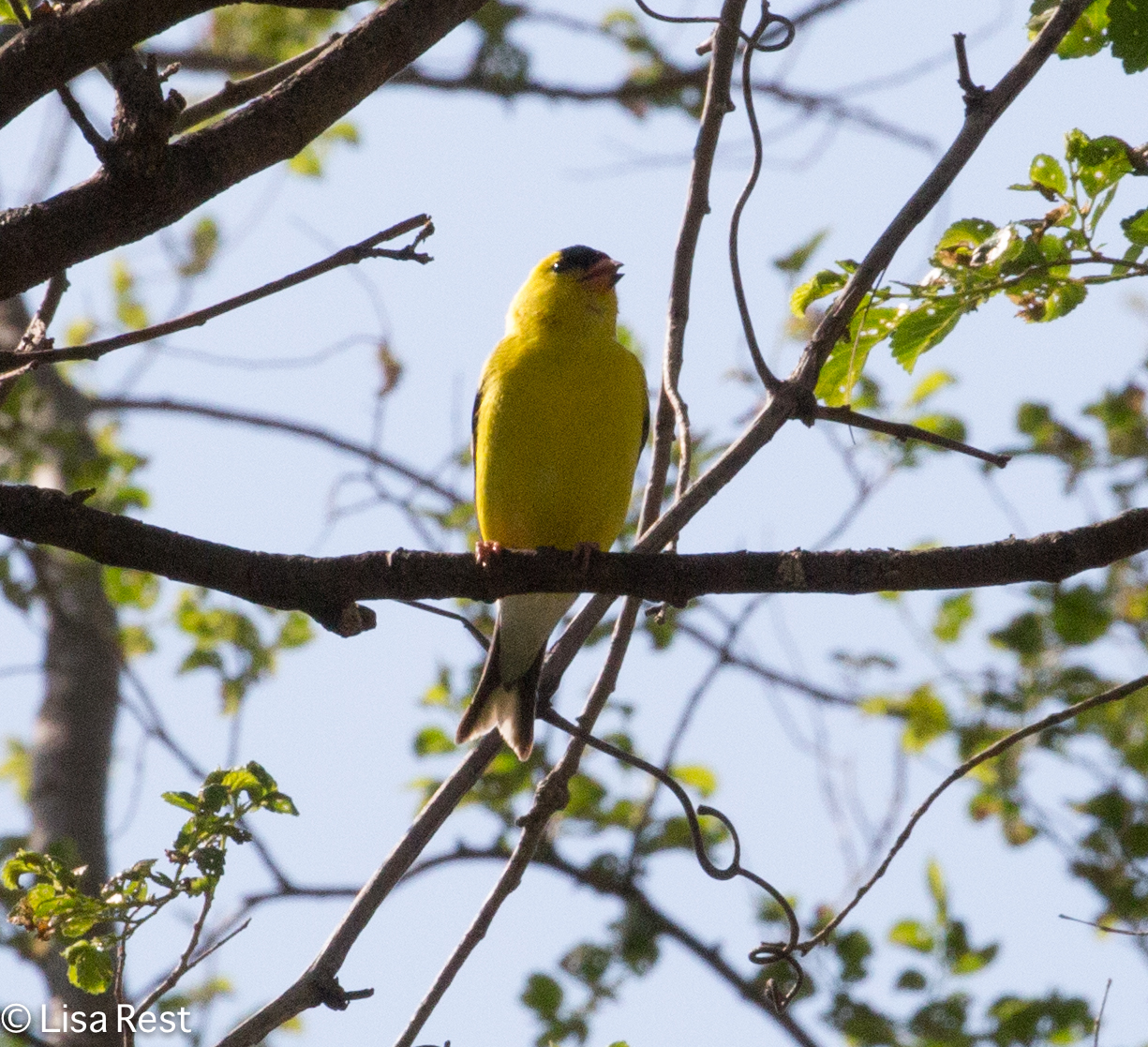
Male American Goldfinches are in full bloom too.

The Red-winged Blackbirds are looking a little tired of it all already.

Gray Catbird

I thought I was hearing the tail end of an Eastern Towhee’s song – and then I spotted one way up high (used to seeing them closer to the ground). Below the shots of the male is a partially visible female Eastern Towhee.

I was also hearing an Eastern Wood-Pewee for the first time this spring. I barely captured a picture of one below.

Red bird of the day turned out to be a male House Finch.

The Baltimore Orioles are busy gathering nesting material. Both female and male birds are below.

This is a really unfortunate place for a Lincoln’s Sparrow to show up but I’m glad one was on site anyway.

I walked around back by the water reclamation district and saw three Killdeer. Below is one of them.

There were quite a few Brown-headed Cowbirds. I got closer shots of the female in the grassy area by the parking lot on my way out.

So we really, really need some rain. This is how the Des Plaines looked on Saturday. You can walk down to it easily because the bottomlands are all dried out. Unfortunately because of the lack of water, there were no birds by the river.

So it wasn’t a great day for warblers, but I did manage a few pictures of a female Bay-breasted Warbler.

Can’t leave without a Robin. It’s got to be getting harder and harder to find those worms. The Robin below has a not-so-tasty-looking worm in its bill.

With a little luck I will be back with the prelude to all this before the weekend when I will likely be outside again. There is rain in the forecast but I have learned to become skeptical of the outcome. At least it is still fairly cool, but that will change too. This is all affecting my mood, to say the least. I am looking forward to swimming tonight – a sure antidote to depression.

Migrant Morning at the Portage

I had a lot of other photographs I was going to post from previous visits but they will have to wait. In spite of the rainy forecast Saturday morning, I went to the Portage and even though it was overcast, it was magical. Within a minute or two I had heard 10 bird species. I saw most of them and many more.

Perhaps the first bird I saw and heard was a Baltimore Oriole. There were easily half a dozen males staking out territories. This was the only one sitting out in the open.

I encountered a small flock of warblers fairly early. I was lucky to be able to sit on a big fallen log that has become permanent enough to attract graffiti. The opportunity to sit and look up into the trees was welcome. Below, couple Yellow-rumped Warblers.

I encountered small groups of White-Crowned Sparrows. They were delightful to see, but they weren’t singing. I have had them in my yard for a couple weeks and they have always started singing the minute I open the door. It was nice enough of these guys to pose for pictures.

I’ve been hearing Yellow Warblers for a couple weeks but hadn’t seen one yet at the Portage. But I found this one in my photos.

Yellow Warbler

And then, of course, the Indigo Buntings. I underestimated their ability to look gorgeous even in poor light.

Below is a series of Black-and-White Warblers. There have been times I haven’t been able to capture these guys and girls, so this was a real treat for me.

I think I’ve decided Hackberries are my favorite trees. The birds like them a lot, and the Portage now seems to be full of them. They are in the elm family and I suspect were planted to fill the gaps left by all the elms we lost over the years to Dutch Elm Disease.

Here’s a Black-capped Chickadee demonstrating why he likes Hackberries. They seem to attract good worms.

A few birds I would expect to see all summer…

This female American Robin looks a bit exhausted. She also appears disheveled with her brood patch.
A male American Goldfinch
Gray Catbird
Great Blue Heron flyover

There were at least 30 swallows over the water. I had three species – Tree Swallows, Barn Swallows and Northern Rough-winged Swallows. They are all represented in the slide show below.

I looked up and saw this Scarlet Tanager. I’m going back to see if I can find another.

I always hear at least one White-Breasted Nuthatch but I haven’t seen any for quite a while. This one made up for all the ones I missed.

Song Sparrow

Here’s what a Magnolia Warbler might look like straight above you. Below I have grouped several views of the “Maggies” who always seem to engage with the camera.

There were some barely-there birds…

Blue Jay
Female Cape May Warbler
Female Downy Woodpecker

With one more Magnolia Warbler photo, I am done with this post. We are going to get warm over the next few days. I wish I didn’t have to work, it would be ideal weather to see more birds. But the somewhat crummy weather this morning created conditions for some nice encounters with beautiful birds. I really can’t complain.

Spring Slowly Unfolds

The weekend before last was warm – but very windy. I went up to the Hebron Trail/Goose Lake Natural Area anyway to see if I could find any Yellow-Headed Blackbirds. I did eventually see them as tiny little yellow-headed black dots far away. It was almost too windy to see any birds well at all.

Farm buildings adjacent to the trail…
The view going…

Where there was a break in the trees, I was surprised to see this one Eastern Kingbird sitting quietly for me to take its picture. I had to think a bit about its identification at such close range!

There were several Blue-Gray Gnatcatchers but they were hard to see.

I don’t know why I make a fuss about Brown-Headed Cowbirds but I still think the males are beautiful.

I had heard Indigo Buntings the day before at the Portage but this was the first one I saw. The closer photographs below are from last year. I will likely get more opportunities this year after the birds establish their territories and start defending them.

Red-winged Blackbirds are easy to see at this location, even on a windy day.

Although it was a hard day for warblers, it was still warm enough for bugs and worms, and I managed to see this Nashville Warbler.

On the trail, coming and going, I saw a Brown Thrasher.

After I had exhausted my patience with the Yellow-headed Blackbirds heard but not seen from the observation deck, I walked a few feet past and stood – only to see a Sandhill Crane take to the air a few yards away. There is nothing quite like seeing a bird with a 77″ wingspan coming toward you.

A few more views…

I was surprised to see a Gray Catbird sitting and calmly looking at me. They are usually quite secretive.

Playing the hiding game was a Yellow Warbler.

Even Song Sparrows were laying low…

A little more Sandhill Crane action…

One more warbler – a Palm Warbler…

Canada Geese are easily dismissed, but they are still striking looking birds.

We are not on the Brood X Cicada a/k/a 17-year locust map this year, but here is a cooperative Cicada from last summer. It hitched a ride into my post with the Indigo Bunting photos.

I have as many more photographs to share as I have other obligations preventing me from doing so. I hope the space between posts will narrow a bit in the not-too-distant future. Hope for the promise of spring.