Golden Crowns in Riverside

I’ve been trying to write this post since last Tuesday. Spring migration has begun, and at this rate I will not be able to get caught up until next spring. On my visit the morning of April 5 to Riverside, one species stood out, albeit the smallest: Golden-crowned Kinglet. I first encountered several by the paved path in Riverside, but on the Riverside Lawn side of the river, there could easily have been more than the 50 I reported. They were slightly outnumbered by Red-winged Blackbirds that I did not bother to photograph in cloudy light, but I did record them because some of their vocalizations reminded me a bit of other blackbirds I have heard and you can hear the beautiful cacophony in the second recording below. The first recording has the sound of the Kinglets – that little tiny tinker bell sound on top of the blackbird chorus.

Golden-crowned Kinglets
Red-winged Blackbirds

I took way too many pictures of the Kinglets because they were practically at eye level or on the ground…

Here’s how the Des Plaines River looks these days from the paved path in Riverside.

On the other side of the paved path, the flood plain was flooded a bit, providing enough water for a group of Blue-winged Teal along with Mallards and Canada Geese. As for the geese, I have been seeing 68B a lot lately.

In addition to all the Golden-crowned Kinglets I saw my first Ruby-crowned Kinglet of the season.

Here’s how the river looked that morning from the Lyons side by the Hofmann Tower.

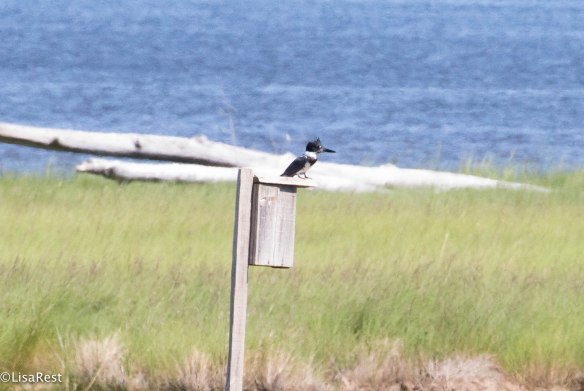
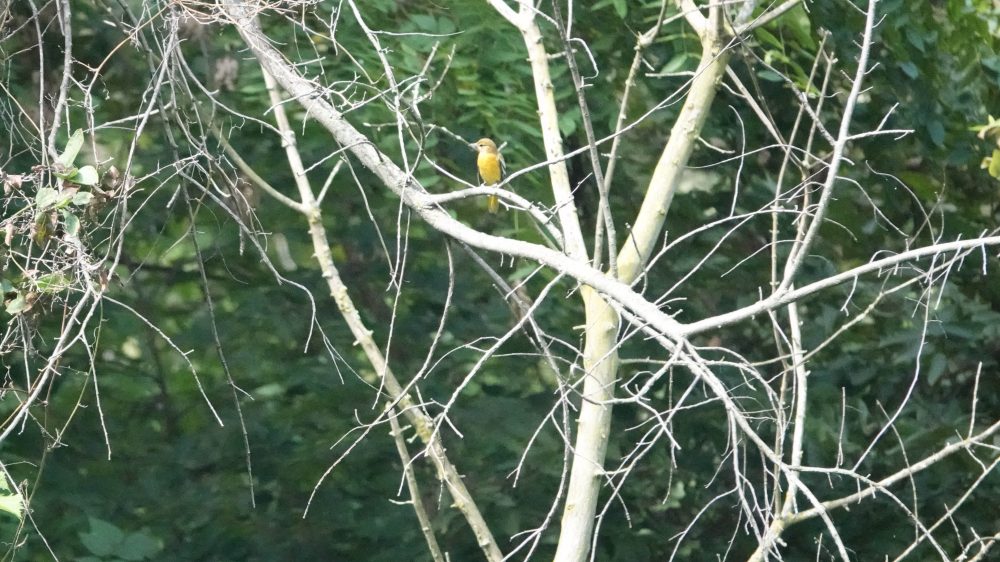
When I came back to the bridge on Joliet Avenue I could just barely see a Belted Kingfisher perched far away in this tree. I had followed her in flight from another location. I have usually seen a male at this location so it was nice to see her with her rufous breast band.

There were still some Red-breasted Mergansers in the river, although they were pretty far away.

I always have room for a perching Northern Cardinal. Here are my two volunteers from that morning.

With the available light on and off, I thought these Mallards looked rather content in the fluddle.

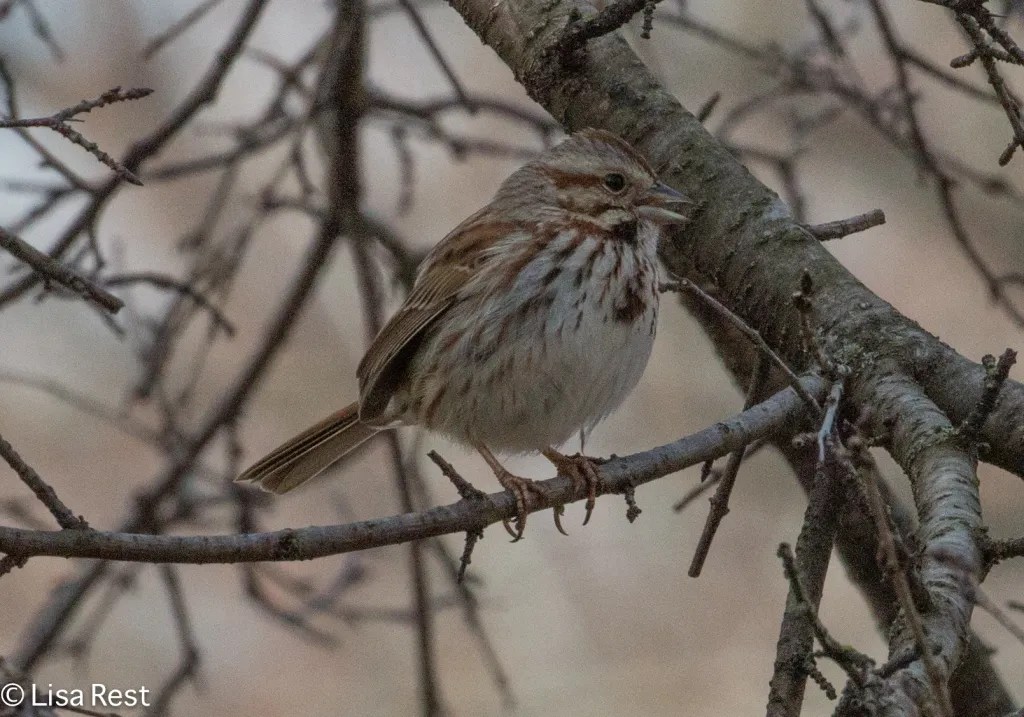
The perched Song Sparrow sat and talked to me, he didn’t sing this time. The one on the ground looks to be a different individual.

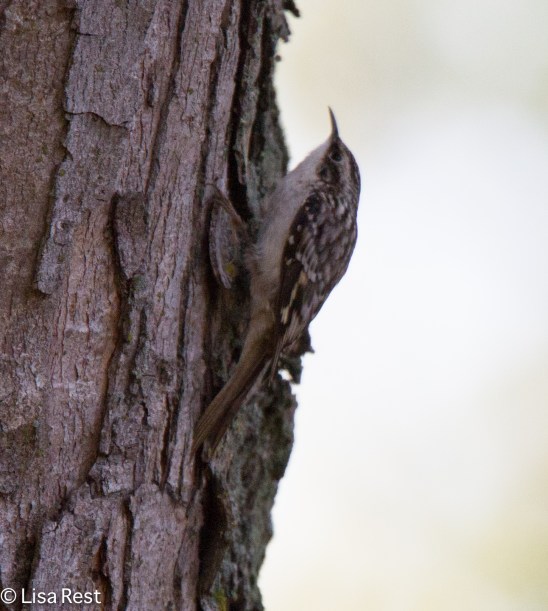
Brown Creepers never really disappeared but they seem to be making a comeback for spring anyway.

I wasn’t able to capture a Great Blue Heron by the river that morning but I sort of managed to commemorate these two flying over.

Here are two more of my favorite Golden-crowned Kinglet photos.

I will try to get back sooner. I have been alternating visits to Riverside with the Chicago Portage and every day I have gone out, I have seen something new.

I also have been spending time visiting with my flute-playing friend Linda who very unfortunately broke her femur a week and a half ago. She is recuperating well from a successful surgery which put her back together, and she is now in rehab. I will miss playing with her in this year’s Spring Music Festival but pray for her complete recovery and making music together again.

Two Visits to an Old New Place

Thanks to a dog walker I met twice last week… I visited a new-for-me place which has been in my backyard, so to speak, all along. I had been meaning to check out the Riverwalk on the Lyons side of the Des Plaines but never realized the other side had a park along the river called Indian Gardens. Many thanks to Ken the architect from Riverside who told me about it. It’s actually closer to home than the Portage, even, by about a couple minutes.

These pictures are from two days’ visits. I parked on the Lyons side and then walked across the bridge and through the Indian Gardens park. I didn’t venture past the tennis courts the first day, but on the second day I walked through them and found where there is an “unmanaged” trail along the river where I will be going more often.

The Lyons side has a fantastic Hoffman Tower which provides a place to hang out for a sizable number of feral pigeons. It occurred to me that I hadn’t seen a flock of pigeons in flight for quite some time.

Walking through Indian Gardens

Blue Jays seem to be everywhere lately. They’re carrying on noisily and are even sometimes visible.

Time to get your fill of Magnolia Warbler photographs because I just barely saw one the last couple days – I think they have moved on, after dominating the warbler migration scene for two weeks. You can click on any of these pictures to get a better view.

Monarch Butterflies are still migrating here and there.

There are a lot of Northern Cardinals at this location, but they are more often heard than seen. I did manage to capture a few females, though. I’ve never seen one capture an insect – it looks like a grasshopper. And then the one perched in a tree with its leaves already turning – she nearly blends in.

It’s absolutely wonderful to see the Great Egrets – even if it’s mainly due to the fact that we haven’t had any substantive rain for at least a couple weeks and it’s been hot, so the middle of the Des Plaines River is very low – perfect for waders.

There were 4 Great Egrets on my last visit – only 3 visible in this photograph

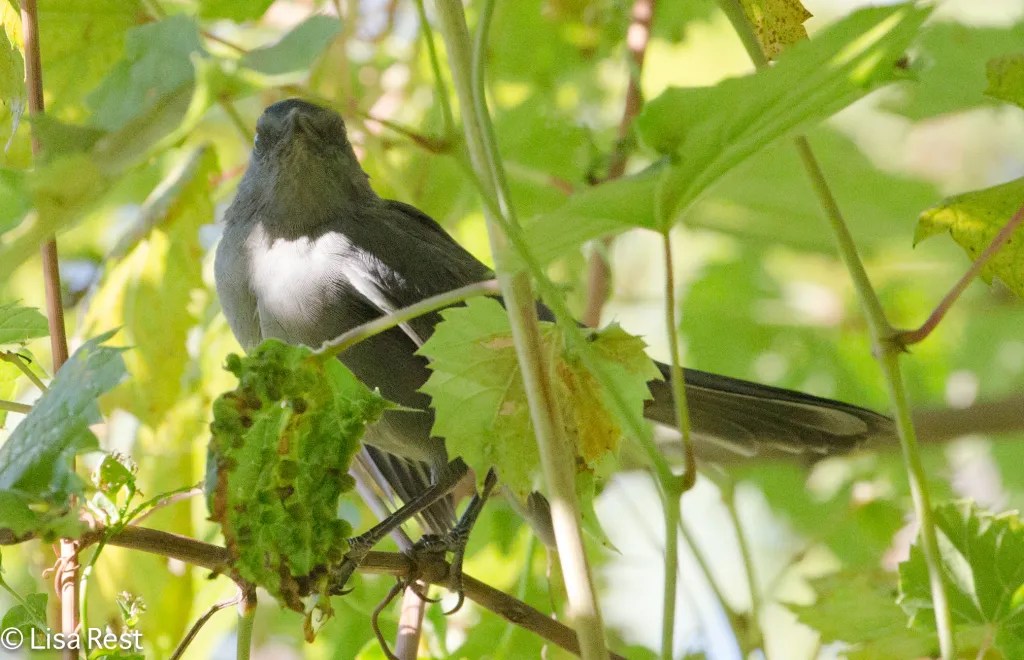
Gray Catbirds have evaded my lens nearly all summer and now they are getting bolder as they prepare to fly south. The young bird amongst all the dead leaves was right at my feet on the Lyons side.

Canada Geese are moving around and I always love to see them in flight.

Not as many Great Blue Herons as Great Egrets but they are also taking advantage of the shallow river.

On occasion, a Double-Crested Cormorant. Since they are divers, I can’t imagine this bird was too happy with the shallow water situation.

European Starlings are not in huge flocks like they were several years ago. Here’s a few staked out on a dead tree.

I was delighted to see a Belted Kingfisher fly by noisily on my second visit, as I crossed the bridge.

A sneaky closer view of this Great Egret.

Below is a busy Blackpoll Warbler, blending in with the leaves.

Blackpoll Warbler
An American Robin – I liked its perch choice

I saw the Osprey on both visits. On my second visit, just as I discovered the access point to the trail closer to the river, I inadvertently disturbed the Osprey – it was perched in a large tree right past the trail head, until I approached – so I will be more careful to look for it before I venture forth next time. The bird flew across the river to perch on the tree below. It was quite something to have a bird with a 63″ wingspan take off right over my head.

I was happy to find a Canada Warbler and took advantage of its willingness to stick around for several shots, albeit at a distance. This looks like a first year bird, with a faint necklace.

Swainson’s Thrush

I was trying to capture the Gray-Cheeked Thrush below and was photo-bombed by a Magnolia Warbler.

I thought it would be easy to combine all these photos into one post but it seems I have overshot my limit again.

Many more photos to come – if I can keep up with it. I have to get used to my new routine, while it lasts anyway. I have a feeling I will be delving into the archives over the winter months playing catch-up. This morning started off cool and cloudy at Columbus Park where we had a scheduled walk. We didn’t see very many birds and those that we did were not easy to capture in low light. I feel like I’ve been given the rest of the morning off to finish this post.

Back to Mid-April

In my typical fashion, I have been trying to write this post for the last week and a half. So while we are all wondering how to get through the holidays this year-like-no-other, I feel a sense of loss too, even though I likely would not have had any plans to go anywhere myself. But there’s also a sense of opportunity in any day I really don’t have to think about work.

Even though it was a cool, late spring and in the middle of the pandemic, there’s something oddly comforting these days about looking back.The Portage looks about like this now – no leaves on the trees, everything muted in browns and grays – but the birds are different in appearance, and most of these species have left for the winter. I took way too many photographs on this day, which might explain why it’s taken me seven months to process them. I won’t be doing a lot of explanation…that might take me another seven months. just hope you enjoy the images.

It will be a while before male American Goldfinches look like the one below.

Out over the Des Plaines River that day, there were three Belted Kingfishers flying around. I didn’t do a very good job of capturing them, they were quite far away. But at least one flew close enough to be recognizable.

A returning Song Sparrow
A Blue Jay, blending in with the sky and the barren tree
Waiting to come back to life.

I keep trying to get a decent photograph of the golden shafts on a Flicker and usually fail, but this time I got close.

There were a couple Blue-Winged Teal hanging out with the Mallards.

One Ring-Billed Gull flew over low enough to be identifiable.

Robins started coming back to their territories. The one in the second photograph is barely discernible from the tree it’s in.

Of course nothing says spring like the return of Red-Winged Blackbirds.

It was early enough in the morning to encounter a couple deer.

Please forgive me, I took way too many pictures of Golden-Crowned Kinglets. They are all gone now, but it was a joy to see them return in April.

Downy Woodpecker – the Portage’s most numerous resident woodpecker

Here’s a thrush I don’t see often – a Veery.

I took a few too many pictures of this Ruby-crowned Kinglet too, but at least I did get somewhat of a shot at the ruby crown.

A Yellow-bellied Sapsucker…

Yellow-bellied Sapsucker

I am always happy to see a White-Breasted Nuthatch, even though they are with us all year long. I never tire of them.

The light was nice on this Red-Bellied Woodpecker.

Red-bellied Woodpecker

Brown-headed Cowbirds are…what they are.

The pair of Eastern Bluebirds this year were such a welcome sight. Although I saw them for several weeks, I don’t think they wound up staying to breed. I can only hope they give the Portage a second chance next year.

The first warbler to show up in the spring, and the last to leave in the fall… the trusty Myrtle, or as long as it’s still lumped with Audubon’s (last time I checked), it’s a Yellow-Rumped Warbler.

I will be back with more from last spring (!) and some more current observations. I hope you are safe and well, wherever you are. And I hope you continue to find moments of peace and solace. There is still a lot to be thankful for.

Return to Goose Lake Natural Area

After the Portage weekend it felt like time to revisit the Yellow-Headed Blackbirds and maybe get to see a Black Tern, so I got up early on the 30th — a month ago already! — and went to Goose Lake Natural Area near Hebron. I am beginning to absolutely love this place, except for the hour-and-a-half it takes to get there, but of course that’s why it’s so special. I hope to go back sometime this coming weekend – after I visit the other Goose Lake, which is less of a drive in the opposite direction.

The Yellow-Headed Blackbirds were on their territories and the one closest to the trail was easier to see than last time. I think I caught an obscure photo of a female in the top center of the photos below.

The Yellow Warbler below stayed partially hidden, but I caught up with its cousin later.

Yellow Warbler

There were plenty of Red-Winged Blackbirds, but the males didn’t offer themselves up for photos. They probably know they are not the main attraction at this place. Below are couple females.

On the walk back to the car I spotted the Wild Turkey below. It was flushed by people approaching from the other direction.

I left thinking I had missed the Black Terns but found this photograph of a fleeting glimpse of one leaving the area.

A family of Pied-Billed Grebes below – I think mom was trying to show the kids how to find food.

I managed to capture the female Belted Kingfisher below flying across the water and then the marsh, looking for a place to perch with her catch.

Willow Flycatchers like this place too.

A couple Great Egrets flew over.

A Common Yellowthroat was bold enough to look me in the lens.

I heard the Great-Crested Flycatcher below before I managed to barely see him when I first hit the trail.

An American Crow…

A bit puzzled by the nest in the reeds below until it proved to be an American Robin sitting on it. So they do nest in places other than trees and the fascia of suburban houses.

A male Mallard flew by, reminding me that he’s a beautiful bird too.

A small flock of Double-Crested Cormorants flying over – of all the flock names, I will choose a “swim” of cormorants. You might prefer “flight,” “gulp”, “rookery” or “sunning”.
The Hebron Trail…
An unusually cooperative Gray Catbird
One more of the Yellow Warbler

I’ve been busy at work, so goes the bulk of my laptop time. Hoping for a bit of a respite this coming weekend, and not too many deafening firework explosions. Summer is definitely upon us. Take a deep breath.

Taking Stock

I started writing this post on Friday, after I took a break from the work email and made a trip to The Feed Store to stock up on birdseed, peanuts and spray millet for those inside and out. Working from home is so strange. In my head I am still working, but home has all its necessary distractions. I keep thinking I will have gotten used to it only when I have to go back to the office. It was still good to get out, and even better to get exercise moving everything into the house and the back porch. It was a chilly, gray day, but it is March, which my mother always used to refer to as the “adolescent” month, so I endure its changeability with her blessing.

Speaking of adolescents, I suppose the bird below could be called an adolescent Purple Finch. I am at a loss as to why I took so many photographs of it, but when in this plumage maybe the last thing I’m thinking is “Purple Finch” so it’s a reminder.

As I may have mentioned previously, I moved a lot of photographs off the laptop recently. Many were of winter scenes never shared, but I was tired of winter and it’s more than enough enduring this winter of the soul, so I have gone back to the remaining pictures from my trip to New Brunswick last August. And in that location at that time of year, there were a lot of in-between looking birds getting ready to make their first trips south for the winter.

I particularly got a kick out of this Yellow-Rumped Warbler. My friend Lesa tells me she has already seen some of these guys locally as they start to go back north. I could fantasize this was one of them.

Yellow-Rumped Warbler

I’m too lazy to go back and try to reconstruct exactly when we were wherever on August 20 but my notes say we were on the Salt Marsh Trail and Callendar’s Trail with a beach picnic area in Kouchibouguac National Park, which likely accounts for the shorebird images and others with wide open spaces for a background. We also visited the C. Irving Arboretum.

Red-Breasted Nuthatch
Short-billed Dowitchers
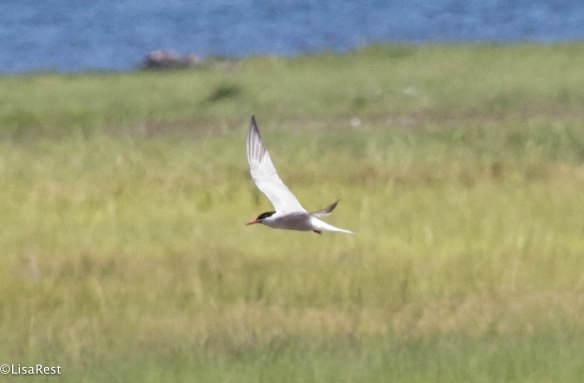
Common Tern
White-faced Meadowhawk (male)
Belted Kingfisher
Common Raven

Thanks for stopping by and joining this visual journey. I will be back soon with more images from last summer. Spring is coming, and with it, hope for renewal.

Spring Preview: Columbus Park

I had planned to write a post before my departure for Big Bend but it didn’t happen. Now I am back from an amazing trip, but even though I have started processing my pictures, it will probably take me a couple of weeks given the busy schedule I am returning to, so I will see if I can manage this post for the moment.

I did a Columbus Park walk on the Saturday before I left, and it was to witness the first hint of migrating birds, but our spring has been anything but spring-like, with snow occurring the next day and from what I hear, another wet, fluffy snowfall the Saturday before my return. Yet I’m planning on putting out the hummingbird feeders tomorrow morning. C’mon, it’s May!

The big wading and diving birds were easiest to spot… It was particularly entertaining to watch the Double-Crested Cormorants drying off in the sun. Maybe the Canada Goose thought I was trying to take its picture.

We had several Wood Ducks, but this was perhaps the closest view I got of a male swimming in front of a female Mallard.

A little army of hungry Golden-Crowned Kinglets appeared on the grass in front of us at one point, reminding me of the very first time I ever saw them years ago doing the same thing on the lawn at Millennium Park.

The female Belted Kingfisher below was pretty far away but nice to see.

This Black-crowned Night-Heron flew by us before landing in a tree.

American Robins have been on their territories for weeks now and we saw many.

Swamp Sparrows outnumbered Song Sparrows (4 to 2!) but were hard to photograph.

Eastern Phoebe arrivals are always a sign of spring. The similarly-colored bird below the Eastern Phoebe is a Northern Rough-Winged Swallow.

You know the Red-Winged Blackbirds are ready for business when the girls start arriving.

Northern Flickers put on a show for us but they were hard to capture as well.

Our last “lawn” species was Killdeer.

I got caught up on my sleep last night, but I’m heading into a busy weekend. Saturday morning is the Spring Bird Count, Saturday night is the Spring Music Festival…and with any luck on Sunday, I can start cleaning up my yard, as green things, both wanted and invasive, are starting to emerge. The recommendation to not clear anything until the temperature stays above 50 degrees Fahrenheit will be difficult to adhere to… we are still dropping into the 40’s, albeit the higher 40’s, overnight. I do remember seeing a butterfly or two before I left. I hope to see some insects Sunday and maybe a better forecast.

Fall Migration Continues II

YRWA Portage - 10-13-18-2668

Yellow-Rumped Warbler at Chicago Portage

And continues and continues and…I have been so busy birding every weekend it’s taking even longer to process the pictures. These are from last week – October 13 – Thatcher Woods and the Chicago Portage.

WTSP 10-13-18 Thatcher-2188

White-Throated Sparrow at Thatcher Woods

The birds blend in more and more with their surroundings, but I find it so intriguing. Although it does take almost twice as much effort to get the camera to focus on the bird.

LISP 10-12-18 Thatcher-2303

Lincoln’s Sparrow, Thatcher Woods

I was very pleased to find a Winter Wren hanging out with the sparrows and remaining warblers at Thatcher Woods. I always think of Don Kroodsma and The Singing Life of Birds when I see a Winter Wren, even if it’s not singing.

Much like two weeks earlier, there were still a lot of Palm Warblers and Yellow-Rumped Warblers at Thatcher Woods.


Here’s what the Portage looked like when I got there.

10-13-18 Portage-2436The Yellow-Rumpeds were foraging in the duckweed.


It was a pleasure to see several Hermit Thrushes. And nice to see them somewhere other than hopping around on park lawns downtown.

HETH 10-13-18 Portage-2477

Hermit Thrush, Portage

I got a brief, lucky look at a Belted Kingfisher flying over the pond.

BEKI 10-13-18 Portage-2466

Belted Kingfisher

Some Song Sparrows are already practicing singing for next spring, which might explain why I have heard more than I have seen.

SOSP 10-13-18 Portage-2458

Song Sparrow

Out on the road overlooking the compost piles that now decorate the Metropolitan Water Reclamation District property, I saw this Red-Shouldered Hawk land in the tree and sit for a long period of time.

RSHA 10-13-18 Portage-2640

Red-Shouldered Hawk

Other raptors flew overhead, including the Sharp-Shinned Hawk below.

SSHA Portage - 10-13-18-2702

Sharp-Shinned Hawk

It took me a while to realize that the birds below are Purple Finches. There seem to be quite a lot of them at the Portage this fall.


PUFI Portage - 10-13-18-2521

Purple Finch

Not to be confused – much – with House Finches…

HOFI Portage - 10-13-18-2583

House Finch

Ruby-Crowned Kinglets are still abundant. But the bird below right is a Golden-Crowned Kinglet. It was perched about a foot and a half in front of me and we bonded for a while, but it was much too close to get a picture of it then!

Still seeing Eastern Phoebes, although I expect fly catching is becoming more difficult as temperatures drop.

EAPH Portage - 10-13-18-2664

Eastern Phoebe

My last two photos are of Hermit Thrushes. The second one is for the russet color of its back in the sun…

HETH 10-13-18 Portage-2760HETH 10-13-18 Portage-2770I’ll be on a mission to get through my photos from this past weekend… Our weather seems to have calmed down a bit and we are in a crisp but sunny period. I love fall, maybe for its nostalgia…!


Surprises at the Chicago Portage

SORA 10-8-2017-9396

Sora behind duckweed-covered Mallards

Last Sunday I got up early enough to pick up Susan at 7:15 and get to the Chicago Portage, only to find the cable barring entry to the parking lot was still strewn across the entrance. I locked the car and we walked around the parking lot area for about 10 minutes before the designated person showed up. It was well past sunrise, which is when the preserves are supposed to be open… But it was still early enough to see a Sora Rail across the duckweed not long after we started down the trail.

I have never seen a Sora at the Portage. Rails are hard enough to see just about anywhere. The usual scenario is that I might hear their beautiful song and take for granted I will never find them. This one was silent, but virtually out in the open. Susan looked across the water with her binoculars and said, “Is that a Sora?” and then I spent the next several minutes trying to get a decent picture of it.

The other surprise Sunday was a Marsh Wren, also a first for me, for the Portage. But though we saw it well for a half second, it was not interested in seeing us again so I got no photographs.

I do have one more surprise, though, from the previous weekend. I saw a juvenile Red-Headed Woodpecker, another species I have never seen at the Portage and only infrequently anywhere, and I managed to get the pictures below. I can’t help but wonder if the change in habitat, the opening up, so to speak, of more marshy areas, will attract this species more often.

Birds became visible from their foraging behavior. The tiny Golden-Crowned Kinglet below was interested in something contained in the bark of a tree down the trail from us.

I caught the Ruby-Crowned Kinglet below in a more contemplative phase.

Not to be outdone by other species adopting its favorite foraging spots, here is one of two Brown Creepers we saw.

BRCR10-8-2017-9579Closer to the end of our walk the intense sunlight started playing tricks with color and it wasn’t until I got home and processed the next few photos that I realized what we had.

WTSP 10-8-2017-9591

White-Throated Sparrow

The Yellow-Rumped Warbler below looked so blue in the light, I didn’t recognize it while taking the pictures.

The Black-Capped Chickadee below would not show its face but I was intrigued by its foraging calisthenics anyway.

And we managed to find one more Magnolia Warbler to add to the list.

Downy Woodpeckers are common all year round at the Portage but not always available for picture-taking. But this one was so busy with whatever it was working on, she put on a little show.

When we checked the Des Plaines River, the Belted Kingfisher was still hanging out.

Yellow-Rumped Warblers were the most numerous species on our visit, but it was still tempting to take the pictures below. At least you can see the yellow rump…

Shadowy images of a White-Breasted Nuthatch on the left and a Cedar Waxwing on the right. We didn’t have a huge flock of waxwings but there will still a dozen or so.

We saw some other thrushes but this was the only one I managed to capture. I have never seen more than one Gray-Cheeked Thrush at a time which makes me think maybe they tend to be solitary.

GCTH 10-8-2017-9570

Gray-Cheeked Thrush

Others have been to the Portage since our visit and a couple rarities, at least for the time of year, have been reported. I want to go back soon but this weekend is already booked with people activities, unless the forecast for rain and thunderstorms changes Saturday morning.

DOWP 10-8-2017-9684

Bullfrog Break

Bullfrog 4-15-17-0899Bullfrog 4-15-17-0886A few weeks ago I took my car to the dealer for its annual checkup and then went to McGinnis Slough to see how spring was progressing. As I walked through the path next to the marshy area the grass started to move, and I determined there had to be frogs hopping into the water out of sight. After stopping  and waiting for a while, I was able to finally see some Bullfrogs and photograph them. They were capable of moving so quickly, I’m glad a few sat still for me.

Not a lot of birds present yet, but the Song Sparrows were abundant.

This female Red-Winged Blackbird was an indication that some breeding birds are ready to get down to business.

Female RWBL 4-15-17-0897

Female Red-Winged Blackbird

Always nice to see a male Wood Duck even as he started swimming away from me.

Still seeing Ruby-Crowned Kinglets even three weeks after I took these pictures. I suspect the cold winds still pushing down from the north is keeping them from progressing to their breeding grounds. Have not been able to get one to reveal its Ruby Crown.

The male Belted Kingfisher below was busy.

We’re a lot leafier now, but the trees were just beginning to show some green for the robin below.

AMRO 4-15-17-0893

American Robin

AMCO 4-15-17-0874

There were likely more American Coots like the one at left, but I didn’t see a lot of them even skulking around in the marsh.


As I was panning on the Red-Tailed Hawk below it flew into the sun and even though it was somewhat cloudy that was not something I was planning to do, but I like the way it turned out.

RT Hawk in the Sun 4-15-17-0838One more Bullfrog shot. Who knew they could be so pretty?

Bullfrogs 4-15-17-0904And as promised a few more from the Science March.

Hope to be back soon with a report from the indoor crowd, the Spring Bird Count, more from Panama, Migration Central…wherever the wind blows me next (it’s unseasonably chilly and windy today).

A Walk in the Woods

Northern Shoveler 4-2-17-0029

Northern Shoveler

I’ve been back from Panama for two weeks and I’m still not done going through my pictures. Even staying home instead of going swimming a few times hasn’t gotten it done between software updates…

So I went for a walk at the Portage yesterday even though it was cloudy, because spring migration is upon us, and I wanted to get out with the camera, especially after I forgot to take it with me on Saturday when I joined Illinois Ornithological Society’s trip to lakes in Lake County looking for Common Loons and other waterfowl, named “Loonapalooza” by my friend and the organizer and leader of the trip, David Johnson. I drove for an hour to get to the meeting place only to discover that I had remembered everything (scope, tripod, water bottle, binoculars, backpack, and I thought my brain) but left my best camera with its new lens at home. It never made it out the door. Next time I’m leaving that early in the morning I suppose I should write a list and put “brain” first, camera second… I’m blaming it on my medication, but there’s no need to go there now.

Above all this useless information is a young deer that appeared across the water, came across the bridge and walked almost toward me, very unusual for after-nine-ish in the morning.

Below, a Red-Tailed Hawk flying over.

The good news is I am in love with the new lens, which until recently I didn’t even know existed because there are times when I quit looking for any more camera stuff, but the two guys with cameras on the Panama trip informed me that Canon had finally come out with a new, improved 100-400mm lens. I had stopped using the old one, which I still have, but had hardly any use for. Instead I have been struggling with the monster Tamron lens for the last two years, which was getting harder and harder to carry around and focus. I think that lens might be going on the recycle list too. Because the new Canon 100-400mm lens and my Mark III 5D are really happy together, and an extra 200mm doesn’t necessarily mean you’ll get a decent picture, especially if you can’t hold the equipment still.

CAGO 4-2-17-0090That said, there’s still only so much you can do with anything in poor light. Like the very cooperative and friendly Golden-Crowned Kinglet below, he was pretty dull and drab yesterday.

GCKI 4-2-17-0263The dead wood in the water was perhaps more suited for the weather. It is transforming into…I’m not sure what bird that resembles on the right, below.

I was happy to see a Belted Kingfisher on the water. Although even he looks gray.

BEKI 4-2-17-0006Sparrows were abundant. White-Throated Sparrows, which are a dime a dozen on the lakefront, seem special here. There were lots and lots of Song Sparrows singing like crazy, even though I managed to capture a silent one. Below these two, a couple hidden shots of a fairly distant Fox Sparrow, whose rufous caught my eye and brightened up the surrounding gloom. And the final sparrow at the bottom, a Chipping Sparrow, is my first one of the season, although I’m sure I heard one in neighborhood last week.

CHSP 4-2-17-0154Lots of woodpeckers but they were hard to get on. Below is a Red-Bellied on the left. The little bird on the right is a Brown Creeper, not a woodpecker, but spends as much time on trees as woodpeckers if not more, and it’s also the first one for me this spring. Click on the pictures to enlarge, and look at how beautifully the creeper blends in.

There was a bench at one end of the water but it has disappeared. However, there are a few other places to sit. I stopped to rest on a boulder that is near one of the information boards, and watched five Canada Geese flying in together and then starting to squabble over positions.

I don’t think I saw Wood Ducks last year, so it was nice to see a pair yesterday. Here’s the guy, his mate was less accommodating.

WODU 4-2-17-0070

Couldn’t resist one more of the Shoveler.

Northern Shoveler 4-2-17-0036Okay, well, tonight I’m going swimming unless there are thunderstorms, and I promise I will finish The Panama Pictures so I can start sharing them with you.

Thanks to everybody for stopping by, for following my inconstant blog. Happy Monday.