Looking Back to Spring Forward

I started writing this post to coincide with setting the clocks forward, and now it’s taken me over another week to get back to it. But when considering all the photographs were taken a year and a month ago – on April 19th, 2020, to be exact – and I never got a chance to finish processing them until now, it’s taken even longer! I hope it’s kind of a sneak preview of what to expect in the coming days and weeks as spring unfolds at the Portage.

One of my first encounters was a pair of Downy Woodpeckers exhibiting their exuberant version of courtship behavior. At first I thought they were arguing! I have never witnessed this before so I’m glad I was able to capture it. If you click on the right panel and keep going you can see the sequence.

It appears I had way too many photographs from this excursion which might explain why I never managed to post them. Still it’s nice to revisit them, like the female Northern Cardinal below.

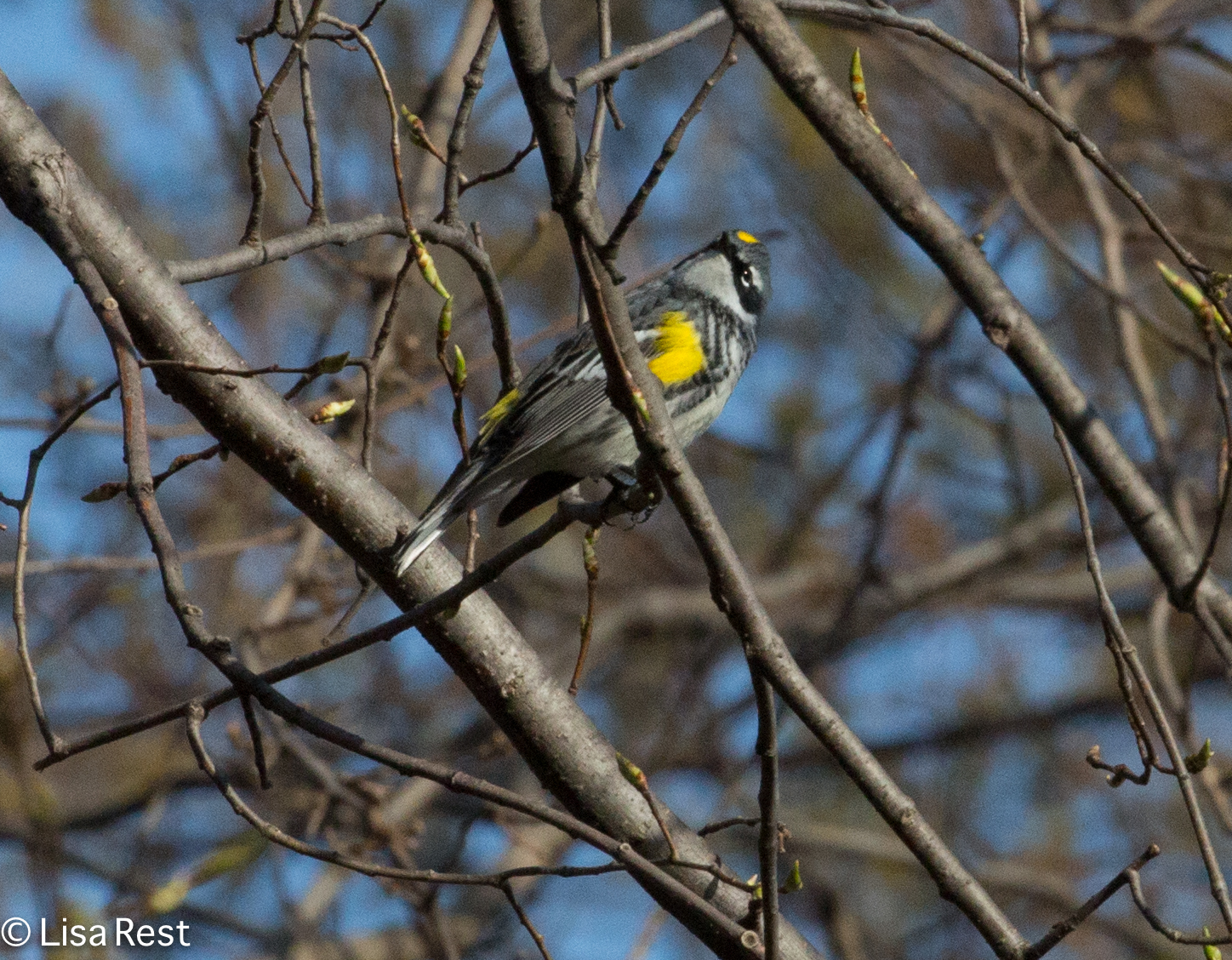
Below, often the first warbler to visit, a Myrtle Yellow-Rumped Warbler.
Surprised to find this photograph in the mix – likely my first sighting of an Eastern Bluebird last year.

An Eastern Phoebe, dreaming of flying insects, perhaps.

Another Downy Woodpecker.

Song Sparrows…

Red-winged Blackbirds…

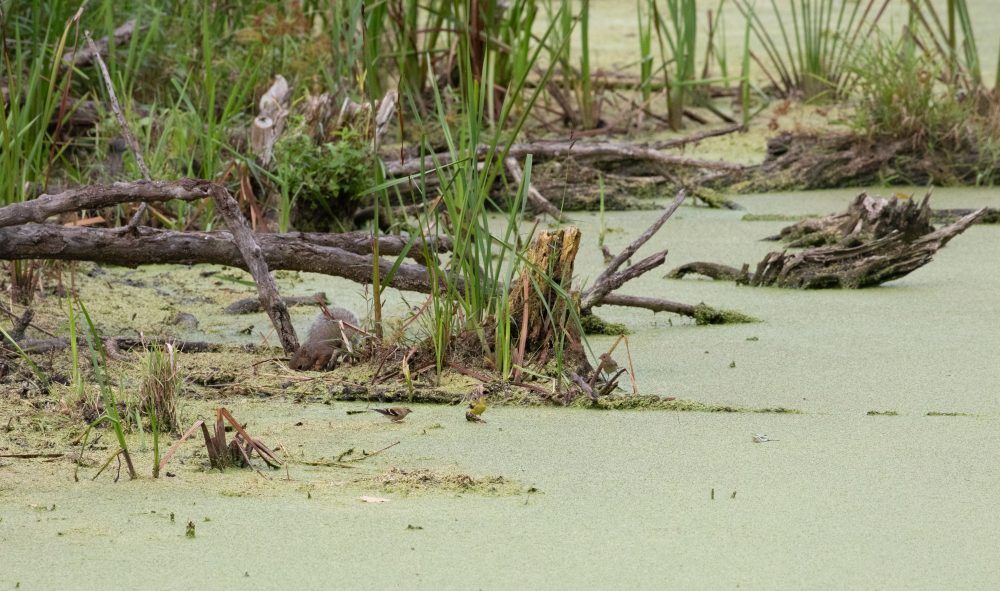
I don’t think there’s enough water on site anymore to attract herons, but there is plenty nearby so I should still see them flying over on occasion.

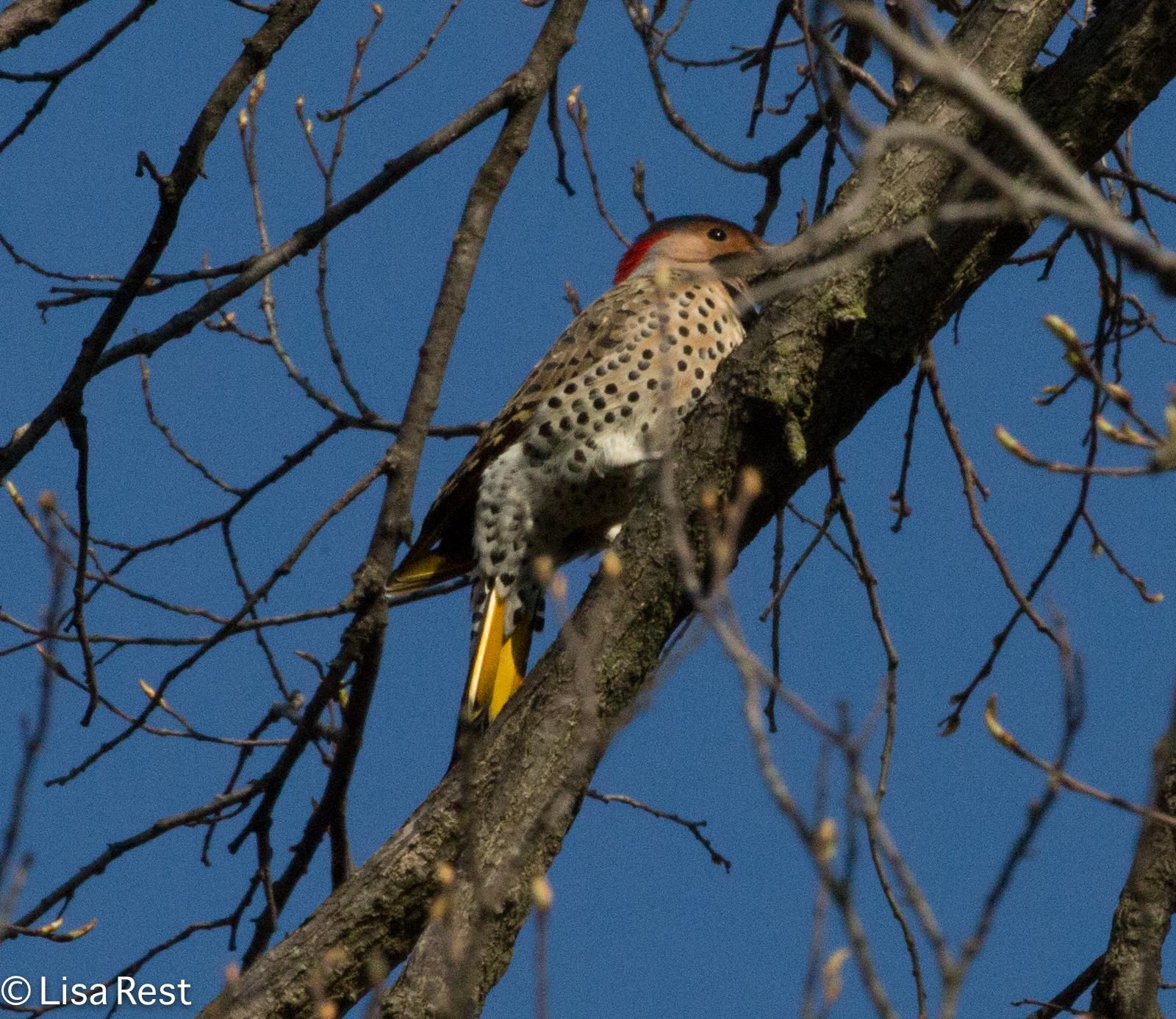
A Northern Flicker showing just a little of its golden shafts.

There were two Yellow-Bellied Sapsuckers on this tree and one flew away.

A Black-capped Chickadee showing off.

A singular turtle…

An assortment of early fungus, moss and flora.

A singing American Robin

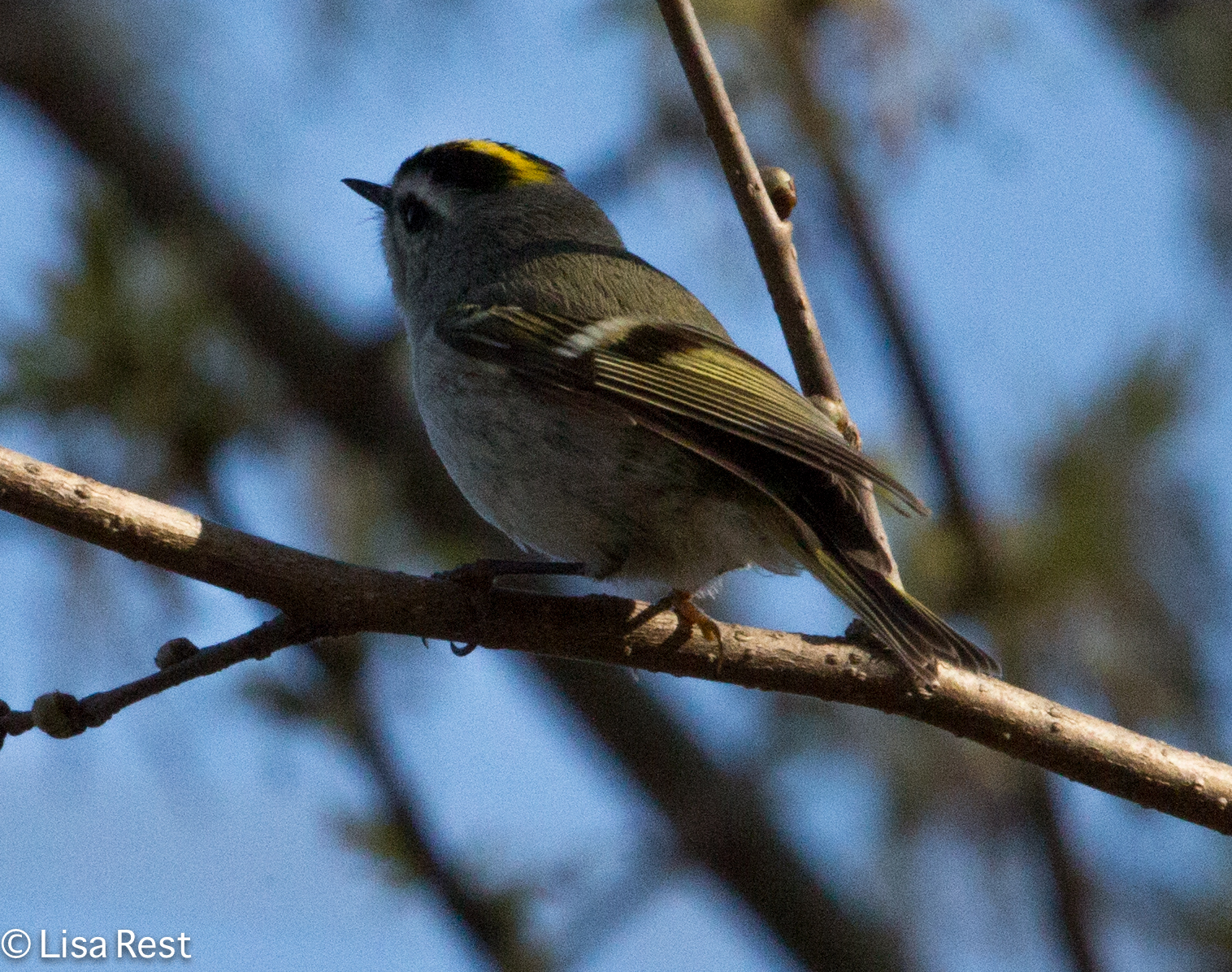
Here’s a Golden-Crowned Kinglet – unfortunately the lighting didn’t do its colors justice.

This Brown-headed Cowbird was foraging on the ground.

Canada Geese and the clouds…

Robins often seem like they want to engage in a conversation.

A Wood Duck drake in a tree. I remember trying to get this shot after I saw him land, with a lot of branches between us.

Mallards…

Blue-winged Teal…

So the Portage will still be slowly coming to life, but we’re warming up, the days are getting longer and migration has begun. Springing forward with hope.

Back to Mid-April

In my typical fashion, I have been trying to write this post for the last week and a half. So while we are all wondering how to get through the holidays this year-like-no-other, I feel a sense of loss too, even though I likely would not have had any plans to go anywhere myself. But there’s also a sense of opportunity in any day I really don’t have to think about work.

Even though it was a cool, late spring and in the middle of the pandemic, there’s something oddly comforting these days about looking back.The Portage looks about like this now – no leaves on the trees, everything muted in browns and grays – but the birds are different in appearance, and most of these species have left for the winter. I took way too many photographs on this day, which might explain why it’s taken me seven months to process them. I won’t be doing a lot of explanation…that might take me another seven months. just hope you enjoy the images.

It will be a while before male American Goldfinches look like the one below.

Out over the Des Plaines River that day, there were three Belted Kingfishers flying around. I didn’t do a very good job of capturing them, they were quite far away. But at least one flew close enough to be recognizable.

A returning Song Sparrow
A Blue Jay, blending in with the sky and the barren tree
Waiting to come back to life.

I keep trying to get a decent photograph of the golden shafts on a Flicker and usually fail, but this time I got close.

There were a couple Blue-Winged Teal hanging out with the Mallards.

One Ring-Billed Gull flew over low enough to be identifiable.

Robins started coming back to their territories. The one in the second photograph is barely discernible from the tree it’s in.

Of course nothing says spring like the return of Red-Winged Blackbirds.

It was early enough in the morning to encounter a couple deer.

Please forgive me, I took way too many pictures of Golden-Crowned Kinglets. They are all gone now, but it was a joy to see them return in April.

Downy Woodpecker – the Portage’s most numerous resident woodpecker

Here’s a thrush I don’t see often – a Veery.

I took a few too many pictures of this Ruby-crowned Kinglet too, but at least I did get somewhat of a shot at the ruby crown.

A Yellow-bellied Sapsucker…

Yellow-bellied Sapsucker

I am always happy to see a White-Breasted Nuthatch, even though they are with us all year long. I never tire of them.

The light was nice on this Red-Bellied Woodpecker.

Red-bellied Woodpecker

Brown-headed Cowbirds are…what they are.

The pair of Eastern Bluebirds this year were such a welcome sight. Although I saw them for several weeks, I don’t think they wound up staying to breed. I can only hope they give the Portage a second chance next year.

The first warbler to show up in the spring, and the last to leave in the fall… the trusty Myrtle, or as long as it’s still lumped with Audubon’s (last time I checked), it’s a Yellow-Rumped Warbler.

I will be back with more from last spring (!) and some more current observations. I hope you are safe and well, wherever you are. And I hope you continue to find moments of peace and solace. There is still a lot to be thankful for.

Grateful

Not always sure where I’m coming from with one-handed typing, but the slowness with which I have had to express myself has given berth to more measured thoughts, perhaps, and, like bird-watching, there is something almost meditative in it.

Before I stray further, I want to dedicate this post to my dear friend Linda Rios and her husband Ed who got me through my awful post-injury and surgery situation with loving aplomb. It occurred to me after I struggled to finish the last post that I was bereft in my focus and needed to at least acknowledge how much my friends have meant to me during this blotch on my existence.

These photos are from August 29th, mostly taken at the Portage. After I was done there I checked out what the Army Corps of Engineers has done to the part of Ottawa Trail that runs along the Des Plaines River, expecting there wasn’t much to photograph there except for the habitat destruction.

Below, a very cooperative White-breasted Nuthatch.

The Chestnut-sided Warbler below was pretty well-hidden but now that I can’t take any photographs for a while I am glad I managed to get these when I did.

The bird below is a Nashville Warbler.

Red-winged Blackbird

The last of the Baltimore Orioles. I had one visit my feeder later that afternoon…

A juvenile American Robin

There were a few Indigo Buntings still around as late as September 19, which was the first bird walk I led after my surgery. Most of them looked like the two below.

On my way out of the Portage on August 29, I spotted this Cooper’s Hawk who just sat, and sat, and I took way too many pictures expecting that it would do something interesting. I was too exhausted by the time it finally took off.

A little Portage flora – I am always amazed at the height of the trees so maybe the cell phone conveys them somewhat. Then there are parts of the trail that are lined with blooming flowers now – a vast improvement over the burdock from years past.

Juvenile Northern Flicker

So this is what Ottawa Trail is looking like now that the levee has been finished on one side of the Des Plaines. It was relatively devoid of birds but I expected that. Others have told me, though, that the levee affords great looks at the Des Plaines River when there are water birds present, so I shall have to check that out another time.

I was able to capture a few signs of life.

On my way out of Ottawa Trail, over the parking area, a Red-Tailed Hawk flew overhead.

Elbow-wise, the cast is gone, stitches removed, and I have 12 weeks of physical therapy ahead. I actually had one physical therapy session on Friday and was reassured I had chosen the right location when I heard a crow calling as I went back to my car. As I mentioned, I managed to lead bird walks these past two Saturdays and I am so grateful to the participants who showed up and helped me feel alive again. I didn’t master the one-handed binocular skill, but now that I am cast-free, I am able to raise my left arm enough so maybe I can go looking for a few more birds this fall even if I cannot commemorate the sightings in photos. In these uncertain times it’s all the more grounding to continue one’s connection with the natural world.

Two Visits to McGinnis Slough

Even though I never go to McGinnis Slough these days prepared to see a lot of birds – which would require bringing my scope – I invariably see something interesting. It used to be a great place for hundreds of Great Egrets and multiple Great Blue Herons, but for the past several years the numbers have dwindled to a few individuals. During waterfowl migration it’s still a place to see good numbers of several species. My last two visits were sort of before and after spring migration. But I like the fact that it’s not crowded. You can’t your bike through it, so that likely keeps people away. And you could miss it driving by at 50 mph on LaGrange Road, even though the entrance is newly paved and there’s a lovely wrought-iron fence, maybe to keep the deer from crossing the highway.

So these photographs are from April 4 and June 7 of this year. From grays and browns in early April to greens and blues in June. April 4 was a good day for Tree Swallows, even if they look washed-out on a cloudy day.

Tree Swallow and a Northern Shoveler
Blue-winged Teal

The gray and brown was enhanced by a little low-lying fog on the April visit.

I haven’t seen an awful lot of Eastern Phoebes this year. I think flycatchers in general have been scarcer, which I can only assume speaks to the lack of insects. I hope they can recover somehow.

Eastern Kingbird, another flycatcher

In the tail end of waterfowl migration, some Lesser Scaup were close enough to photograph.

Those white blobs are actually American White Pelicans on the far shore.
The slough was quite marshy in June.

The June visit featured Warbling Vireos chasing around at eye-level, and then one sang for me. I managed to record a bit of his song below after having him pose for all these pictures.These guys are hard to spot normally so I indulged.

I often see Wood Ducks lined up on this fallen log. The June visit was no exception.

Wood Ducks

Baltimore Orioles aren’t advertising for mates anymore so they’re a little harder to spot.

Going down the path to the north, I encountered a couple does.

There were a few Cedar Waxwings in the same general area as the Warbling Vireos.

This White-breasted Nuthatch would have been even better if he had turned around.

Red-winged Blackbirds abound.

And in the flying-by department…

Herring Gull
Double-crested Cormorants

I’m used to seeing rose mallow, and maybe it will appear later in the summer, but I think this wild iris is new.

Thanks for making it to the end of this long post! We are in for a long, hot, sunny weekend around here. With luck, I will find more birds to share with you.

Snow: Before and After

Hairy Woodpecker at the Portage

Yesterday morning I got up and went to see how the birds were doing at the Portage. It was a cold, windy, bleary morning, and as far as I could tell, nobody was having a good time.

When the large black blob in the distance turned out to be a windblown Bald Eagle, I was encouraged to investigate. I couldn’t get very close to where it was perched high above the railroad tracks.

The Red-Winged Blackbirds weren’t singing much. This one appeared to look as if he was reconsidering his early arrival.

I did finally manage to see one of perhaps four Song Sparrows who were carrying on vocally as if spring had sprung. But he wasn’t flaunting his presence.

Perhaps the nicest surprise was an Eastern Phoebe. I felt for him, though, as there were no bugs to eat and it made me wonder what else he could get by on a couple days before the scheduled warmup.

Even the Robins weren’t having a good time.

The cardinals have been singing for weeks. They started earlier than the Robins. There was one singing along with the piano a few days ago. I was surprised, since the windows aren’t open. He must have heard the keyboard through the front door and I assume he was perched on the little apple tree outside of it. Below is a recording of Bach’s Prelude No. 1 in C Major from the Well-Tempered Clavier, and just at the end where I start playing some other chords you can hear the cardinal singing along.

Northern Cardinal at the Portage
Cardinal singing with us toward the end of this clip

This Downy Woodpecker was foraging low with the sparrows.

I never did see if there was a hen sitting on a presumably well-hidden nest who belonged to this Mallard but he was definitely taking it easy.

I really hoped we were done with this snow stuff, although it was less than a minor inconvenience considering I didn’t have to go anywhere and it has now melted away. These few photos are from yesterday afternoon through the porch windows. The wet snow was falling and I didn’t feel like joining the birds in it, but I wanted to commemorate its arrival since I banished all my snow-in-the-yard photos from this “past” winter to external storage to make room for spring.

I’ve gone back to the photos from my August trip to New Brunswick and Grand Manan and hope to follow with a post or two featuring bright sunshiny blue skies shortly.

I hope you are in good health, and pray you are making some sense out of all the chaos. We will get through this.

Spring Preview: Columbus Park

I had planned to write a post before my departure for Big Bend but it didn’t happen. Now I am back from an amazing trip, but even though I have started processing my pictures, it will probably take me a couple of weeks given the busy schedule I am returning to, so I will see if I can manage this post for the moment.

I did a Columbus Park walk on the Saturday before I left, and it was to witness the first hint of migrating birds, but our spring has been anything but spring-like, with snow occurring the next day and from what I hear, another wet, fluffy snowfall the Saturday before my return. Yet I’m planning on putting out the hummingbird feeders tomorrow morning. C’mon, it’s May!

The big wading and diving birds were easiest to spot… It was particularly entertaining to watch the Double-Crested Cormorants drying off in the sun. Maybe the Canada Goose thought I was trying to take its picture.

We had several Wood Ducks, but this was perhaps the closest view I got of a male swimming in front of a female Mallard.

A little army of hungry Golden-Crowned Kinglets appeared on the grass in front of us at one point, reminding me of the very first time I ever saw them years ago doing the same thing on the lawn at Millennium Park.

The female Belted Kingfisher below was pretty far away but nice to see.

This Black-crowned Night-Heron flew by us before landing in a tree.

American Robins have been on their territories for weeks now and we saw many.

Swamp Sparrows outnumbered Song Sparrows (4 to 2!) but were hard to photograph.

Eastern Phoebe arrivals are always a sign of spring. The similarly-colored bird below the Eastern Phoebe is a Northern Rough-Winged Swallow.

You know the Red-Winged Blackbirds are ready for business when the girls start arriving.

Northern Flickers put on a show for us but they were hard to capture as well.

Our last “lawn” species was Killdeer.

I got caught up on my sleep last night, but I’m heading into a busy weekend. Saturday morning is the Spring Bird Count, Saturday night is the Spring Music Festival…and with any luck on Sunday, I can start cleaning up my yard, as green things, both wanted and invasive, are starting to emerge. The recommendation to not clear anything until the temperature stays above 50 degrees Fahrenheit will be difficult to adhere to… we are still dropping into the 40’s, albeit the higher 40’s, overnight. I do remember seeing a butterfly or two before I left. I hope to see some insects Sunday and maybe a better forecast.

Fall Migration Continues II

YRWA Portage - 10-13-18-2668

Yellow-Rumped Warbler at Chicago Portage

And continues and continues and…I have been so busy birding every weekend it’s taking even longer to process the pictures. These are from last week – October 13 – Thatcher Woods and the Chicago Portage.

WTSP 10-13-18 Thatcher-2188

White-Throated Sparrow at Thatcher Woods

The birds blend in more and more with their surroundings, but I find it so intriguing. Although it does take almost twice as much effort to get the camera to focus on the bird.

LISP 10-12-18 Thatcher-2303

Lincoln’s Sparrow, Thatcher Woods

I was very pleased to find a Winter Wren hanging out with the sparrows and remaining warblers at Thatcher Woods. I always think of Don Kroodsma and The Singing Life of Birds when I see a Winter Wren, even if it’s not singing.

Much like two weeks earlier, there were still a lot of Palm Warblers and Yellow-Rumped Warblers at Thatcher Woods.


Here’s what the Portage looked like when I got there.

10-13-18 Portage-2436The Yellow-Rumpeds were foraging in the duckweed.


It was a pleasure to see several Hermit Thrushes. And nice to see them somewhere other than hopping around on park lawns downtown.

HETH 10-13-18 Portage-2477

Hermit Thrush, Portage

I got a brief, lucky look at a Belted Kingfisher flying over the pond.

BEKI 10-13-18 Portage-2466

Belted Kingfisher

Some Song Sparrows are already practicing singing for next spring, which might explain why I have heard more than I have seen.

SOSP 10-13-18 Portage-2458

Song Sparrow

Out on the road overlooking the compost piles that now decorate the Metropolitan Water Reclamation District property, I saw this Red-Shouldered Hawk land in the tree and sit for a long period of time.

RSHA 10-13-18 Portage-2640

Red-Shouldered Hawk

Other raptors flew overhead, including the Sharp-Shinned Hawk below.

SSHA Portage - 10-13-18-2702

Sharp-Shinned Hawk

It took me a while to realize that the birds below are Purple Finches. There seem to be quite a lot of them at the Portage this fall.


PUFI Portage - 10-13-18-2521

Purple Finch

Not to be confused – much – with House Finches…

HOFI Portage - 10-13-18-2583

House Finch

Ruby-Crowned Kinglets are still abundant. But the bird below right is a Golden-Crowned Kinglet. It was perched about a foot and a half in front of me and we bonded for a while, but it was much too close to get a picture of it then!

Still seeing Eastern Phoebes, although I expect fly catching is becoming more difficult as temperatures drop.

EAPH Portage - 10-13-18-2664

Eastern Phoebe

My last two photos are of Hermit Thrushes. The second one is for the russet color of its back in the sun…

HETH 10-13-18 Portage-2760HETH 10-13-18 Portage-2770I’ll be on a mission to get through my photos from this past weekend… Our weather seems to have calmed down a bit and we are in a crisp but sunny period. I love fall, maybe for its nostalgia…!


Fall Migration Continues

RBNU Portage 9-29-18-1399

Red-Breasted Nuthatch

I think fall must be my favorite season at the Chicago Portage. The birds blend in with the autumn colors, the leaves start to fall from the trees and then every once in a while a bird takes a quick leaf-like descent as well. This past Saturday, after my morning commitment to Thatcher Woods where we had scores of Yellow-Rumped and Palm Warblers, I decided to see what was up at the Portage. Below are two of perhaps 100 Robins…

Directly below, two Common Yellowthroats at Thatcher Woods.

I always take a picture of the water, such as it is, at the Portage to document how it changes from season to season…

Portage 9-29-18-1268There is water enough to bathe in as this female Red-Winged Blackbird was finding out.

RWBL Portage 9-29-18-1577

Red-Winged Blackbird (male)

The Yellow-Rumped Warbler below was at Thatcher Woods…

And the Palm Warbler below was at the Portage.

PAWA Portage 9-29-18-1565Tennessee Warblers and Orange-Crowned Warblers often get confused in the spring but these two made it easier for me.

TEWA Portage 9-29-18-1279

Tennessee Warbler

Orange-Crowneds always looks to me like they have a slight eye-ring.

OCWA Portage 9-29-18-1591

Orange-Crowned Warbler

I missed seeing a flashy male Black-Throated Blue Warbler this year but I’m glad to have found a female of the species, wearing her muted fall clothes.

BTBL Portage 9-29-18-1473

Black-Throated Blue Warbler (female)

Blackpoll Warblers in their fall plumage are stamped permanently on my brain after a few years ago when there were many for several days at my old stomping grounds, Lake Shore East Park, so I was delighted to find this lovely individual.

At one point I encountered some workers who were taking down a tree. I spent some time talking to one while another was driving wedges into what was soon to be the stump. It turns out the trees were not birch but white poplar, which is an invasive species and that is why they were removing it. Come to think of it I don’t recall ever seeing a bird in those trees although they had become a landmark and I thought they were rather attractive. After I was given clearance to go beyond the workers, I grabbed two quick clicks in the distance as the tree fell.

For all the Robin activity there were only a few Cedar Waxwings…

My view from the first bridge at the Portage yielded a Mourning Dove and a House Wren.

MODO Portage 9-29-18-1265HOWR Portage 9-29-18-1255I almost thought I had missed all the Indigo Buntings but there were still a few youngsters left.

INBU Portage 9-29-18-1526

Indigo Bunting

NOCA Portage 9-29-18-1510

Northern Cardinal (female)

I was delighted to see a Swainson’s Thrush if only for a moment…

SWTH Portage 9-29-18-1417

Swainson’s Thrush

Eastern Phoebes…

Just starting to see Dark-Eyed Juncos, the harbinger of colder weather coming, I suppose. But after not seeing them all summer I am glad to have them back.

DEJU Portage 9-29-18-1454

Dark-Eyed Junco

Yellow-Bellied Sapsuckers are coming through as well.

YBSA Portage 9-29-18-1405

Yellow-Bellied Sapsucker

GREG Portage 9-29-18-1318The Des Plaines was so low, this Great Egret was wading out into it quite a ways from the shoreline.

We had a lot of Northern Flickers at Thatcher Woods. Here’s one of them checking out a future home, perhaps.

YRWA Portage 9-29-18-1486

Yes I am a Yellow-Rumped Warbler

And Monarch Butterflies are still migrating. I love the way the Poke Weed looks this time of year. I knew the birds were attracted to it but I guess the Monarchs like it too.

Monarch Portage 9-29-18-1497After hearing and rarely seeing Eastern Wood-Pewees all summer, it was nice to get good looks at this one.

EAWP Portage 9-29-18-1395

Eastern Wood-Pewee

DOWP Portage 9-29-18-1550

This last photograph is of a Downy Woodpecker who was foraging low and obscured by the vegetation but I like the pastel colors.

More to come, I have three more Saturday bird walks, weather permitting. We seem to be entering a rainy spell but from the looks of the Des Plaines last week we can use it.

Portage Summer Day

GRHE 7-28-18-7115I got out early last weekend to beat the heat which was nothing compared to what kept me indoors most of this weekend. Last Saturday was a beautiful day. And usually when the weather is good, the birds are out enjoying it too.

Summer is the time for confusing juveniles, and the first bird I saw, below, suggested to me that it was a juvenile Eastern Wood-Pewee…

EAWP 7-28-18-7095Not to be confused with the juvenile Eastern Phoebe I saw later, below.

EAPH 7-28-18-7100I couldn’t get this Downy Woodpecker kid to turn around and smile for the camera but it was good enough to see his adult feathers coming in…

DOWP 7-28-18-7126The House Wren below just has that newbie look about it.

The Red-Bellied Woodpecker kids were out and about. I was surprised to see no red at all on the head of the one below on the top right.

Robins always look like something else this time of year, but I am no longer fooled.

AMRO 7-28-18-7192I was beginning to wonder if all the Red-Bellied Woodpeckers were gone, but then I found a bunch of them hanging out on the bare limbs of a dead tree. They were all juveniles.

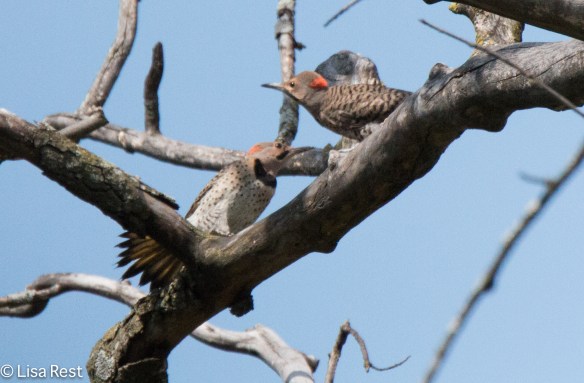
These two young Northern Flickers seemed to be practicing pairing up already.

NOFL 7-28-18-7350

Nothing going on, on the Des Plaines, which was looking low.

Not much in the way of butterflies. A Monarch here and there, and this one Red-Spotted Purple.

But the dragonflies were quite amazing.

Widow Skimmer 7-28-18-7252

Widow Skimmer

I’m going out on a limb with the ID below. I have a fancy book on dragonflies and damselflies but there are way too many choices.

Russet-tipped Clubtail female 7-28-18-7265

Russet-tipped Clubtail female

I’ll keep trying to figure this one out…

? Bluett 7-28-18-7272

Some kind of Bluet

I’m not confusing Twelve-Spotted Skimmers with Widow Skimmers anymore…

Twelve-Spotted Skimmer 7-28-18-7281

Twelve-Spotted Skimmer female

or with Common Whitetails.

Common Whitetail male 7-28-18-7322

Common Whitetail male

Then there was this beautiful Grasshopper that is likely a Differential, but I am absolutely ignorant about grasshoppers so I’m not guessing.

Unidentified Grasshopper 7-28-18-7298And if anybody knows the identity of the beautiful wasp below, please chime in. All my reference books have failed me.

Unknown Wasp 7-28-18-7166Back to the birds. The fruit-eaters were enjoying the mulberry tree. That’s a Cedar Waxwing on the left and an adult American Robin on the right.

This Eastern Kingbird looks mature, but looks can be deceiving.

EAKI 7-28-18-7312Some interesting things on the trail for the juvenile Song Sparrow below…

SOSP 7-28-18-7177and for a male House Sparrow. I rarely see House Sparrows at the Portage but there were these two.

HOSP 7-28-18-7392

Juvenile House Sparrow

Saturday mornings tend to be work days. There was some burning of invasive vegetation going on.

Controlled burn 7-28-18-7176Goldfinches are late breeders, so I haven’t seen many in my yard lately, but I did see this pair at the Portage briefly.

AMGO 7-28-18-7255Always happy to see a Great Blue blending in.

GBHE 7-28-18-7234And it was even pleasant enough for a couple cardinals to make an appearance.

NOCA 7-28-18-7291I heard more Indigo Buntings than I saw, but was finally rewarded by the adult male below.

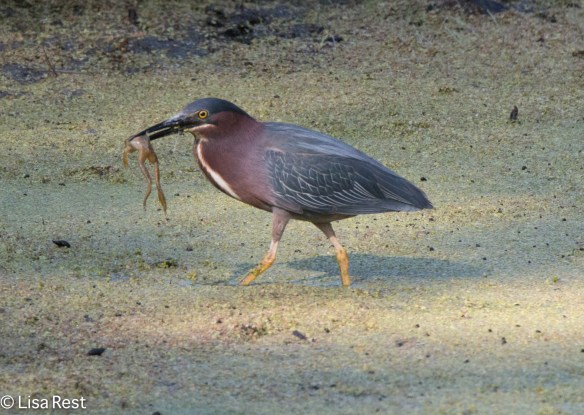
INBU 7-28-18-7382For as much time as the Green Heron spent on this frog I am not sure he or she managed to eat it.

GRHE 7-28-18-7130I hope the heatwave ends in time for next weekend. In the meantime I guess I can’t complain about being stuck in an air-conditioned office this coming week.


Lasting Impressions

WBNU Ottawa Trail 09-09-17-5295

White-Breasted Nuthatch

Somewhere the images I manage to capture of birds over the years accumulate in well-organized collages in my mind’s eye, and from those conglomerations comes empathy for the individuals of the any species and an appreciation for their irreplaceable contributions to life on the planet.

I haven’t seen many species of late, due  somewhat to my inability to frequent the lakefront parks, but when I revisit some of these photographs I took from weekends ago at the Chicago Portage and Ottawa Trail, I am reminded of how special birds surprisingly show up–because birds are creatures of flight, they can fly and land anywhere, and no ultralight aircraft will ever be a match for a bird–and I am lucky to be alive to see them. Like the Golden-Winged Warbler below that popped up at Ottawa Trail on September 9. I couldn’t get great pictures but I am grateful I got to see such a beautiful and sometimes rare bird.

The Red-Bellied Woodpecker below must be a youngster. Colors aren’t quite set yet, still has a fluffy, unfinished look about him.

I never tire of seeing a Magnolia Warbler. Below is either a female or a young male.

Flycatchers were still around during the first days of our heat wave, which is thankfully over except now we are approaching drought. The facing pictures of the Phoebe below were from the Portage and the one below them from Ottawa Trail.

EAPH McGinnis 09-17-17-8200

Eastern Phoebe

Usually I only hear Pewees but that day I got to see this one.

EAWP Portage 09-09-17-8013

Eastern Wood-Pewee

Swainson’s Thrushes were abundant but not always easy to see. After going back and forth I have decided the larger picture below is of a Gray-Cheeked Thrush.

SWTH Portage 09-09-17-7828

Gray-Cheeked Thrush

And the last of the young Indigo Buntings were preparing to leave the Portage.

INBU Portage 09-09-17-7785

Indigo Buntings

I have never seen a Chipmunk sit still long enough for me to point a camera lens at it. This is worth sharing.

Chipmunk Portage 09-09-17-7976

Eastern Chipmunk

More recent memories to come and if I see a few more migrants before the passerine migration is over, I will try to share them with you.