Two Riverside Visits

I haven’t been to Riverside very often lately. It’s either been too hot or, if after a rain, too wet walking through the tall grasses in Riverside Lawn. Here are some photos from July 18, and then a few from the end of June.

A Double-crested Cormorant flying down river

With the insect apocalypse in the back of my mind, I was encouraged to see a few Chimney Swifts close to the water.

A Double-crested Cormorant was enjoying the sunshine.

I encountered an Indigo Bunting on the paved trail who sang beautifully for me until I tried to record him. I had to follow him as he sought other perches to sing from. I thought he had a rather distinctive twist on an Indigo Bunting song. A short recording is below the photos.

When I got to the swinging bridge, I first noticed a gathering of Canada Geese.

I took too many photos of the male Belted Kingfisher who is also at the top of the post. Between trying to stand on my toes so I did not have the top of the bridge in the photos, I was also having a hard time focusing. I hadn’t gone to pick up my new lenses yet.

A juvenile Common Grackle jumped up for a look.

I had been talking to a fisherman when I first reached the bridge. He called me back to the edge of the bridge to see a Smallmouth Bass sitting in the water. When he told me what it was, I was immediately reminded of Peter Mayer’s song, “Little Jimmy.” If you’re curious, here’s a link to a YouTube version. https://www.youtube.com/watch?v=A_XCOynKJ3M

Smallmouth Bass

So, about the overgrown grasses obscuring the trail. I tried to take a photo or two. Walking through here after a rain is a good way to get soaked. It was dry this time, but I may skip completing this walk for a while during the summer.

From the river’s edge, I tried to capture a Northern Rough-winged Swallow.

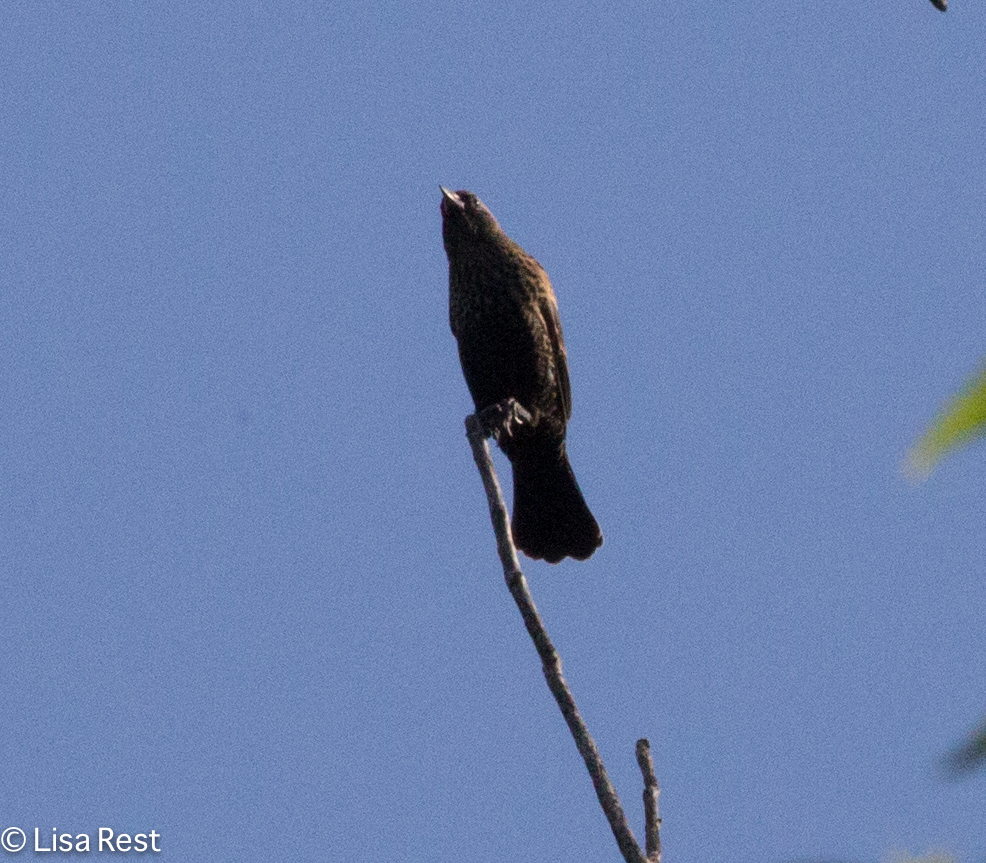
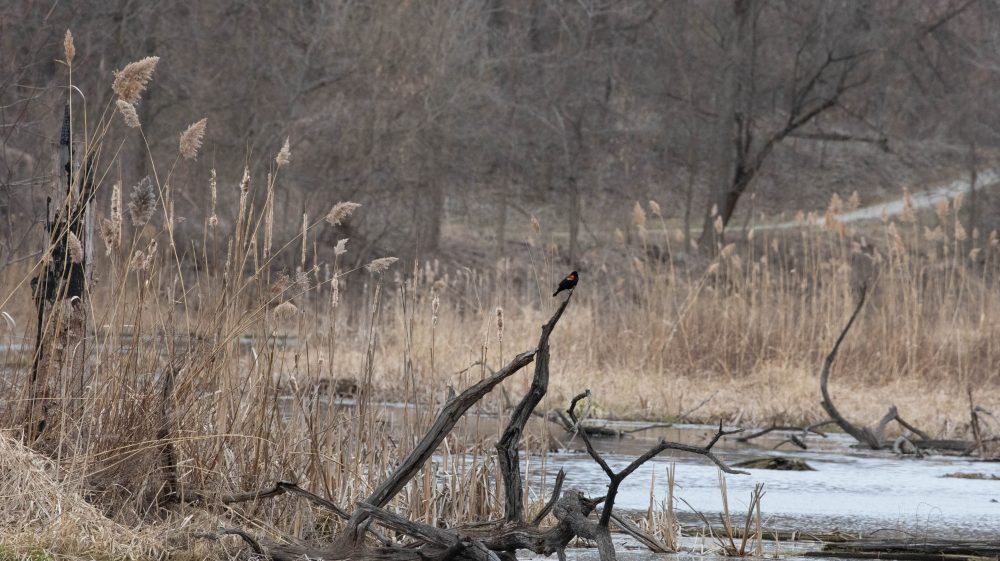
I was attracted to the Red-winged Blackbird below. This is either a female or perhaps a juvenile.

On the Riverside Lawn trail, where I always see them, there were a few Blue-fronted Dancer damselflies. I was thrilled to see them, although there were not as many as previous years.

A Northern Cardinal popped up to sing.

The last birds I saw on my way out were three Double-crested Cormorants sitting in a dead tree. The one easiest to focus on is in the cropped photo below.

Way back on June 25, I saw tagged Canada Goose 98H again.

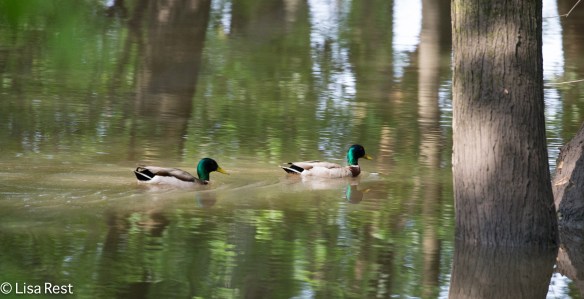
And a Mallard mom was with her offspring. My, how they had grown. I haven’t seen many Mallards since.

I followed a Ring-billed Gull as it flew over the water.

There was also a Killdeer.

I had a female Belted Kingfisher that day but I had an even harder time focusing on her.

I captured an adult male Common Grackle in semi-flight.

And a fly-by American Robin finished my walk.

It has taken me a while to get temporarily accustomed to not going for a walk every morning. Working in the yard has been a somewhat worthwhile substitute, but I can’t help but wonder what I’m missing. I hope to get back to Riverside soon, but with a lot of heat and rain in the forecast my visits will remain sporadic. Storms are possible tonight, which sounds like a nice, if temporary, break in the heat and humidity. Indoors, my birds have been keeping an eye on me to make sure I don’t take too many naps.

End of September: Grackles! Osprey…

After a summer of hardly seeing any Common Grackles, on September 29th of last year I probably saw at least 100. The other Bird of the Day was Osprey. I am looking forward to seeing Osprey on the Des Plaines River this year, along with all the other regular big birds – Great Egrets, Great Blue Herons, Double-Crested Cormorants…

Dry conditions last summer and fall

A frequent visitor to the Des Plaines River was an Osprey or two. I tried to capture the juvenile bird below going after something.

The Common Grackles were perched in the trees along the river, but later on my way back through Indian Gardens they were all over the lawn with Red-winged Blackbirds. It’s likely they were gathering for migration southward. I never really get over those shiny blue heads.

Here’s an adult Osprey I managed to capture flying over the river.

I will always see Rock Pigeons at this location, which attests to its urbanity.

I think this is a juvenile Song Sparrow trying very hard to look like a female House Sparrow…

There was still one Double-crested Cormorant around on that day.

A Mallard hen in the bright sunshine…

I look forward to the Great Blue Herons that will adorn the river this coming spring and summer. I suspect the Great Egrets had just left by this date, but I expect there will likely be quite a number of them too this summer.

Never to be turned down, no matter how bad the light – a cooperative Blue Jay.

I frequently heard Killdeer and sometimes saw them, got lucky with this one flying overhead.

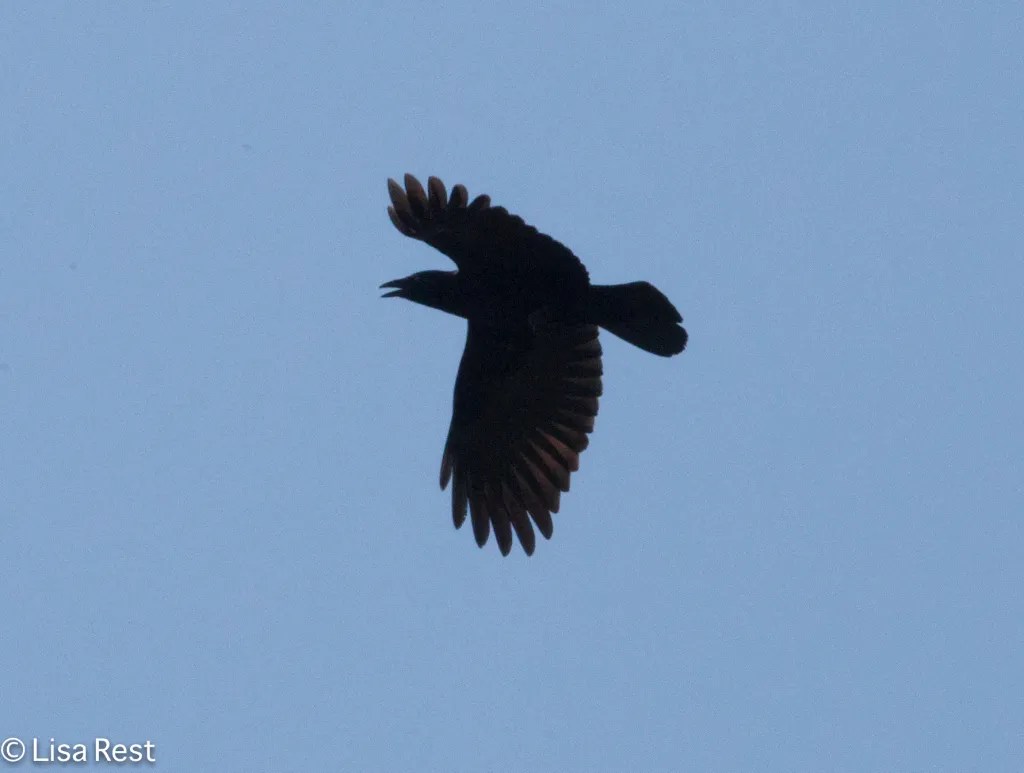
Also never ignored by me, an American Crow flying. There is nothing like a Crow. Period.

Thanks for stopping by and helping me clean up some space on my hard drive. Larger posts are likely ahead with spring migration just around the…corner. As I start to post more often the hard drive glut will be less of an issue, or so I tell myself.

As the weather improves and I go out more, there will be fewer of these retrospective posts. In the meantime it’s nice to dream of the excitement seeing these birds again.

Long Before the Rain

It’s been almost 3 months, which seems hard to believe, but this is a more historical account from McGinnis Slough for birds seen on September 19th, when the slough looked more like a marsh at best. Yet there was more bird activity and a couple less common sightings.

It started off inauspiciously with a European Starling.

But at some point I found a Northern Waterthrush, which is a warbler species I haven’t seen in a long time. They aren’t particularly rare but they don’t travel around in warbler flocks and are often close to water and the ground.

One of my first White-throated Sparrows of the season was in the grass.

Perhaps the bird of the day as far as offering itself up for photographs was Palm Warbler.

Among the land birds was this Swainson’s Thrush.

The Double-Crested Cormorant below gave me several expressions of its flight pattern.

More views of the faded-looking Spicebush Swallowtail butterfly at the top of the post.

I never know exactly where I can expect to see a Great Blue Heron here but I practically always do.

More flying birds to capture – a Great Egret and, of all things, a Blue Jay or two, which don’t normally make themselves so available.

Two warblers – a Nashville and then below, a female Common Yellowthroat.

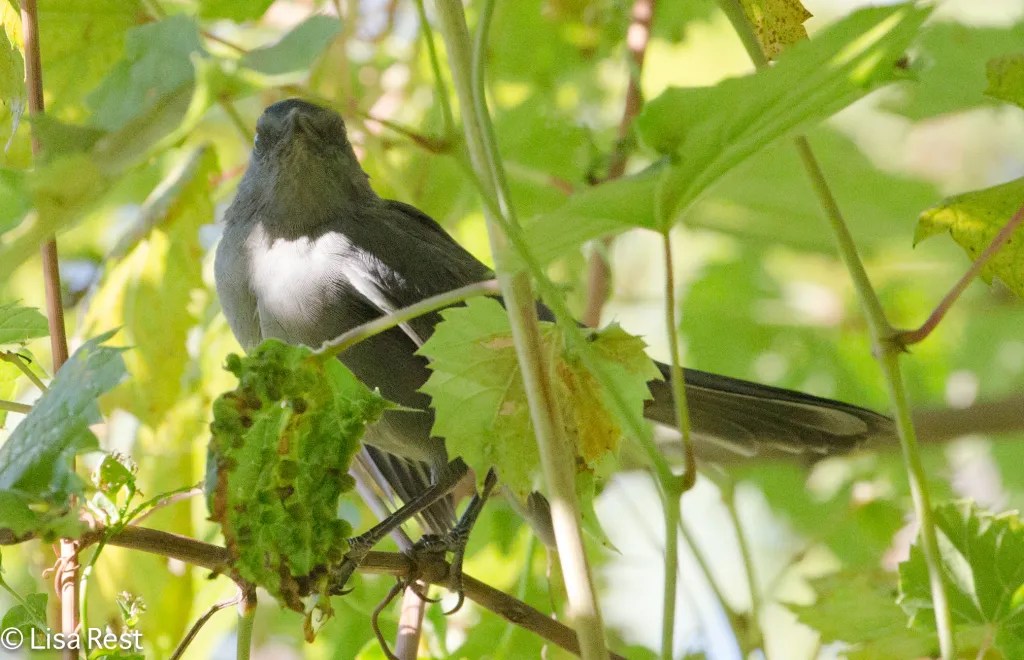
I saw Gray Catbirds at this location more than once.

The light played interesting tricks on these two Wood Ducks flying through the marsh.

The rose mallow flowers seemed late and sparse but they prevailed.

A Yellow-rumped Warbler blending in below.

More flying birds. Cedar Waxwings directly below, and below them, the inevitable Canada Geese.

A couple views of the parched-looking slough.

And a closer-cropped view of the Great Egret seen in the flight sequence above, after it landed.

I have been seeing some amazing birds all week which has kept me more than busy. Even though migration has slowed down, there are still birds to be seen. I will be back as soon as possible with more recent sightings.

Down by the River After the Rain

These photos are from two visits to the Riverside trail on October 20 and 27 – both after periods of some significant rain. Although the Des Plaines is nowhere near flood stage, it is good to see it looking more like a river.

Activity around the Hofmann Tower on 10-20 consisted of two flock bursts – the expected Rock Pigeons and also a flock of Blackbirds, mostly Red-Winged.

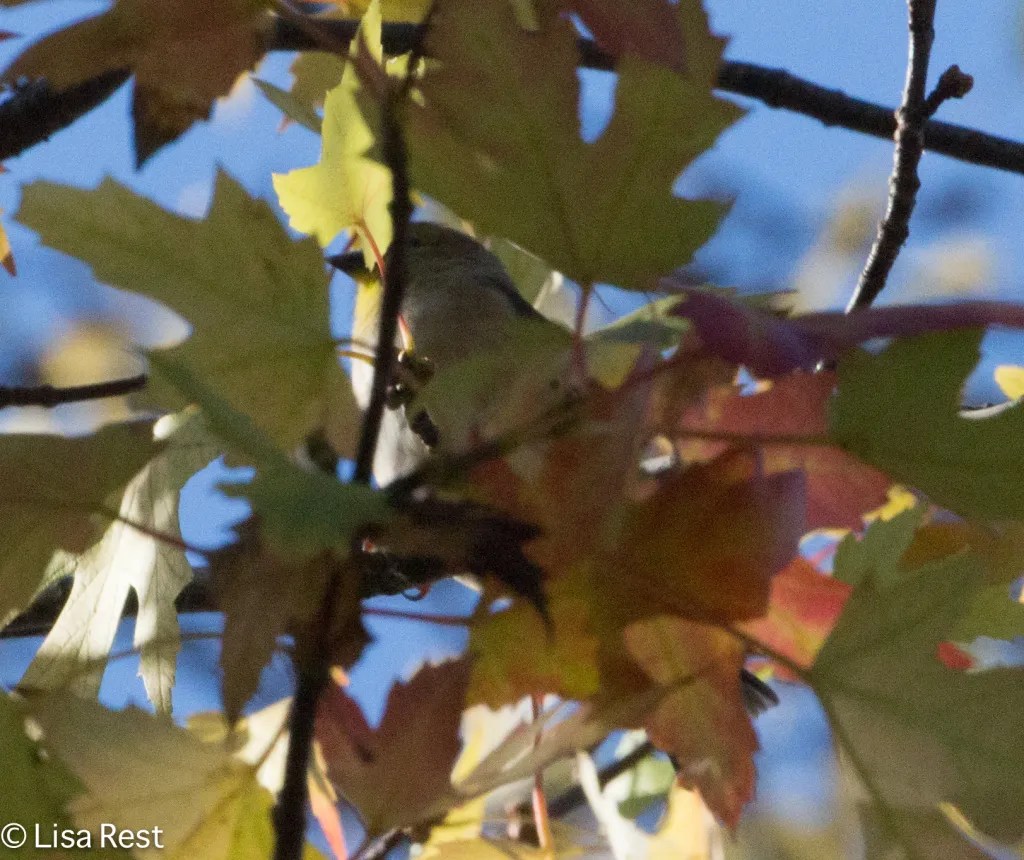
I saw an Orange-crowned Warbler on both occasions.

Below is a Nashville Warbler I saw on the 20th.

It was hard to get a good photo of this Double-Crested Cormorant through the trees but still nice to see on the 20th. I saw one flying a week later and wonder if it was the same bird…

It’s somewhat easier to get Northern Cardinals to sit still for a photo this time of year. As long as they feel somewhat shielded by a twig…

I saw Brown Creepers on both occasions, and was lucky to photograph this one on the 27th.

A Mallard here and there…

European Starlings are in groups, as usual.

One of those Red-winged Blackbirds still hanging around.

Below on the left is the sign posted at either end of the trail in Riverside that runs along the river. On the right is a sign opposite the western end of said trail, which denotes the Plank Road Meadow which features a boat launch.

House Finches are more visible now.

A tree full of Mourning Doves…

I expect to see more White-Throated Sparrows, but managed to capture only the one below.

I was going to simply add the photo directly below and call it a Tennessee Warbler – even though the face looked a little suspect to me. Then this morning when I flipped over the Audubon calendar hanging over the kitchen sink to November, the photograph of the bird on it looked like the one below, only it was identified as a Pine Warbler. So I took out The Warbler Guide to confirm – because now it was showing up as “rare” on my ebird checklist – and went to the bill shape again. That’s what made the face of this bird not look at all like a Tennessee.

Just to elaborate, I rescued the photos below from my external hard drive and found a few more clues to the Pine Warbler identification. There’s ever-so-slightly a hint of wing-bar showing on a couple photographs, but best of all is the one I brightened up a bit, where the bird is looking directly at me. That’s a Pine Warbler face if I ever saw one. I have to be more careful going through all these photos!

Below is a lovely little Song Sparrow.

The remaining Great Blue Heron is not as visible now from the bridge.

Catalpa tree seed pods on the left, and well-eaten Pokeweed on the right.

An American Robin for good measure…

Not sure whose web this is but I found it interesting.

I saw the Red-tailed Hawk flying below before it landed in the tree.

A few more scenes of this location as the late fall progresses.

We are flirting with overnight freezing temperatures. Indeed, this morning I had to scrape the frost off the windows of the car before I went for a walk at the Portage. Today I will be draining as much water as I can store into empty vinegar gallon bottles, to be used in the now-heated birdbaths all winter.

And as the days get shorter and I see fewer birds… take fewer photographs… maybe I can start revisiting the reason why I started this blog in the first place: my fascination with bird song and the birds’ reactions to music. For the moment, I would like to share with you a funny incident I happened to record way back on August 29th. I was playing piano – I have been revisiting Schumann’s “Kinderszenen” – and perhaps that day it had become a bit of drudgery – I was likely distracted by the fact that my effective retirement date was 2 days off. In any event, I struck a wrong chord while playing the 9th piece of it (“Ritter vom Steckenpferd”) and my indoor crowd IMMEDIATELY let me know that was not acceptable. Which not only proves they were right, but also that they are always listening! Below is the clip. Enjoy. 🙂

Great Blue Heron

Return to Riverside

I parked in Lyons on September 27th and got out of the car, assembled my gear, and started walking barely a few steps when I looked up and saw this juvenile Osprey perched in a dead tree right above me. That was an auspicious beginning to a nice walk.

I crossed the bridge after not seeing any other birds on that side of the river. A fellow blogger, Tootlepedal, has suggested my last mention of the bridge was illegal without a photograph of it, so I did my best to frame it, but between my big lens and no way to get far enough away to capture it at a distance, this was the best I could do. I will keep trying, but I haven’t found this bridge’s aesthetic value yet…

Right off the bridge there has been a Great Egret, this time on the rocks that have been exposed due to the lack of water in the Des Plaines River.

The Great Blue Heron close to it was in a much wetter-looking spot. Actually this is right around the spot where there once was the Hofmann Dam, which has been removed.

The Red-winged Blackbird below could barely keep his perch.

Magnolia Warblers were still visible and this one was posing.

A handsome Turkey Vulture flew over, enhanced by a clear sky.

Two different species with the same color palette: they were both in the pokeweed.

White-throated Sparrow
Rose-breasted Grosbeak (immature)

It’s somewhat comforting to know the water is still deep enough in a few places for Double-Crested Cormorants.

I was very happy to see a Golden-crowned Kinglet well. They usually don’t sit still for too long.

A couple more of the juvenile Osprey. There were actually two of them flying around but I didn’t get photos of the action.

I went back two days later and got more pictures that I still have to process. Migration is slowing down a little bit, but I’ve also had a lot of work to do. I will be back with another report soon.

I am happy to note that we are finally getting some rain. It’s not going to make much of a difference in the water levels of the river, but it’s appreciated nonetheless.

Two Visits to an Old New Place

Thanks to a dog walker I met twice last week… I visited a new-for-me place which has been in my backyard, so to speak, all along. I had been meaning to check out the Riverwalk on the Lyons side of the Des Plaines but never realized the other side had a park along the river called Indian Gardens. Many thanks to Ken the architect from Riverside who told me about it. It’s actually closer to home than the Portage, even, by about a couple minutes.

These pictures are from two days’ visits. I parked on the Lyons side and then walked across the bridge and through the Indian Gardens park. I didn’t venture past the tennis courts the first day, but on the second day I walked through them and found where there is an “unmanaged” trail along the river where I will be going more often.

The Lyons side has a fantastic Hoffman Tower which provides a place to hang out for a sizable number of feral pigeons. It occurred to me that I hadn’t seen a flock of pigeons in flight for quite some time.

Walking through Indian Gardens

Blue Jays seem to be everywhere lately. They’re carrying on noisily and are even sometimes visible.

Time to get your fill of Magnolia Warbler photographs because I just barely saw one the last couple days – I think they have moved on, after dominating the warbler migration scene for two weeks. You can click on any of these pictures to get a better view.

Monarch Butterflies are still migrating here and there.

There are a lot of Northern Cardinals at this location, but they are more often heard than seen. I did manage to capture a few females, though. I’ve never seen one capture an insect – it looks like a grasshopper. And then the one perched in a tree with its leaves already turning – she nearly blends in.

It’s absolutely wonderful to see the Great Egrets – even if it’s mainly due to the fact that we haven’t had any substantive rain for at least a couple weeks and it’s been hot, so the middle of the Des Plaines River is very low – perfect for waders.

There were 4 Great Egrets on my last visit – only 3 visible in this photograph

Gray Catbirds have evaded my lens nearly all summer and now they are getting bolder as they prepare to fly south. The young bird amongst all the dead leaves was right at my feet on the Lyons side.

Canada Geese are moving around and I always love to see them in flight.

Not as many Great Blue Herons as Great Egrets but they are also taking advantage of the shallow river.

On occasion, a Double-Crested Cormorant. Since they are divers, I can’t imagine this bird was too happy with the shallow water situation.

European Starlings are not in huge flocks like they were several years ago. Here’s a few staked out on a dead tree.

I was delighted to see a Belted Kingfisher fly by noisily on my second visit, as I crossed the bridge.

A sneaky closer view of this Great Egret.

Below is a busy Blackpoll Warbler, blending in with the leaves.

Blackpoll Warbler
An American Robin – I liked its perch choice

I saw the Osprey on both visits. On my second visit, just as I discovered the access point to the trail closer to the river, I inadvertently disturbed the Osprey – it was perched in a large tree right past the trail head, until I approached – so I will be more careful to look for it before I venture forth next time. The bird flew across the river to perch on the tree below. It was quite something to have a bird with a 63″ wingspan take off right over my head.

I was happy to find a Canada Warbler and took advantage of its willingness to stick around for several shots, albeit at a distance. This looks like a first year bird, with a faint necklace.

Swainson’s Thrush

I was trying to capture the Gray-Cheeked Thrush below and was photo-bombed by a Magnolia Warbler.

I thought it would be easy to combine all these photos into one post but it seems I have overshot my limit again.

Many more photos to come – if I can keep up with it. I have to get used to my new routine, while it lasts anyway. I have a feeling I will be delving into the archives over the winter months playing catch-up. This morning started off cool and cloudy at Columbus Park where we had a scheduled walk. We didn’t see very many birds and those that we did were not easy to capture in low light. I feel like I’ve been given the rest of the morning off to finish this post.

Two Visits to McGinnis Slough

Even though I never go to McGinnis Slough these days prepared to see a lot of birds – which would require bringing my scope – I invariably see something interesting. It used to be a great place for hundreds of Great Egrets and multiple Great Blue Herons, but for the past several years the numbers have dwindled to a few individuals. During waterfowl migration it’s still a place to see good numbers of several species. My last two visits were sort of before and after spring migration. But I like the fact that it’s not crowded. You can’t your bike through it, so that likely keeps people away. And you could miss it driving by at 50 mph on LaGrange Road, even though the entrance is newly paved and there’s a lovely wrought-iron fence, maybe to keep the deer from crossing the highway.

So these photographs are from April 4 and June 7 of this year. From grays and browns in early April to greens and blues in June. April 4 was a good day for Tree Swallows, even if they look washed-out on a cloudy day.

Tree Swallow and a Northern Shoveler
Blue-winged Teal

The gray and brown was enhanced by a little low-lying fog on the April visit.

I haven’t seen an awful lot of Eastern Phoebes this year. I think flycatchers in general have been scarcer, which I can only assume speaks to the lack of insects. I hope they can recover somehow.

Eastern Kingbird, another flycatcher

In the tail end of waterfowl migration, some Lesser Scaup were close enough to photograph.

Those white blobs are actually American White Pelicans on the far shore.
The slough was quite marshy in June.

The June visit featured Warbling Vireos chasing around at eye-level, and then one sang for me. I managed to record a bit of his song below after having him pose for all these pictures.These guys are hard to spot normally so I indulged.

I often see Wood Ducks lined up on this fallen log. The June visit was no exception.

Wood Ducks

Baltimore Orioles aren’t advertising for mates anymore so they’re a little harder to spot.

Going down the path to the north, I encountered a couple does.

There were a few Cedar Waxwings in the same general area as the Warbling Vireos.

This White-breasted Nuthatch would have been even better if he had turned around.

Red-winged Blackbirds abound.

And in the flying-by department…

Herring Gull
Double-crested Cormorants

I’m used to seeing rose mallow, and maybe it will appear later in the summer, but I think this wild iris is new.

Thanks for making it to the end of this long post! We are in for a long, hot, sunny weekend around here. With luck, I will find more birds to share with you.

Return to Goose Lake Natural Area

After the Portage weekend it felt like time to revisit the Yellow-Headed Blackbirds and maybe get to see a Black Tern, so I got up early on the 30th — a month ago already! — and went to Goose Lake Natural Area near Hebron. I am beginning to absolutely love this place, except for the hour-and-a-half it takes to get there, but of course that’s why it’s so special. I hope to go back sometime this coming weekend – after I visit the other Goose Lake, which is less of a drive in the opposite direction.

The Yellow-Headed Blackbirds were on their territories and the one closest to the trail was easier to see than last time. I think I caught an obscure photo of a female in the top center of the photos below.

The Yellow Warbler below stayed partially hidden, but I caught up with its cousin later.

Yellow Warbler

There were plenty of Red-Winged Blackbirds, but the males didn’t offer themselves up for photos. They probably know they are not the main attraction at this place. Below are couple females.

On the walk back to the car I spotted the Wild Turkey below. It was flushed by people approaching from the other direction.

I left thinking I had missed the Black Terns but found this photograph of a fleeting glimpse of one leaving the area.

A family of Pied-Billed Grebes below – I think mom was trying to show the kids how to find food.

I managed to capture the female Belted Kingfisher below flying across the water and then the marsh, looking for a place to perch with her catch.

Willow Flycatchers like this place too.

A couple Great Egrets flew over.

A Common Yellowthroat was bold enough to look me in the lens.

I heard the Great-Crested Flycatcher below before I managed to barely see him when I first hit the trail.

An American Crow…

A bit puzzled by the nest in the reeds below until it proved to be an American Robin sitting on it. So they do nest in places other than trees and the fascia of suburban houses.

A male Mallard flew by, reminding me that he’s a beautiful bird too.

A small flock of Double-Crested Cormorants flying over – of all the flock names, I will choose a “swim” of cormorants. You might prefer “flight,” “gulp”, “rookery” or “sunning”.
The Hebron Trail…
An unusually cooperative Gray Catbird
One more of the Yellow Warbler

I’ve been busy at work, so goes the bulk of my laptop time. Hoping for a bit of a respite this coming weekend, and not too many deafening firework explosions. Summer is definitely upon us. Take a deep breath.

Three Days at the Portage – Day 2

There were still some warblers on May 24, but the Bird of the Day for me was Red-Eyed Vireo. I had been wondering where these birds were, and then they all seemed to show up at once. Usually you hear them singing and don’t see them very well as they move through the trees chasing insects. But this time they were more often seen than heard. In some of these photographs you might actually be able to see the red eye for which they are named.

Red-eyed Vireo

Many of the warblers I saw that day were females. The females tend to migrate later than the males who are in a hurry to set up their territories. Spring migration this year seemed strange for many reasons – the pandemic affecting where you could go to find birds, the weather which is always a factor, and I guess the knowledge in the back of your mind that birds are in decline and you wonder just how many you’re going to see anyway.

Below is a Yellow Warbler who likely is on territory for the summer. I recorded him singing, and you can hear him three times in the little clip below his picture. Some people find the mnemonic “sweet sweet sweet I’m so sweet” helpful in distinguishing this song from others they might be hearing.

Yellow Warbler

I feel fortunate to have seen a Canada Warbler more than once this spring. Unfortunately they prefer somewhat shady spots which I guess they blend into better than bright sunlight. I love the steel-gray blue color of their backs. I would support a Pantone color called Canada Warbler Blue.

Northern Cardinals are all around but not seen too often. This one was far away but distinct.

A Blue Jay on the fly.

Baltimore Orioles are getting harder to see now that they are busy rearing families.

Indigo Buntings are busy too but there are so many of them, they are easier to see.

Indigo Bunting (female)

This might have been the last time I saw a Blue-gray Gnatcatcher. Actually I’m surprised I got to see more than its tail. I still hear them, but only on occasion, certainly not constantly like a few weeks ago when they first arrived.

Even Red-Winged Blackbirds are assuming a lower profile.
Two Mallards navigating the flood waters adjacent to the Des Plaines River which were still quite high that day.
Double-Crested Cormorant – an occasional flyover
The back of a Chipmunk

A couple more warblers – there seemed to be fewer American Redstarts this year, at least where I was. And I just learned something I never bothered to look up before about distinguishing the female Chestnut-sided Warbler from the male – the bright chestnut sides don’t extend as far down the side on the female. So the pictures below are of a female. And since I continue to hear a male singing at the Portage I can only wonder if there might be an actual breeding pair.

I still hear the Eastern Wood-Pewee but this might have been the last time I got photo ops.

The big surprise walking back in the opposite direction across the first bridge was to see this Robin’s nest right off the side of the bridge, in plain sight – and I had never noticed it before. Mom was in a nearby tree, waiting to revisit her brood.

A bird more often heard than seen..Gray Catbird.

Red-eyed Vireo

I love this last picture of the Red-eyed Vireo. Having said that, I realized a few days ago that I need to bring more control to my blog posts when I take so many pictures and can’t decide what to do with them and invariably end up with too many – believe it or not, this is a pared-down selection. I really need to use my flickr page more often, so I stuck some other photographs there and if you’re really curious, follow the link to them. I will try to be back sooner with the final installment of the Memorial Day weekend excursions and reports from other destinations since. Hope you are staying safe and well and rising to the daily challenges.

Spring Preview: Columbus Park

I had planned to write a post before my departure for Big Bend but it didn’t happen. Now I am back from an amazing trip, but even though I have started processing my pictures, it will probably take me a couple of weeks given the busy schedule I am returning to, so I will see if I can manage this post for the moment.

I did a Columbus Park walk on the Saturday before I left, and it was to witness the first hint of migrating birds, but our spring has been anything but spring-like, with snow occurring the next day and from what I hear, another wet, fluffy snowfall the Saturday before my return. Yet I’m planning on putting out the hummingbird feeders tomorrow morning. C’mon, it’s May!

The big wading and diving birds were easiest to spot… It was particularly entertaining to watch the Double-Crested Cormorants drying off in the sun. Maybe the Canada Goose thought I was trying to take its picture.

We had several Wood Ducks, but this was perhaps the closest view I got of a male swimming in front of a female Mallard.

A little army of hungry Golden-Crowned Kinglets appeared on the grass in front of us at one point, reminding me of the very first time I ever saw them years ago doing the same thing on the lawn at Millennium Park.

The female Belted Kingfisher below was pretty far away but nice to see.

This Black-crowned Night-Heron flew by us before landing in a tree.

American Robins have been on their territories for weeks now and we saw many.

Swamp Sparrows outnumbered Song Sparrows (4 to 2!) but were hard to photograph.

Eastern Phoebe arrivals are always a sign of spring. The similarly-colored bird below the Eastern Phoebe is a Northern Rough-Winged Swallow.

You know the Red-Winged Blackbirds are ready for business when the girls start arriving.

Northern Flickers put on a show for us but they were hard to capture as well.

Our last “lawn” species was Killdeer.

I got caught up on my sleep last night, but I’m heading into a busy weekend. Saturday morning is the Spring Bird Count, Saturday night is the Spring Music Festival…and with any luck on Sunday, I can start cleaning up my yard, as green things, both wanted and invasive, are starting to emerge. The recommendation to not clear anything until the temperature stays above 50 degrees Fahrenheit will be difficult to adhere to… we are still dropping into the 40’s, albeit the higher 40’s, overnight. I do remember seeing a butterfly or two before I left. I hope to see some insects Sunday and maybe a better forecast.