Catching Up

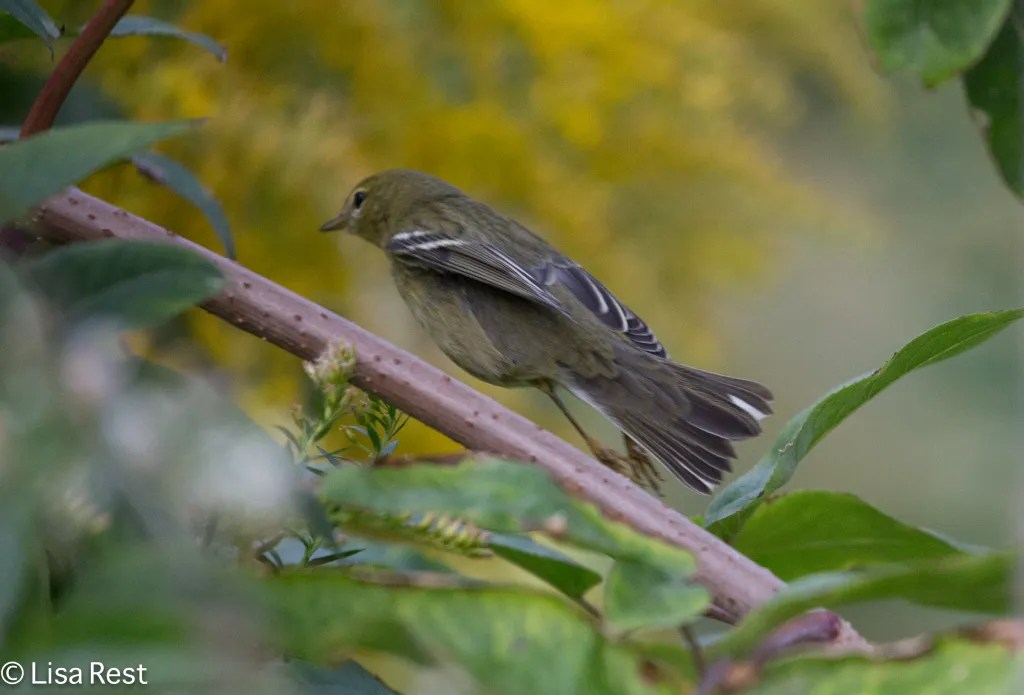
Here it is the end of September and I am just getting around to photos from the 10th taken at – where else? – the Chicago Portage. The activity seemed to die down a bit that day so there aren’t quite so many to sift through. Magnolia Warbler above and directly below.

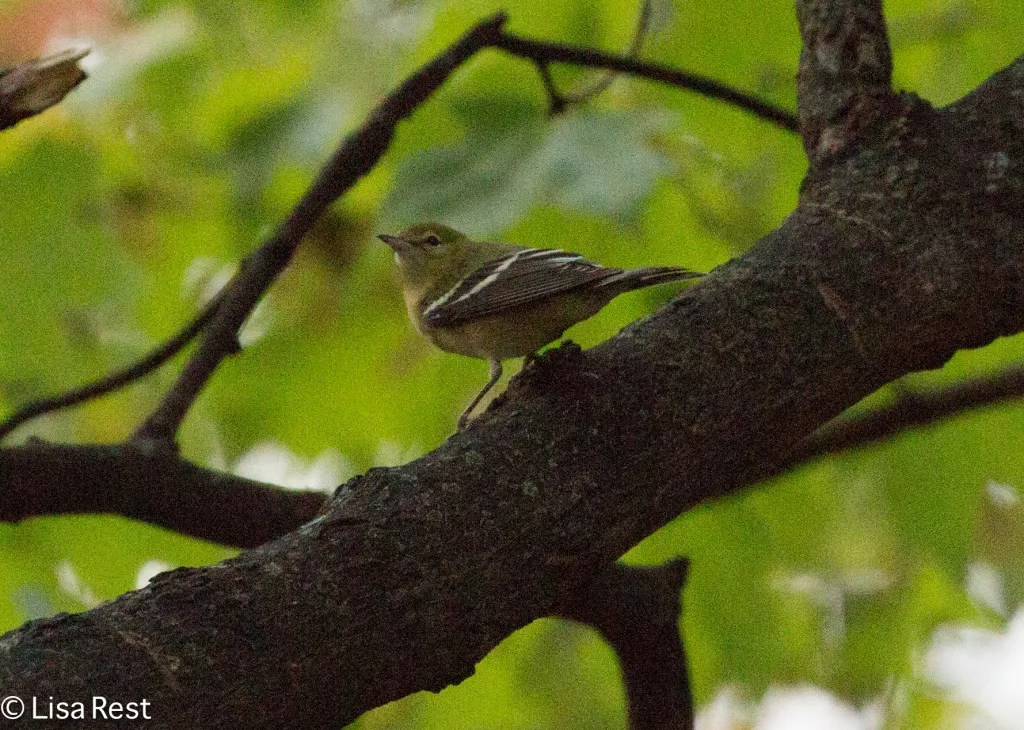
I’m not 100% sure but I think the bird directly below is a Pine Warbler. One of those confusing fall warblers…

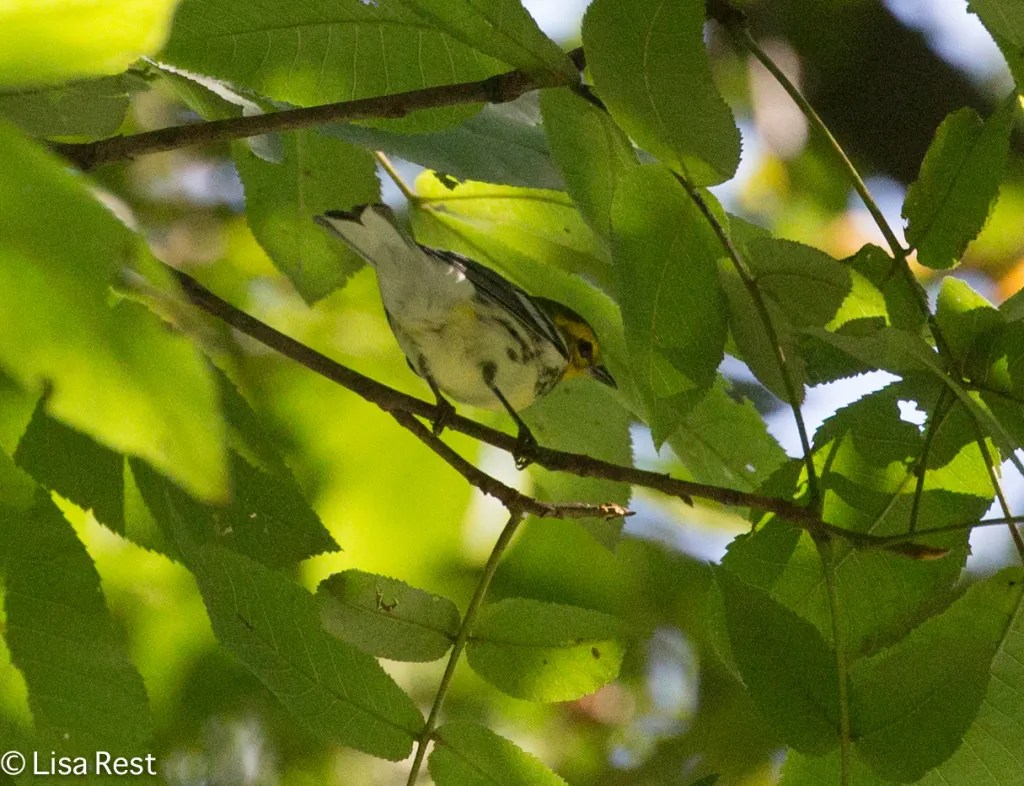
This was the first time I had seen a Northern Parula in a while. A not-so-common warbler around here.

A few other birds seen that weren’t warblers…

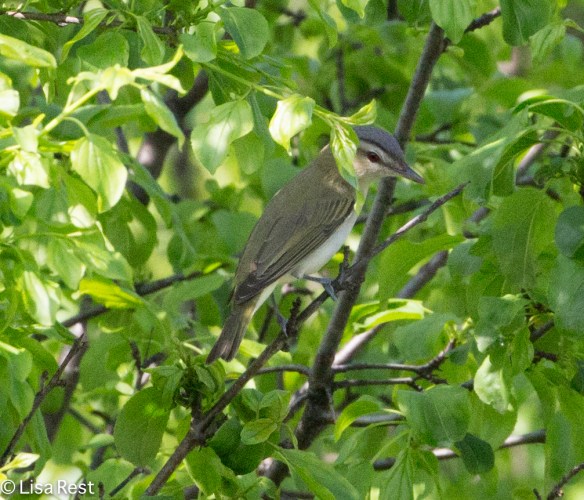
Red-eyed Vireo
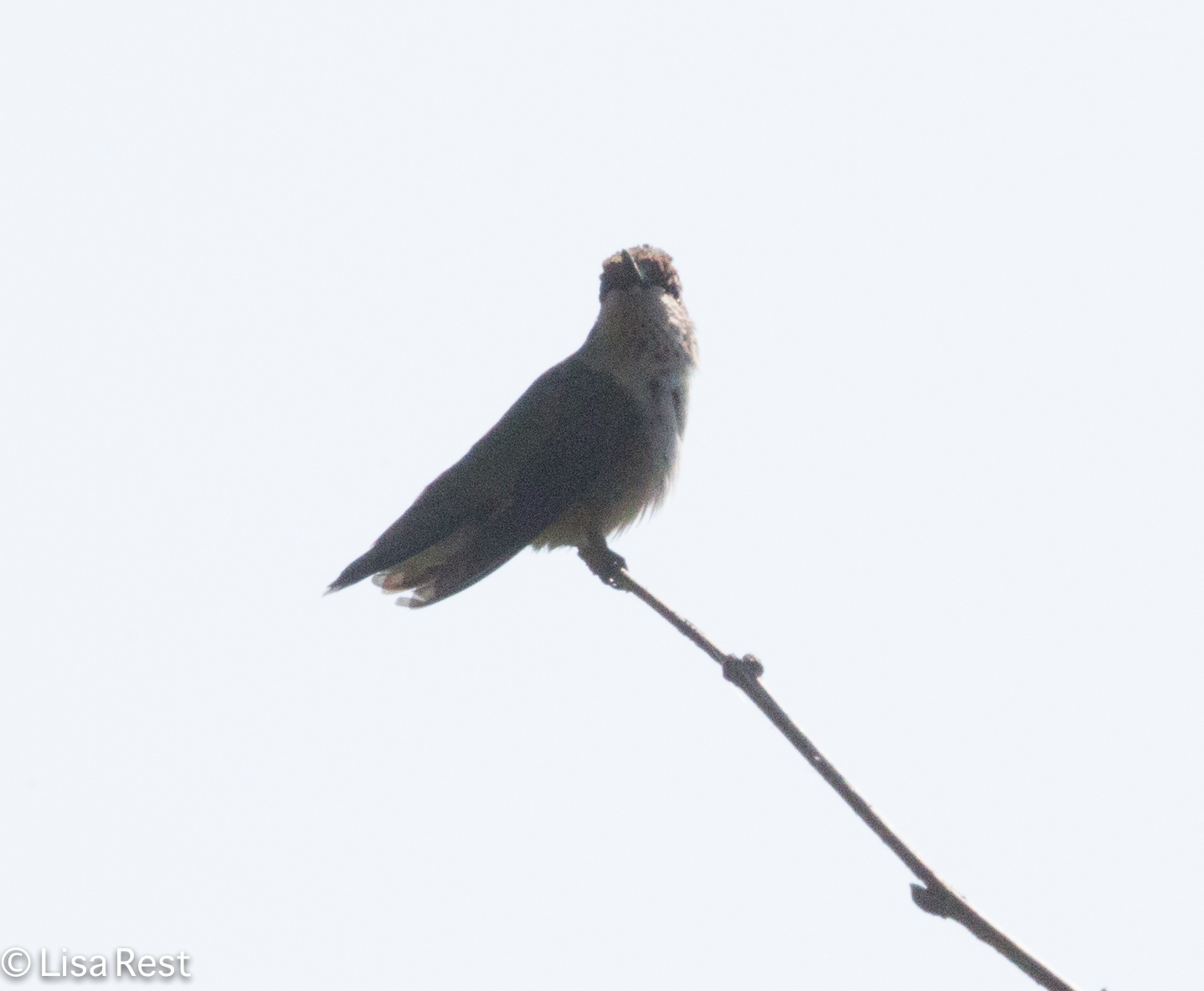
For the record, a Ruby-Throated Hummingbird…
Swainson’s Thrush

Blackpoll Warblers have been everywhere, or so it seems. Below is another.

Never confusing, a Black-and-White Warbler below. I suppose if you couldn’t see them well you might mistake one for a nuthatch as they behave the same way.

This Nashville Warbler could have been in better light…

The other ubiquitous warbler that is easy to confuse with the Blackpoll is the Bay-breasted Warbler, below.

Chipmunks are everywhere too – it seems like a bumper crop this year.

One more of the Northern Parula.

I’m afraid I will be back shortly with another surfeit of something. This birding every morning to make up for not being able to do it while I was working is…almost like going to work. But I am enjoying myself and it seems imperative to pay attention and keep track of the birds while I still can. Learning how to navigate retirement with…a sense of purpose.

Bemis Woods Twice

I decided to visit Bemis Woods a couple times two weeks ago as it is on the way to the grocery store where buy my organic veggies and then I wouldn’t be wasting a trip running all the way over to the store just for a couple items the first time, and my weekly groceries the next. I have now changed my shopping day to Friday instead of Saturday, so… visiting Bemis could become a weekly event.

I wasn’t sure if I would ever visit Bemis after the installation of a “Go Ape” Zipline feature a couple years ago. It’s right off the parking lot. but I thought I would see how it was to walk the trails, figuring the pandemic had probably put a damper on Go Ape for a while. While it doesn’t take up the whole preserve, that much human activity, in addition to plenty of bike riders, walkers and runners…well, you get the picture for a slow-moving quiet person like me. Bemis is also huge and there are trails sprawled out leading to oblivion, or so it seems, but luckily the GPS on my phone confirms I am going back in the right direction.

Black-throated Green Warblers have been everywhere this season. Period.

I was delighted to find the female Black-throated Blue Warbler below in my photos.

I could not resist documenting this Blackpoll Warbler’s struggle with its prey.

Not to be outdone by the warblers chasing bugs, this Black-capped Chickadee showed me there are other interesting things to eat.

I have no idea what the plant below is but I liked the way it has gone to seed.

Another view of part of Bemis that is not woods.

Bemis is otherwise thick with tall trees like the view below, which makes seeing anything a challenge.

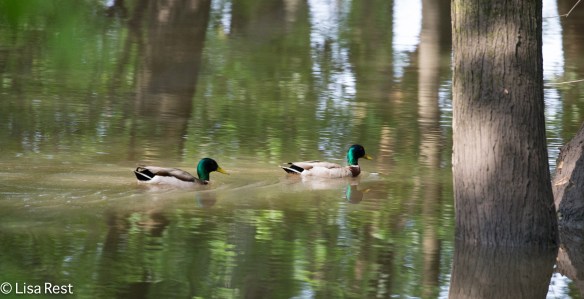
The Salt Creek runs through the preserve and there were Mallards at least one morning. It was nice to see some water still deep enough to afford waterfowl.

The asters below caught my eye. There are so many different types of asters, the more I learn the more confused I become. I’m glad the bee in the right-hand photo has figured it out.

Two more views of the Northern Flicker at the top of the post.

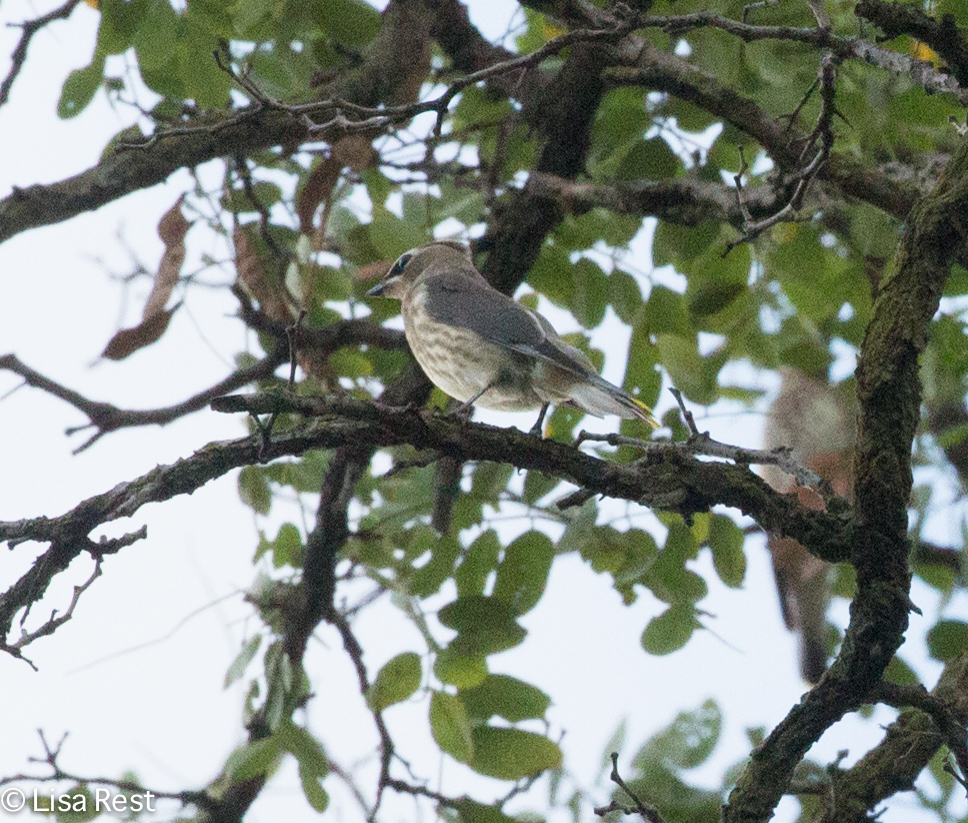
Below is a confusing fall warbler that has to be a Bay-Breasted but looks almost nothing like the ones below it in different light.

I have not seen many Chestnut-Sided Warblers this fall but am always glad when I do see one.

Below, some type of phlox and then golf-ball-sized galls that are found on Staghorn Sumac trees.

There’s always room for a Downy Woodpecker in my estimation.

This is still just the tip of the iceberg. However I have to use up more photographs soon or I won’t have room on my hard drive for the ones I have yet to take. Or something like that. I did get a bit of a reprieve last week when we had a string of rainy, cloudy mornings – which I devoted to projects I’m starting in my yard. We had cool weather and then we went back to hot and dry – and now we seem to be somewhere in between, but I am really hoping for some more rain, again.

Two Days of Retirement

To celebrate August 31st being my last official day of work, I went to the Portage two mornings in a row, to look for the first signs of fall migration. I didn’t see an awful lot of species on either visit, but there were some nice looks. Best of all was feeling really free to take my time and not worry about checking my work email. I still have to get used to waking up in the dark, though, because I have walks to lead every Saturday in September and October.

Of course the obvious draw this time of year is the fall warblers passing through on their way south from their breeding grounds in the north. I didn’t see a lot of species and missed a couple, but so far I have seen a few warblers each day. They behave differently on their way back to their wintering grounds. They are not foraging in flocks and they are in less of a hurry. So while they may be harder to spot at times, it’s easier to concentrate on one bird at a time. Below are a couple American Redstarts.

I felt lucky to find this Bay Breasted Warbler in my photographs.

Magnolia Warbler, also at the head of this post

One of my favorites, a Chestnut-Sided Warbler, was being rather coy.

Not a warbler, but a nice to see Red-Eyed Vireo both days. The bottom photograph was taken the second day when the Vireo was eating poke berries with the Cedar Waxwings.

Thursday morning I managed to capture enough photographs of the Orange-Crowned Warbler below to justify my claim that I had seen one, since it’s very early for this species.

I just barely captured this Nashville Warbler.

Wednesday was cloudy.

Large flocks of Cedar Waxwings were present on both days.

Some closer views of the Waxwings Thursday, when they were busy eating poke berries.

Below is a beautiful wasp’s nest. I have a slightly smaller one in my crabapple tree this year as well…

Something else that I had a lot of in my yard before I removed nearly all of it, below, is Common Beggar Ticks which is native, and an annual – but doesn’t bloom until now.

On the first day I did manage to capture the Swainson’s Thrush below. I also saw a Wood Thrush but that photograph isn’t presentable.

Robins are looking scruffy this time of year. Most of them are juveniles.

When I first walked in on Thursday, there was a deer at the end of the paved path, and then a Cooper’s Hawk with prey landed in a tree above me, but I didn’t see what it had captured.

Unfortunately this Ruby-Throated Hummingbird was completely backlit in bright sunshine but it was still nice to see it perch right in front of me.

There were still a couple Indigo Buntings around.

Female Indigo Bunting

For once, there were more than one or two Monarch Butterflies. I realize this is probably the last I will see of them but it was nice while it lasted.

Below is a Chipmunk foraging in a tree.

A few scenes of the Portage and one quick look at the Des Plaines River where not much is happening at the moment.

Black-capped Chickadees are around all year but I don’t always see them. Sometimes I don’t even hear them. This one didn’t mind being seen or heard.

I am trying to navigate this new feeling of almost endlessness. Well, it doesn’t last for long. There is much to do, but less of a feeling of urgency or hopelessness as my work duties have all but vanished. I have agreed to remain with the firm as an independent contractor to help out with various projects while they still try to find and train my replacement. My stipulation was to assume any given morning with nice weather would be off limits for my attention as I will likely be out looking for birds somewhere.

Once More with Sunshine

I went back to the Portage Sunday to see if abundant sunshine would allow me to see more birds. As it turned out, it was harder to capture most of the birds – except for the Indigo Buntings who were readily available – but in going through my photographs later I discovered the camera saw more birds than I did and I found some unexpected species. Nothing rare – it’s spring migration, so just about anybody can show up.

Vesper Sparrow

Not only was the Vesper Sparrow unexpected, but I was also surprised to see a Black-Billed Cuckoo, although I have seen them at the Portage on occasion before.

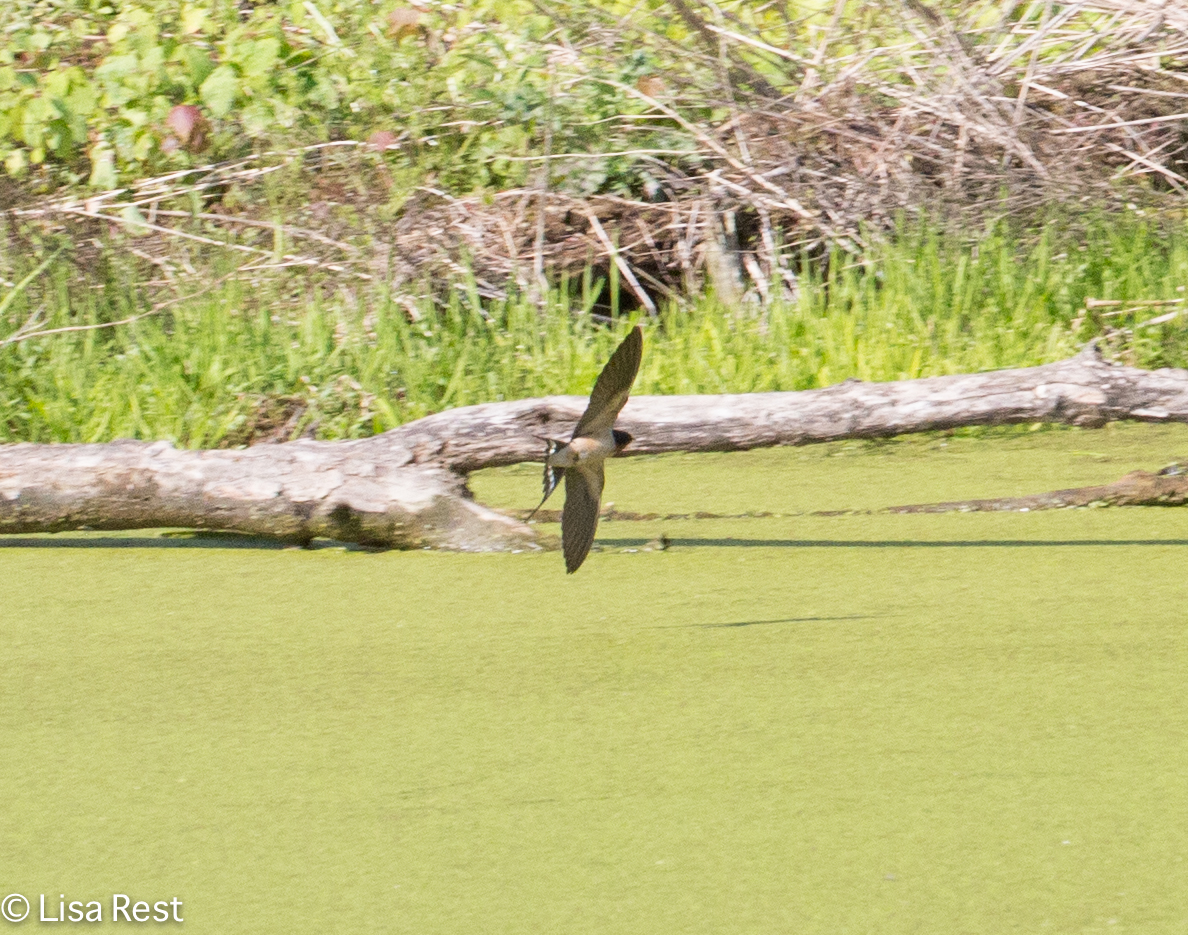
There were swallows like the day before, although not as many. I have concluded that the Northern Rough-winged Swallows fly in a more deliberate fashion which makes them easier to capture. Still I managed to snap one photo of a Barn Swallow in the lower right-hand corner.

So the Indigo Buntings were busy singing in the sunshine. I am convinced they have an artistic sense of the best places to perch for photos. I love the way this one was initially framed by the split of the tree trunk.

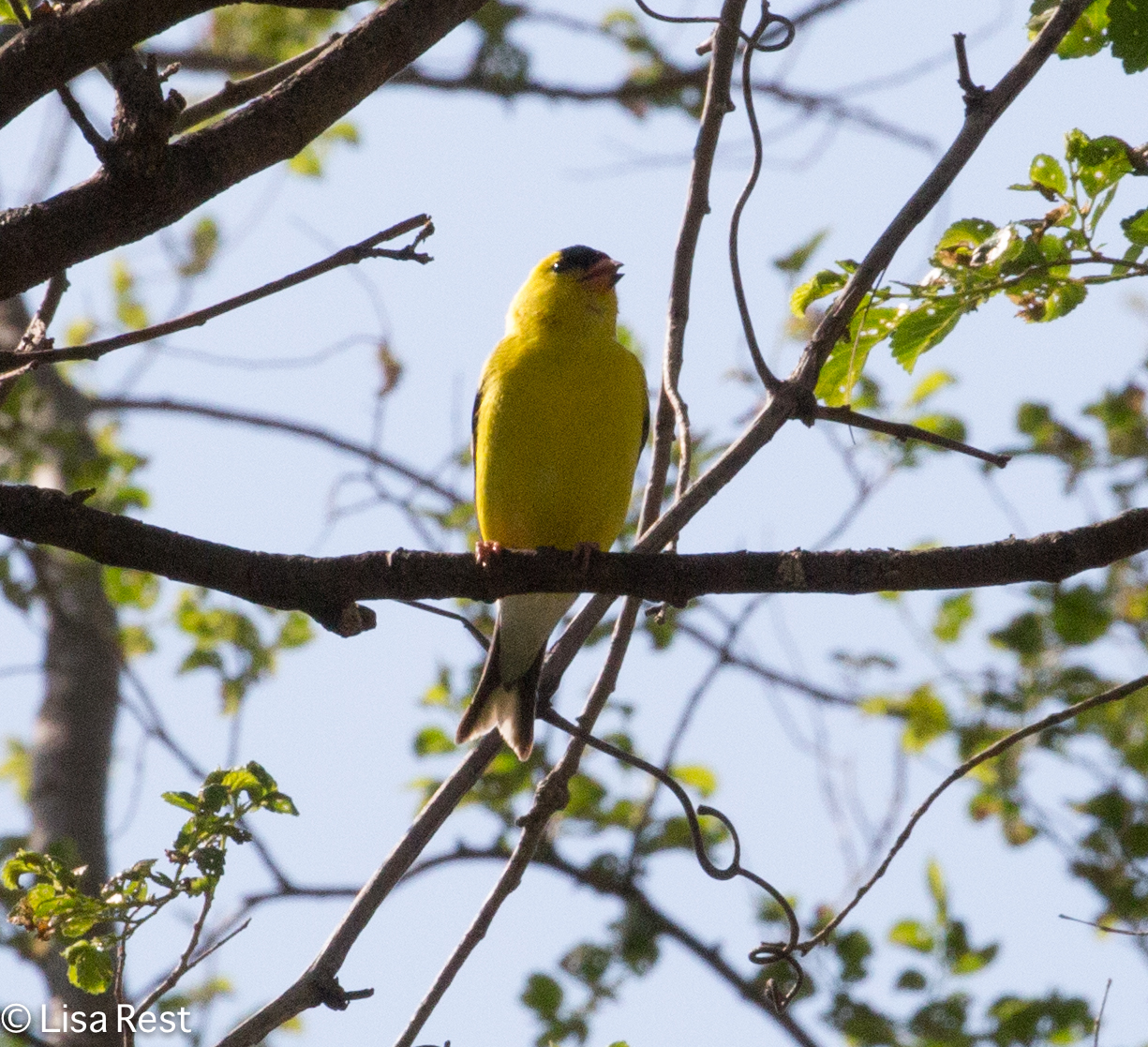
Male American Goldfinches are in full bloom too.

The Red-winged Blackbirds are looking a little tired of it all already.

Gray Catbird

I thought I was hearing the tail end of an Eastern Towhee’s song – and then I spotted one way up high (used to seeing them closer to the ground). Below the shots of the male is a partially visible female Eastern Towhee.

I was also hearing an Eastern Wood-Pewee for the first time this spring. I barely captured a picture of one below.

Red bird of the day turned out to be a male House Finch.

The Baltimore Orioles are busy gathering nesting material. Both female and male birds are below.

This is a really unfortunate place for a Lincoln’s Sparrow to show up but I’m glad one was on site anyway.

I walked around back by the water reclamation district and saw three Killdeer. Below is one of them.

There were quite a few Brown-headed Cowbirds. I got closer shots of the female in the grassy area by the parking lot on my way out.

So we really, really need some rain. This is how the Des Plaines looked on Saturday. You can walk down to it easily because the bottomlands are all dried out. Unfortunately because of the lack of water, there were no birds by the river.

So it wasn’t a great day for warblers, but I did manage a few pictures of a female Bay-breasted Warbler.

Can’t leave without a Robin. It’s got to be getting harder and harder to find those worms. The Robin below has a not-so-tasty-looking worm in its bill.

With a little luck I will be back with the prelude to all this before the weekend when I will likely be outside again. There is rain in the forecast but I have learned to become skeptical of the outcome. At least it is still fairly cool, but that will change too. This is all affecting my mood, to say the least. I am looking forward to swimming tonight – a sure antidote to depression.

Three Days at the Portage – Day 2

There were still some warblers on May 24, but the Bird of the Day for me was Red-Eyed Vireo. I had been wondering where these birds were, and then they all seemed to show up at once. Usually you hear them singing and don’t see them very well as they move through the trees chasing insects. But this time they were more often seen than heard. In some of these photographs you might actually be able to see the red eye for which they are named.

Red-eyed Vireo

Many of the warblers I saw that day were females. The females tend to migrate later than the males who are in a hurry to set up their territories. Spring migration this year seemed strange for many reasons – the pandemic affecting where you could go to find birds, the weather which is always a factor, and I guess the knowledge in the back of your mind that birds are in decline and you wonder just how many you’re going to see anyway.

Below is a Yellow Warbler who likely is on territory for the summer. I recorded him singing, and you can hear him three times in the little clip below his picture. Some people find the mnemonic “sweet sweet sweet I’m so sweet” helpful in distinguishing this song from others they might be hearing.

Yellow Warbler

I feel fortunate to have seen a Canada Warbler more than once this spring. Unfortunately they prefer somewhat shady spots which I guess they blend into better than bright sunlight. I love the steel-gray blue color of their backs. I would support a Pantone color called Canada Warbler Blue.

Northern Cardinals are all around but not seen too often. This one was far away but distinct.

A Blue Jay on the fly.

Baltimore Orioles are getting harder to see now that they are busy rearing families.

Indigo Buntings are busy too but there are so many of them, they are easier to see.

Indigo Bunting (female)

This might have been the last time I saw a Blue-gray Gnatcatcher. Actually I’m surprised I got to see more than its tail. I still hear them, but only on occasion, certainly not constantly like a few weeks ago when they first arrived.

Even Red-Winged Blackbirds are assuming a lower profile.
Two Mallards navigating the flood waters adjacent to the Des Plaines River which were still quite high that day.
Double-Crested Cormorant – an occasional flyover
The back of a Chipmunk

A couple more warblers – there seemed to be fewer American Redstarts this year, at least where I was. And I just learned something I never bothered to look up before about distinguishing the female Chestnut-sided Warbler from the male – the bright chestnut sides don’t extend as far down the side on the female. So the pictures below are of a female. And since I continue to hear a male singing at the Portage I can only wonder if there might be an actual breeding pair.

I still hear the Eastern Wood-Pewee but this might have been the last time I got photo ops.

The big surprise walking back in the opposite direction across the first bridge was to see this Robin’s nest right off the side of the bridge, in plain sight – and I had never noticed it before. Mom was in a nearby tree, waiting to revisit her brood.

A bird more often heard than seen..Gray Catbird.

Red-eyed Vireo

I love this last picture of the Red-eyed Vireo. Having said that, I realized a few days ago that I need to bring more control to my blog posts when I take so many pictures and can’t decide what to do with them and invariably end up with too many – believe it or not, this is a pared-down selection. I really need to use my flickr page more often, so I stuck some other photographs there and if you’re really curious, follow the link to them. I will try to be back sooner with the final installment of the Memorial Day weekend excursions and reports from other destinations since. Hope you are staying safe and well and rising to the daily challenges.

Three Days at the Portage – Day 1

Scarlet Tanager

The Memorial Day weekend this year offered three beautiful days of birding at the Portage. I had no desire to go anywhere else; rather, I was interested to see what different birds I might discover each day, enhanced by the fact that a lot of birds were finally on the move to their summer homes. Here are photographs from Saturday, May 23rd.

While I think this was the last day I saw the male Scarlet Tanagers, there were plenty of Indigo Buntings. I am not aware of Scarlet Tanagers breeding at the Portage, but the Indigo Buntings certainly are a presence now every year. I suspect some of them that return may have hatched at the Portage.

Indigo Bunting

I don’t know where the Green Herons are hanging out – likely on the Des Plaines River or perhaps across the railroad tracks in the low-lying water-collecting areas of Ottawa Trail – but I still see them fly over nearly every visit. I was fortunate enough to capture this one in flight.

This Scarlet Tanager looks orange compared to the other one. I imagine it is a function of the intensity and angle of the light.

Not too many warblers left…

Goldfinches are everywhere but not as easy to see.

There were plenty of Baltimore Orioles and they looked like they were busy tending to their nesting sites.

I finally managed to capture a singing Song Sparrow.

The turtles never miss a sunny day.

Daisy Fleabane opening up now – I had some in my yard last year, hope it returns

I love this Common Grackle posing, capturing the epitome of grackleness.

I fear for Black-capped Chickadees. Lately I have seen only one at a time.

One of many House Wrens.

A slow-motion Blue-gray Gnatcatcher.

Gray Catbirds are more often heard than seen but I was fortunate enough to enjoy both with this one.

A questioning look from the Great-crested Flycatcher below.

Perhaps this European Starling had just taken a bath in the last photo.

I have seen more Eastern Wood-Pewee’s this year. There’s even one in my neighborhood.

Subsequent visits gave me much better views than the Red-Eyed Vireo below.

Another Indigo Bunting

Then, most exciting of all, as I was sitting down and contemplating leaving, I heard and then saw the Red-Headed Woodpecker below. I have been waiting to see this species for an entire year. I wonder if this is the same one that I have seen on rare occasions only.

I have no idea what kind of caterpillar this is but it was my last subject as I left for the day.

i will be back with Days 2 and 3 which were also quite birdy. My next visit to the Portage will likely be more challenging but I will continue visiting to keep track of the emerging families. I hope we humans find some peaceful solutions. The days are getting so very long now.

In Between

Black-Throated Green Warbler (female)

I’ve been trying to write this next post with photos from Kouchibouguac National Park taken on August 19, with the thought in mind that I might get around to more recent photos before I go on my next trip, and, well, you can see how it’s not been going as planned.

Anyway, I intended to post pictures from the entire day but there are way too many of them to make any sense out of, so I’m concentrating here on the sometimes frustrating looks we had at warblers who were just beginning to migrate, or getting ready to do so – and displaying plumages I likely will never see again.

Northern Parula

Northern Parulas were everywhere. Which is why I have entirely too many pictures of them. The Bay-breasted Warbler below was not entirely cooperative. But most fascinating to me was being forced to concentrate on the entire jizz of the bird instead of particular field marks, because many of them weren’t painted in yet…

Yellow-Rumped Warbler in a most undignified but revealing moment

I expect I’ll be back with the other intended half of this post pretty quickly, with most of it taken along the beach.

Black-and-White Warbler

For what it’s worth, the Magnificat last Sunday was pretty magnificent in its own right and I am grateful to have taken part in it. Beyond that I feel like the month has taken off at a frenetic pace that has not let up and I am on a timer, not just a treadmill. But I admire y’all with your holiday spirit and wish you glad tidings.

Last Saturday at Columbus Park

GBHE Columbus Park 10-6-18-2039

Great Blue Heron with prey

Columbus Day has come and gone for another year. Even after suggestions that we rename it Native American Annihilation Day, it would be cumbersome to re-label everything presently Columbus. Columbus Park has been around for a long time. According to the Chicago Park District, it is considered the finest example of landscape architect Jens Jensen’s output and was designated a National Historic Landmark in 2003.

RCKI Columbus Park 10-6-18-2005

Ruby-Crowned Kinglet

I’ve been too busy looking for birds to photograph the landscaping but I’ll try to keep it in mind since I have one more planned visit next Saturday. After that I will be free to go anywhere or not. The morning started out cloudy and wet but improved. We park in the golfers parking lot, where there were many intrepid golfers by the time I arrived. Early on, the birds were not easy to spot last Saturday. They were either too far away to see clearly and/or tangled in dense multicolored foliage. Above is a Ruby-Crowned Kinglet. Below is a photograph that may or may not have a bird in it, to give you an example…

Puzzle Columbus Park 10-6-18-1997And then when I did eventually find a bird and tried to enlarge the photograph enough for identification purposes…

Baypoll Warbler Columbus Park 10-6-18-1955

This is a Bay-Breasted Warbler. Even after ebird insists nobody can tell a Bay-Breasted from a Blackpoll this time of year, the configuration of the wing bars, the faint rosy wash on the flank and the facial pattern all tell me it’s a Bay-Breasted.

PIWA Columbus Park 10-6-18-2047

This is a Pine Warbler that we actually glimpsed better naked eye than with the camera.

For one thing I have been able to exercise my desire to see a Yellow-Bellied Sapsucker the last week or so. Below is one from Columbus Park…

YBSA Columbus Park 10-6-18-1779and a couple days earlier, from the park at 311 South Wacker, a block away from my office. Notice all the sap-holes in the bark!

YBSA 10-4-18-1747Even though Red-Winged Blackbirds don’t migrate far, I think we’ve seen the last of them in these parts until they return to nest in the spring.

RWBL Columbus Park 10-6-18-1968Another off-site but maybe not off-topic bird is the Ovenbird below. One or two of these have been hanging out at 311 South Wacker. I think I had eight of them at one time in the spring.

I would be remiss if I didn’t include a Nashville Warbler…

NAWA Columbus Park 10-6-18-1982And the large pond that attracts so much waterfowl…

MALL Columbus Park 10-6-18-1823Then I was intrigued by the fungus that had adopted a tree stump.

Fungus Columbus Park 10-6-18-2010We saw the Great Blue Heron early on and then later when it was trying to negotiate a slippery fish.

Our last bird was perhaps the nicest surprise. A Cooper’s Hawk perched directly overhead.

COHA Columbus Park 10-6-18-2055I am going to Thatcher Woods tomorrow morning for the last walk there, and I have absolutely no idea what to expect. We are currently experiencing cold, cloudy weather. The forecast for tomorrow is sunny and moderately cool. I plan to get in as much birding as possible before I tend to my weekend chores because Sunday is going to be challenging. The choir sings in the morning, and in the afternoon I’m attending a “Soul Connections” group I joined several months ago, then directly after that, my first attendance at a writer’s workshop, led by one of the SC group’s participants – an activity I haven’t attempted in many, many years. I think I’ve come to the conclusion that we have to connect with each other on multiple levels if we’re going to get through this. 🙂


Last of the Late Fall Warblers

YRWA 09-30-17-9009

Yellow-Rumped Warbler

I haven’t seen many warblers this fall for various reasons but from what I can gather numbers have been down, if not sightings of individuals. So it’s not just my itinerant schedule but factors like weather and habitat changes play in.

So right about now the “last” warblers are most visible, led by the Yellow-Rumped (Myrtle) (above) and Palm Warblers. Below are a couple pictures of my most cooperative Palm Warbler at the Chicago Portage last weekend.

Two weeks ago I was fortunate enough to join Chicago Ornithological Society’s walk at Humboldt Park, a location I had always wondered about but never gotten to, and we were fortunate enough to have a little flurry of Black-Throated Green Warblers. I have missed seeing this favorite of mine for a couple years or more. They were always easy to find when my most-frequented haunt was Daley Bicentennial Plaza.

Below is a Blackpoll Warbler I managed to capture Thursday afternoon at the Boeing garden down by the Chicago River, only a few blocks away from my new office location. While I am not wildly ecstatic about the limited opportunity offered at this place, it gives me hope for the future if I can manage to take a walk after noon. The garden was less congested with lunchers than it would have been under the noonday sun, and my little flurry of warblers happened just as I turned around to head back to the office.

Often confused with the Blackpoll above this time of year is the Bay-Breasted Warbler below, thus the name “Baypoll”. This Bay-Breasted I managed to see the one early morning I paid a visit to Lake Shore East Park before work.

BBWA 09-25-2017-5704Except for the bird perched in the oak tree below, this Nashville Warbler was foraging radiantly at the Chicago Portage on September 30.

And the Wilson’s Warbler below was not in the best of light that early morning at Lake Shore East Park, but I have consistently seen Wilson’s down there for a couple years so I have to wonder if it is one of the same individuals.

WIWA 09-25-2017-5678The last of the American Redstarts to come through were girls.

Still a Magnolia Warbler here and there, also a likely female.

Not a warbler, below, but when the flocks of Ruby-Crowned Kinglets start coming through, it’s a sure sign of the end of fall warbler migration. This one was also down by the river at the Boeing garden.

A couple more photos…not very sharp but lingering like the birds.

BTGW 09-23-17-8375YRWA Portage 09-30-17-8620We’ve had some rain now, temperatures are still warm during the day although falling blissfully at night, doesn’t look like we’ll be hitting the 80’s again as the days are getting shorter… But the sunshine was surprisingly warm yesterday around 10:00 AM. I’ll be back soon with new discoveries from the Chicago Portage.

City Migrants – Fall Migration 2016

If I’d been thinking clearly I probably would have postponed the cataract removal until after fall migration, but I ventured anyway into the wilds of downtown Chicago after I convinced myself that with patience and practice I could temporarily look through the view finder on the Canon with my left eye… Anyway, I managed to find quite a few cooperative birds to photograph and have decided to share them now before I invite you back to the Galapagos. A couple more shots of the Chestnut-Sided Warbler below. Responding to my thoughts, as I’m taking pictures of him, of “what a beautiful bird you are.”

First-year male American Redstarts are always welcome.

Things didn’t seem to get really active until last week. There’s probably a whole lot more I could have done if I put my mind to it, but I’ll get my new prescription lens in a few days and with luck, all my kvetching will fade away. (Don’t hold me to it!)

Red-Winged Blackbirds breed in Millennium Park so these birds below likely hatched this year.

Below, a Canada Warbler on the left and a Wilson’s Warbler on the right, both at Lake Shore East Park a couple weeks ago. The Canada was shy.

Juvenile European Starlings in their in-between plumage, which I find fascinating. They look more like “Star”-lings to me. They’re not exactly migrants…unless they’re from another planet?

starlings-9-9-2016-lse-park-0604I wonder if the Common Grackle below could be a molting adult, without its long tail.

cogr-9-16-2016-lse-molting-1005Magnolia Warblers have been coming through for weeks.

cswa-9-27-2016-lse-park-1734

Not a lot of thrushes this year – sometimes they show up in large groups. A Gray-Cheeked Thrush that was at 155 N. Wacker on the left, and a Hermit Thrush on the right and below.

heth-9-29-2016-lse-park-2025

Hermit Thrush

Two views of an Orange-Crowned Warbler at the Boeing garden, below.

Two Blackpoll Warblers…

Similar to the Blackpoll but a bit different this time of year, a Bay-Breasted Warbler. I think! Confusing Fall Warblers redux.

bbwa-9-22-2016-boeing-1243

Bay-Breasted Warbler…?

Two more Blackpolls below.

And now, signalling the tail end of warbler migration, Palm Warblers, below…

and Yellow-Rumped Warblers (Myrtle subspecies).

And the same two species in flight, Palm on the left, Yellow-Rumped (with the yellow rump showing), below. Note the similarities…and differences.

My prize discovery last week was a beautiful male Black-Throated Blue Warbler. I think we have been seeing more of this species the last couple years but it’s still not common and always special. Luckily this one liked to show off.

btbw-9-27-2016-lse-park-1603

Black-Throated Blue Warbler

Golden-Crowned Kinglets are coming through but hard to capture in cloudy light. Or at least that’s my excuse.

gcki-9-29-2016-lse-park-1873On the 29th I saw this presumably female Wilson’s Warbler, below, at Lake Shore East Park, and am glad I had pictures to prove it to ebird – apparently it’s late in the season to see a Wilson’s. Others reported seeing them too, in the area.

I always look forward to the return of the White-Throated Sparrows. I have seen a couple other species too and I’m hoping to take some pictures of them this week.

The Black-and-White below appears to be a female.

black-and-white-warbler-9-29-2016-lse-park-2118

Black-and-White Warbler

A late Magnolia.

mawa-9-29-2016-lse-park-2122

Magnolia Warbler

Red-Breasted Nuthatches are visible this year.

rbnu-9-29-2016-lse-park-2014

Red-Breasted Nuthatch

I have a new crop of juvenile Crows that look for me. We will hang out more over the winter months when there are no more migrants.

amcr-9-22-2016-loop-1301amcr-9-27-2016-lse-park-1798

I had to run an errand on Friday all the way over to the river, and on the way back into the office, as I crossed the street at Wells and Madison, I heard a loud “caw-caw-caw.” I stopped and looked up but saw nothing. “Caw-caw-caw” again. I waited. People streamed by me on their way to wherever, I’m sure they did not hear the crow, and no one was curious about why I had stopped to look. Then, in the top branches of a locust tree planted in the sidewalk across the street, the crow moved. After we acknowledged each other’s presence, he was silent. I crossed the street to get a better look and he appeared to be fiddling with something dark but I can’t say what it was, a bat, shoe leather, hard to tell without binoculars. But how nice to be recognized by this super-intelligent creature. Made my day. 🙂