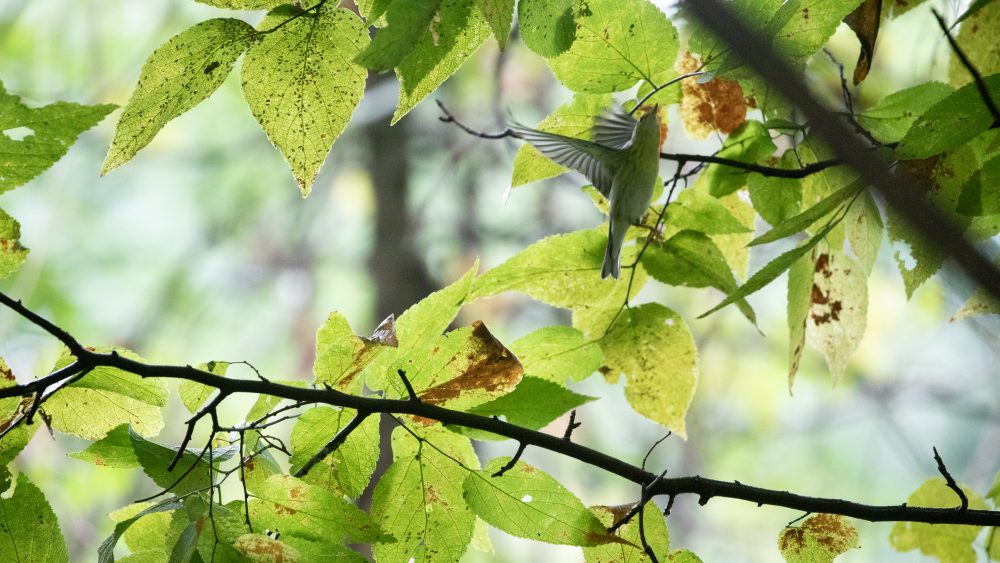
Timing Is Everything

GBHE & RWBL McGinnis 07-02-17-4884I got up early this morning so I could go to the Little Red Schoolhouse Forest Preserve and then stop by McGinnis Slough. I haven’t been to the Schoolhouse in a long time so I made sure I covered every inch of it. I never heard or saw a Prairie Warbler, which would have been a life bird. I was satisfied to see a couple Tufted Titmice and to record a beautiful song of a Wood Thrush. In all, it was a pleasant visit for an hour and a half.

The Slough is hardly a slough, the water levels have receded and it is covered with plant life, which has made it less attractive to a number of species I would have expected to see there. But there were several Great Blue Herons.

I got home just before noon and threw myself in the shower to wash off the insect repellant, had a little beet salad and farofa for lunch (this has become one of my favorite combinations), and quickly fell asleep on the futon. I was too tired to think about whatever pictures I might have taken. A quick nap, I thought, and then some piano practice and cleaning the dining room, as last night we did the living room, complete with almost a dozen new residents: I’m making sure there are no more babies in the making for at least a week…

When I checked my email, it became apparent that someone heard, saw and photographed the Prairie Warbler at the Schoolhouse yesterday, because it made the Rare Bird Alert which comes to my mailbox. That was disheartening. But I managed to get up the energy to download my pictures from the camera and start going through them, and that’s when I found this wonderful series of a Red-Winged Blackbird harassing a Great Blue Heron.

I had been sitting on the picnic table that overlooks the slough from the northern end of the preserve, and suddenly these two characters were in front of me. I hadn’t even remembered taking these pictures until I saw them – that’s how quickly it all happened. One cannot plan for these things. The only thing I changed today was I finally set up my Mark III so I no longer have to use the shutter button to focus. I had done this already to my 70D over a month ago. I don’t know if it had anything to do with anything but I just feel really lucky to have taken these pictures.

GBHE & RWBL McGinnis 07-02-17-4885

The Red-Winged Blackbird’s shadow makes two of him on the heron’s back!

Weather permitting, I’m going to Goose Lake Prairie in Grundy County tomorrow. I had already planned to go, before someone found a King Rail there. That would be another life bird for me, but I’m not going with any expectations. Timing is everything.

Kirtland’s Warblers and Friends

KIWA 05-27-17-3239

Kirtland’s Warbler

Sorry I haven’t been back to the page sooner but I’ve been down with a nasty cold that doesn’t seem to want to go away.  Yet I could speak above a squeak this morning, so I will have to take that as a sign of improvement. Here is a quick post from part of a visit to Michigan with friends over the Memorial Day Weekend. Specifically, these photographs were taken at the Kirtland’s Warbler Restoration Project in Iosco County. We visited this site on the morning of the 27th. The Kirtland’s breeding population is established well enough now at this location to warrant offering tours by the AuSable Valley Audubon Society. Thanks so much to Sam Burckhardt and the Chicago Ornithological Society for another memorable trip.

To go along with the pictures of a singing Kirtland’s above, here is a brief sample of his song:

Kirtland’s Warblers are a fire-dependent species, breeding only in young Jack Pine forests. They winter in the Bahamas. Their fascinating story was chronicled a few years ago by William Rapai, the author of The Kirtland’s Warbler: The Story of a Bird’s Fight Against Extinction and the People Who Saved It

The Kirtland's Warbler: The Story of a Bird's Fight Against Extinction and the People Who Saved It by [Rapai, William]

NAWA 05-27-17-3137

Nashville Warbler

There were also several Nashville Warblers on territory and although they were a bit elusive I did manage to obtain a few distant photos of this one and a clip of him singing as well. To confuse the issue his song is overlapping the Vesper Sparrow’s, which is also below.

Perhaps the unexpected treat for me was a singing Vesper Sparrow. I have not seen these guys too often. A clip of the Vesper Sparrow’s song is below the pictures which were taken at an unfortunate distance. It can be distinguished from the Nashville’s bubbly song by the three introductory notes all at the same pitch.

Perhaps the birds most seen over the weekend were the huge flocks of non-breeding Canada Geese. This is only a small sampling of one flock passing overhead.

Below, a female Orchard Oriole on the left (you have to click on the picture and still look hard to find her, she is so well-camouflaged) and a male Orchard Oriole on the right.

Brown Thrashers were singing quite a bit too, now I’m sorry  didn’t bother to record one. Below is one very cooperative bird.

Now the challenge is to get through another busy weekend and a lot more photographs (and, I hope, a lot less facial tissue). I am trying to stay optimistic! Please have faith, I shall return, lots to share with you.

BRTH 05-27-17-3340

Brown Thrasher

A Little Panama, a Little Protest

Great Jacamar 3-14-17-2198

Great Jacamar

I stayed home last night instead of going swimming because I just didn’t feel like going out in the weather again. It was chilly, rainy and windy all day and after a busy weekend it felt like a stay-at-home-with-the-birds night, providing me enough mental energy for combing through the Panama Pictures.

It wasn’t always easy to find the birds…when I was taking the pictures, or going through the pictures later. Like this Bay Wren below.

Or this American Pygmy Kingfisher.

Some were a bit more obliging, like the White-Whiskered Puffbirds below. Male on the left, female on the right.

Or the Scarlet-Rumped Cacique that took forever to finally turn around and show me the field mark it was named for. I’m rather enamored of its blue-ringed eyes.

Just as I almost got the White-Tailed Trogon in focus, it left.

Woodcreepers are unique, and the Black-Striped Woodcreeper below is particularly so.

This Rufous Mourner didn’t appear very mournful to me; I think it must be named after its song.

Rufous Mourner 3-14-17-2322

Rufous Mourner

Below is a somewhat distant Masked Tityra.

Masked Tityra 3-14-17-2366

Masked Tityra

Another beautiful skulker below, a Chestnut-Backed Antbird. When I see an antbird I always feel like a Peeping Tom.

Mealy Parrots are fairly common in Central and South America, but I find them beautiful and wish they had a more attractive name.

Below, one of many Mantled Howler Monkeys that were hard to fit into a picture.

Mantled Howler Monkey 3-14-17-2280I know, I promised you Protest, so here we go with a series of some shots from the Science March in Chicago on April 22nd.

I think I’ll spread the Science March photos out over a few posts – likely marches will be ongoing all spring/summer/dare I say all year? and we’ll stay in the mood.

There’s a spring bird count to do on Saturday morning, choir on Sunday, and if it ever stops raining, the garden beckons. Stay tuned for more from Panama, spring migration, etc. Thanks for your visit!

Back to Panama, Day 1 continued

Orange-Chinned Parakeet 3-13-17-1518

Orange-Chinned Parakeet

More birds from the first full day of a short but colorful trip. It’s always a delight to see parrots and parakeets, after you’ve managed to distinguish them from the leaves of the trees into which they blend so well. Orange-Chinned Parakeets were our most common psittacine species.

The picture below is as close as I got to the tiny spec of “orange chin” this bird is named for. I’ve come to the conclusion you can only “see” it in the field guide illustrations.

Orange Chin of the Orange-Chinned Parakeet 3-13-17-1564Below is a Yellow-Tailed Oriole. I saw a lot of different Orioles all at once years ago in Belize and got terribly confused. Luckily this was the only Oriole we had to worry about except for the Baltimore Oriole which we shall see shortly in spring migration in the United States, with many staying to breed throughout the summer.

Yellow-Tailed Oriole 3-13-17-1803

Yellow-Tailed Oriole

Later in the day we visited some wetlands and caught glimpses of the juvenile Rufescent Tiger-Heron on the left and its parents on the right.

Also present in the wet areas were Northern Jacanas like the one below.

I think I have never seen a Greater Ani before, only Groove-Billed and Smooth-Billed. I was surprised to see the scalloped blue edges on its feathers.

Greater Ani 3-13-17-1758

Greater Ani

We had some raptors too. The Gray-Lined Hawk below is a new species for me. What a gorgeous creature.

Gray-Lined Hawk 3-13-17-2017

Gray-Lined Hawk

I’ve seen Zone-Tailed Hawks before, but never really gotten such a detailed view of their feather patterns underneath.

Zone-Tailed Hawk 3-13-17-2039

Zone-Tailed Hawk

The Black Vulture below is feather-challenged but still elegant in flight. Black Vultures outnumbered every other kind so you will be seeing more pictures of them.

Black Vulture 3-13-17-2053

Black Vulture

I couldn’t resist throwing in a few more pictures of a Plain-Colored Tanager. I’m sure he was pleased I paid so much attention to him.

This Black-Headed Saltator isn’t living up to its name. If it weren’t for the overall shape of the bird and the white eyebrow I would still be trying to figure out who it was.

Black-Headed Saltator 3-13-17-2055

Black-Headed Saltator

We saw a lot of Yellow Warblers, and there have been a few reported to have made their way to the Midwest in the U.S. already.

Yellow Warbler 3-13-17-2103

Yellow Warbler

This is not my greatest picture of a Rufous-Tailed Hummingbird but I like the branch it’s on.

cropped-rufoustailed-hummingbird-3-13-17-0894.jpg

Rufous-Tailed Hummingbird

Red-Lored Parrots were seen a few times too. This bird seems to be feeding on something here. Looks crunchy, what fun.

There was a Three-Toed Sloth in a tree close to the tower we stayed in. It blended in well but luckily was exposed enough for a photograph.

Three-Toed Sloth 3-13-17-1424It’s been a busy week, with the March for Science last Saturday, then Choir Sunday at Unity Temple, work, upcoming rehearsal and participation in the Spring Music Festival at Unity Temple-United Lutheran which my friend Linda and I attended last year but this year we are performing Schubert’s Sonatina for Flute and Piano. I managed to get in a swim last night but the rest of the week is clamoring for attention. I’ll be back with more birds from Panama as soon as I can.

Happy Spring!

Where to Start? The Panama Pictures

Keel-Billed Toucan 3-13-17-0788

Keel-Billed Toucan

Finally getting around to those Panama Pictures! Life keeps getting in the way, and of course with spring migration just starting there have been other distractions. But I keep thinking there’s a better solution to my madness somewhere. Maybe that’s what keeps me going. The madness, I mean. If I find the solution, it might all come to a halt.

Ah the Tanagers. Above, probably one of the most common we saw, the Crimson-Backed Tanager, with the male lower left and the female on the right, showing her crimson back. Lucky for me there were only a few possibilities to worry about. The tanagers in some places, especially if they are traveling in a flock, can be confounding.

From gaudy to drab – below, the Plain-Colored Tanager on the left and the Palm Tanager on the right. But I think they have their own subtle beauty.

And below, a White-Shouldered Tanager and the ubiquitous Blue-Gray Tanager which always makes me have to decide whether to spell it Gray or Grey.

All these photos were from the first full day of the trip. Which means there are more days to come (and for me, more pictures to process). We did not travel far from either lodging location, spending four nights at the Canopy Tower and another two nights at the Canopy Lodge in El Valle, the days and locales having blended into a continuum in my head by now, so I won’t have a lot of commentary to contribute. Now that I’ve decided to leave the monster lens at home next time I travel, maybe my dream companion would be a scribe instead of a sherpa.

Both locations had feeders which made it easier to see some of the birds, particularly hummingbirds. White-Necked Jacobins dominated the feeders but you don’t always see the white neck they were named for, so there it is in the picture below. The hummingbird on the lower right is a White-Vented Plumeleteer. Unfortunately the white vent isn’t very easily distinguishable but I like the illumination on the throat.

Elusive antbirds are always a challenge to see. We got lucky with the two below. A Fasciated Antshrike and a Dot-Winged Antwren.

Black-Crowned Antshrike 3-13-17-1366

Black-Crowned Antshrike

The two puffbirds below look almost identical except on very close inspection, which likely kept me poring over the field guide for several minutes. On the left is the Pied Puffbird which I saw last year in the Amazon in Ecuador, and on the right, Black-Breasted Puffbird.

Two flycatchers, the Black-Headed Tody Flycatcher, which is a new one for me, and the Dusky-Capped Flycatcher.

Below is a Streaked Flycatcher, not usually seen from the back, but after 20 or more shots he still wouldn’t turn around so I gave up.

Streaked Flycatcher 3-13-17-1678

Streaked Flycatcher

The Rusty-Margined Flycatcher below can be confused with Greater Kiskadee, Social Flycatcher, until you get the hang of telling them apart.

Back to the elusive with a fairly common but hard-to-get-a-good-photo Squirrel Cuckoo. The picture on the lower right gives you more of an idea of how far away it was.

Green Honeycreepers below.

Blue Dacnis 3-13-17-0864

Green Honeycreeper

Blue Dacnis Female 3-13-17-0882

Green Honeycreeper Female

Below, a Red-Legged Honeycreeper is the bright blue guy, and the green bird is a Blue Dacnis female.  I’m starting to get these guys confused!

Below, a Pale-Vented Pigeon and a Gray-Headed Chachalaca. Click on the pictures if you want a better view, especially of pigeon colors. I love this pigeon. You will see it again in a later post.

Two more for the trying-to-be-elusive list. Cocoa Woodcreeper on the left and Cinnamon Woodpecker on the right.

There’s a lot more but I think I better give us all a break. Which means I can be back that much sooner! Thanks for stopping by!

Night Monkeys 3-13-17-1411

Night Monkey

March On

gho-salt-creek-2-26-17-9906

Great Horned Owl on nest, Salt Creek Forest Preserve, Cook County

I started writing this post on March 1. WFMT’s Carl Grapentine kicked off March 1’s morning program by playing, what else? Various marches. I was just getting over February.

The end of February was sufficiently balmy to lock  it into the record books with January as being the first time both months went without snow in Chicago.

I birded with my friend Susan last Sunday. We went to Bemis Woods South and the Salt Creek Forest Preserve. It was so quiet I didn’t bother to do a list. We were about to give up on the Salt Creek portion when a man walking in the opposite direction told us to look for an owl, so we continued. The Great Horned Owl at the top of this post made the day. Its nest was easily seen from the trail, and it sat and watched as people went by.

Two more birds from Bemis below, a White-Breasted Nuthatch and Red-Bellied Woodpecker.

March came in like the proverbial lion, returning to chilly, windy temperatures. My reward for venturing out of the office last week was to see my first Yellow-Rumped Warbler in Millennium Park. Nothing rare, but an earliest first for me.

It’s a busy time of year for the birds, as they prepare for spring. Today I visited the Chicago Portage, and although by the time I got there the sunny start was disappearing, and the number of Canada Geese and Mallards was increasing, and there were some more unusual visitors in the air, like the Bald Eagle below with nesting material and a small flock of Sandhill Cranes. The Sandhills were oddly quiet.

baea-3-5-17-0568

The Bald Eagle was flying east, but I have no idea where the nest might be. That direction was industrial, with the Sanitary and Ship Canal.

Saw and heard my first male Red-Winged Blackbirds today at the Portage, where they have come to establish territories.

There were maybe 40 Mallards spread out wherever there was water, and 5 pair of Canada Geese were checking out nesting spots. I haven’t seen any banded geese this year.

Other than the Red-Winged Blackbirds there were very few passerines, with the exception of a few American Robins and European Starlings. I heard a Song Sparrow, Chickadees, Killdeer, and a couple Downy Woodpeckers were flitting about.

The last Downy Woodpecker I photographed was last week in Millennium Park.

Also present that day, a couple Northern Cardinals and the White-Throated Sparrows who literally yelled their calls from the bushes when they saw me approach our favorite spot.

More Portage views…

cago-and-mallards-portage-2-26-17-9953I hope to be back once more if possible, with an update on my indoor crowd – before I leave for a quick trip to Panama. I’ve been planning this trip for months and unbelievably, all of a sudden it’s here.
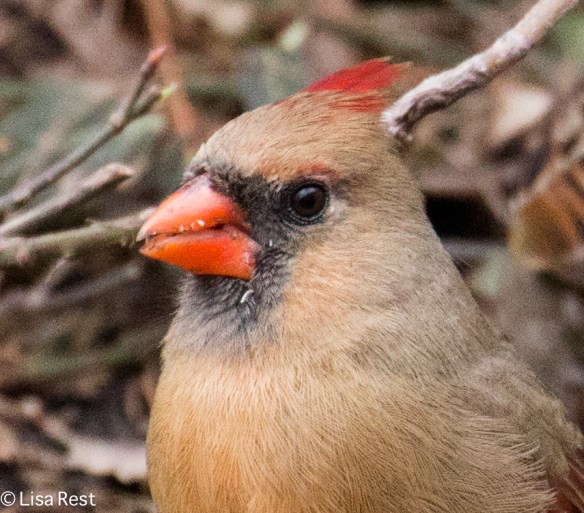
noca-millennium-3-2-17-0390Thanks to you all for checking in. Until next time… Peace and Think Spring.

We Pause for a Brief Message from…The Crows

crow-cancer-survivors-2-6-17-7464Today may be Monday, but it was also a beautiful day, with ample sunshine at least in the morning and early afternoon hours, and we warmed up to 54 degrees, which is downright balmy. So I went for a walk this afternoon in search of…birds.

Unlike my most recent visits, there were no Cardinals or White-Throated Sparrows to be seen, although I heard one or two. The Black-Capped Chickadees were more vocal but hiding.

I checked the two usual places in Millennium Park before I set off for the Cancer Survivors Garden and then as I approached. I thought I saw four large black birds perched in a tree down at the southeast end. Could it be…?

crows-cancer-survivors-2-6-17-7427Yes, they were Crows. And there they sat, silent and still. I wondered if maybe one of them was the individual that had flown by on Thursday and since today was such a nice day, it gathered friends to hang out with to see if I was for real.

I put peanuts and some pretty-stale-by-now Birdz cookies at the base of the tree they were in. And the Crows just sat there in the tree, still, silent.

I went to a far bench where I could sit and watch them, and they remained stone-faced. After a minute or two I decided I should probably go back to work. It was only as I started walking away, they all followed me.

I didn’t mind being tricked out of more treats. I put peanuts and the rest of the stale cookies at the base of one of the trees where we used to hang out, and sat down and watched them party. Two Chickadees showed up and also got to work on some birdseed. The Crows started to call a little bit. It was like seeing old friends and picking up right where we left off.

All I can hope for is that this is not a singular occurrence and that we meet again on a regular basis. I realize I have to hold up my end too: it’s up to me to show up more often as well.

Spring is coming.

In case you’re wondering, we didn’t talk politics. In fact it occurred to me later that the Crows really don’t like crowds, and maybe the protests and marches kept them away, so it was only fitting they had me to themselves for our reunion.

amcr-cancer-survivors-2-6-17-7701

Reflections on a Post-Groundhog Day

noca-millennium-2-2-17-7364This really has nothing to do with Groundhog Day except that, according to the official Groundhog, we are in for 6 more weeks of winter. I can tell you that as annoying as that prospect might be, it’s nothing compared to dreading the “what next?” incredulity of news coming from the nation’s capitol.

The Northern Cardinals have been hanging out at the northwest corner of Millennium Park by the entrance to the Boeing Gallery.

noca-millennium-1-26-17-6704noca-millennium-1-26-17-6700

This is not going to be a political rant, indeed, I’m trying to escape our new reality for a few moments of sanity, as long as birds are still around to help. Sometimes I have to wait a while before the birds show up, but eventually they do. All these photos are from the last week or so, Millennium and Maggie Daley parks in downtown Chicago.

wtsp-2-color-millennium-1-26-17-6800

Both colorations of White-Throated Sparrow

I haven’t seen my Crow Friends downtown for what seems like months and probably is. At least too many weeks.Here we had been spending winters together,  but this winter they have all disappeared. I am all but lost because, especially when life gets too confusing, the crows are of invaluable comfort and perspicacity. I live in hope that they return in the spring. I think they will. Where they have gone for a retreat, I have absolutely no idea. But in what seemed like an omen, as the sight of a crow often does, Thursday as I sat quietly on bench at the Cancer Survivors Garden, one crow flew silently across the sky going north, and did not stop or acknowledge my calls, but still the sight of it gave me hope. I was so hopeful I almost forgot to take a quick picture for posterity.

The Cancer Survivors Garden which has now been absorbed by Maggie Daley Park is for the most part asleep for the winter, with no birds present. I suspect every last berry has been picked off of every last bush.

The usual suspects are still around elsewhere. White-Throated Sparrows usually call before I see them, but if I stop with some treats they come out fearlessly. It’s the City Sparrow-Country Sparrow phenomenon again, like the City Mouse and the Country Mouse. The White-Throated Sparrows in Chicago’s Loop parks have likely learned how to take advantage of human generosity from the House Sparrows that honed it down to a fine art.

The Black-Capped Chickadees are good at this too but they often move so quickly they’re hard to catch with the camera.

Dark-Eyed Juncos are still around too, not so many, perhaps, and on a dark background on a dark day, well, here you have it, but I was lucky to catch the one on the left with its tail feathers spread out, as you usually don’t see the white feathers except when they’re flying away from you.

And then there are those moments when we bond.

noca-millennium-2-1-17-7275

One of the White-Throated Sparrows was starting to sing last week. Could have been this guy.

wtspmillennium-1-26-17-6715

For humans, the ice rink is a popular pastime these days.

And another popular pastime, below.

Unless something newsworthy occurs in the meantime, I’ll be back next with more from the Galapagos.

bcch-millennium-1-26-17-6858

Fleeting Greetings of 2017

millennium-park-cardinal-12-28-16-5958

Millennium Park Cardinal 12-30-16

This year is off to a slow start. I very much wanted to do a blog post honoring my indoor crowd which has been getting along fine, or so I thought. At least they seemed to be doing fine for a while.

Below is a short video I was able to capture in the gloom of the afternoon’s diminishing light just so I could isolate my Zebra Finch Arturo Toscanini singing his song, which starts with an arpeggio and goes from there. Below that you can hear him again before I start playing the Adagio to the Ravel Piano Concerto in G which may put you to sleep if you listen to the whole thing but don’t say I didn’t warn you.

I went back to the Portage on New Year’s Day. It was much colder and sunnier than the week before and the birds were harder to find, but I counted as many species with a couple variations from last week’s list. All I have to show for it is ice and a distant Downy Woodpecker.

The birds in the backyard have returned to the feeders. I’m convinced the numbers of House Sparrows have fallen drastically, but they tend to fall off anyway in the winter. It was nice to see a couple Goldfinches and my own Downy Woodpeckers.

Before I went out birding, I chased Emerald Greenwald away from Dudlee’s latest nesting attempt (I gave in to Dudlee’s badgering me weeks ago and let her have the mug back but didn’t make it comfy for her) – not sitting down with myself long enough to figure things out, like the fact that Greenwald herself had approached reproductive age – and hoped for the best.

I came back to a bloody mess. Nobody had hatched but the eggs were broken open and bloody, nesting material the doves had accumulated themselves was everywhere, and Dudlee and Drew were looking the worse for wear.

greenwald-1-1-17-0736

Emerald Greenwald, covered with evidence

drew-and-dudlee-1-1-17-0750

Drew and Dudlee, still in shock  – “How could you do this to us??!”

This has created a terrible silence. I don’t know when if ever Drew will start singing again. I had grown quite fond of his chiming in with any pretty music he heard on the radio all weekend. I like to imagine he might get over it but I don’t know if Dudlee will. To make matters worse, she seems to have a damaged right wing – it’s droopy. She was hiding in the kitchen last night, I’m sure she doesn’t feel safe anymore, even though without a nest I don’t think Greenwald is interested in bothering her. I may try to catch Dudlee and put her up in an infirmary cage for a few days, since she can’t fly very well anyway.

On a happier note, it’s always fun to watch a Society Finch tackle a piece of corn.

And there’s always time for a good bath in the pie plate.

I hope to be back soon on a happier note. Best wishes to everyone for a healthy new year. Whoever thought we’d make it to 2017? Stay tuned!

yard-dowp-1-1-17-6196

Chicago Portage: A January Thaw the Day after Christmas

rbwp-12-26-16-5838

Red-Bellied Woodpecker

It was raining and cloudy when I woke up this morning and the forecast as read on the radio didn’t sound too promising, but then the clouds appeared to be clearing and I had no more reasons to dawdle, so I set out for the Portage.

My timing was right – there were a lot of sparrows and three species of woodpecker which isn’t phenomenal but one, a Hairy, I hadn’t seen in a while so that was special.

hawp-12-26-16-5812

Hairy Woodpecker

There was a lot of fungus growing everywhere which made me realize just how much life goes on in spite of the cold and snow.

Northern Cardinals were abundant but distant, even with the long lens. I don’t know what happened with my setting on the right, I am unaware of changing anything but I must have hit a button somewhere, but maybe the contrast is interesting anyway, seeing as how the sparrows were blending in with everything.

American Tree Sparrows were most abundant.

This was the only Dark-Eyed Junco that didn’t fly away immediately.

deju-12-26-16-5797Several hardy little Song Sparrows surviving our surprise winter.

sosp-12-26-16-5669A couple pictures of the thaw. No birds in the water but some flew over as if considering it.

The Red-Bellied Woodpecker was enjoying the sunshine.

rbwp-12-26-16-5859Milkweed pods almost looking like birds hanging from their stalks.

milkweed-portage-thaw-12-26-16-5942It was wonderful to be out. I had the place virtually to myself and it felt like home again. I made an early resolution to spend more time in these woods, to bear witness to the changes of the seasons, the habitat, and the inhabitants.