Grateful

Not always sure where I’m coming from with one-handed typing, but the slowness with which I have had to express myself has given berth to more measured thoughts, perhaps, and, like bird-watching, there is something almost meditative in it.

Before I stray further, I want to dedicate this post to my dear friend Linda Rios and her husband Ed who got me through my awful post-injury and surgery situation with loving aplomb. It occurred to me after I struggled to finish the last post that I was bereft in my focus and needed to at least acknowledge how much my friends have meant to me during this blotch on my existence.

These photos are from August 29th, mostly taken at the Portage. After I was done there I checked out what the Army Corps of Engineers has done to the part of Ottawa Trail that runs along the Des Plaines River, expecting there wasn’t much to photograph there except for the habitat destruction.

Below, a very cooperative White-breasted Nuthatch.

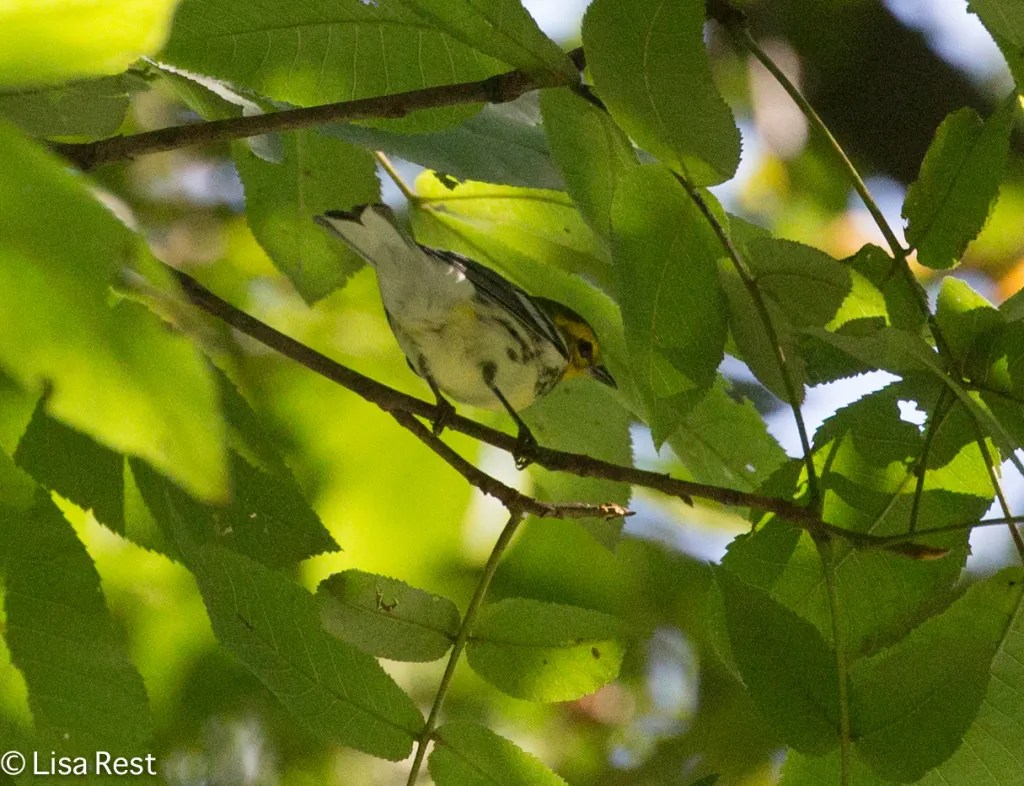
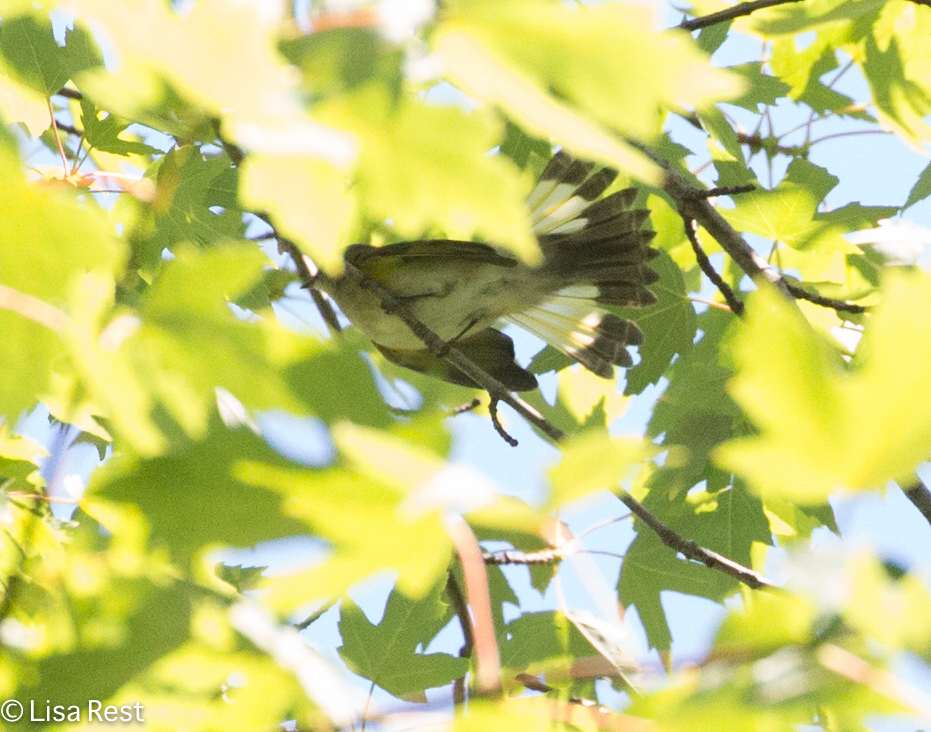
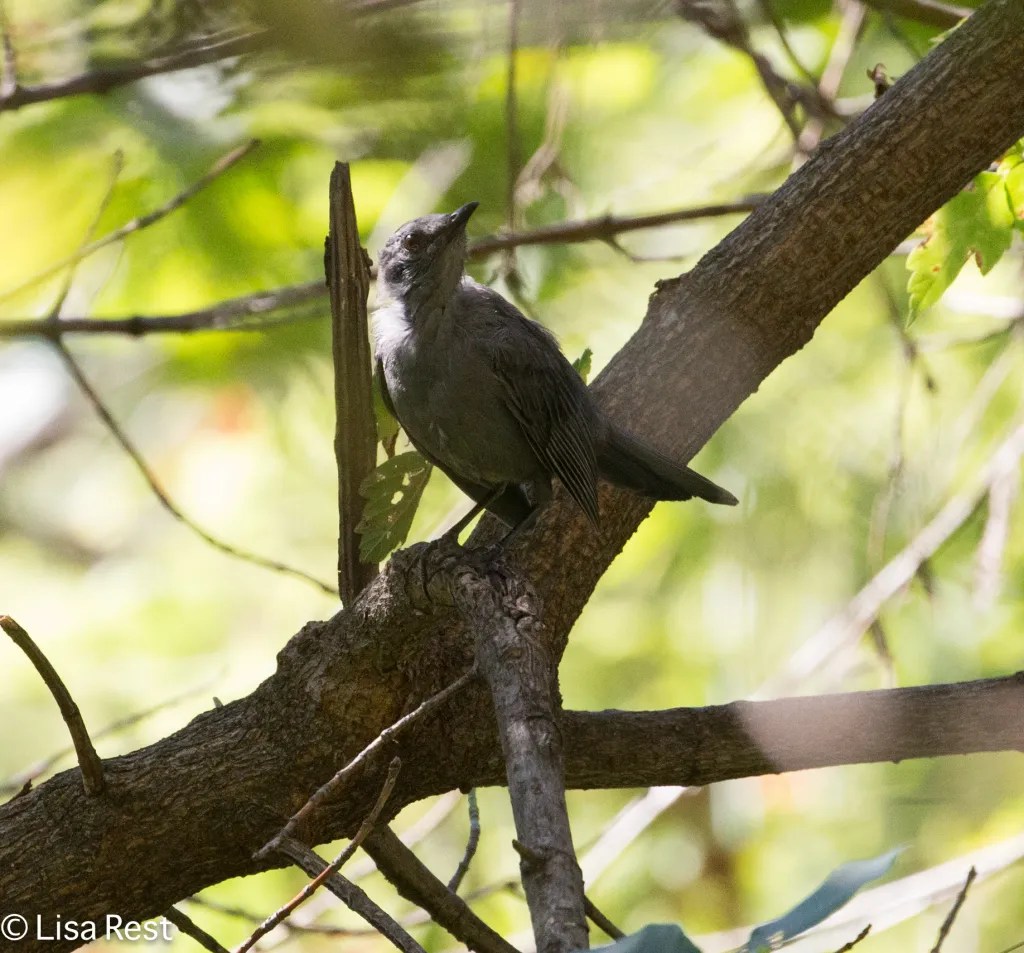
The Chestnut-sided Warbler below was pretty well-hidden but now that I can’t take any photographs for a while I am glad I managed to get these when I did.

The bird below is a Nashville Warbler.

Red-winged Blackbird

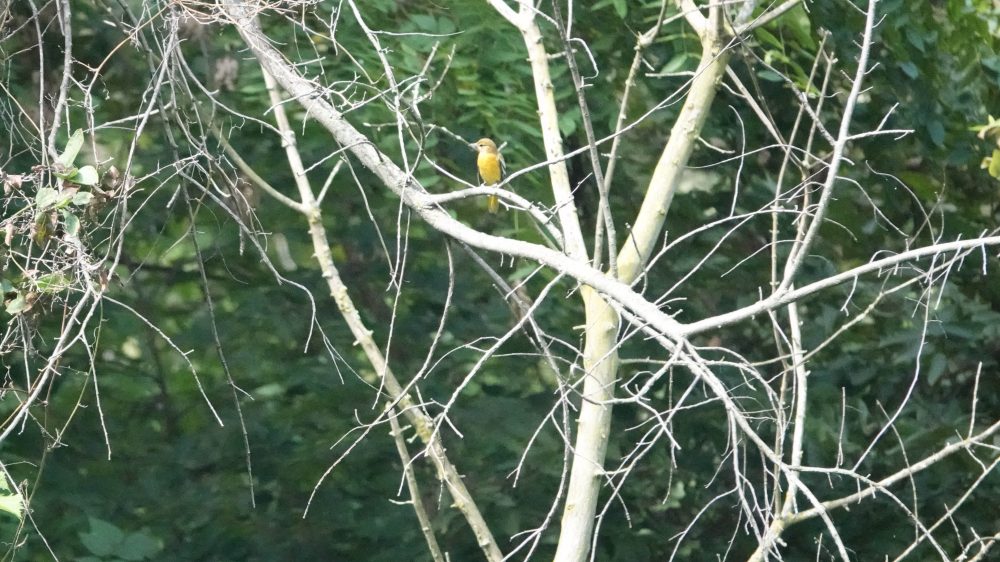
The last of the Baltimore Orioles. I had one visit my feeder later that afternoon…

A juvenile American Robin

There were a few Indigo Buntings still around as late as September 19, which was the first bird walk I led after my surgery. Most of them looked like the two below.

On my way out of the Portage on August 29, I spotted this Cooper’s Hawk who just sat, and sat, and I took way too many pictures expecting that it would do something interesting. I was too exhausted by the time it finally took off.

A little Portage flora – I am always amazed at the height of the trees so maybe the cell phone conveys them somewhat. Then there are parts of the trail that are lined with blooming flowers now – a vast improvement over the burdock from years past.

Juvenile Northern Flicker

So this is what Ottawa Trail is looking like now that the levee has been finished on one side of the Des Plaines. It was relatively devoid of birds but I expected that. Others have told me, though, that the levee affords great looks at the Des Plaines River when there are water birds present, so I shall have to check that out another time.

I was able to capture a few signs of life.

On my way out of Ottawa Trail, over the parking area, a Red-Tailed Hawk flew overhead.

Elbow-wise, the cast is gone, stitches removed, and I have 12 weeks of physical therapy ahead. I actually had one physical therapy session on Friday and was reassured I had chosen the right location when I heard a crow calling as I went back to my car. As I mentioned, I managed to lead bird walks these past two Saturdays and I am so grateful to the participants who showed up and helped me feel alive again. I didn’t master the one-handed binocular skill, but now that I am cast-free, I am able to raise my left arm enough so maybe I can go looking for a few more birds this fall even if I cannot commemorate the sightings in photos. In these uncertain times it’s all the more grounding to continue one’s connection with the natural world.

Three Days at the Portage – Day 2

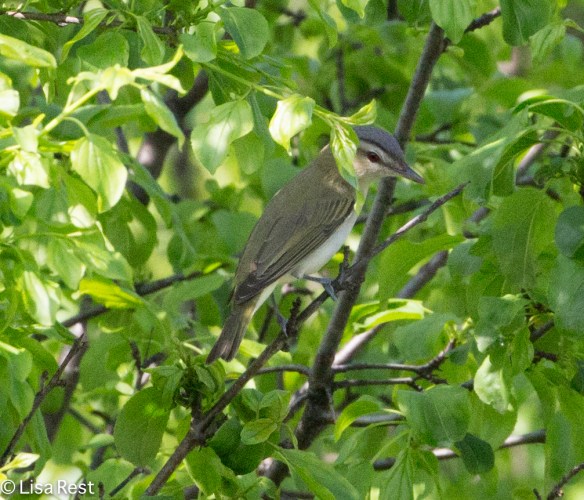
There were still some warblers on May 24, but the Bird of the Day for me was Red-Eyed Vireo. I had been wondering where these birds were, and then they all seemed to show up at once. Usually you hear them singing and don’t see them very well as they move through the trees chasing insects. But this time they were more often seen than heard. In some of these photographs you might actually be able to see the red eye for which they are named.

Red-eyed Vireo

Many of the warblers I saw that day were females. The females tend to migrate later than the males who are in a hurry to set up their territories. Spring migration this year seemed strange for many reasons – the pandemic affecting where you could go to find birds, the weather which is always a factor, and I guess the knowledge in the back of your mind that birds are in decline and you wonder just how many you’re going to see anyway.

Below is a Yellow Warbler who likely is on territory for the summer. I recorded him singing, and you can hear him three times in the little clip below his picture. Some people find the mnemonic “sweet sweet sweet I’m so sweet” helpful in distinguishing this song from others they might be hearing.

Yellow Warbler

I feel fortunate to have seen a Canada Warbler more than once this spring. Unfortunately they prefer somewhat shady spots which I guess they blend into better than bright sunlight. I love the steel-gray blue color of their backs. I would support a Pantone color called Canada Warbler Blue.

Northern Cardinals are all around but not seen too often. This one was far away but distinct.

A Blue Jay on the fly.

Baltimore Orioles are getting harder to see now that they are busy rearing families.

Indigo Buntings are busy too but there are so many of them, they are easier to see.

Indigo Bunting (female)

This might have been the last time I saw a Blue-gray Gnatcatcher. Actually I’m surprised I got to see more than its tail. I still hear them, but only on occasion, certainly not constantly like a few weeks ago when they first arrived.

Even Red-Winged Blackbirds are assuming a lower profile.
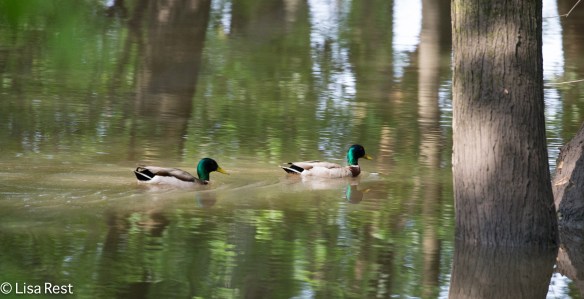
Two Mallards navigating the flood waters adjacent to the Des Plaines River which were still quite high that day.
Double-Crested Cormorant – an occasional flyover
The back of a Chipmunk

A couple more warblers – there seemed to be fewer American Redstarts this year, at least where I was. And I just learned something I never bothered to look up before about distinguishing the female Chestnut-sided Warbler from the male – the bright chestnut sides don’t extend as far down the side on the female. So the pictures below are of a female. And since I continue to hear a male singing at the Portage I can only wonder if there might be an actual breeding pair.

I still hear the Eastern Wood-Pewee but this might have been the last time I got photo ops.

The big surprise walking back in the opposite direction across the first bridge was to see this Robin’s nest right off the side of the bridge, in plain sight – and I had never noticed it before. Mom was in a nearby tree, waiting to revisit her brood.

A bird more often heard than seen..Gray Catbird.

Red-eyed Vireo

I love this last picture of the Red-eyed Vireo. Having said that, I realized a few days ago that I need to bring more control to my blog posts when I take so many pictures and can’t decide what to do with them and invariably end up with too many – believe it or not, this is a pared-down selection. I really need to use my flickr page more often, so I stuck some other photographs there and if you’re really curious, follow the link to them. I will try to be back sooner with the final installment of the Memorial Day weekend excursions and reports from other destinations since. Hope you are staying safe and well and rising to the daily challenges.

Walking in the Hood

It’s difficult to come to this page after the events of the past week. The Covid-19 depression cycle was insidious enough, but the pain from reopening the festering societal wounds that never heal makes it that much more difficult to rally myself. I started writing a song, the music coming to me over the kitchen sink where I get all my inspiration. I managed to write it down and then, since it is meter-friendly, started writing a few lyrics, but like many things I start and never finish, I don’t know when I will go back to it. At least I have a notebook I can find to write music in: I bought it a week or two ago to start writing down the Zebra Finch songs as they are solidifying. It still fascinates me how it takes years for the males to create and embellish on their songs.

I managed to go back to Goose Lake Natural Area on Saturday morning before the chaos ensued. It was almost like slipping into the fourth dimension if anyone else remembers that Twilight Zone episode. Except that I had to drive an hour and a half to get to another dimension, but I guess that makes it that much more real. I am saving those photographs for a future post.

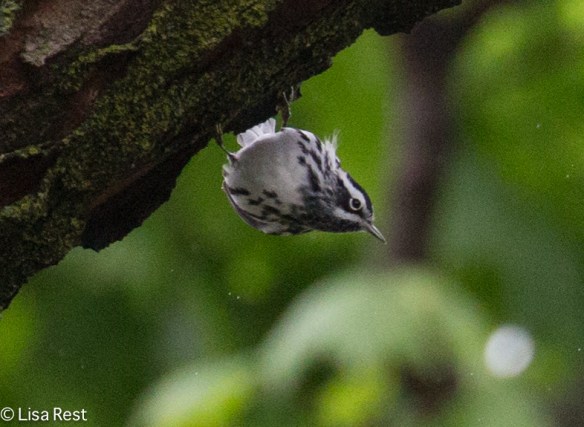
Black-and-white Warbler

Anyway, about the pictures for this post: about two weeks into working at home I decided that I needed to fit a walk into my daily routine, weather permitting, so I began taking a walk every morning before work, a tame walk by any means encompassing perhaps only a mile, but I could look for birds, particularly as it was spring migration. So I have been going out with binoculars and the camera and settled on a route that gets me out and back in time to go to work without feeling rushed or pressured, and always stopping to check on who’s in the backyard upon my return. The pictures in this post are from one particularly delightful morning roughly two weeks ago when I guess migration was in whatever kind of full swing it was finally coming to. It was overcast which didn’t help too much but the birds were there.

For a week or two, no matter where I was, I was seeing or hearing Chestnut-sided Warblers.
American Robin on her nest

There were not as many White-Crowned Sparrows in the yard this year – I never saw more than one. This particular morning I was lucky enough to capture him. I am convinced he is the same bird whose little syncopated song I heard earlier.

More of the White-breasted Nuthatch at the top of the post.

And here was finally a Black-and-white Warbler who was practically at eye-level, making him easier to capture. This species navigates tree bark like the nuthatch.

Swainson’s Thrush

This might be the only Tennessee Warbler I saw this spring. Certainly the only one I was able to photograph. Usually they are more common and noisy about it. I did manage to capture this one singing a bit.

Northern Cardinal

I missed capturing an Ovenbird in my backyard, but it was likely the same one who was hiding in my apple tree in the front yard, below.

Thanks for visiting. I hope you are doing as well as possible. We all have our own limits, I suppose. I take a short nap when I’m just too tired to continue. But I always feel better getting up and doing something, and my indoor birds provide endless opportunity in that regard. I also revive every time I play music for them. That is how this whole thing started, and it’s turning out to be the one thing that sustains our spirits.

Back to the Portage

It’s all I can do to keep up with migration this spring, let alone the pictures I have taken…So I’m attempting to do this in chronological order but it won’t be easy. This past Saturday started out cool but sunny. I decided to start my walk in the opposite direction of what I normally do. Then I realized that I had forgotten to put my little portable stool in my backpack so I decided to walk back to the car to get it. As I walked, I heard the Great-Crested Flycatcher, and then saw him in one of the Redbud trees bordering the lawn behind the statue. The morning had promise.

Great-Crested Flycatcher
I have decided to photograph the statue every time I go to the Portage now to gauge the light conditions.

Last Saturday was a riot of colorful birds. I counted a dozen male Indigo Buntings. They were everywhere and they were not particularly shy, so I took advantage of their fearlessness. You can see how the light affects the hue of the blueness, when actually their feathers are all black.

I ventured out to the gravel road that runs along the MWRD property and found two male Scarlet Tanagers. They were trading songs.

But I discovered a glimpse at a Summer Tanager later in my pictures.

For all the male Baltimore Orioles singing and displaying these last few weeks, I have seen only one or two females so far. But that’s because they’re busy tending the nest.

Yellow Warblers may stay and breed at the Portage. Invariably I hear them but don’t always see them. So I was glad to capture this one.

White-Breasted Nuthatches are present all year, but are not seen or even heard frequently now.

The female Rose-Breasted Grosbeak below is the last one I have seen. I am not aware of any starting families at the Portage, but it could happen.

We have had a lot of rain, and even more after these pictures were taken. There were two Canada Geese trying out the newly flooded waters.

So this time of year of course I’m looking for warblers wherever I can find them. I just calculated that over the last couple of weeks I have seen 21 species total. I haven’t been able to photograph them all, but most, sometimes discovering them in my photographs. I will try to post as many as possible. They won’t always be textbook-looking photos. For example, the Golden-Winged below I barely captured but it was the details from the photographs that I was able to identify it as a likely female.

One more Magnolia Warbler

Then there are the flycatchers. They can be confusing. I have since seen the Eastern Wood-Pewee again in the same location looking more like himself so I am guessing he was having an off day (typically he would look more pointy-headed).

Eastern Wood-Pewee
I think this is a Willow Flycatcher…passing through.

On this day I saw this Turkey Vulture being escorted away by a Red-Winged Blackbird.

Song Sparrows are present, singing, and likely staying to raise families.

i keep hearing and sometimes seeing Chestnut-Sided Warblers every time I have been to the Portage since my first intimate encounter with one last Tuesday.

Chestnut-Sided Warbler

There’s a little rapids under the first bridge where the water runs out of the Portage. No water ever runs into the Portage, as far as I can tell, but It’s still nice to see the flow over the rocks.

More often heard than seen, Blue Jays are out and about but rarely available for photos, so it was nice to see this one.

I found this female Common Grackle to be attractive in her own way.

I had noticed this nest before but wasn’t sure anyone was using it until I managed to capture these two Goldfinches. You will probably have to click on the first photo to see the female poking her head out of it. I have since not been able to find the nest, which was not far from the trail, but it could still be there and hidden in all the plant growth that has occurred since.

Sadly, Black-Capped Chickadees are getting harder and harder to find. Long taken for granted, I am convinced they are in decline, at least locally. I caught this one in a hurry.

Here’s my Robin photo of the post.

As the leaves are finally coming out, it’s interesting to see how the spaces change.

Below is one of my favorite birds, a Blue-Headed Vireo. I have seen them a couple times this spring which is surprising to me, as I don’t think I have seen one for years.

Woodpeckers are busy everywhere.

Red-Bellied Woodpecker

And last for the moment, I finally was able to catch the male Eastern Bluebird in focus. He has a habit of posing in difficult places, but he sat long enough this time. And although I think I heard him this past week, I haven’t seen him since. I hope the pair is still nesting and I will be looking for baby bluebirds this summer.

I have been to the Portage four times since last Saturday! I am beginning to feel like I live there. Every time I have gone, there has been a different species or a special encounter with one I’ve seen so far this spring. As many people have remarked, the cool start has been difficult for the birds migrating to their breeding grounds. I can only hope those who have visited the Portage are finding what they need in this little hotspot and will survive and flourish on the rest of their journey.

I will be back with lots more. Thanks for checking in, and I hope you are safe, well, and able to get out and enjoy this spring.

Half a Well Day Off for Migration

Chestnut-sided Warbler

After last Sunday’s chilly, gloomy rain, I had my eye on Tuesday morning and notified the work team that I was taking it off. Tuesday came, starting out cool but sunny, and I went to the Portage to see if any warblers I barely glimpsed at on Sunday were there for a better view.

The green-up is in progress and the treetops are full of tiny bugs and worms we can’t see, but the birds know where to look for them.

After hearing and then eventually seeing a couple Chestnut-sided Warblers, I was lucky enough to have an intimate moment with this individual. We exchanged thoughts about spring and sunshine.

I always hear five or more House Wrens, but rarely see them. Tuesday morning was a special day, though, because it seemed like all these guys were out and showing off. The very last photograph below shows one going into his nest.

Another very vocal group rarely seen are the Warbling Vireos. I followed this one around with the camera.

There were still a couple Ruby-Crowned Kinglets here and there. Only now, like the Blue-gray Gnatcatchers, when you’re looking for warblers, these birds become “distractors,” to quote one of my favorite guides, Mitch Lysinger.

Even Blue Jays seem to be more visible. I’ve had one in my yard all week, too, although he leaves the minute he sees me.

On this beautiful morning I was delighted to find one of my favorite sparrows, Lincoln’s.

There were still a few Blue-Winged Warblers. It’s been a good year to see them.

Female Goldfinches never get much press so I thought I’d share these two photos.

I always hear White-Throated Sparrows’ little chip notes before I see them. It was nice to have one posing.

In the Big Bird Flyover Department, it’s been quite a while since I’ve seen an Osprey. I used to see one flying over the Des Plaines River when I visited Ottawa Trail, but that location is no longer available. I haven’t been back since they built a levy. It will be interesting to see what happens with the river, with all the rain we are getting this week.

Osprey

A rare glimpse of Mrs. Bluebird Tuesday morning.

Eastern Bluebird

Early on I saw this Least Flycatcher from the bridge, at quite a distance.

Most of the warblers were distant and high in the trees, so much so that I didn’t always know what I was looking at until I processed the photos.

Black-and-White Warblers have been a bit evasive this year.

Something about the cool, slow start to spring has made the moss look happier.

Here’s a bird I never thought I’d see. It was really far away so I had no idea what it was until later.

Palm Warblers are still around but blending in too well with their surroundings.

One of my favorites, Canada Warbler, was down low but in the shade.

Here’s one of two female Rose-breasted Grosbeaks I saw together in the same location.

Rose-breasted Grosbeak (female)

I first saw the man below a couple weeks ago, I think. He was playing loud music from that speaker thing he’s got in his right hand. Keeping my social distance, I cupped my hands over my ears. The next time I heard him coming, he was playing “Scotland the Brave”. I thought about whatever PTSD he was suffering from, it was too bad he had to foist it on other people, but I decided not to let him bother me and maybe it was a good thing he was walking his dog in the woods. Anyway, it’s likely he’s been out every day since the lockdown began.

Red-bellied Woodpeckers are challenging to spot, but it’s often rewarding when I do see them.

Red-bellied Woodpecker

Below you can barely see a Spotted Sandpiper in the shadow of the bent log.

I actually saw a flock of thirty or more Common Grackles fly in on Tuesday.

There are a lot of Brown-headed Cowbirds this year.

Brown-headed Cowbirds

Here’s one of those surprise warblers I found later in the photographs. I had to do some thinking about this one. When I think of a Blackburnian Warbler I always imagine the males. This is a female. It took me a while to figure her out.

Magnolias are usually easier to see than this one, but migration isn’t over yet.

Distant but distinguishable Black-throated Green Warblers.

I don’t see Hairy Woodpeckers half as often as Downies. I find though that I’m getting to be able to distinguish them by their feather pattern first.

I had been waiting for the Indigo Buntings to show up. I was to see about a dozen of them yesterday. These two were the first I saw on Tuesday.

Baltimore Orioles are setting up their territories.

Thanks for making it to the end of this long post! After I kept adding birds to the ebird list, I reported 51 species for Tuesday morning. I went back to the Portage Saturday and found some more beautiful birds. I’ll be back as soon as possible. Hope you are safe and well as can be, wherever you are.

Spring Returns

Black-throated Green Warbler

When I came back from Texas two weeks ago, the weather in Chicago was fairly pleasant and I mused I could have two springs! No matter that the Saturday before I got home there was snow on the ground. But just as we slipped into May, when it seemed reasonable to expect things would start warming up a bit, northeast winds picked up and although we weren’t freezing, the windchills were in the 30’s. It’s an understatement to say there has been a lot of rain. The downpours have brought most of the trees into leaf and encouraging emerging plant life everywhere. Then, this past Thursday morning, a lot of migrant birds were down from the skies from the previous evening’s rainstorm.

I’m too far away from the lakefront now to go off searching for rarities on my lunch hour, but I took Friday off so that I could scope out the Portage before my bird walk on Saturday. It turned out to be the nicest day of my three-day weekend. Although it started off chilly and windy, when the sun emerged a little before 10:00 AM all was forgiven.

Magnolia Warbler

I just finished getting through Friday’s pictures last night – it seemed there were way too many, but I discovered three more species in them to add to the list with a grand total of 54 species, 13 of them warblers. Which isn’t super fantastic but it’s credible for the Portage.

As for the Texas pictures, I managed to send some to Field Guides Saturday night and now with that off my plate I can go back through all of them and start developing for my own purposes. Time, technology and energy being available in inconsistent quantities, this will take me a while.

So in the meantime, here are some of the spring migrants from my walk on Friday, and there will likely be some more from this visit and Saturday’s outing as I try to keep up with everything that seems to be happening this month.

American Redstart
Chestnut-sided Warbler
Wilson’s Warbler
Palm Warbler
Yellow-rumped Warbler (Myrtle) (robber baron pose)

This is all I can manage for now. I hope to report back soon with lots more!

Black-throated Green Warbler

Fall Warbler Fall-Out

COWA 9-10-18-9678

Connecticut Warbler

Last Friday after some rain and wind, I was called down to the front of our office building by a coworker who had gone down for a cigarette. She said there was a little bird in distress. As it turned out there were two birds in distress, the one she saw flopping around almost as if it was having seizures being a first-year Cape May Warbler, and another, the stunned Chestnut-Sided Warbler you can see below on the left. I called the Bird Collision Monitors hotline and got their voicemail. After waiting to hear back for about twenty minutes, I thought I could not leave the two birds alone on the sidewalk surrounded by foot traffic, glass and steel, so I took them both to the park-like setting about a block away at 311 South Wacker Drive. You can see them both on the grass below. I sat with them and observed the Cape May was dead, but when I reached for the Chestnut-Sided, it chirped and flew away, so I felt better for having rescued it. When the Bird Collision Monitors did finally call me, they said they had picked up over 200 birds that day. The little bird you see below on the building ledge wasn’t stunned but it was lost, as it flew up from the sidewalk looking for a way out of the buildings. I believe it’s a Least Flycatcher.

There were a lot of birds in the park Friday, so I went back on Monday afternoon with the camera. But not before checking the potted trees in the front of my building, where I found among other more common species, the Connecticut Warbler at the top of this post.

BPWA 9-10-18-9765

Blackpoll Warbler

There were a lot of Blackpolls but it was difficult to get a decent picture. Although I am thankful for the landscape architects planting lots of locust trees which are great for migrants, the trees are quite tall and I only carry my 300mm lens around with me during the week, so it was a challenge.

WIWA 9-10-18-9925

Wilson’s Warbler

The Wilson’s Warbler never got low enough for me to capture his trademark skullcap but there’s something so Wilson’s about the shade of yellow. I really think whoever names colors could come up with an entire Warbler Collection. For as many field marks as my brain has memorized, I think I sometimes recognize these birds by the shade of yellow, if there’s good light.

MAWA 9-10-18-0083

Magnolia Warbler

There’s a familiar phrase, “warbler neck,” which is what you get looking up at these birds in the tall trees.

How nice of this Chestnut-Sided to almost come down to my level.

CSWA 9-10-18-9895

Chestnut-Sided Warbler

Then there are the birds that prefer ground level, like the Common Yellowthroat below.

COYT 9-10-18-0006

Common Yellowthroat

On the other hand I was surprised to find this Pine Warbler in the grass when I later went through my photographs.

PIWA 9-10-18-9985

Pine Warbler

PIWA 9-10-18-9942

Pine Warbler

It’s been a long time since I’ve gotten close enough to get a good picture of a Black-and-White Warbler and Monday was no exception. This was the best I could do.

American Redstarts come in several color combinations this time of year. The second-year or more adult males are black and orangey-red. The young males are yellow where the red would be, but it’s a warmer yellow than the females. I seem to have captured a bird that is somewhere in between the first and second-year males below the pictures of the older bird, judging from the darker gray on its head and back.

(Click on the pictures just below to see how this male’s plumage is changing.)

AMRE 9-10-18-9818

American Redstart (female)

The biggest surprise perhaps was to see another Connecticut Warbler. These birds are normally hard to find, and here on the same day I had two within a block of each other.

COWA 9-10-18-0060Suffice it to say that the lure of fall migration is irresistible, especially with nice weather. The birds are taking advantage of the calm skies in this part of the country as well. I have been going back to the park every day this week and as of Tuesday all these birds seem to have left and no new ones have come in. I would like to think they all took off Monday night, navigating well out of the city and continuing their trips to Central and South America.

AMRE 9-10-18-9824I’ll have lots more to report if I can manage it. Hope you are having decent weather wherever you are.

Portage Vacation Day

CEWA 8-31-18-8696

Cedar Waxwing

I took today off. It was a bit difficult getting up early this morning after swimming last night but I managed to get over to the Portage a little after 8:00 a.m. and took note of how deserted the place was on a weekday. No dog-walkers or cyclists. Only one runner, who was probably as amazed to see me as I was him.

img_2889img_2888A long shot of the duckweedy water above and just below it, an untrimmed path I decided not to take.

AMRO 8-31-18-8397The robins are back, and the waxwings are still numerous. Literally nobody in the mucky water. I was treated to American Redstarts and a couple Ruby-Throated Hummingbirds early on, which gave me hope to find a few more migrants.

AMRE 8-31-18-8409

American Redstart (First Year Male)

Ruby-Throated Hummers above, an adult male American Redstart below.

The only other warblers I could barely photograph were the Chestnut-Sided below left and the Black-Throated Green on the right. I missed the Ovenbird that landed briefly in  the tree I later found them in.

In the beginning with the immature male Redstarts was a chattering young House Wren.

Butterflies were out for the sunshine today. Red Admiral, Pearl Crescent and Monarch butterflies.

I saw a few White-Breasted Nuthatches too.

WBNU 8-31-18-8715I heard the Eastern Wood-Pewee long before I saw the one below.

EAWP 8-31-18-8745This time of year I expect to see lots of Indigo Bunting children and I did, but they were playing hard to get with the camera.

Yellow is the predominant color this time of year and I found a bumblebee and a goldfinch taking advantage of it.

One Eastern Kingbird…

EAKI 8-31-18-8640There was a lot of chatter from catbirds but I only barely saw the youngster below.

GRCA 8-31-18-8474A couple more Cedar Waxwings. The one on the left is an immature.

The last photograph I took was of this stunning little Silvery Checkerspot.

Silvery Checkerspot Butterfly 8-31-18-8756My walk tomorrow will take place if we are not totally rained out. Scattered thunderstorms are in the forecast. We shall see… This evening as I write this I have just heard the rumble of thunder. And now it is starting to pour.

By the way it feels nice to have the time to do a same-day blog post. Perhaps if I – no, let’s say when I retire – I will be up to the task more often.


City Migrants – Fall Migration 2016

If I’d been thinking clearly I probably would have postponed the cataract removal until after fall migration, but I ventured anyway into the wilds of downtown Chicago after I convinced myself that with patience and practice I could temporarily look through the view finder on the Canon with my left eye… Anyway, I managed to find quite a few cooperative birds to photograph and have decided to share them now before I invite you back to the Galapagos. A couple more shots of the Chestnut-Sided Warbler below. Responding to my thoughts, as I’m taking pictures of him, of “what a beautiful bird you are.”

First-year male American Redstarts are always welcome.

Things didn’t seem to get really active until last week. There’s probably a whole lot more I could have done if I put my mind to it, but I’ll get my new prescription lens in a few days and with luck, all my kvetching will fade away. (Don’t hold me to it!)

Red-Winged Blackbirds breed in Millennium Park so these birds below likely hatched this year.

Below, a Canada Warbler on the left and a Wilson’s Warbler on the right, both at Lake Shore East Park a couple weeks ago. The Canada was shy.

Juvenile European Starlings in their in-between plumage, which I find fascinating. They look more like “Star”-lings to me. They’re not exactly migrants…unless they’re from another planet?

starlings-9-9-2016-lse-park-0604I wonder if the Common Grackle below could be a molting adult, without its long tail.

cogr-9-16-2016-lse-molting-1005Magnolia Warblers have been coming through for weeks.

cswa-9-27-2016-lse-park-1734

Not a lot of thrushes this year – sometimes they show up in large groups. A Gray-Cheeked Thrush that was at 155 N. Wacker on the left, and a Hermit Thrush on the right and below.

heth-9-29-2016-lse-park-2025

Hermit Thrush

Two views of an Orange-Crowned Warbler at the Boeing garden, below.

Two Blackpoll Warblers…

Similar to the Blackpoll but a bit different this time of year, a Bay-Breasted Warbler. I think! Confusing Fall Warblers redux.

bbwa-9-22-2016-boeing-1243

Bay-Breasted Warbler…?

Two more Blackpolls below.

And now, signalling the tail end of warbler migration, Palm Warblers, below…

and Yellow-Rumped Warblers (Myrtle subspecies).

And the same two species in flight, Palm on the left, Yellow-Rumped (with the yellow rump showing), below. Note the similarities…and differences.

My prize discovery last week was a beautiful male Black-Throated Blue Warbler. I think we have been seeing more of this species the last couple years but it’s still not common and always special. Luckily this one liked to show off.

btbw-9-27-2016-lse-park-1603

Black-Throated Blue Warbler

Golden-Crowned Kinglets are coming through but hard to capture in cloudy light. Or at least that’s my excuse.

gcki-9-29-2016-lse-park-1873On the 29th I saw this presumably female Wilson’s Warbler, below, at Lake Shore East Park, and am glad I had pictures to prove it to ebird – apparently it’s late in the season to see a Wilson’s. Others reported seeing them too, in the area.

I always look forward to the return of the White-Throated Sparrows. I have seen a couple other species too and I’m hoping to take some pictures of them this week.

The Black-and-White below appears to be a female.

black-and-white-warbler-9-29-2016-lse-park-2118

Black-and-White Warbler

A late Magnolia.

mawa-9-29-2016-lse-park-2122

Magnolia Warbler

Red-Breasted Nuthatches are visible this year.

rbnu-9-29-2016-lse-park-2014

Red-Breasted Nuthatch

I have a new crop of juvenile Crows that look for me. We will hang out more over the winter months when there are no more migrants.

amcr-9-22-2016-loop-1301amcr-9-27-2016-lse-park-1798

I had to run an errand on Friday all the way over to the river, and on the way back into the office, as I crossed the street at Wells and Madison, I heard a loud “caw-caw-caw.” I stopped and looked up but saw nothing. “Caw-caw-caw” again. I waited. People streamed by me on their way to wherever, I’m sure they did not hear the crow, and no one was curious about why I had stopped to look. Then, in the top branches of a locust tree planted in the sidewalk across the street, the crow moved. After we acknowledged each other’s presence, he was silent. I crossed the street to get a better look and he appeared to be fiddling with something dark but I can’t say what it was, a bat, shoe leather, hard to tell without binoculars. But how nice to be recognized by this super-intelligent creature. Made my day. 🙂

Stragglers in the City

CONW 6-3-15-4297Unexpected. There are reports of migrant warblers every now and then, here and there, but the warblers are, for all practical purposes, gone except for the few that stay to start families. But after reading every day about a Connecticut Warbler that continued to hang out, for over a week, in the parking lot of a Holiday Inn downtown, I finally got on the subway last Wednesday afternoon and went to see it for myself. It was not my first Connecticut Warbler, but its sheer persistence persuaded me.

CONW Clinton & Harrison 6-3-15-4325

Connecticut Warbler, Holiday Inn, Chicago parking lot

If I regret anything about my visit it was my failure to record his song, because he was a strong, adamant singer and he would knock off a few phrases every five minutes or so.

CONW Clinton & Harrison 6-3-15-4317

For those who are into identifying warblers by their undertail coverts…

For all I know the Connecticut could still be there, although there have been no reports since Saturday. Below is a handsome Gray Catbird that popped out at the Holiday Inn parking lot as well.

GRCA Clinton & Harrison 6-3-15-4258

Gray Catbird

The stragglers I encountered almost every day the past two weeks were White-Throated Sparrows. Yesterday they were gone from 155 N. Wacker, but I still heard one singing, of all things, at Union Station. I tried to report it in ebird on my phone app but gave up when it kept challenging me. So much for citizen science.

WTSP 6-4-15-4400

A lingering White-Throated Sparrow

Perhaps my favorite late warbler in terms of chutzpah was the little Ovenbird below who made the berm by the bicycle rack at Union Station his territory. He was still singing last week. His habitat wasn’t all cigarette butts but I found it rather poignant that he could endure them.

OVEN with cigarette butts, Union Station 6-3-15-4381

Ovenbird at Union Station

Also last week, there was a Chestnut-Sided Warbler at 155 N. Wacker. That was a special treat, even if that space, always in the shadows, made him difficult to photograph.

CSWA 155 N Wacker 5-27-15-3853

Chestnut-Sided Warbler

CSWA 155 N Wacker 5-27-15-3845

There was a female Common Yellowthroat too: a furtive, not-always-so-common sight.

Female COYT Union Station 5-27-15-3731

Common Yellowthroat

Below is my last first-year male American Redstart at 155 N. Wacker.

AMRE 155 N Wacker 5-27-15-3770

The Union Station Ovenbird was just a delight to hang out with. I miss his cheery song already.

OVEN 6-4-15-4414

I haven’t heard or seen him this week, so I hope he has moved on to better territory.

OVEN 6-4-15-4420The forecast is for hot, rainy, muggy weather this week. I don’t know if I’m quite ready for the mosquito onslaught.