Spring Stirrings at the Portage

RWBL 03-04-18-6599I visited the Portage a couple weekends ago to see how many Red-Winged Blackbirds were returning to set up territories: one of the signs that spring is inevitable, which I can mentally check off every year. I hadn’t been over there for a few weeks so it was time to see how things were starting to change.

Moss 03-04-2018-6532There was only a tiny bit of green happening. For the most part the browns and greys were still in charge although the angle of the light is changing.

Portage 03-04-18-6609Predictably there were a lot of Canada Geese.

CAGO 03-04-18-6812Then there were the territorial disputes…and flyovers.

The Portage surprises me when I least expect it to. I don’t believe I’ve ever had an Eastern Bluebird there before but there was one two weeks ago.

More than one Killdeer suggests a potential breeding pair…?

Sparrow-wise, one of several American Tree Sparrows likely on their way out, and a Savannah Sparrow on its way in…although I don’t think the Portage has opened up enough to attract breeding Savannah Sparrows.

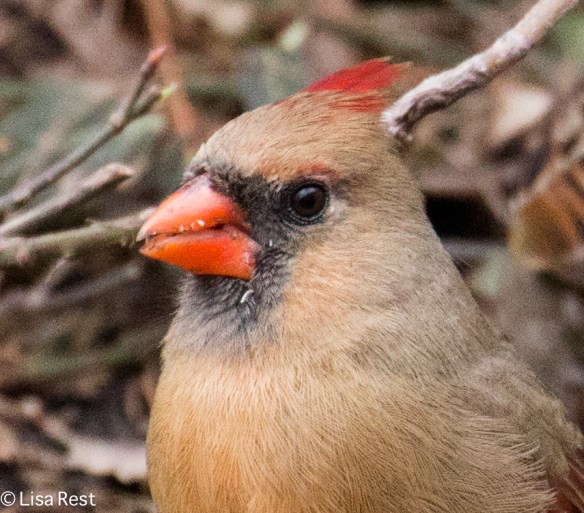
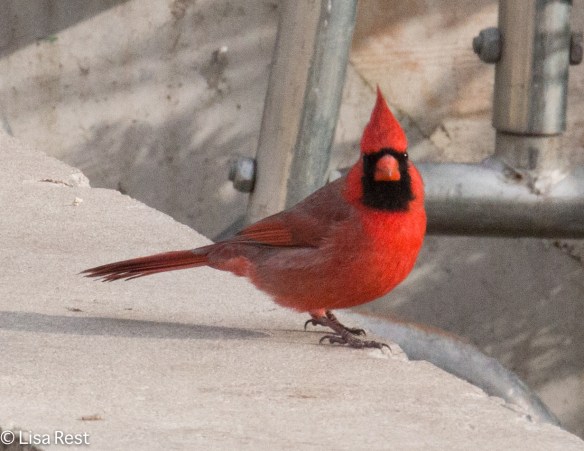
ATSP 03-04-18-6738SASP 03-04-18-6765Northern Cardinals are here all year long but it’s always nice to see them. One Dark-Eyed Junco tried to steal the scene in the upper right-hand picture below.

A few more of Red-Winged males and Canada Geese, back on their home turf to start new families. There is something reassuring about certain things that don’t change, especially lately.

And I could not resist a picture of our most ubiquitous resident, American Robin.

AMRO 03-04-18-6788I haven’t decided yet where to go tomorrow but it looks like the weather will be warm and sunny so we’ll see what happens. We’ve had cold and windy weather all week so it should be a nice break for all of us. My mother always used to call March the “Adolescent Month.” I think there’s still a little snow in the forecast next week although it likely won’t be much… Fingers crossed. 🙂

Frolicking with the Gulls

Frolicking HEGUs 02-17-2018-6217I confess that I always look forward to this annual event, the Gull Frolic up in Winthrop Harbor near the Wisconsin border, with some ambivalence. Admittedly, it is as much a gathering for the local birding community as it is for the gulls themselves. The drive is long. The weather, when good for seeing gulls, is challenging for humans. Maybe ambivalence is more prevalent these days for just about anything that takes up my “free” time. But then I tell myself, you never know what or who you’ll see until you go, and the car could probably use a drive on the tollway (is that still a thing with a hybrid vehicle? I don’t know), and any excuse to sing along with Peter Mayer (from Minnesota) is a good reason to go anywhere anyway.

Iceland and HEGU 02-17-2018-5950

1st Cycle Iceland Gull (left) and a 3rd Cycle Herring Gull

So there I was an hour early, thinking I was late, remembering I had seen the email about the later start time but didn’t check it before I left, so I appeared, I suppose, to be a die-hard gull fanatic by arriving so soon with my monster lens attached to the camera and hanging off me like a third limb. There was plenty of ice and the gulls, mostly Herring, were congregating on it. The challenge was to recognize gull species other-than-Herring and all their myriad plumage cycles. I thank Amar Ayyash, gull expert extraordinaire, for graciously pointing out the first-cycle Iceland Gull captured in the above photograph, as appearing more evenly brown in plumage. The narrow all-black bill helps too. So maybe I will remember this next year. Or maybe not.

Glaucous Frolicking 02-17-2018-5900

Glaucous Gull (left) and below with geese

After years of hearing people swear by hand warmers, the cold winter inspired me to try a pair in anticipation of the Gull Frolic. It’s reassuring to know that there is nothing sinister contained in the ingredients that cause a chemical reaction to create heat when iron powder is exposed to air (sounds a bit explosive, though, doesn’t it?). Although the heat never really reached my fingertips, it was nice to have that little hot pad in the palm of my hand in the glove. Trying to manage the camera with cold, gloved fingers is challenging, so if my hands were a little warmer it likely didn’t hurt.

The Canada Geese weren’t exactly invited but they were enthusiastically crashing the party when the chumming of (albeit whole-wheat) store-bought bread began. I’m sure the bread isn’t good for the gulls either but it doesn’t hurt them once a year, and the whole purpose is to take advantage of their propensity to engage with anything that hits the water, or in this case, the ice, to bring them in closer so we can see them. Gulls aside, I found it a bit amusing to watch this particular goose try to land gracefully on the ice.

Unfortunately, I didn’t stay for lunch or the lecture. My right knee was bothering me (I might revisit this thought in a future post, now that I am seeking a remedy), I was tired of the cold, and I had the usual myriad weekend chores listing up in my brain. Basically, beyond Herring Gulls, I think the only other species observed were the Iceland, Thayer’s (even though Thayer’s has been lumped with Iceland, there’s an effort to re-split again), Glaucous, Great Black-Backed, and a Lesser Black-Backed I did not see. I find the Herrings in their various plumages entertaining anyway. But by the time I left I was beyond entertainment and eager to survive the long-ish drive home. Second-cycle Great Black-Backed Gull below.

There is one thing I will never be able to test and that is how gulls would respond to music. Indeed the thought had never occurred to me until I was driving home. That would certainly be another kind of frolic.

There’s no reason to believe gulls would not respond to music, but it’s beyond my ability to design an experiment. I leave the option open to anyone who wants to try it. Of course gulls don’t “sing” per se, but who knows, they might dance, or they are certainly capable of something resembling dance in flight. I have seen pigeons and doves dance, and cranes too, flamingos, parrots…so I am not being altogether fanciful in my musings here.

Beyond the Thayer’s Gulls above, here are a few more pictures of frolicking gulls, for the record. While I’m looking forward to next year’s event and hope to be in better shape for it, these cold winter memories are a bit much. Bring On Spring.

Frolicking 02-17-2018-5865It might be a good idea to revisit my last day in Ecuador to brighten up my next post…

Kirtland’s Warblers and Friends

KIWA 05-27-17-3239

Kirtland’s Warbler

Sorry I haven’t been back to the page sooner but I’ve been down with a nasty cold that doesn’t seem to want to go away.  Yet I could speak above a squeak this morning, so I will have to take that as a sign of improvement. Here is a quick post from part of a visit to Michigan with friends over the Memorial Day Weekend. Specifically, these photographs were taken at the Kirtland’s Warbler Restoration Project in Iosco County. We visited this site on the morning of the 27th. The Kirtland’s breeding population is established well enough now at this location to warrant offering tours by the AuSable Valley Audubon Society. Thanks so much to Sam Burckhardt and the Chicago Ornithological Society for another memorable trip.

To go along with the pictures of a singing Kirtland’s above, here is a brief sample of his song:

Kirtland’s Warblers are a fire-dependent species, breeding only in young Jack Pine forests. They winter in the Bahamas. Their fascinating story was chronicled a few years ago by William Rapai, the author of The Kirtland’s Warbler: The Story of a Bird’s Fight Against Extinction and the People Who Saved It

The Kirtland's Warbler: The Story of a Bird's Fight Against Extinction and the People Who Saved It by [Rapai, William]

NAWA 05-27-17-3137

Nashville Warbler

There were also several Nashville Warblers on territory and although they were a bit elusive I did manage to obtain a few distant photos of this one and a clip of him singing as well. To confuse the issue his song is overlapping the Vesper Sparrow’s, which is also below.

Perhaps the unexpected treat for me was a singing Vesper Sparrow. I have not seen these guys too often. A clip of the Vesper Sparrow’s song is below the pictures which were taken at an unfortunate distance. It can be distinguished from the Nashville’s bubbly song by the three introductory notes all at the same pitch.

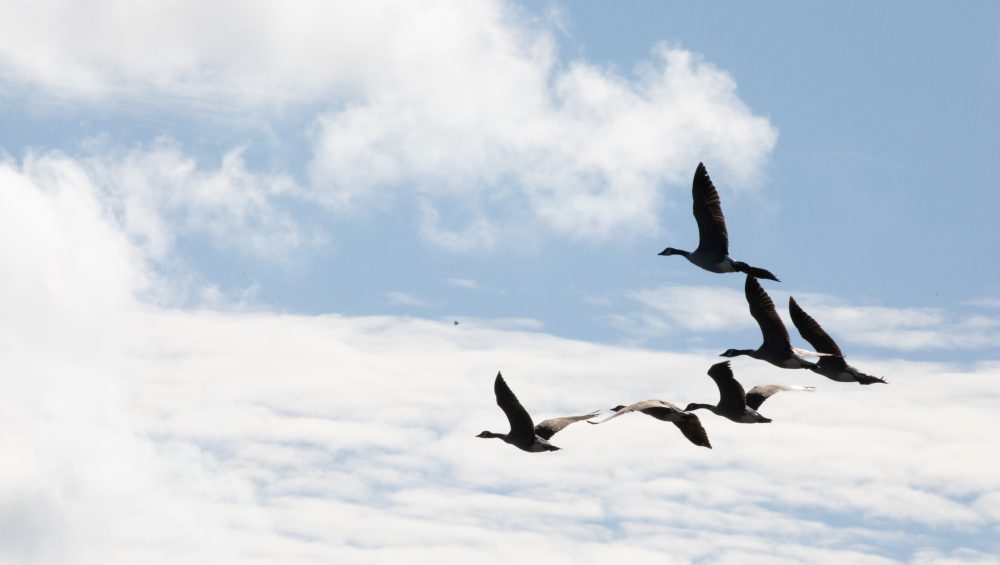
Perhaps the birds most seen over the weekend were the huge flocks of non-breeding Canada Geese. This is only a small sampling of one flock passing overhead.

Below, a female Orchard Oriole on the left (you have to click on the picture and still look hard to find her, she is so well-camouflaged) and a male Orchard Oriole on the right.

Brown Thrashers were singing quite a bit too, now I’m sorry  didn’t bother to record one. Below is one very cooperative bird.

Now the challenge is to get through another busy weekend and a lot more photographs (and, I hope, a lot less facial tissue). I am trying to stay optimistic! Please have faith, I shall return, lots to share with you.

BRTH 05-27-17-3340

Brown Thrasher

A Walk in the Woods

Northern Shoveler 4-2-17-0029

Northern Shoveler

I’ve been back from Panama for two weeks and I’m still not done going through my pictures. Even staying home instead of going swimming a few times hasn’t gotten it done between software updates…

So I went for a walk at the Portage yesterday even though it was cloudy, because spring migration is upon us, and I wanted to get out with the camera, especially after I forgot to take it with me on Saturday when I joined Illinois Ornithological Society’s trip to lakes in Lake County looking for Common Loons and other waterfowl, named “Loonapalooza” by my friend and the organizer and leader of the trip, David Johnson. I drove for an hour to get to the meeting place only to discover that I had remembered everything (scope, tripod, water bottle, binoculars, backpack, and I thought my brain) but left my best camera with its new lens at home. It never made it out the door. Next time I’m leaving that early in the morning I suppose I should write a list and put “brain” first, camera second… I’m blaming it on my medication, but there’s no need to go there now.

Above all this useless information is a young deer that appeared across the water, came across the bridge and walked almost toward me, very unusual for after-nine-ish in the morning.

Below, a Red-Tailed Hawk flying over.

The good news is I am in love with the new lens, which until recently I didn’t even know existed because there are times when I quit looking for any more camera stuff, but the two guys with cameras on the Panama trip informed me that Canon had finally come out with a new, improved 100-400mm lens. I had stopped using the old one, which I still have, but had hardly any use for. Instead I have been struggling with the monster Tamron lens for the last two years, which was getting harder and harder to carry around and focus. I think that lens might be going on the recycle list too. Because the new Canon 100-400mm lens and my Mark III 5D are really happy together, and an extra 200mm doesn’t necessarily mean you’ll get a decent picture, especially if you can’t hold the equipment still.

CAGO 4-2-17-0090That said, there’s still only so much you can do with anything in poor light. Like the very cooperative and friendly Golden-Crowned Kinglet below, he was pretty dull and drab yesterday.

GCKI 4-2-17-0263The dead wood in the water was perhaps more suited for the weather. It is transforming into…I’m not sure what bird that resembles on the right, below.

I was happy to see a Belted Kingfisher on the water. Although even he looks gray.

BEKI 4-2-17-0006Sparrows were abundant. White-Throated Sparrows, which are a dime a dozen on the lakefront, seem special here. There were lots and lots of Song Sparrows singing like crazy, even though I managed to capture a silent one. Below these two, a couple hidden shots of a fairly distant Fox Sparrow, whose rufous caught my eye and brightened up the surrounding gloom. And the final sparrow at the bottom, a Chipping Sparrow, is my first one of the season, although I’m sure I heard one in neighborhood last week.

CHSP 4-2-17-0154Lots of woodpeckers but they were hard to get on. Below is a Red-Bellied on the left. The little bird on the right is a Brown Creeper, not a woodpecker, but spends as much time on trees as woodpeckers if not more, and it’s also the first one for me this spring. Click on the pictures to enlarge, and look at how beautifully the creeper blends in.

There was a bench at one end of the water but it has disappeared. However, there are a few other places to sit. I stopped to rest on a boulder that is near one of the information boards, and watched five Canada Geese flying in together and then starting to squabble over positions.

I don’t think I saw Wood Ducks last year, so it was nice to see a pair yesterday. Here’s the guy, his mate was less accommodating.

WODU 4-2-17-0070

Couldn’t resist one more of the Shoveler.

Northern Shoveler 4-2-17-0036Okay, well, tonight I’m going swimming unless there are thunderstorms, and I promise I will finish The Panama Pictures so I can start sharing them with you.

Thanks to everybody for stopping by, for following my inconstant blog. Happy Monday.
March On

gho-salt-creek-2-26-17-9906

Great Horned Owl on nest, Salt Creek Forest Preserve, Cook County

I started writing this post on March 1. WFMT’s Carl Grapentine kicked off March 1’s morning program by playing, what else? Various marches. I was just getting over February.

The end of February was sufficiently balmy to lock  it into the record books with January as being the first time both months went without snow in Chicago.

I birded with my friend Susan last Sunday. We went to Bemis Woods South and the Salt Creek Forest Preserve. It was so quiet I didn’t bother to do a list. We were about to give up on the Salt Creek portion when a man walking in the opposite direction told us to look for an owl, so we continued. The Great Horned Owl at the top of this post made the day. Its nest was easily seen from the trail, and it sat and watched as people went by.

Two more birds from Bemis below, a White-Breasted Nuthatch and Red-Bellied Woodpecker.

March came in like the proverbial lion, returning to chilly, windy temperatures. My reward for venturing out of the office last week was to see my first Yellow-Rumped Warbler in Millennium Park. Nothing rare, but an earliest first for me.

It’s a busy time of year for the birds, as they prepare for spring. Today I visited the Chicago Portage, and although by the time I got there the sunny start was disappearing, and the number of Canada Geese and Mallards was increasing, and there were some more unusual visitors in the air, like the Bald Eagle below with nesting material and a small flock of Sandhill Cranes. The Sandhills were oddly quiet.

baea-3-5-17-0568

The Bald Eagle was flying east, but I have no idea where the nest might be. That direction was industrial, with the Sanitary and Ship Canal.

Saw and heard my first male Red-Winged Blackbirds today at the Portage, where they have come to establish territories.

There were maybe 40 Mallards spread out wherever there was water, and 5 pair of Canada Geese were checking out nesting spots. I haven’t seen any banded geese this year.

Other than the Red-Winged Blackbirds there were very few passerines, with the exception of a few American Robins and European Starlings. I heard a Song Sparrow, Chickadees, Killdeer, and a couple Downy Woodpeckers were flitting about.

The last Downy Woodpecker I photographed was last week in Millennium Park.

Also present that day, a couple Northern Cardinals and the White-Throated Sparrows who literally yelled their calls from the bushes when they saw me approach our favorite spot.

More Portage views…

cago-and-mallards-portage-2-26-17-9953I hope to be back once more if possible, with an update on my indoor crowd – before I leave for a quick trip to Panama. I’ve been planning this trip for months and unbelievably, all of a sudden it’s here.

noca-millennium-3-2-17-0390Thanks to you all for checking in. Until next time… Peace and Think Spring.

Fog Settles In

noca-home-1-22-17-6393

Northern Cardinal outside my house this morning

Inertia beckons. The fog was thick on Thursday when I visited Millennium Park, but it was even thicker this morning when Lesa and I decided to try birding the Palos area.

dowp-mcginnis-1-22-17-6398

Downy Woodpecker, McGinnis Slough

McGinnis Slough was fairly quiet except for Canada Geese that kept flying over. We did see the outline of perhaps 500 or so in the water except we could barely make out their shapes in the fog. There were American Tree Sparrows on the ground not far from the parking lot.

We did manage to see several Common Mergansers at the south end of the preserve. The shot of the geese flying overhead gives you an idea of how foggy it was.

We drove over to the Little Red Schoolhouse to see birds at the feeders, if nothing else, and true to Lesa’s prediction, there were two Tufted Titmice.

We also had our only White-Throated Sparrow at the Schoolhouse. There’s an American Tree Sparrow behind it.

wtsp-little-red-schoolhouse-1-22-17-6504Perhaps the brightest feature at the Schoolhouse was the fungus growing below.

fungus-little-red-schoolhouse-1-22-17-6520Here are a few pictures from Thursday, downtown at Millennium Park. There are perhaps 20 or 30 White-Throated Sparrows distributed in several areas. Below are two that came for the birdseed I had brought with me.

American Robins are starting to show up here and there. They never really go completely away but they associate loosely in flocks in the winter.

European Starlings are returning too. They used to overwinter but the last few years I have noticed their absence, so they must be migrating a bit for a while.

eust-millennium-1-19-17-6359Those tough year-round city natives, Rock Pigeons, are always somewhere in the Loop. Below, two pied pigeons.

Individually they’re really unique. But I have to be careful not to pay too much attention to them or they’ll think I’m going to feed them.

pied-pigeons-millennium-1-19-17-6380This Robin was interesting too. How much color can I get out of any bird in this light?

amro-millennium-1-19-17-6341The forecast is for cooler temperatures, rain turning to snow, winter isn’t over yet. But this week I heard some bird song from a Black-Capped Chickadee, an American Robin and a Northern Cardinal. That gives me hope.

Warmup to a Merry Christmas

noca-12-9-16-5033In the mad rush to the end of the year there hasn’t been much time for birding or posting but I am here to wish you all happy, good-cheer holidays, whatever you are celebrating. Last night I sang with the Unity Temple Choir for their Christmas Eve service and today I am catching up on bread gifts to distribute around the neighborhood. So while the house smells of cinnamon and yeast, Handel’s Messiah playing on the radio, and snow still on the ground even though we’ve warmed up quite a bit, I will try to compile a brief photographic history of the last few weeks.

Most of the wild birds I have seen lately have been downtown on infrequent visits to the parks. The light hasn’t been anything to celebrate but the Black-Capped Chickadees, White-Throated Sparrows, House Sparrows and Northern Cardinals are all happy to partake of the treats I bring them.

wtsp-12-9-16-5091

White-Throated Sparrow

And although I haven’t had many crows, I am usually able to find at least two, sometimes four. I don’t know where they’ve gone this year. Maybe the polar vortex has caused them to congregate elsewhere. Too bad, because I’m baking Birdz Cookies now, and I’ve perfected the recipe.

Sometimes there are a few American Robins about, although not as much now that the trees and bushes are running out of fruit.

There was that one horribly cold week and I managed to document the temperature and the steam on the river, if nothing else. I didn’t go out that day.

Two days later it had warmed up a bit, for which I was grateful, as I participated in the Fermilab Christmas Bird Count, but it was a brutal experience slogging through packed snow and seeing not many birds at all. Not surprisingly, overall, the number of species and individuals were down from previous years.

The Canada Geese flying overhead seemed to be the only ones having a good time.

I couldn’t even get the pair of Northern Cardinals below to come out from the thicket long enough to photograph them.

northern-cardinals-fermilab-12-17-16-5561

What’s been really shocking to me is the lack of birds in my yard. While I don’t see them most of the time because I’m at work anyway, at least I have an idea that they’re showing up by the emptiness of the feeders. Oddly enough, just as we started the warmup this past week, my feeders remained full. You would think just the opposite would occur. I began to wonder if the sub-zero temperatures had taken more casualties than a more normal winter. I hope this isn’t a warning for the future.

crows-12-16-16-5362wtsp-12-12-16-5180I have seen birds in the yard today now that I’m home, and I’m starting to think that a good deal of the absences probably have to do with the local raptors’ hunger more than the weather. We shall see. The birds come, but they don’t stay long. I’ll try to do a census tomorrow in the yard since I would like to see my favorites beyond the inevitable House Sparrows. I may even go out to the Portage for a walk-around early in the morning. We’re supposed to have relatively balmy temperatures tomorrow morning before we go back to normal. A seesaw December. And only one week left of it.

Wishing you all love and peace!

Putzing Around the Portage

amgo-portage-10-23-16-3645amgo-portage-10-23-16-3474Yesterday morning was perfect fall weather, the sun was shining, it was cool but comfortable, and it seemed like I should walk around and get used to taking pictures looking through the camera lens with the right eye again. I have had the new prescription for a week.

mallards-en-scene-portage-10-23-16-3305

In any event I take back whatever I said last time I posted about the Chicago Portage. Perhaps absence does make the heart grow fonder. I noticed when I submitted my bird list to ebird that a month had passed since my last visit. Just seeing the old place in the beginning of its fall colors felt like coming home.

A lot of issues with shadows yesterday. The angle of the sunlight and its brightness made some of the photos almost useless. Above, one of two Cooper’s Hawks, a too-bright White-Throated Sparrow and a House Finch.

The Red-Tailed Hawk above appeared momentarily after the Cooper’s Hawks left. I was glad to have arrived at bird-of-prey time.

Most numerous of all species were Mallards, although there was a group of 26 Canada Geese too.

Above, a Red-Winged Blackbird and a Red-Bellied Woodpecker. As the days grow ever shorter, chances to see both species will diminish.

I was surprised to see so many House Finches, like the two above. Maybe the habitat change is taking effect.

sosp-portage-10-23-16-3525

Song Sparrow

I caught this Song Sparrow too busy eating something to flush, and thankfully for me, he was in better light.

Black-Capped Chickadee and Dark-Eyed Junco… the Junco is proof that winter is on the way.

cawr-portage-10-23-16-3625

Carolina Wren

I heard the Carolina Wren while I had stopped to talk to a fellow Portager, and was very glad to find it later, even if it was somewhat hidden from view. I haven’t seen or heard Carolina Wrens here for at least 2 years. But migration being what it is I shouldn’t get my hopes too high.

Even though I missed the raptors flying, I did get a helicopter. Maybe I scared it away with my lens… The photo on the right is just some marshy overgrowth.

amgo-portage-10-23-16-3580

American Goldfinch

The Goldfinches were numerous and busy eating. I’ve been busy too planting more for them to eat this time of year in my yard, since they seem to have turned their beaks up at the niger seed. But if I can’t attract the flocks I used to with that stuff at least it’s good to see them happy at the Portage.

I’ll be back with Part 3 of the Galapagos.

We Pause for a Brief Commercial from Spring

I may have said I didn’t want to get distracted in my last blog post, but I felt the need to go out for a little exploration Sunday morning, and so became distracted by a few birds at McGinnis Slough and the Chicago Portage. And if I don’t pay them due respect now they will likely never get another chance.

The Red-Winged Blackbirds are back in force at McGinnis, with likely more to arrive. I counted maybe a dozen males singing on their territories. There were Red-Winged Blackbirds back in Millennium Park downtown yesterday, along with some of their Common Grackle cousins. (The photo below is from McGinnis.)

I have been checking off all my little Signs of Spring since I got back: the appearance of the first American Robin in my yard last week, then hearing Robins singing in the neighborhood yesterday (looking forward to those 2:00 AM serenades!), the Northern Cardinals singing their descending scale song, and I’m even distracted by the return of the Canada Geese to the Jackson Street Bridge. A Horned Grebe on the lakefront. Every year around this time someone sees a Red-Throated Loon by Monroe Harbor. I may have been the first to report one a few years back. I have missed the bird ever since but wonder if it’s the same individual returning year after year.

It was cloudy, cold and windy on Sunday, perfect Red-Tailed Hawk weather at McGinnis. We have warmed up since then and have relatively balmy temperatures predicted for the entire work week, along with attendant rain and thunderstorms.

McGinnis Slough

The other raptor at McGinnis was a juvenile Bald Eagle. There are more and more frequent sightings of these birds in the Chicago metropolitan area.

Not many surprises at the Chicago Portage but it was brimming with the promise of renewal. There were several White-Breasted Nuthatches and Downy Woodpeckers.

One of the pairs of Canada Geese ready to set up housekeeping was the same tagged couple from the last two years, No’s. 16 and 11. If I recall correctly 16 is the male. This time I noticed the bands on their legs as well although they are not decipherable.

Chicago Portage

Among the Mallards and Canada Geese was one Northern Shoveler. I just barely managed to capture him before he took off.

There were about a dozen Dark-Eyed Juncos but with the sweep of warm air coming in, this may be the last time I see them.

It looks as if beavers have been busy,,,

I’m not changing the header on this page because I do intend to get right back to the photographs from Nicaragua! Maybe all the rain this week will keep me inside long enough to finish that task.

Portions of this post were lost during my overreaction to a software update. It’s a long story not worth repeating here. I have tried to reconstruct it as well as possible.


Christmas Bird Count Tidings from Fermilab

AMTR Fermilab 12-19-2015 -8229

American Tree Sparrow

It wasn’t raining. It wasn’t snowing. It was predictably very cold and I had harbored second thoughts about taking the camera with me. But after all, the Christmas Bird Count happens only once a year. And even if I am ever-so-slightly wondering if I’m still doing things the old-fashioned way when there is probably new cutting-edge equipment that is easier to use in inclement weather, I persevered.  Resigned to the fact that if there was anything worthwhile to shoot I’d probably have to remove the gloves and deal with the frostbite later.

Fermilab 12-19-2015 -8171

So here are a few photos from my morning with one of the three teams assigned to various areas for the count.

There are always more Canada Geese and Mallards than one can count individually so you wind up doing estimates. And scanning through the crowd to see if there are any different species. Somewhere in this group were three Greater White-Fronted Geese, a couple Common Mergansers and I forget what else at this point. Not allowed to count the geese when they’re in the air.

Geese Fermilab 12-19-2015 -8193

It took awhile before we found the inevitable American Tree Sparrow flocks. This flock had an American Goldfinch with it.

And at one point we had a coyote who was easy to see if hard to get a decent picture.

Coyote Fermilab 12-19-2015 -8260

There is a wood lot not far from the Red Barn where we always go traipsing through quietly looking for owls. There is a lot of undergrowth between the pines that presents a challenge just to find a way to walk through it. I never find anything. I was looking down at a lot of frozen mushrooms underfoot that unfortunately were not captured by my ginormous lens. Then I stopped and looked up. And there it was. A Long-Eared Owl, staring at me.

Although the owl was very cooperative, it was backlit, it was dark in there, and a lot of twigs blocked my view (the owl knew all this, of course). After I took enough pictures that would at least prove what I saw, I tried to find someone in my group to tell about it. By the time I did, I had no idea exactly where I saw it. The guys went in to find it and flushed it. I felt as if I had betrayed the owl, but the owls we saw in other spots, mainly Great Horned, were also flushed, so I guess we get one day a year to disturb them for science.

Tree Sp Fermilab 12-19-2015 -8201

Not much else to report at the moment. Singing tonight with the Unity Temple Choir for a Christmas Eve service. Looking forward to a nice, quiet Christmas Day at home with the birds. Thanks for visiting, and have a very merry holiday!