Fog Settles In

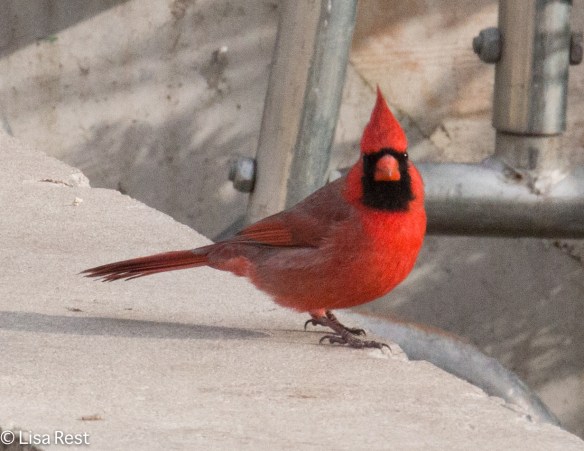
noca-home-1-22-17-6393

Northern Cardinal outside my house this morning

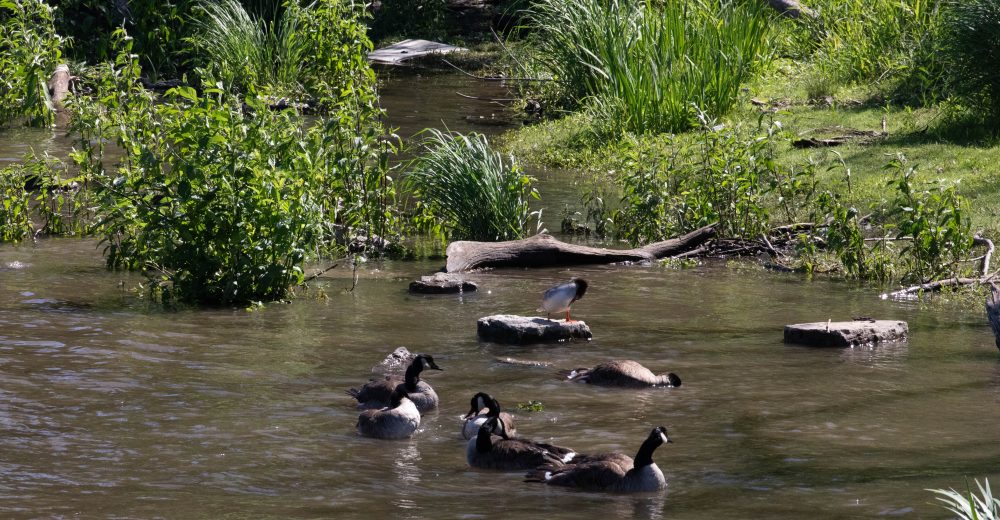
Inertia beckons. The fog was thick on Thursday when I visited Millennium Park, but it was even thicker this morning when Lesa and I decided to try birding the Palos area.

dowp-mcginnis-1-22-17-6398

Downy Woodpecker, McGinnis Slough

McGinnis Slough was fairly quiet except for Canada Geese that kept flying over. We did see the outline of perhaps 500 or so in the water except we could barely make out their shapes in the fog. There were American Tree Sparrows on the ground not far from the parking lot.

We did manage to see several Common Mergansers at the south end of the preserve. The shot of the geese flying overhead gives you an idea of how foggy it was.

We drove over to the Little Red Schoolhouse to see birds at the feeders, if nothing else, and true to Lesa’s prediction, there were two Tufted Titmice.

We also had our only White-Throated Sparrow at the Schoolhouse. There’s an American Tree Sparrow behind it.

wtsp-little-red-schoolhouse-1-22-17-6504Perhaps the brightest feature at the Schoolhouse was the fungus growing below.

fungus-little-red-schoolhouse-1-22-17-6520Here are a few pictures from Thursday, downtown at Millennium Park. There are perhaps 20 or 30 White-Throated Sparrows distributed in several areas. Below are two that came for the birdseed I had brought with me.

American Robins are starting to show up here and there. They never really go completely away but they associate loosely in flocks in the winter.

European Starlings are returning too. They used to overwinter but the last few years I have noticed their absence, so they must be migrating a bit for a while.

eust-millennium-1-19-17-6359Those tough year-round city natives, Rock Pigeons, are always somewhere in the Loop. Below, two pied pigeons.

Individually they’re really unique. But I have to be careful not to pay too much attention to them or they’ll think I’m going to feed them.

pied-pigeons-millennium-1-19-17-6380This Robin was interesting too. How much color can I get out of any bird in this light?

amro-millennium-1-19-17-6341The forecast is for cooler temperatures, rain turning to snow, winter isn’t over yet. But this week I heard some bird song from a Black-Capped Chickadee, an American Robin and a Northern Cardinal. That gives me hope.
Warmup to a Merry Christmas

noca-12-9-16-5033In the mad rush to the end of the year there hasn’t been much time for birding or posting but I am here to wish you all happy, good-cheer holidays, whatever you are celebrating. Last night I sang with the Unity Temple Choir for their Christmas Eve service and today I am catching up on bread gifts to distribute around the neighborhood. So while the house smells of cinnamon and yeast, Handel’s Messiah playing on the radio, and snow still on the ground even though we’ve warmed up quite a bit, I will try to compile a brief photographic history of the last few weeks.

Most of the wild birds I have seen lately have been downtown on infrequent visits to the parks. The light hasn’t been anything to celebrate but the Black-Capped Chickadees, White-Throated Sparrows, House Sparrows and Northern Cardinals are all happy to partake of the treats I bring them.

wtsp-12-9-16-5091

White-Throated Sparrow

And although I haven’t had many crows, I am usually able to find at least two, sometimes four. I don’t know where they’ve gone this year. Maybe the polar vortex has caused them to congregate elsewhere. Too bad, because I’m baking Birdz Cookies now, and I’ve perfected the recipe.

Sometimes there are a few American Robins about, although not as much now that the trees and bushes are running out of fruit.

There was that one horribly cold week and I managed to document the temperature and the steam on the river, if nothing else. I didn’t go out that day.

Two days later it had warmed up a bit, for which I was grateful, as I participated in the Fermilab Christmas Bird Count, but it was a brutal experience slogging through packed snow and seeing not many birds at all. Not surprisingly, overall, the number of species and individuals were down from previous years.

The Canada Geese flying overhead seemed to be the only ones having a good time.

I couldn’t even get the pair of Northern Cardinals below to come out from the thicket long enough to photograph them.

northern-cardinals-fermilab-12-17-16-5561

What’s been really shocking to me is the lack of birds in my yard. While I don’t see them most of the time because I’m at work anyway, at least I have an idea that they’re showing up by the emptiness of the feeders. Oddly enough, just as we started the warmup this past week, my feeders remained full. You would think just the opposite would occur. I began to wonder if the sub-zero temperatures had taken more casualties than a more normal winter. I hope this isn’t a warning for the future.

crows-12-16-16-5362wtsp-12-12-16-5180I have seen birds in the yard today now that I’m home, and I’m starting to think that a good deal of the absences probably have to do with the local raptors’ hunger more than the weather. We shall see. The birds come, but they don’t stay long. I’ll try to do a census tomorrow in the yard since I would like to see my favorites beyond the inevitable House Sparrows. I may even go out to the Portage for a walk-around early in the morning. We’re supposed to have relatively balmy temperatures tomorrow morning before we go back to normal. A seesaw December. And only one week left of it.

Wishing you all love and peace!

Breeding Birds

PRWA IDSP 05-29-2016-2349Passerine migration is over for all practical purposes. Birds have taken to their breeding grounds and are getting down to business. Here are some photos from the last couple weekends, starting with the Prothonotary Warbler above, seen at Indiana Dunes State Park.

Yellow Warblers are common summer residents around here. The one on the left above was hanging out at IDSP and the one on the right was the first bird I encountered at the Chicago Portage last Sunday on a late, gloomy morning.

Even with a lot more light going on at the Indiana location, backlighting was a constant challenge. Above, compare an adult male Scarlet Tanager on the left with what was determined to be a first-year male of the same species.

There were several Red-Headed Woodpeckers at IDSP. I don’t see them too often so they were a nice surprise.

Perhaps the most exciting find was the hardest to photograph. Above is a male Acadian Flycatcher, not far from where his mate is sitting on a cleverly positioned nest underneath a leaf.

Two looks at Eastern Wood-Pewees above.

We had two Pileated Woodpeckers, and the one above was in the best light but this species still eludes my camera, monster lens and all.

Cedar Waxwings above, at IDSP on the left and the other one from the Chicago Portage.

The Portage had at least four male Baltimore Orioles, and I was able to spot a female not entirely hidden on the right, above.

To add to my list of not-often-seen woodpeckers, I had a Hairy Woodpecker at the Portage. Usually I see Downies everywhere, but this was the only woodpecker that I was able to photograph.

Tree Swallows were abundant. And below, it was a good day for turtles at the Portage.

And for Mallard ducklings…looking almost full grown.

Below, a newly fledged American Robin and an adult.

One more look at the Red-Headed Woodpecker.

RHWP IDSP 5-29-2016-2453I’ve been busy writing silly songs, working, gardening and starting to get ready for a trip that will begin on July 1. I am now glad I inadvertently planned to be away before the Democratic National Convention. I’m growing weary of the daily drama and it will be good for my head to be totally oblivious to politics for a couple weeks.

I’ll try to get back to this page a few times before I go. Thanks for stopping by!


Chicago Portage Surprise

Blue-Winged Teal 04-03-2016-5155

Blue-Winged Teal

I went to the Portage last Sunday and meant to report back earlier but the work week got the better of me. So while I am sitting here sharing the sunshine with the indoor crowd and not feeling too bad about it since there’s about a quarter of an inch of snow on the ground from last night…

The Blue-Winged Teal at the top of the post were swimming around when I first saw them but as I tried to get unobstructed views to photograph, they flushed, and sadly the best picture I got was of two in flight. I hate flushing birds but as I progressed along the path I think all 8 of them would have left anyway.

It’s still surprising to me to see people working on Sunday, but there these guys were, working on the new shelter right off the parking lot.

Chicago Portage Shelter Construction 04-03-2016-5013

With the unseasonal weather confusion, still seeing some winter species like the American Tree Sparrow below.

American Tree Sparrow 04-03-2016-5049

American Tree Sparrow

I took the photos of these two female ducks before identifying them. The one on the left appears to be a female American Black Duck. The one on the right, however, appears to be a hybrid American Black Duck-Mallard female. It took me a while to figure out the second one. My reasoning for the ID on the second one is the plumage.

There was also one Canada Goose sitting in the water but so still she appeared to be sitting on a nest.

An Eastern Phoebe was my first of the year at the Portage. Even though I saw this bird in two locations I suspect it’s the same one.

Such was the grayness of the day that even pieces of wood appeared to be possibly alive.

Portage  04-03-2016-5284

Below, two Mallards dabbling in their bottoms-up fashion and a male Mallard.

There were a few American Goldfinches present, none showing any more color than the one below.

And there are always Downy Woodpeckers.

American Robins are always here too, only now beginning to look fancy.

An average day at the Portage, perhaps. But then The Big Surprise occurred as I approached the parking lot and this Bald Eagle flew over my head. It appears to be an immature bird, Bald Eagles attaining their adult plumage after about five years, so the head, for instance, is not completely white.

But to see a Bald Eagle in my neighborhood – well, it is around the Des Plaines River, but still, barely a mile and a half from where I live – this is really amazing to me. Apparently not unusual, though, because when I reported it to ebird my sighting was not questioned.

BAEA  04-03-2016-5337Below is another shot of the Eastern Phoebe. I love these birds, they’re so cooperative.

EAPH 04-03-2016-5231I owe you one more post from Nicaragua and then maybe the snow will melt for good and we can get started with spring!

Hanging Out

BCNH Portage 8-2-15-8128

The virtual sunniness of it all makes the summer heat seem more oppressive somehow. We had rain after rain after rain in July for weeks and then virtually for a week it was all over, the steady sunshine and heat quickly depleting water levels. So I didn’t know what to expect when I wandered over to the Portage Sunday morning. Perhaps shorebirds, but there were none. However there was the Black-Crowned Night Heron above. I don’t think I’ve ever seen one at this location, so that made the visit worthwhile immediately. In discovery mode I’ll take anything but for some reason a different or unexpected bird sates my hunger for more for…at least a few minutes!

GBHE Portage 8-2-15-8165GBHE Portage 8-2-15-8201The only other species near what little water was left was a Great Blue Heron who was first silhouetted as I walked in against the sun, the trail still being inaccessible from the opposite direction, and then after I emerged from a lot of burdock and butterflies, the heron decided to leave.

Red Admiral Portage 8-2-15-1349

Red Admiral

The butterflies almost made up for the lack of bird species.

Comma Butterfly Portage 8-2-15-1319

Eastern Comma

Eastern Comma Butterfly Portage 8-2-15-1308

Eastern Comma

Butterfly Portage 8-2-15-1368

Silver-spotted Skipper

Red Spotted Purple Butterfly Portage 8-2-15-1389

Red Spotted Purple

Caterpillar Portage 8-2-15-1332

Lined Tiger Moth Caterpillar

After months of closing the hole in the fence, the gate, so to speak, is wide open. An enormous amount of vegetation has been cleared and there is a wide path leading in either direction, toward the Des Plaines River or the Metropolitan Water Reclamation District. I did not go far in either direction but decided to at least take a peek at the river and on my way I encountered a doe and two fawns. Below is one of the fawns passing through.
Deer Portage 8-2-15-8175There were dragonflies but they were generally less cooperative.

Dragonfly Portage 8-2-15-1372

White-Faced Meadowhawk

Dragonfly Portage 8-2-15-1364

Unidentified Damselfly

Bumblebee Portage 8-2-15-1327

Is this the backside of a bee?

House Wrens were still quite vocal and I managed to see this one.

HOWR Portage 8-2-15-8156

House Wren

Of all 13 species I reported, there were more American Robins than anything else. The one below will quickly lose its spottiness.

AMRO Portage 8-2-15-8241

Juvenile American Robin

Downy Woodpeckers are regulars at the Portage, if not always visible.

DOWP Portage 8-2-15-8249

Downy Woodpecker

And Indigo Buntings still rule. There have been more than ever this breeding season, and they are still singing.

INBU Portage 8-2-15-8114We’ve cooled off a bit, and the days are inching ever-so-slightly shorter, tilting thoughts toward fall migration. I’m sure there’s still plenty of hot weather left but maybe I’m finally getting used to it. If it doesn’t rain this weekend…who knows where I could go?

Post-pourri

Comma  7-23-15-7983Apologies for the bad pun. It’s been a busy, fragmented, hot week and a half or so. Also, the past weekend was one long party, with no birds in attendance. I am not used to being much of a social butterfly.

Moth Lurie Millennium 7-15-15-7580

A moth casts a shadow at Lurie Garden

I haven’t been out much during the day either. If I didn’t know better I might think the crows have given up on me, but I suspect it’s lack of the quiet shady spots we used to have, where we could convene without a steady stream of human beings. Pigeons are much less picky about habitat but definitely not used to having their pictures taken.

Crow  7-27-15-8012

ROPI 7-14-15-7441ROPI 7-24-15-8001On the days I have gone out, I have managed to keep amused. One bright spot, for instance, was finding some Monarch Butterflies in Lurie Garden.

Monarch Lurie Millennium 7-15-15-7570

There are other interesting pollinators too. I think the wasp below was more black than blue, but lightening it up made it interesting.

Lurie Millennium 7-15-15-7549One afternoon last week standing outside the northern entrance to Lurie, I heard some earnest chirping and determined it was coming out of the small oak tree before me. There were a couple security guards talking to each other totally oblivious to the Robin’s nest I soon located.

AMRO Nest Millennium 7-15-15-7528

American Robin nestlings

I suspect the Northern Cardinal below is a young bird as well because it seemed to know the peanut was for eating but was perplexed by it anyway.

NOCA 7-14-15-7468NOCA 7-14-15-7460On hot, boring days at Lake Shore East Park, as long as I could find a bench to sit on, I took to photographing the fountains.

Fountain LSE 7-07-15-6698Fountain LSE 7-15-15-7502Then a few days ago I was sitting in the shade across from the east side of the Pritzker Pavilion, waiting for crows, and the little bird below darted out of the yews. The shade was so dense it was hard to get a decent picture, but this is the first time I have seen a juvenile Ovenbird at Millennium Park at the end of July. I was so surprised I thought I was going to get a rare bird alert but Ovenbirds breed in this part of the continent so even though I think it was rare for Millennium Park it’s not unlikely. This is the same spot I heard a White-Throated Sparrow singing a couple weeks ago, which is rare, so maybe just going to sit in this spot isn’t such a bad idea. Crows or no crows.

OVEN 7-27-15-8035

Ovenbird, Millennium Park, 7-27-15

OVEN 7-27-15-8022The greatest reward perhaps is still seeing Monarch Butterflies. I have seen fewer than 20 individuals this summer, at least two of them flying around the cement canyons of LaSalle Street. I hope the Swamp Milkweed is making them feel welcome.

Monarch on Swamp Milkweed Lurie Millennium 7-22-15-7930Swamp Milkweed Lurie Millennium 7-22-15-7918

Birding the Hood

AMRO Berwyn 5-24-15-3391A combination of unpredictable weekend weather and outright curiosity caused me to spend some time in the last few weeks walking around the block, so to speak, to see what birds were present. Other factors also pushed me over the edge: reading John Marzluff’s Welcome to Subirdia (still reading it but like three or four other books I’ve started who knows when I’ll finish it), hearing Red-Eyed Vireos singing on my way to work, seeing Rose-Breasted Grosbeaks at my feeder, and not wanting particularly to get up in the middle of the night so I could arrive somewhere farther by daybreak.

AMRO Berwyn 5-24-15-3357

American Robin, 5-24-15

Of course the Robins have been on territory for quite a while, and they pretty much act like they own the place, but they’re still fun to watch.

WODU Berwyn 4-27-15-8748

Wood Ducks, April 27, 2015

One evening I got home from work and saw the two Wood Ducks in the picture above when they landed on top of a chimney across the street. They looked as surprised to be there as I was to see them.

RBGR Berwyn 5-10-15-9739

Rose-Breasted Grosbeaks on the feeder 5-10-15

RBGR Berwyn 5-10-15-9736The three Rose-Breasted Grosbeaks sampling sunflower seeds above appeared to be an adult male, a female and a somewhat immature male (the guy sitting on top of the feeder in the first picture). Maybe the pair were showing junior his first trip north.

RBGR Berwyn 5-16-15-2133

Male Rose-Breasted Grosbeak 5-16-15

A week later there was still a male in the neighborhood. Rose-Breasted Grosbeaks breed in this area, but I think they still prefer the forest preserves.

On May 16 I found two Red-Eyed Vireos but they wouldn’t pose for pictures. However I did manage to engage the cooperative, hungry female Black-and-White Warbler below. She was just down the street from my house.

Black and White Warbler Berwyn 5-16-15-1993

Black-and-White Warbler, 5-16-15

Black and White Warbler Berwyn 5-16-15-1975

Also not far away was the Yellow Warbler below. These are not unusual species but to see them not far from the house is unusual for me, since it never occurred to me that if I was just patient and looked a little harder, I could likely find some warblers in the neighborhood.

YEWA Berwyn 5-16-15-2056

Yellow Warbler, 5-16-15

Blue Jays tend to be heard and rarely seen, but I did get good looks at this one. He probably thought I was a curious sight, walking around with binoculars and a camera.

BLJA Berwyn 5-16-15-2019

Blue Jay, 5-16-15

BLJA Berwyn 5-16-15-2017

Maybe most surprising was seeing a Hermit Thrush dash out from underneath a parked car. I had been seeing one in my neighbor’s yard, so it’s likely the same individual.

HETH Berwyn 5-16-15-2113

Hermit Thrush, 5-16-15

The flowers are all gone now from my Horse Chestnut but that day the bees were enjoying the bounty.

Bee on Horse Chestnut Berwyn 5-10-15-2154Now I’m looking forward to fall migration to see if I can repeat the experiment on those iffy mornings when I don’t necessarily feel like going “somewhere.” It’s certainly easier to take a stroll around the block, and I don’t have to worry about finding my way back to where I started.

RBGR Berwyn 5-16-15-2084Spring migration is pretty much over, although late-comers and late-leavers are still surfacing here and there. Now my focus will turn to breeding birds and, whenever possible, finishing my review of photographs from trips I’ve already taken before I set off for somewhere else…

Sunday’s Remainder

Gray-Cheeked Thrush, Ottawa Trail Woods

Gray-Cheeked Thrush, Ottawa Trail Woods

I wrote most of this last night…It’s hard to believe–as I sit here with the windows closed not because it is too hot but because it is unseasonably cold outside–that Sunday was hot and buggy. Every time I stopped to get a photograph or look about for telltale movement, I was sampled by some mosquito accessing a bug-spray-free spot on me. At some point one merely gives up or gives in. The insects know the end is nigh for them, so they partied hardy, like 1999.

Cedar Waxwing Tree, Chicago Portage

Cedar Waxwing Tree, Chicago Portage

Juvenile Cedar Waxwing

Juvenile Cedar Waxwing

The birds certainly know something is up. Large flocks of Blackbirds, Robins, Cedar Waxwings and Mourning Doves assembled at the Chicago Portage last Sunday. I also had perhaps ten Ruby-Throated Hummingbirds, finally, although it was still not possible to photograph them.

American Robin, Portage

American Robin, Portage

Red-Winged Blackbird

Red-Winged Blackbird

Mourning Dove

Mourning Dove

Female Ruby-Throated Hummingbird

Female Ruby-Throated Hummingbird

Of course I was looking for more warblers. There were not very many. Three views of a Magnolia Warbler…

Magnolia Warbler

Magnolia Warbler

MAWA Ottawa Trail 9-7-14-5415MAWA Ottawa Trail 9-7-14-5418

I sometimes do not know how the camera finds these birds when I can barely see them. A few views of a Confusing Fall Warbler…see if you can find the bird in this tangle! At first I thought it was a Bay-Breasted, but then on closer inspection it is likely a Blackpoll. We affectionately refer to these quandaries as Baypoll Warblers. (You will have to click on the pictures to enlarge them.)

Bay-Breasted Warbler

Likely Blackpoll Warbler

BBWA Portage 9-7-14-5187BBWA Portage 9-7-14-5188Among a few other species present, I managed to catch a Tennessee Warbler and an Ovenbird.

Tennessee Warbler, Chicago Portage

Tennessee Warbler, Chicago Portage

Ovenbird, Chicago Portage

Ovenbird, Chicago Portage

My hunch that there might be more warbler action at Ottawa Trail, over by the Des Plaines River, did not prove to have any merit whatsoever. There were fewer birds altogether. But I did get a rather nice look at a Red-Bellied Woodpecker. Juvenile Indigo Buntings were present in both places and also Gray-Cheeked Thrush, which is a less common thrush to see. RBWP Ottawa Trail 9-7-14-5366 RBWP Ottawa Trail 9-7-14-5382

Juvenile Indigo Bunting

Juvenile Indigo Bunting

Another Gray-Cheeked Thrush, Chicago Portage

Another Gray-Cheeked Thrush, Chicago Portage

It was only fitting to have a Red-Tailed Hawk fly by and put its stamp on the end of my outing.

Red-Tailed Hawk, Ottawa Trail Woods

Red-Tailed Hawk, Ottawa Trail Woods

Tomorrow I plan on going on Chicago Ornithological Society’s walk at Columbus Park. I haven’t been there in a couple years, even though it’s not far away. It will be interesting to see what we find. I was really looking forward to the original plan, which was to go to Humboldt Park as I have never been there, but the Chicago Park District has organized a weekend event called “Riot Fest” there, which makes conditions less promising for the birds and those who watch them.

Tempering the “Riot Fest” and maybe even our bird walk will be the forecast for early rain and cloudy skies! We are cloudy, rainy and in the 50’s today, so I can get in the mood when I go out later. Oh well.

Lake Katharine

Black-Crowned Night Heron

Black-Crowned Night Heron

Last Sunday morning I managed to get up early and find Lake Katharine, which is directly south from where I live. Dick Riner mentioned it to me when I visited Bartel Grasslands, so I decided to check it out. It’s part of the Cook County Forest Preserve system. Although it’s surrounded by suburban sprawl, it has a variety of well-managed habitats and I will return.

Cabbage White

Cabbage White

I started out walking east from the parking lot to take in the prairie/grassland portion. It was overcast and a bit cool so there wasn’t a lot of activity yet, but I was not planning on staying long anyway since I had a cousins’ lunch to attend in the afternoon.

Is this Purple Loosestrife?

Is this Purple Loosestrife?

Japanese Beetle on Thistle

Japanese Beetle on Thistle.

I didn’t manage to visit the Nature Center this time but I will on my next visit. According to the website, Lake Katharine has many educational and volunteer programs in place to get people involved with nature. I was just enjoying the scenery like this huge sunflower and imagining how many goldfinches would be hanging upside down on it as soon as the seeds ripen.

Sunflower 7-13-14-2732Sunflower Seeds 7-13-14-2735

Out of the wildflowers and heading toward the west end of the lake, I walked a path with a wooded area which is where I encountered the Black-Crowned Night Heron at the beginning of the post. It landed in a tree not too far away, but when it saw me it spent time trying to hide behind whatever branches were between us. I guess when he figured out I wasn’t going to leave until I got a picture with all of his head in it, he gave in.

Dragonflies were one reason why I came, but I was able to barely photograph only this one and I don’t know what it is, fledgling dragonfly observer that I am. I don’t think the picture offers enough detail to be absolutely certain.

Dragonfly - Pond Hawk 7-13-14-1312

Male Blue Dasher – thanks for the ID, Linda!

Grass 7-13-14-2712

Unknown Grass

Froggies 7-13-14-1314

Froggies?

I’m also soliciting identification of the grass – I gave up after clicking on a list with links to pictures and descriptions of maybe 100 different grasses that occur in Illinois.

When I got to the water and stopped to look, the shallows seemed to be bubbling with life. Occasionally I did see bubbles but for the most part I felt as if I was being watched by a couple hundred eyes from submerged frogs. I am not good at identifying frogs so I have no idea if they were really frogs or my overactive imagination.

American Robin

American Robin

Robins are everywhere, busy with their nests and most likely working on a second clutch. I have seen juvenile Robins but this adult felt like posing with a grub. A few robins are still singing a phrase here and there.

Caspian Tern

Caspian Tern

Caspian Tern

Caspian Tern

I saw the Great Egret before the Caspian Tern. I went around the trail to get a closer look at the egret and started talking with another Dick who was also taking pictures. He works at Lake Katherine and maintains the grounds, which is too huge a task for me to imagine. The tern flew over us as we were talking. According to Dick the tern has been making an appearance daily.

GREG 7-13-14-1398When I did finally get close enough for a better picture of the egret, it decided it had had enough of posing and scratched an itch.

GREG 7-13-14-1407I am going to sleep early so I can get up and join the Evanston North Shore Bird Club’s field trip to Rollins Savanna in Grayslake, Illinois. It will take me an hour to get there, even at 5:30 in the morning. Rollins was on my list of places to visit, I haven’t been there in a couple years, and I don’t think I’ve ever seen the entire place, but a four-hour field trip should cover it all and satisfy my curiosity. (Oh, and it’s good for the car to get some exercise beyond running local errands. I need motivation to get up at 3:00 a.m.)

Busy Breeding Birds

Eastern Bluebird

Eastern Bluebird

Sunday morning I got up early before the predicted heat ensued and went to the Dorothy and Sam Dean Nature Sanctuary in Oak Brook…

Sign-1709Sanctuary-1694

because I felt like I hadn’t had a proper Eastern Bluebird yet this year. I found only one Bluebird but he did not let me down. He even chirped a slight song but it was not strong enough to beat out the surrounding chorus.

EABB-9921

There were a few other birds on the wire…

Song Sparrow

Song Sparrow

Juvenile Barn Swallow

Juvenile Barn Swallow

The first bird, the parking lot bird, if you will, was a Great Blue Heron flying over.

Great Blue Heron

Great Blue Heron

There was a flock of Cedar Waxwings moving through. I caught one laggard.

Cedar Waxwing

Cedar Waxwing

But the dominant species overall was Red-Winged Blackbird.

Red-Winged Blackbird

Red-Winged Blackbird

And the Blackbirds were no less shy taking on Turkey Vultures than they had been the Red-Tailed Hawks at McGinnis a couple weeks ago.

Turkey Vulture chased by Red-Winged Blackbirds

Turkey Vulture chased by Red-Winged Blackbirds

Indeed it was a little dicey walking around the paths. Being the height of breeding season, the Red-Wingeds were not in the mood to tolerate my presence. Click on the picture below to see the spider in this female Red-Winged Blackbird’s bill.

Female Red-Winged Blackbird

Female Red-Winged Blackbird

RWBB-0085

The Sanctuary is a small place, but it managed to make the House Sparrow below look exotic.

House Sparrow

House Sparrow

After about an hour in Oak Brook, I decided it was time to head back east and check in at the Portage.

Portage-0119

The water levels are high, in large part, I suspect, to the felling of so many trees. There were puddles directly in front of me on the path, visited by a Killdeer…

Killdeer

Killdeer

and a Song Sparrow…

Song Sparrow

Song Sparrow

There were Warbling Vireos singing up a storm here, as they had been at Dorothy and Sam’s place too. In the sample below, the Warbling Vireo is the very busy-sounding song going on behind all the other noises.

Warbling Vireo

Warbling Vireo

Juvenile Wood Duck

Juvenile Wood Duck

The Portage was full of juvenile birds, like the Wood Duck above. I was glad to see a Green Heron fly over and another, albeit far away, ensconced foraging over the water. I am glad the Green Herons are back.

Green Heron

Green Heron

And after not seeing any Mallards the last two or three times I visited, now there is an entire family.

Mallards

Mallards

Also ubiquitous at the Portage are House Wrens. There were at least four males singing on territories. Here’s one of them.

House Wren

House Wren

Juvenile American Robin

Juvenile American Robin

There are always loads of American Robins at the Portage, and now there will be even more as the youngsters start figuring things out.

The big surprise, perhaps, was on the other side of the fence. I followed the path that leads down to the train tracks and the Des Plaines River. I stopped halfway to peer into the bottomlands and saw a Great Egret. I think this is the first time I have seen a Great Egret at the Portage.

Behind the Portage looking down to the Des Plaines River

Behind the Portage looking down to the Des Plaines River

Changes in habitat create subtle changes in the creatures that use it. It will no doubt continue to be an interesting year at the Chicago Portage.

Great Egret

Great Egret

When I went back to my car, I met Adrian and Stella, whom I have seen walking their dogs at the Portage. We had a delightful visit and I look forward to seeing them again.

Portage-0146

And now I must get back to work, looking for my old car title, and going through more photographs. The weather forecast is for rain and thunderstorms much of the week so there may be hope for inside endeavors.