Wetlands and Bottomlands

Hennepin-Hopper

Hennepin-Hopper

Last Sunday my friend Lesa and I joined Jeff Smith’s DuPage Birding Club outing to the Dixon Waterfowl Refuge at Hennepin-Hopper Lakes in Bureau County, Illinois.  The weather was cooler than predicted and cloudy, but it was good to get out. As you can read the link, the refuge is fairly new. Twenty years ago the water was still drained out of it for soybean and corn fields. Since restoration, Hennepin-Hopper has attained Audubon Important Bird Area status and in February of 2012 was listed as a wetland of international importance.

Red-Winged Blackbird

Red-Winged Blackbird

On the map, Hennepin-Hopper inhabits an area to the south and east of the crook in the Illinois River when it changes course from west to south. In addition to marshes and lakes, there are a lot of bottomlands close to the river as well. We walked a trail through the marshes that border the lakes, and there we saw and heard plenty of Red-Winged Blackbirds and Song Sparrows proclaiming their territories.

Song Sparrow

Song Sparrow

I believe we had all seven woodpecker species: Downy, Hairy, Northern Flicker, Red-Bellied, Red-Headed, Yellow-Bellied Sapsucker and Pileated, which is the rarest of all, but for some reason the Pileated was the only one I got representative pictures of, and it was far away.

Pileated Woodpecker

Pileated Woodpecker

Pileated Woodpecker

Pileated Woodpecker

We had a couple Red-Tailed Hawks and Northern Harriers. One Red-Tail was close enough to photograph. Click on the picture to see a larger image.

Red-Tailed Hawk

Red-Tailed Hawk

At one point we heard Blue Jays harassing something and it turned out to be a Barred Owl, distant and well-hidden behind several trees. The only thing making this photograph possible, I suppose, is the absence of leaves.

Barred Owl

Barred Owl

Also a bit rare, Rusty Blackbirds. We’re always on the lookout for them as they pass through. The drab backlighting doesn’t do them justice unfortunately.

Female Rusty Blackbird

Female Rusty Blackbird

Male Rusty Blackbird

Male Rusty Blackbird

This Great Blue Heron blended in, even in silhouette.

Great Blue Heron

Great Blue Heron

So where are the lakes and the waterfowl, you say? A lot of pictures like the one below, but hardly ever close enough to take pictures of the several species we had.

Waterfowl at Hennepin-Hopper

Waterfowl at Hennepin-Hopper

A few species hung a bit closer to the edges, like Bufflehead…

Bufflehead

Bufflehead

and Northern Shovelers.

Northern Shovelers

Northern Shovelers

And our only shorebird species was a Killdeer.

Kildeer

Kildeer

American White Pelicans were a presence. Below, several flew over shortly after we arrived.

American White Pelicans

American White Pelicans

Later we caught up with them or some others on the Illinois.

Pelicans on the Illinois River

Pelicans on the Illinois River

Here’s a closer view of one that flew overhead.

American White Pelican

American White Pelican

Perhaps the bottomlands left the greatest impression on me. The reflection of the tree trunks in the water is mesmerizing.

Bottomlands

Bottomlands

Turning homeward, we stopped by some bottomlands to see Wood Ducks and Mallards, but were eventually distracted by a Little Brown Bat hunting over the water.

Little Brown Bat

Little Brown Bat

It’s been a hellishly busy week but I will be back.


Afternoon Visitor

Cooper's Hawk on my neighbor's tree

Cooper’s Hawk on my neighbor’s tree

I haven’t been going very far on the weekends through the snow and cold, but I’m still drawn to the outdoors on whatever scale, so I guess that might explain why I have managed to see the local Cooper’s Hawk more frequently this winter. The bird doesn’t always stay for a photograph, but almost two weeks ago I managed to take these.

I first went around the other side of the house to get a picture of the sedum as I have never seen it.

Ice on Sedum Side of House 2-16-14 5575.jpg-5575

Then I ventured around back to see what was going on there. No birds at the feeders, but there was this squirrel eating sunflower seeds by the horse chestnut. The squirrel looks almost like a grey-fox mix to me but it’s most likely a grey squirrel.

Squirrel 2-16-14 5582.jpg-5582

Then I realized the explanation for no birds in the yard was undoubtedly the presence of the Cooper’s Hawk on my neighbor’s roof, next to the dish.

Cooper's Next Door 2-16-14 5610.jpg-5610

It wasn’t a great view but the bird was so close it was hard to resist taking photographs. And then even harder to crop out the dish.

Cooper's Next Door 2-16-14 5615.jpg-5615

When the coop grew tired of not being able to hide there, it flew out front to sit in my neighbor’s tree.

Cooper's Next Door 2-16-14 5722.jpg-5722

I haven’t found any telltale piles of feathers in the yard lately, but I haven’t seen hardly any mourning doves either. It will be interesting to see how many birds survive this winter. There is one benefit to the snow cover, however: I have not seen a certain black and white cat for months.

Safe Passage For Amur Falcons Through India

Amur Falcons 1-26-13 9306.jpg-2

Also in Tanzania I was forturnate enough to see Amur Falcons which migrate from Siberia to the African continent. They have recently been rescued from indiscriminate slaughter, which I did not know about when I saw them. Read all about it at the link to this blog on National Geographic’s page.

Safe Passage For Amur Falcons Through India.

In Search of Another Continent

Wildebeest Migration 1-24-13 8790.jpg-2

Wildebeest Migration, Serengeti

…if not another planet! We are experiencing rather horrible weather at the moment. I have been almost glad my car is at the shop so I don’t have to deal with it. But the prospect of walking in a deluge of thunder and anything from freezing rain to torrential downpours was not a fun option either. Watching for black ice underfoot, lest I tumble. Add the warning of heavy wind gusts until 3:00 p.m. today to yesterday’s flood warnings.

I saw a beautiful male White-Winged Scoter yesterday morning in the river outside the train station, but could not even bring myself to pull the point-and-shoot, which was all I dared pack in anticipation of the forecast, out of my backpack, because the next moment I was nearly blown over by a gust of wind. This morning when I arrived three WW Scoters flew by with five Red-Breasted Mergansers – nice to see even if they were gone in a split second.

Anyway, I’ve grown tired of the weather – today we are presently, at 34 degrees and whatever the wind, warmer than we will be for the next 6 days as temperatures steadily plummet again. I have retreated to the task of going through the East Africa trip pictures, and here are some from the day we left the Serengeti and traveled to Tarangire National Park.

Leopard Tortoise Migration 1-24-13 8802.jpg-2

Leopard Tortoises

Perhaps no surprises here but a reminder that color does exist somewhere.

Eastern Double-Collared Sunbird 1-25-13 8900.jpg-2

Eastern Double-Collared Sunbird

There are so many species of eagle to worry about, and there are snake eagles and fish eagles and hawk eagles too… This Steppe Eagle was nice enough to pose. Please click on the photos for more detail.

Steppe Eagle 1-26-13 9192.jpg-2

Steppe Eagle

The Black-Breasted Snake Eagle below flew by close enough to identify later.

Black-Breasted Snake Eagle

Black-Breasted Snake Eagle

So as not to leave out the magnificent mammals that were spectacular to see…never as many elephants to constitute a herd, but small groups nonetheless.

African Elephants

African Elephants

On the same day as the rest of these photographs, we were fortunate enough to see Cheetahs.

Cheetah 1-24-13 8840.jpg-2

And in my desperation for color, I conclude this post with a Grey-Headed Kingfisher.

Grey-Headed Kingfisher

Grey-Headed Kingfisher

I’ll be back soon, weather (ha!) permitting.

Cabin Fever Blues, Second Verse

Cooper's 1-26-14 3463.jpg-3463

Just when I was about ready to fall off the deep end of my inertia, I looked out the back window and saw this Cooper’s Hawk sitting in my redbud tree. So I guess there could be some advantage to cabin fever after all. Seeing as how I never get to see this character that my neighbor has often told me shows up every afternoon…

Cooper's 1-26-14 3468.jpg-3468Cooper's 1-26-14 3509.jpg-3509

Cooper's 1-26-14 3519.jpg-3519Too bad the pictures had to be taken through the back window and a screen, but the bird sat there long enough for me to grab the camera and the lens and even appeared to be yawning, probably from the cold more than boredom with the photo shoot.

Cooper's 1-26-14 3503.jpg-3503


Will You Be My Bateleur?

Tarangire National Park 1I2A9377

The East African landscape is breathtaking by itself, and when an incredible creature penetrates the space, it’s beyond the imagination. At least that’s how I felt whenever I saw this dramatic-looking raptor, the Bateleur.

Bateleur

Bateleur

According to Wikipedia, Bateleur means “Street Performer” in French, its closest relatives are the snake-eagles, and it’s the national emblem of Zimbabwe. You can read more about it at the link.

Bateleur Jr 1I2A9752

We were fortunate to encounter members of this species daily when we were in Tanzania. Then, shortly before we left, during our afternoon exploration of Tarangire National Park, we were treated to close views of a juvenile and its parent.

Bateleurs 1I2A9776

They tolerated our inquisitive presence. But I’m sure they were far less enchanted with us than we were with them.

Bateleurs Parent and Child 1I2A9763

I imagine when we stopped photographing them they could get on with their business, probably one of those long lessons about looking for and catching prey.

Bateleurs 1I2A9770

It’s hard to look at these pictures and not want to go right back.

Between returning to work and not having replaced the laptop computer yet, it’s taking  longer than I’d like to go through the pictures, but I hope to accomplish more this weekend.

One more view of this very whimsical-looking bird.

Bateleur2 1I2A9178

Raptor Reminiscence: Hawks on the Move

Turkey Vulture, IBSP

Turkey Vulture, IBSP

Two Sundays ago, I joined a field trip organized through the Evanston North Shore Bird Club to the hawk watch at Illinois Beach State Park (“IBSP”). I have known about the hawk watch for years but never managed to get there until now (it’s an hour-and-a-half drive, which usually discourages me). But it’s a treat to visit IBSP altogether. The expanse of fairly undisturbed habitat along the lakefront is restorative.

IBSP Hawk Watch 1I2A3583

The hawk watch is a special, different kind of bird watching. Basically it’s sitting or standing around and waiting for raptors to fly over. And when the raptors are too far away to identify by field marks, it’s great to have the counters available to help you identify them by shape and flight pattern. Luckily not all the birds were that far away.

Red-Tailed Hawk, IBSP

Red-Tailed Hawk, IBSP

Red-Tailed Hawk, IBSP

Red-Tailed Hawk, IBSP

Northern Harrier, IBSP

Northern Harrier, IBSP

Then this past Sunday I birded much closer to home. My friend Lesa met me at Miller Meadow and we walked around there for a couple hours.

American Kestrel, Miller Meadow

American Kestrel, Miller Meadow

From the beginning, we kept running into this American Kestrel who was hunting the preserve. Eventually we were treated to our own miniature hawk watch. As we started to turn back, we counted a Cooper’s Hawk, four Red-Tailed Hawks, a Northern Harrier, a Golden Eagle and fifty-five Turkey Vultures.

Northern Harrier, Miller Meadow

Northern Harrier, Miller Meadow

Turkey Vultures kettling, Miller Meadow

Turkey Vultures kettling, Miller Meadow

Turkey Vulture, Miller Meadow

Turkey Vulture, Miller Meadow

I did not manage to get pictures of all the birds that flew over but considering that most of the year you feel lucky to see one or two raptors on an outing, seeing so many fly overhead was quite exciting.

Juvenile Black-Crowned Night Heron

Juvenile Black-Crowned Night Heron

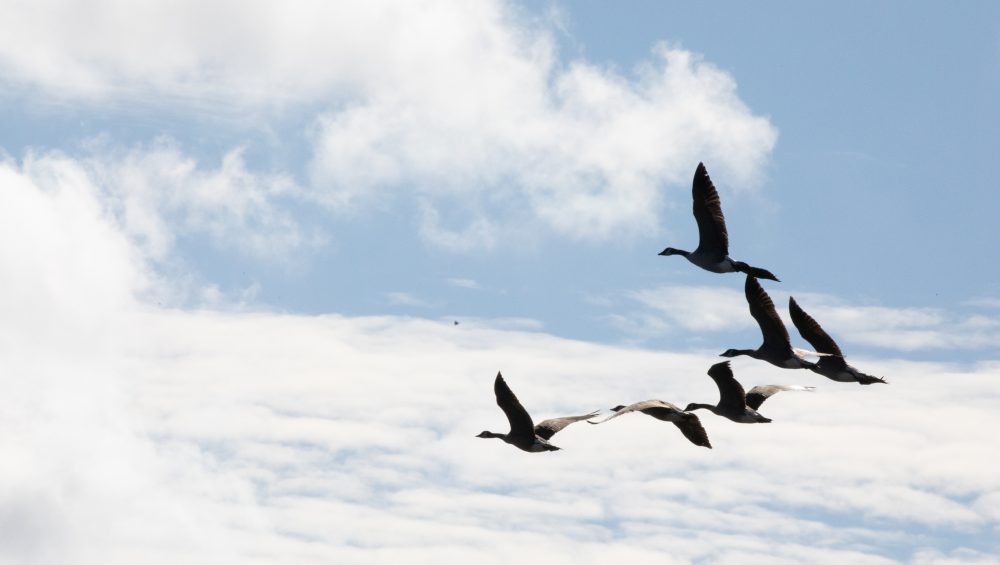
Earlier in the day, we also had a migrating juvenile Black-Crowned Night Heron… sometime before the 200 or so Canada Geese that had been feeding in the fields took to the air.

Geese 1I2A3696

Canada Geese

Sunday at the Portage

BC Chickadee IMG_8415_1

Black-Capped Chickadee

After two days getting up before 4:00 a.m., it was wonderful sleeping in somewhat Sunday morning before going over to the Portage. I had no expectations, I only wanted to go out and explore. Perhaps that is the best thing about going to a place you know well: you are always primed for surprises. I started walking in slowly around 8:30. Mine was the only car in the parking lot, so I had the entire place to myself. And it was quiet.

Portage IMG_8078_1

I was not surprised to see Wood Ducks, indeed they have been there every time, but it was special to see the young drakes in their new grownup plumage.

Wood Ducks IMG_8162_1

The surprise was seeing two young raccoons behind them.

Wood Ducks and Racoons IMG_8094_1

I managed to get a picture of one.

Raccoon IMG_8168_1

The last few visits to the Portage have been scarce on woodpecker sightings even though I knew they were always there…so it was nice to see this Red-Bellied Woodpecker.

RB WP IMG_8108_1

Through a break in the trees, a Red-Tailed Hawk was visible, perched on a bare limb over the water.

Red-Tailed Hawk

Red-Tailed Hawk

While I was trying to photograph the Magnolia Warbler below…

Magnolia Warbler

Magnolia Warbler

a Winter Wren caught my eye. It’s always a surprise to see a Winter Wren. Especially after I had given up trying to find the Carolina Wren who was singing earlier.

Winter Wren

Winter Wren

Downy Woodpeckers are always plentiful, but this one was busily drilling at eye level.Downy IMG_8488_1

And not all the Gray Catbirds have left.

Gray Catbird IMG_8289_1

Heavy rainfall the night before filled the bottomland with water.

Portage IMG_8328_1

A lone Canada Goose was by the water near the Wood Ducks, standing on one foot

Goose IMG_8166_1

while many more flew overhead.

Canada Geese IMG_8223_1

The most unusual sighting did not produce great pictures, but there were enough to identify a Northern Parula. My ebird sighting was questioned because I had to add this bird to the list; I did not dare add it until I was sure I had pictorial proof.

N Parula IMG_8438_1

N Parula Warbler IMG_8436_1


There was no shortage of Yellow-Rumped Warblers. Indeed, they were everywhere, although none were as photogenic as the week before. But I caught this one skipping across the duckweed.

Yellow-Rumped IMG_8515_1

The change of seasons renders the Portage a magical place.

Portage IMG_8323_1

The Falcon Returns – Life and Death on the 46th Floor

Mbres360 IMG_7289

Whatever post I had been envisioning to be cobbled from birding the last two weekends or downtown forays during the week has been usurped by Mbres360, the young Peregrine Falcon from my last post.

IMG_7276

This morning began very birdy up on the 46th floor. My coworkers drew my attention to a female Golden-Shafted Flicker that had apparently struck the building. She was lying right outside the window on the balcony or ledge down the hall from my office. She looked perfect, except that she was dead. I don’t have it in me to photograph a dead bird; it seems somehow disrespectful. Yet I would volunteer to get her to the Field Museum, where she might be gutted and stuffed. They would do so respectfully, and keep track of her death in their records. If there was a way to get the building maintenance to open the window, I wanted to deliver the Flicker to the Chicago Bird Collision Monitors and the Field Museum. I ran back to my office and that’s when Kim called to me and said, “Lisa, he’s back.”

Mbres360 IMG_7279

Mbres360 was indeed back. The closer pictures are shot unfortunately through blinds, but still it was easy to see his bands and confirm his identity. He seems to have taken a liking to our rookery-like tower. And he looks bigger and more ferocious than last week.

Mbres360 IMG_7290

After I took these pictures, the Flicker Drama was continuing. I ran back to the other balcony where the maintenance guys had just removed the Flicker into a black plastic bag and it seemed inevitable they would throw it in the trash. Leslie, our office manager, put in a call to the management office to ask them to hold the Flicker until a collision monitor could pick it up. I called Bird Collision Monitors and asked them to introduce themselves to building security; and then the Flicker should be turned over to them. I never heard back, so all I can hope is that they were able to rescue the Flicker from a dumpster burial.

When I went back to Kim’s office the falcon was gone, but Kim said he was after a smaller bird that had also disappeared. Mbres360 has probably figured out he can get an easy meal by looking for stunned birds colliding with our building. He would not be interested in a dead bird, however. Personally I wish him luck, because it seemed way too much trouble to remove the Flicker for an uncertain outcome. I shudder to think what it would have been like to try to rescue a bird that was still alive under those circumstances. Not that I wouldn’t try…

Mbres360 IMG_7287

Falcon on the 46th Floor

Peregrine IMG_7107

Meet “Mbres360.” I’m not sure how to pronounce his name or what it stands for, but he paid the office a visit yesterday afternoon by landing on the ledge outside the conference room, and I am still savoring the opportunity, seeing one of these birds up close.

I did not want to startle him by going through the conference room doors. Luckily Kim was in her office which also has a view of the ledge, and when I told her the bird was right outside her window, she invited me in to take pictures. I ran to get the camera, afraid I might miss the opportunity because I had put it away, but I guess the bird was as curious as we were, because he waited for me to get my act together and I took a few shots.

Peregrine IMG_7104

Then I went looking on the Internet for where to report him and see if maybe he could be identified. In less than a minute I found Stephanie Ware’s wonderful Chicago Peregrine Falcon Blog. I followed her instructions and sent her pictures and a closeup of the bands which I read as Red N and Green 53.

53 N Peregrine IMG_7104

Stephanie graciously wrote me back to tell me the bird was was a male chick “from this year’s river nest” and then she identified him by name.

I’m always looking out the windows to see who is flying by, which is probably why I’ll never get an office with a window. I have seen Peregrines on several occasions, but I never dreamed one would visit like this. Considering the Chicago Peregrines are born and raised in an urban environment, with nests on top of skyscrapers, I guess it’s not that unlikely. But this felt very special. The sighting made my week, for sure. And led me to Stephanie’s wonderful blog, so I can learn more about these beautiful birds.

Peregrine IMG_7110

After I had taken maybe five pictures, he decided he’d had enough and with a little shriek, he literally disappeared into thin air. I guess that is the magic of the entire encounter. Once these birds fledge they start honing their incredible speed which makes them such formidable predators. It’s hard to think of Mbres360 as a tough guy just yet.