Back to Mid-April

In my typical fashion, I have been trying to write this post for the last week and a half. So while we are all wondering how to get through the holidays this year-like-no-other, I feel a sense of loss too, even though I likely would not have had any plans to go anywhere myself. But there’s also a sense of opportunity in any day I really don’t have to think about work.

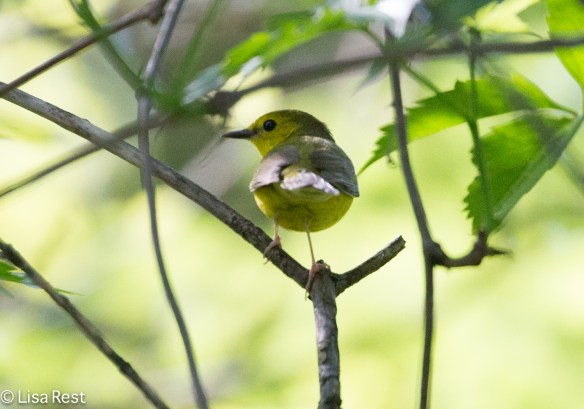
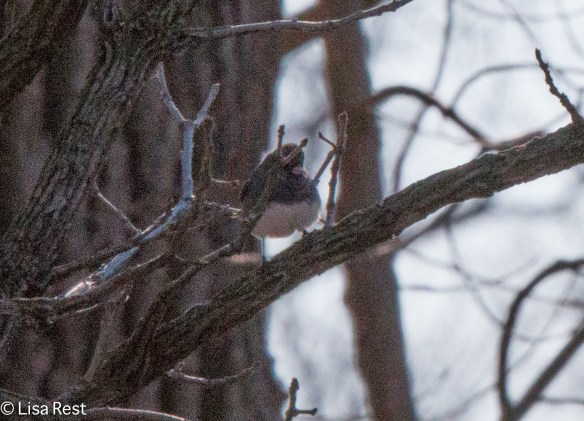
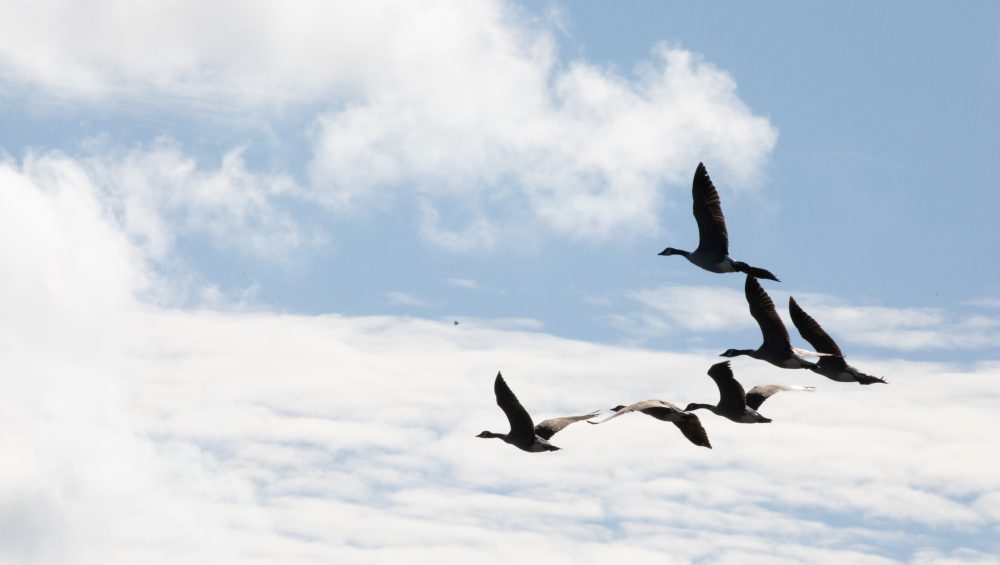
Even though it was a cool, late spring and in the middle of the pandemic, there’s something oddly comforting these days about looking back.The Portage looks about like this now – no leaves on the trees, everything muted in browns and grays – but the birds are different in appearance, and most of these species have left for the winter. I took way too many photographs on this day, which might explain why it’s taken me seven months to process them. I won’t be doing a lot of explanation…that might take me another seven months. just hope you enjoy the images.

It will be a while before male American Goldfinches look like the one below.

Out over the Des Plaines River that day, there were three Belted Kingfishers flying around. I didn’t do a very good job of capturing them, they were quite far away. But at least one flew close enough to be recognizable.

A returning Song Sparrow
A Blue Jay, blending in with the sky and the barren tree
Waiting to come back to life.

I keep trying to get a decent photograph of the golden shafts on a Flicker and usually fail, but this time I got close.

There were a couple Blue-Winged Teal hanging out with the Mallards.

One Ring-Billed Gull flew over low enough to be identifiable.

Robins started coming back to their territories. The one in the second photograph is barely discernible from the tree it’s in.

Of course nothing says spring like the return of Red-Winged Blackbirds.

It was early enough in the morning to encounter a couple deer.

Please forgive me, I took way too many pictures of Golden-Crowned Kinglets. They are all gone now, but it was a joy to see them return in April.

Downy Woodpecker – the Portage’s most numerous resident woodpecker

Here’s a thrush I don’t see often – a Veery.

I took a few too many pictures of this Ruby-crowned Kinglet too, but at least I did get somewhat of a shot at the ruby crown.

A Yellow-bellied Sapsucker…

Yellow-bellied Sapsucker

I am always happy to see a White-Breasted Nuthatch, even though they are with us all year long. I never tire of them.

The light was nice on this Red-Bellied Woodpecker.

Red-bellied Woodpecker

Brown-headed Cowbirds are…what they are.

The pair of Eastern Bluebirds this year were such a welcome sight. Although I saw them for several weeks, I don’t think they wound up staying to breed. I can only hope they give the Portage a second chance next year.

The first warbler to show up in the spring, and the last to leave in the fall… the trusty Myrtle, or as long as it’s still lumped with Audubon’s (last time I checked), it’s a Yellow-Rumped Warbler.

I will be back with more from last spring (!) and some more current observations. I hope you are safe and well, wherever you are. And I hope you continue to find moments of peace and solace. There is still a lot to be thankful for.

Grateful

Not always sure where I’m coming from with one-handed typing, but the slowness with which I have had to express myself has given berth to more measured thoughts, perhaps, and, like bird-watching, there is something almost meditative in it.

Before I stray further, I want to dedicate this post to my dear friend Linda Rios and her husband Ed who got me through my awful post-injury and surgery situation with loving aplomb. It occurred to me after I struggled to finish the last post that I was bereft in my focus and needed to at least acknowledge how much my friends have meant to me during this blotch on my existence.

These photos are from August 29th, mostly taken at the Portage. After I was done there I checked out what the Army Corps of Engineers has done to the part of Ottawa Trail that runs along the Des Plaines River, expecting there wasn’t much to photograph there except for the habitat destruction.

Below, a very cooperative White-breasted Nuthatch.

The Chestnut-sided Warbler below was pretty well-hidden but now that I can’t take any photographs for a while I am glad I managed to get these when I did.

The bird below is a Nashville Warbler.

Red-winged Blackbird

The last of the Baltimore Orioles. I had one visit my feeder later that afternoon…

A juvenile American Robin

There were a few Indigo Buntings still around as late as September 19, which was the first bird walk I led after my surgery. Most of them looked like the two below.

On my way out of the Portage on August 29, I spotted this Cooper’s Hawk who just sat, and sat, and I took way too many pictures expecting that it would do something interesting. I was too exhausted by the time it finally took off.

A little Portage flora – I am always amazed at the height of the trees so maybe the cell phone conveys them somewhat. Then there are parts of the trail that are lined with blooming flowers now – a vast improvement over the burdock from years past.

Juvenile Northern Flicker

So this is what Ottawa Trail is looking like now that the levee has been finished on one side of the Des Plaines. It was relatively devoid of birds but I expected that. Others have told me, though, that the levee affords great looks at the Des Plaines River when there are water birds present, so I shall have to check that out another time.

I was able to capture a few signs of life.

On my way out of Ottawa Trail, over the parking area, a Red-Tailed Hawk flew overhead.

Elbow-wise, the cast is gone, stitches removed, and I have 12 weeks of physical therapy ahead. I actually had one physical therapy session on Friday and was reassured I had chosen the right location when I heard a crow calling as I went back to my car. As I mentioned, I managed to lead bird walks these past two Saturdays and I am so grateful to the participants who showed up and helped me feel alive again. I didn’t master the one-handed binocular skill, but now that I am cast-free, I am able to raise my left arm enough so maybe I can go looking for a few more birds this fall even if I cannot commemorate the sightings in photos. In these uncertain times it’s all the more grounding to continue one’s connection with the natural world.

Weekends at the Portage

I spent the mornings of July 4th and Sunday, June 28th, at the Chicago Portage, mainly to see how the birds that spend their breeding season there are doing. Fledglings are starting to show themselves. Sometimes they look so different from the adults it takes a moment or two to figure out exactly who they are.

American Goldfinch

A Green Heron occasionally stops by to see what’s happening, perhaps to see if the water it used to fish in has returned. I suspect the herons miss the water even more than I do. A frequent dog-walker I have exchanged conversation with for years told me that he heard the amount of water flowing into the Portage was being controlled to discourage beavers. That’s extremely disappointing to me, if true. I had read somewhere that efforts were being made to restore the habitat to its original state but I really don’t know how that could happen. I will keep trying to find out the true story. In the meantime the habitat change attracts other species that were absent before, but I miss the old “regulars.”

All that vegetation in the middle used to be water…

Something else: just as I was beginning to explore farther afield, the fence gate has been closed and locked. I am not surprised, with all the extra foot and bicycle traffic – I am sure it is a matter of liability between the water reclamation district and the railroad. Of course I would be able to crawl through the opening on the righthand side of the gate but I don’t think it’s worth doing now. It might be hard to resist during fall migration though. I guess it will depend on how many people are still using the trails.

So the stars of both visits were the male Indigo Buntings. There were plenty of them everywhere and quite a few volunteered for photographs. Since I always take too many pictures and have a hard time deciding which ones to use I have just piled them up here.

There seems to be a good number of Northern Flickers this year.

I am always happy to see a Monarch Butterfly. But sadly I haven’t seen more than two at a time.

Starting to see more dragonflies too.

European Starlings always look more interesting to me in their juvenile plumage.

I never know when I’m going to run into a deer.

Red-winged Blackbirds are less visible now that they’ve accomplished their mission of setting up territories and making babies. This may be the last time I will have seen a male singing.

I found the photos below confusing until I realized, upon closer inspection, that the breast is yellow and the tail has rufous coloration to it. Voila, this is a juvenile Great-crested Flycatcher. I don’t believe I’ve ever seen a juvenile before, so I am really happy I managed to capture it.

Another Indigo Bunting…

Here’s a Baltimore Oriole feeding his fledgling.

These are juvenile Red-winged Blackbirds checking out their surroundings.

This is the time of year when robins take on all kinds of plumage variations, particularly among the juveniles.

Downy Woodpecker (juvenile)

Below are photos of an adult Red-bellied Woodpecker and a juvenile, for comparison.

I was intrigued by the House Wren below who disappeared into the cavity in the tree…

The Blue-gray Gnatcatcher below seems to have a strange sort of tumorous growth on its back.

My lucky one-shot of a juvenile Rose-breasted Grosbeak. I haven’t seen any of this species otherwise for quite a while so it’s nice to know they are here.

Well it’s taken me almost two weeks to write this post… I will try to keep up with posting. Today was a gift in that there were clouds and thunderstorms to keep me inside and less tempted to go out. If it were up to me, I would have as many mornings as I wanted each week to do everything I like to do.

Three Days at the Portage – Day 3

Well here it is, the long-anticipated last act to the Memorial Day weekend of birding at the Chicago Portage. Compared to the previous two days, I didn’t have a lot of photographs. I reported as many species as the previous day (41), but between extremely bright light conditions and my inability to focus, perhaps in part due to the light shining in my eyes, the day had a different feel to it.

But it was a great day for discovery and observation. The bird of the day was a Prothonotary Warbler. I have been looking for this species to appear at the Portage for years every spring or fall when the Des Plaines River floods the lowlands because then the habitat reminds me of the Cache River Basin in southern Illinois where I saw my first of many Prothonotary Warblers.

Flooding on the Des Plaines River

As it turns out, I didn’t see it in the flooded area but directly across the trail from it. Although I got great views with the naked eye, I was not able to capture the bird well with the camera, so going back through these photographs I had my doubts. But the photograph above with the head cut off confirms the ID for me because of the white undertail coverts showing. I confess I still have my doubts about the other photos, but I know I saw the bird, so maybe there will be a next time.

Just so you can appreciate how frustrating this can be and why I sometimes spend entire days thinking about identification challenges, below is a Wilson’s Warbler I photographed on the same day, if not in the exact same spot. I do know the gizz of a Wilson’s since I have seen them frequently enough for years. When I saw the Prothonotary, it appeared larger and moved more slowly and deliberately than the Wilson’s.

And now for another sort-of warbler challenge, the American Redstart below. I have seen this coloration a few times before so I was not confused, only fascinated. The tail immediately gives this bird away as an American Redstart, but it is showing yellow and white with black coming in on the body. What you are seeing is a soon-to-be second-year male American Redstart. When the summer is over he may be entirely black and orange in place of the gray and yellow, and will be considered an adult.

And below is a female American Redstart. She will always be gray, yellow and white. Not the best photograph but you might be able to see just a little of the yellow peeking out on her breast.

That was about it for the warblers that day. I just took a tally for the season and I have seen 24 warbler species this spring. That’s 2/3 of the possible number I might have seen. But given the fact that I was basically birding in only one area I feel pretty fortunate to have seen all these warblers, sometimes even seeing them very well.

On to the rest of the birds I managed to photograph on Memorial Day. Below are some male Brown-headed Cowbirds who don’t seem to have much to do except hang out on bare branches.

I don’t remember how I managed to get the photos below of a flying Red-Bellied Woodpecker but I don’t get this lucky very often! I was probably trying to focus on it perched somewhere and it took off.

Red-winged Blackbirds…are a given. The bird in the second photograph knocked the Northern Flicker in the photos below off its perch, which enabled me to get pictures of some of those elusive but brilliant golden shafts underwing.

There were a couple Eastern Kingbirds for a day or two, and I haven’t seen them since. Maybe they were shopping for nesting spots and decided to go elsewhere.

Below is a trail at the Portage I have only walked recently. For years I stayed away from the gravel road that ran between the official forest preserve and the Metropolitan Water Reclamation District property because it used to be patrolled by police and photographers were not welcome. The past couple years now, I think, restrictions to access have been lifted, but it took this year along with the impression of having extra time to decide to walk the extra mile as it were. The road itself runs along some woods that border the Des Plaines River, and then splits in two, with the one fork below wooded on both sides. This might have been a very good place to look for the earlier warblers back in April. I will definitely keep it on my agenda of places to visit in the fall. Recently, although it’s getting very buggy there were not very many birds available.

Birds that fly over on occasion and if I’m lucky, I can capture them. This time it was more as a record of their presence than anything else.

Great Blue Heron
Northern Harrier – considered rare at this location but I don’t know why, as I have seen them every so often

Indigo Buntings and House Wrens will be available all summer.

The Downy Woodpecker below was challenging to capture.

If you click on the photos below, you will be able to see a Blue-Gray Gnatcatcher that looks more like a Blue-Green Gnatcatcher. This was another ID I struggled with a bit when going through the pictures, but the eye ring in the first photo and the cocked tail in the next give the bird away. It’s a testament to how lighting can change everything. I have never seen this bird look green before.

American Goldfinches foraging in the duckweed
American Robin of the Day (there are always at least 20-30 of them about)
Baltimore Oriole – too busy now to pose for pictures

I’ve been to the Portage a few times since the big weekend and I will likely be visiting regularly to check up on summertime birds, and I anticipate a return of dragonflies and butterflies. I have been a couple other places too and plan to publish those posts when possible. Lately it’s easier to sit inside on a hot day, slaving over a laptop in air conditioning. Thanks again for stopping by, and congratulations making it to the end of another long post!

Back to the Portage

It’s all I can do to keep up with migration this spring, let alone the pictures I have taken…So I’m attempting to do this in chronological order but it won’t be easy. This past Saturday started out cool but sunny. I decided to start my walk in the opposite direction of what I normally do. Then I realized that I had forgotten to put my little portable stool in my backpack so I decided to walk back to the car to get it. As I walked, I heard the Great-Crested Flycatcher, and then saw him in one of the Redbud trees bordering the lawn behind the statue. The morning had promise.

Great-Crested Flycatcher
I have decided to photograph the statue every time I go to the Portage now to gauge the light conditions.

Last Saturday was a riot of colorful birds. I counted a dozen male Indigo Buntings. They were everywhere and they were not particularly shy, so I took advantage of their fearlessness. You can see how the light affects the hue of the blueness, when actually their feathers are all black.

I ventured out to the gravel road that runs along the MWRD property and found two male Scarlet Tanagers. They were trading songs.

But I discovered a glimpse at a Summer Tanager later in my pictures.

For all the male Baltimore Orioles singing and displaying these last few weeks, I have seen only one or two females so far. But that’s because they’re busy tending the nest.

Yellow Warblers may stay and breed at the Portage. Invariably I hear them but don’t always see them. So I was glad to capture this one.

White-Breasted Nuthatches are present all year, but are not seen or even heard frequently now.

The female Rose-Breasted Grosbeak below is the last one I have seen. I am not aware of any starting families at the Portage, but it could happen.

We have had a lot of rain, and even more after these pictures were taken. There were two Canada Geese trying out the newly flooded waters.

So this time of year of course I’m looking for warblers wherever I can find them. I just calculated that over the last couple of weeks I have seen 21 species total. I haven’t been able to photograph them all, but most, sometimes discovering them in my photographs. I will try to post as many as possible. They won’t always be textbook-looking photos. For example, the Golden-Winged below I barely captured but it was the details from the photographs that I was able to identify it as a likely female.

One more Magnolia Warbler

Then there are the flycatchers. They can be confusing. I have since seen the Eastern Wood-Pewee again in the same location looking more like himself so I am guessing he was having an off day (typically he would look more pointy-headed).

Eastern Wood-Pewee
I think this is a Willow Flycatcher…passing through.

On this day I saw this Turkey Vulture being escorted away by a Red-Winged Blackbird.

Song Sparrows are present, singing, and likely staying to raise families.

i keep hearing and sometimes seeing Chestnut-Sided Warblers every time I have been to the Portage since my first intimate encounter with one last Tuesday.

Chestnut-Sided Warbler

There’s a little rapids under the first bridge where the water runs out of the Portage. No water ever runs into the Portage, as far as I can tell, but It’s still nice to see the flow over the rocks.

More often heard than seen, Blue Jays are out and about but rarely available for photos, so it was nice to see this one.

I found this female Common Grackle to be attractive in her own way.

I had noticed this nest before but wasn’t sure anyone was using it until I managed to capture these two Goldfinches. You will probably have to click on the first photo to see the female poking her head out of it. I have since not been able to find the nest, which was not far from the trail, but it could still be there and hidden in all the plant growth that has occurred since.

Sadly, Black-Capped Chickadees are getting harder and harder to find. Long taken for granted, I am convinced they are in decline, at least locally. I caught this one in a hurry.

Here’s my Robin photo of the post.

As the leaves are finally coming out, it’s interesting to see how the spaces change.

Below is one of my favorite birds, a Blue-Headed Vireo. I have seen them a couple times this spring which is surprising to me, as I don’t think I have seen one for years.

Woodpeckers are busy everywhere.

Red-Bellied Woodpecker

And last for the moment, I finally was able to catch the male Eastern Bluebird in focus. He has a habit of posing in difficult places, but he sat long enough this time. And although I think I heard him this past week, I haven’t seen him since. I hope the pair is still nesting and I will be looking for baby bluebirds this summer.

I have been to the Portage four times since last Saturday! I am beginning to feel like I live there. Every time I have gone, there has been a different species or a special encounter with one I’ve seen so far this spring. As many people have remarked, the cool start has been difficult for the birds migrating to their breeding grounds. I can only hope those who have visited the Portage are finding what they need in this little hotspot and will survive and flourish on the rest of their journey.

I will be back with lots more. Thanks for checking in, and I hope you are safe, well, and able to get out and enjoy this spring.

Half a Well Day Off for Migration

Chestnut-sided Warbler

After last Sunday’s chilly, gloomy rain, I had my eye on Tuesday morning and notified the work team that I was taking it off. Tuesday came, starting out cool but sunny, and I went to the Portage to see if any warblers I barely glimpsed at on Sunday were there for a better view.

The green-up is in progress and the treetops are full of tiny bugs and worms we can’t see, but the birds know where to look for them.

After hearing and then eventually seeing a couple Chestnut-sided Warblers, I was lucky enough to have an intimate moment with this individual. We exchanged thoughts about spring and sunshine.

I always hear five or more House Wrens, but rarely see them. Tuesday morning was a special day, though, because it seemed like all these guys were out and showing off. The very last photograph below shows one going into his nest.

Another very vocal group rarely seen are the Warbling Vireos. I followed this one around with the camera.

There were still a couple Ruby-Crowned Kinglets here and there. Only now, like the Blue-gray Gnatcatchers, when you’re looking for warblers, these birds become “distractors,” to quote one of my favorite guides, Mitch Lysinger.

Even Blue Jays seem to be more visible. I’ve had one in my yard all week, too, although he leaves the minute he sees me.

On this beautiful morning I was delighted to find one of my favorite sparrows, Lincoln’s.

There were still a few Blue-Winged Warblers. It’s been a good year to see them.

Female Goldfinches never get much press so I thought I’d share these two photos.

I always hear White-Throated Sparrows’ little chip notes before I see them. It was nice to have one posing.

In the Big Bird Flyover Department, it’s been quite a while since I’ve seen an Osprey. I used to see one flying over the Des Plaines River when I visited Ottawa Trail, but that location is no longer available. I haven’t been back since they built a levy. It will be interesting to see what happens with the river, with all the rain we are getting this week.

Osprey

A rare glimpse of Mrs. Bluebird Tuesday morning.

Eastern Bluebird

Early on I saw this Least Flycatcher from the bridge, at quite a distance.

Most of the warblers were distant and high in the trees, so much so that I didn’t always know what I was looking at until I processed the photos.

Black-and-White Warblers have been a bit evasive this year.

Something about the cool, slow start to spring has made the moss look happier.

Here’s a bird I never thought I’d see. It was really far away so I had no idea what it was until later.

Palm Warblers are still around but blending in too well with their surroundings.

One of my favorites, Canada Warbler, was down low but in the shade.

Here’s one of two female Rose-breasted Grosbeaks I saw together in the same location.

Rose-breasted Grosbeak (female)

I first saw the man below a couple weeks ago, I think. He was playing loud music from that speaker thing he’s got in his right hand. Keeping my social distance, I cupped my hands over my ears. The next time I heard him coming, he was playing “Scotland the Brave”. I thought about whatever PTSD he was suffering from, it was too bad he had to foist it on other people, but I decided not to let him bother me and maybe it was a good thing he was walking his dog in the woods. Anyway, it’s likely he’s been out every day since the lockdown began.

Red-bellied Woodpeckers are challenging to spot, but it’s often rewarding when I do see them.

Red-bellied Woodpecker

Below you can barely see a Spotted Sandpiper in the shadow of the bent log.

I actually saw a flock of thirty or more Common Grackles fly in on Tuesday.

There are a lot of Brown-headed Cowbirds this year.

Brown-headed Cowbirds

Here’s one of those surprise warblers I found later in the photographs. I had to do some thinking about this one. When I think of a Blackburnian Warbler I always imagine the males. This is a female. It took me a while to figure her out.

Magnolias are usually easier to see than this one, but migration isn’t over yet.

Distant but distinguishable Black-throated Green Warblers.

I don’t see Hairy Woodpeckers half as often as Downies. I find though that I’m getting to be able to distinguish them by their feather pattern first.

I had been waiting for the Indigo Buntings to show up. I was to see about a dozen of them yesterday. These two were the first I saw on Tuesday.

Baltimore Orioles are setting up their territories.

Thanks for making it to the end of this long post! After I kept adding birds to the ebird list, I reported 51 species for Tuesday morning. I went back to the Portage Saturday and found some more beautiful birds. I’ll be back as soon as possible. Hope you are safe and well as can be, wherever you are.

Late April Goose Lake

With the forecast of only one nice day this past weekend, I planned to go to Goose Lake Natural Area and the Hebron Trail, which has become one of my favorite, if distant, destinations. One doesn’t know what to expect when venturing out these days. I knew I could count on the absence of crowds, even if there were some people walking, riding bikes, running, birding. Luckily this is a vast expanse and I could still feel quite alone most of the time, however I now take that sentiment in current context.

Starting down the Hebron Trail…

The walk is long to the Goose Lake part – at least it seems to take forever. There were not a lot of birds along the way this early in the season to distract me, but there was certainly a lot of up-and-coming moss.

The main attraction to me, then, was the Yellow-Headed Blackbirds. The females haven’t started arriving yet as far as I can tell, but I wanted to be there when the males were setting up territories so I could hear them sing. With all the Red-Winged Blackbirds singing, they didn’t seem to vocalize in long phrases, but I did manage to get a recording, albeit with a lot of wind noise, of their characteristic rusty-crank-sounding song. The short song clip is below these photographs.

I might add that the Yellow-Headeds were far away and rather secretive. I want to go back in a few weeks to see if I can get a better look.

There were several Song Sparrows and I managed to get a few photographs of them. They had some lovely songs too. I almost wish I could have left the camera and recorded vocalizations, but it was windy that day anyway.

Another likely breeding sparrow in this habitat is the Swamp Sparrow. I was lucky to encounter the beauty below.

I miss Crows a lot. It’s been a chronic ache that started with my job location three years ago, made worse by the current situation banning visits to lakefront parks. So another thing I like about this location is that I always get to see Crows.

I confess I wasn’t paying an awful lot of attention to Red-Winged Blackbirds, but I did find this guy attractive. There’s a female in three photos below him.

I had to look hard to see the Goose on her nest below.

There were still a few Ruby-Crowned Kinglets here and there.

As I turned to go back, three crows were harassing a Red-Tailed Hawk.

I got distracted by a little more plant life and my first ladybug of the year.

There was an elusive Red-Bellied Woodpecker off the side of the wooded trail as I walked back.

I have been working harder than ever from home which was not at all what I expected when this whole pandemic thing began. As long as it’s raining I don’t mind so much. Oh well. Tomorrow is May 1.

Last Weekend at the Portage: Coming Back to Life

I can’t believe another week has gone by already. While it seems like time should be moving slowly, I am finding it to be the opposite as my days at home fill up with work and chores. It’s as if I never left my schedule. And yet because I am home, it sometimes seems like I don’t have a schedule.

Winter returned twice this week and I was going to post a few pictures of birds in the snow but time got away from me and I’m not feeling too nostalgic for snow at the moment. It’s still chilly overnight but I think we are finally going to start warming up. And of course the question lurking right behind that is, Then What?

I went to the Portage last Saturday and Sunday mornings, because both days turned out fairly decent weather-wise. The variety of species differed somewhat between the two days, in that the Yellow-Rumped Warblers who posed for pictures and the one Ruby-Crowned Kinglet were present on Saturday but not detectable on Sunday. That sort of thing. On the other hand, I had the Bluebird on Sunday. So it goes.

Yellow-Rumped Warbler
American Robin

I’ve been seeing Yellow-Bellied Sapsuckers (I call them “Sappies”) in the neighborhood all week, and had one in my yard last weekend, but this is the only one I’ve been able to sort of capture so far.

There were a lot of White-Throated Sparrows, or at least more of them than the other species. Below this grouping is a short recording of one of them singing. He had a really nice version of their song, which has always been one of my favorites.

I had no idea what was going on with these Red-Winged Blackbirds on the trail as I approached them on Saturday, but on Sunday I noticed that someone has been leaving a little pile of birdseed, so that explains the gathering and likely the behavior. Feeding the animals is a no-no. But I imagine there are more people walking the trails these days than normally do, and I think that’s a good thing. Maybe we will all treasure being outside more after our quarantine subsides.

The Tree Sparrow was seen on Saturday and not on Sunday. I don’t expect to see one again until late fall.

The female Red-Wingeds have now joined the males and everybody’s ready to start working on the next generation. On Saturday I must have had more than 50 Red-Winged Blackbirds at the Portage. I don’t think I ever saw that many last year. It could be some were passing through. It will be interesting to see how many remain to nest.

There was one male Blue-Winged Teal hanging out with a couple of Mallards.

I only got a glimpse of the crown on this Ruby-Crowned Kinglet.

Woodpeckers – there were a lot of Northern Flickers. And Downy Woodpeckers are always present. I always hear a Red-Bellied Woodpecker, but don’t always see one. It was also nice to see a Hairy Woodpecker. I keep hoping I will see a Red-Headed Woodpecker here again.

Red-bellied Woodpecker

This looks like a young male Red-Winged Blackbird. He must be a late-bloomer.

Robins are everywhere.

As things are just starting to turn green, mosses were attractive.

People have been reporting Hermit Thrushes so I was happy to see one. I miss seeing half a dozen of them at once downtown in the city, but maybe it’s better to see one in the woods than a lot of them on turf grass.

Hermit Thrush

There were two Turkey Vultures flying around, at then at one point they landed in the trees.

A lovely Mrs. Cowbird. What more can I say?

The trees are starting to bud and this will all burst into green soon.

If you click on the dove pictures you can see nesting material in its bill easier.

There are a lot of Cardinals at the Portage but they’re not always easy to capture, especially this time of year when they’re busy setting up territories.

So here is the Bluebird of Happiness. I don’t get to see Bluebirds too often, so this was a special treat.

I plan to go out this weekend and with any luck, there will be even more birds to see. Migration continues, and I suspect the birds are having a better time of it without so much human interruption.

Quick Portage Check-up

I have been trying to take advantage of any better weekend weather since I got back from Mexico, specifically just to wander the Portage and see what’s going on. Last weekend, Sunday was beautiful and warm, but I had to spend the morning indoors singing in the choir, but even though I didn’t have high expectations for an afternoon walk, I thought anything might be interesting. As it turned out, I heard only a few birds and saw absolutely nothing save some Canada Geese and a Red-Tailed Hawk. I went out again yesterday morning, to take advantage of the only sunshine this weekend, and after walking for nearly half an hour to only hear a few birds, I finally caught up with a flock of foraging sparrows and the woodpeckers and Blue Jays I had been hearing.

Canada Geese – when there was open water

Yesterday’s stars were a couple Red-Bellied Woodpeckers.

The Downies were busy too.

When the flock first appeared it seemed to be mostly Dark-Eyed Juncos and White-Throated Sparrows. They weren’t particularly interested in coming any closer to me. But it was a delight to just stand still and watch the flock forage and move through. And when the sun was shining, it was nearly warm on my back. It was otherwise seasonably cold yesterday, with hardly any open water.

White-Throated Sparrow
Dark-eyed Junco
American Tree Sparrow – found in my photographs later

There were likely a few more cardinals around than the two I saw briefly. Below is one of them.

Northern Cardinal

One of a few storyboards along the trail…dressed in snow and ice.

And right behind the storyboard location appeared something I wasn’t expecting so late in the morning – a foraging White-Tailed Deer. I didn’t want to disturb her so after we connected with a few photographs I turned back and made my way out of the preserve.

I was surprised to turn around and see a Brown Creeper busy poking up this tree.

Throughout the morning the Blue Jays were noisily carrying on but they were quite distant when they finally appeared.

In all maybe there were four robins yesterday morning. I’m sure there’s a larger flock somewhere.

Grey Squirrel…
Song Sparrow – as at the very top of this post

I will be back soon with warmer memories from Mexico. As of this moment, it has just started snowing. In the interim, I would like to leave with a quote from Bill Penzey which I read this morning:

“When they do their best to get us to abandon all hope is when we must embrace it more tightly than ever.”

Putzing Around the Portage

Too far away for a sharp image but still lovely to see.

The signs of spring are evident. Birds are moving, the days are getting longer even if we artificially shortened the morning hours, but I still needed to be reminded by the official first day of spring on the 20th. The last two weekends I have visited the Portage just to see what signs of life are emerging, however slowly. Robins are back and setting up territories in the woods as well as in my neighborhood. Red-Winged Blackbirds were audible on both visits to the Portage, if not displaying yet. Perhaps most exciting last Saturday was seeing my first Eastern Bluebird of the year, even if it was clear across the creek.

I started imagining what it must have been like before all the House Sparrows and accompanying civilization…when I envision Bluebirds ruled. Then I started reading about how Bluebirds have made a come back of sorts, thanks to people putting up nest boxes, and they prefer open fields for habitat, so as the Portage loses more trees maybe I’ll see them a bit more often there. But for the most part I don’t live near Bluebird territory.

Juncos have been photographically elusive for me this winter and last Saturday was no exception. I probably was looking at the last ones I’d see for a while. On the other hand I was surprised to see a Pine Siskin (below) but likely their occurrence in my yard this winter is part of a trend.

There were more American Tree Sparrows and Song Sparrows hanging out by the thawed pond than anything else.

There was open water last weekend, as opposed to the weekend before, but only one pair of Canada Geese and a Mallard or two.

Otherwise, a White-Tailed Deer, and below her, what the frozen raging Des Plaines looked like two weekends ago, from a distance.

I have only heard/seen one Red-Bellied Woodpecker so far…

My plan is to go back out tomorrow morning, when we are promised sunshine, to see if there are any more changes occurring. On my way to the train this morning, I noticed the Silver Maples are budding on the neighborhood streets. We are still flirting with a few overnight temperatures below freezing, but it looks like March will go out like a lamb.