A Warbler Here and There

Welcome to Fall Migration Warbler Identification Meditation. (I was inspired after reading an article about meditation going mainstream.) Warblers are starting to arrive, and I had more species in my photos than I realized while taking them. Since many of the warblers look quite different from their spring plumages, and are often hard to distinguish from others, it necessitates a review of wing bars, undertails, bill shape, and if you ask me, even a facial expression can sometimes play a role.

I had been seeing a warbler here and there over the last week or so and was planning to gather them all together in one post here, but my visit to the Chicago Portage on Tuesday morning – before the Heat Wave – proved too busy to ignore, so I am just going to consolidate what I saw on Tuesday and come back later with the rest.

My visit didn’t start out with warblers, of course. Except for a few American Robins, the birds were at quite a distance. This young Robin was enjoying some ripe pokeberries.

There were birds perched from time to time in the bare trees that border the water, and for the most part, I was just taking photos to identify them later. There were some interactions going on that I might not have bothered to notice.

An Eastern Kingbird is at the top, a Baltimore Oriole below

All I can figure is the Baltimore Oriole started moving toward the top of the tree where the Eastern Kingbird was perched and there was a bit of an upset. My last photo was of the Eastern Kingbird either going after prey or giving up on the challenge to its position.

Then I was following perhaps the same Eastern Kingbird with what looked like a cicada. It wasn’t having an easy time of it.

After all that, a quiet moment for the Eastern Kingbird.

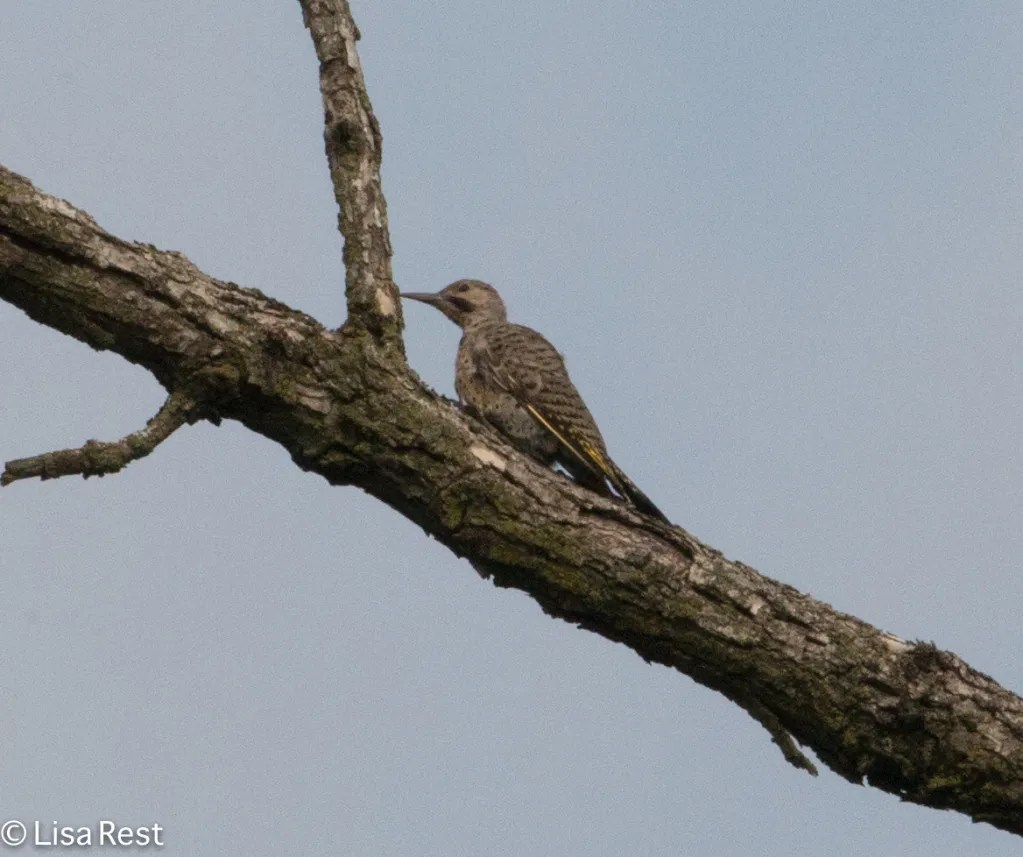
Young and older Northern Flickers popped up here and there.

It was probably the first time I did not hear a Song Sparrow, but I did see this young bird at a considerable distance.

Quiet bird moments gave me opportunities to focus the lens on other things. I really like the way the foxtail grass looks with the sun shining through it. Then for butterflies, there was a Hobomok Skipper, a Monarch, and a Pearl Crescent.

A spider web off the trail was more challenging.

A view of the new trail from the south end of it

And now for the warblers. Just as I was pretty much on my way out, so to speak, but before I reached Tadziu’s bridge (by the way, I saw and head a couple adult male Indigo Buntings, but I do think Tadziu has left for his winter home), I noticed activity in the expanse of trees between the trail and the train tracks. At first, there were several Red-eyed Vireos.

I barely caught a clear glimpse of a Magnolia Warbler.

I was not aware until I developed my photos that one of the first birds I was following was actually a Chestnut-sided Warbler. There’s not much chestnut siding in this bird, but the greenish-yellow coloring on the crown and back, the eye-ring, and yes, its posture/expression tipped me off.

The Black-and-White Warbler was easy to see, however briefly, but difficult to capture. I managed one clear photo.

I had the feeling I was seeing more than one Bay-breasted Warbler.

This is likely a different individual below.

And the bird below is the same individual as the one at the top of the post.

With the mixed flock was a young-looking Blue-gray Gnatcatcher

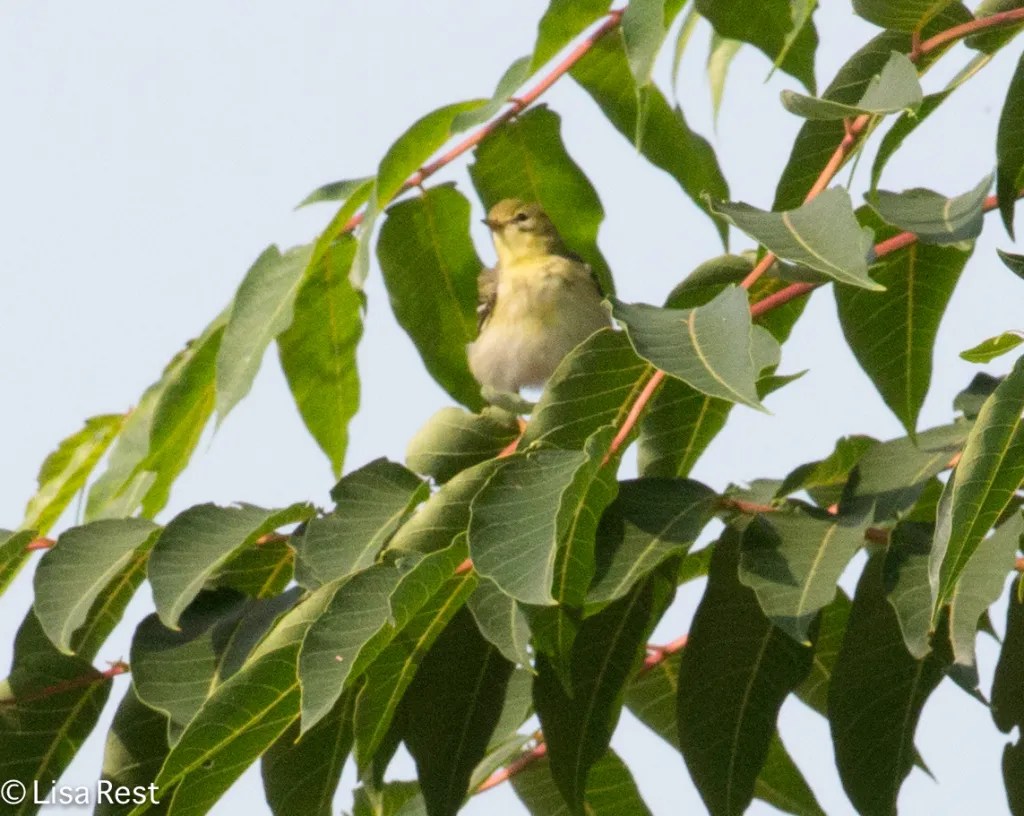
I at first assumed the bird below was another Bay-breasted but changed my mind when I saw the photo of its back. I started going down the Blackpoll Warbler trail. It’s also very hard to see some vague orange coloring on the foot in these photos. But there is faint streaking on the breast in the first photo.

A couple Baltimore Orioles were in the mix as well, if a bit farther away.

The Baltimore Oriole below was intrigued by some dead leaves.

Here’s one of those not-in-focus photos I got of the Black-and-White as it escaped scrutiny.

Well, our 100 degrees Fahrenheit has given me the opportunity to sit inside and finish this post. We are due for cooler temperatures tomorrow. I will likely visit Riverside in the morning to see what migrants are appearing there, and then drive to my temporary swimming location. I’m looking forward to cooler temperatures on the weekend and into next week when I will be able to resume a more regular routine again. But I am already starting to make room for fall activities. Wednesday evening choir rehearsals have returned. The kids are back in school down the block. The Saturday morning bird walks begin on September 2nd at Columbus Park.

And somehow in spite of my efforts at population control inside the house, increasingly louder begging noises have me expecting to see a new Zebra Finch fledgling or two shortly. Somebody is getting better at building predator (me)-proof nests.

To be continued. 🙂

One Day in May

I thought I would be combining photos from a couple days in Riverside, but I took more than enough on May 17. It was perhaps my best spring migration day from the standpoint of seeing some birds I had not seen yet this spring and receiving great cooperation from them. My list totaled 52 species that day, and I spent a little over three hours to see them. Two days earlier on the 15th, I had 57 species – we will have to get caught up with those birds later.

When I crossed the Joliet Avenue bridge, I saw the Mallard hen below with her four ducklings. Later I saw them swimming across the river.

As I started to walk the paved path that runs along the Des Plaines River, I found birds here and there tucked into the trees.

Least Flycatcher
Believe it or not – a Yellow-rumped Warbler
A more recognizable Yellow-rumped Warbler
American Robin

I took the photo of the fisherman below to show how low the river was. Unfortunately, nearly 2 weeks later, it is even lower now. We are experiencing “moderate drought” according to the U.S. Drought Monitor.

I could not resist photographing these Tree Swallows taking a break. I shot the two twice to focus on one and then the other.

I crossed the footbridge and walked into Riverside Lawn. There I encountered an American Redstart singing enthusiastically. The video clip below has a small portion of his song.

For a Redstart, he was relatively easy to capture.

It’s annoying to try and figure out flycatchers that don’t vocalize, but for some reason I decided this one was an Alder Flycatcher.

I never tire of Magnolia Warblers.

This was the first time I saw Cedar Waxwings this spring.

Palm Warblers were everywhere for weeks. Now they are being seen here and there but the sightings are rare. This one didn’t want to be seen at all.

I don’t always find an Indigo Bunting here, so this was a nice encounter.

Gray Catbirds are everywhere.

Scarlet Tanagers were around for maybe a couple weeks. The yellow on the one below is interesting.

Sooner or later a female Red-winged Blackbird strikes an interesting pose.

Common Yellowthroats are frequently heard but rarely seen in areas with more trees, so I was very happy to get a chance to photograph this one.

Another warbler that’s not always easy to see, in part because it tends to stay close to the ground, is the Ovenbird.

Yet another Scarlet Tanager…

And another male American Redstart…

No matter how long I photographed the flycatcher below, it would not turn sideways so I could see its wing bars. I think it’s an Alder Flycatcher.

The thrushes were abundant and lovely to see this spring.

Veery

Then I got lucky enough to see a less-often-seen warbler. This is a male Black-throated Blue Warbler. If I had gotten no other photograph but the first one below, I would still be able to tell what it was from the distinguishing white check mark on the wing. That identifier helps a lot when seeing the female of this species.

It’s easy to take Yellow-rumped Warblers for granted, but I thought this one took an interesting pose.

Yellow-rumped Warbler

Nashville Warblers made themselves available only in part all season.

I caught up with the Ovenbird again later and it posed for me.

More Magnolia Warblers…

Female Scarlet Tanagers are beautiful too. The light on the bird in the first photograph makes it look almost like another species.

The guys are just fabulous. One of those days in Riverside I saw a male Scarlet Tanager appear in a tree right above a couple walking toward me with their dog and I pointed to the tanager. They looked up and saw it. I got a thumbs-up.

Let’s not forget about Mourning Doves. It was a Mourning Dove’s song that got me started with the whole birds-sing-in-key-with-music stuff.

Here’s one more of the Magnolia Warbler that’s at the top of the post.

This appears to be a lovely female Yellow-Rumped Warbler.

And in better light, it was easier to see this Palm Warbler.

The Ring-billed Gull below was putting on a little show on the wall by the Hofmann Dam.

And now for a little vireo review. Red-eyed Vireos are heard more often than seen, with their distinctive question-sounding song. But every once in a while I get to photograph an individual.

And then on occasion I get to see a Warbling Vireo well.

It has taken me days to get through this. I hope it won’t take you that long!

I have been out every day finding more birds, which would be enough to keep me occupied. But now we suddenly have summer weather – the heat of it, anyway – with no rain, and I have new plants in the ground and more coming shortly, so I have added watering the garden in the evening to the daily routine. I bought a new hose that just makes it either to the back or the front of my lot. Even though we had a drought last summer, it was generally cooler, and I managed to get by without watering at all, but that was because of all the established native plants. I am planting new things while preparing for a native garden walk the third week of July.

June will be “Bustin’ Out All Over.”

The Birds Are Back: 2 – a Weekend Birding the Chicago Portage

Last Saturday morning, I led the first of two Unity Temple Auction bird walks at the Chicago Portage. After the group left, I stayed and found more birds with Bob Smith. I went back again the next day. Both days were cloudy and sometimes even a little drizzly, which did not make for great photographs, but I took too many photos anyway. Spring migration is finally rolling.

Before I go further, I just wanted to share the photograph below that reminds me of a wallpaper pattern. Birds have a natural artistic sense.

Baltimore Oriole Wallpaper

WARNING: This post has too many photographs. You may get dizzy. I certainly did trying to get them all in here. For the sake of expediency I am forsaking any attempt at order. Sort of.

American Redstarts are always a challenge, even in good light.

Below is a first-year male American Redstart.

And then a second year or older male…

There have been a lot of thrushes at the Portage. Below are Swainson’s Thrushes.

I have seen several Gray-cheeked Thrushes too. The unfortunate lack of light didn’t help with the images of the one below.

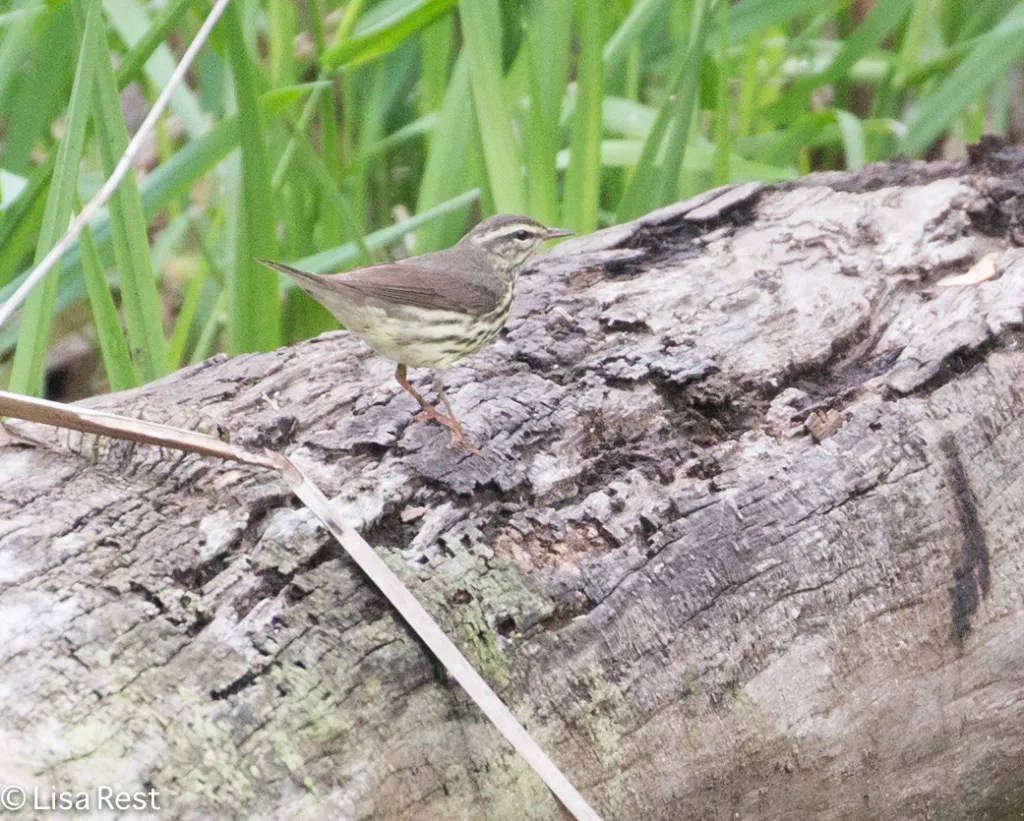
Northern Waterthrushes, several of which have been present lately, are a different type of New World Warbler. They’re not thrushes. I thought I heard somewhere that they now had their own classification, but they are still in the parulidae family.

Another Northern Waterthrush, down close to the water where they normally forage.

Yellow-rumped Warblers are still around.

Back to the Thrushes. Below are two individual Veerys seen on both days.

Scarlet Tanagers are back. A pair could stay to breed at the Chicago Portage.

Female Scarlet Tanager

Indigo Buntings are back to raise families as well.

My Indigo Bunting friend Tadziu was not available when I led the group through the trails, but he showed up later on Saturday. Below the photos is a video I took of him the Thursday before, which has some of his song.

If you remember my Flicker Mania post from April 15 when Northern Flickers were Everywhere, by contrast, it’s now definitely a challenge to catch a glimpse of one of them.

A busy Northern Flicker

House Wrens fill the air with their chattery songs. Most are staying for the summer.

A House Wren

Tennessee Warblers can also make a lot of noise, but they have been difficult to spot.

A Baltimore Oriole is below, collecting material for her fabulously constructed nest.

This Black-throated Green Warbler almost disappeared into the green.

Blue-gray Gnatcatchers are not easy to spot these days. They’re way up high and maybe even a little harder to hear with their wheezy song.

They were much easier to see just a couple weeks ago.

Another bird that can be heard everywhere but makes a rare appearance – a Warbling Vireo.

I barely caught a glimpse of a female Common Yellowthroat (in the first two photos below) and then discovered I had by chance barely captured the male as well. This is a warbler of open fields and some park-like settings, and is most often found in shrubby habitat. They stay all summer and you might even forget about them were it not for often hearing the male singing his “witchety wichety” song loudly from some hidden location.

Below is an Eastern Wood-Pewee, a flycatcher that normally stays through the summertime at the Portage. It has a lyrical song for a flycatcher that can often be heard from quite far away. If I hear one singing closer, I will have to see if I can record him.

On Sunday I saw the Great-crested Flycatcher below. Ebird tells me I saw my first one this year on May 9.

Empidonax flycatchers are often tricky to identify, especially without accompanying vocalizations. I believe the bird below is a Least Flycatcher, which is also the Least Difficult to ascertain.

Another Swainson’s Thrush is below. I finally heard one singing yesterday.

It was hard to capture a Nashville Warbler those two days.

I have since seen more Magnolia Warblers and I promise to post some better pictures soon.

We still had a Dark-eyed Junco last weekend, which came up rare for such a late date.

Chestnut-sided Warblers have been around for a week or more. I promise better photos to come of this bird too.

Below is one of two Osprey that flew over late Saturday morning.

The Wilson’s Warbler below was kind enough to offer his most reliable field mark, although in better light, I can wax rhapsodic over Wilson’s Warbler Yellow.

Northern Cardinals might be a little puzzled – or bored – by all the fuss over the influx of other brightly-colored birds. They seem less bothered by the camera’s attention lately.

We saw a Beaver swimming in the stream Saturday morning. We also saw a Muskrat later but I didn’t get a respectable photo.

Swallows were busy. There were Northern Rough-winged Swallows… which I saw, incidentally, this morning before it started to rain.

And there were Barn Swallows.

White-crowned Sparrows were easier to see.

I saw my first Blackpoll Warbler last weekend.

One more Indigo Bunting

I promise not to do this again…it’s too hard to organize. But I just had to let loose with these photos before diving into the rest of them. Spring Migration is like the Holy Grail.

I was praying for rain this morning but the forecast was indecisive, so I went to the Portage. It started to rain in earnest about twenty minutes after I got there, so I switched priorities and did my grocery shopping. I will go back out to swim shortly. My new plants are grateful for the rain. And since I didn’t manage to stay up late last night to finish this post, so am I.

Tomorrow is the second auction bird walk and the forecast couldn’t be better. We should have plenty of sunshine which will make it easier to see the birds.

The Birds Are Back: I

I have been out every morning, even a few times in the rain, anticipating arrivals. Nearly every day has produced another species. And with warmer weather the last few days, I have seen 40+ species in either of my most-frequented locations.

These photos are from May 4th at the Portage, with the exception of the Baltimore Oriole at the top of the post who perched right in front of me yesterday and insisted on having his picture taken. A lot has transpired since May 4 but I figure I have to start somewhere.

Yellow Warblers have been abundant lately.

Warbling Vireos are recognized more often by their song. They’re not always easy to see. So I was particularly happy to capture this one somewhat.

Even before the Baltimore Orioles began arriving, I saw this male Orchard Oriole. I saw one again yesterday and now I’m wondering if perhaps there will be a breeding pair.

It was a little tricky following the Nashville Warbler below.

At some point I will devote more space to some better Yellow-rumped Warbler and Ruby-crowned Kinglet photos, but these were just in the sampling for this day.

Yellow-rumped Warbler
Ruby-crowned Kinglet

It wasn’t until I got home and took my pictures off the camera that I realized there was a Green Heron sitting to the right of the Great Egret.

Turtles are back, enjoying the sunshine.

Perhaps one could imagine a conversation between the Great Egret and the turtles.

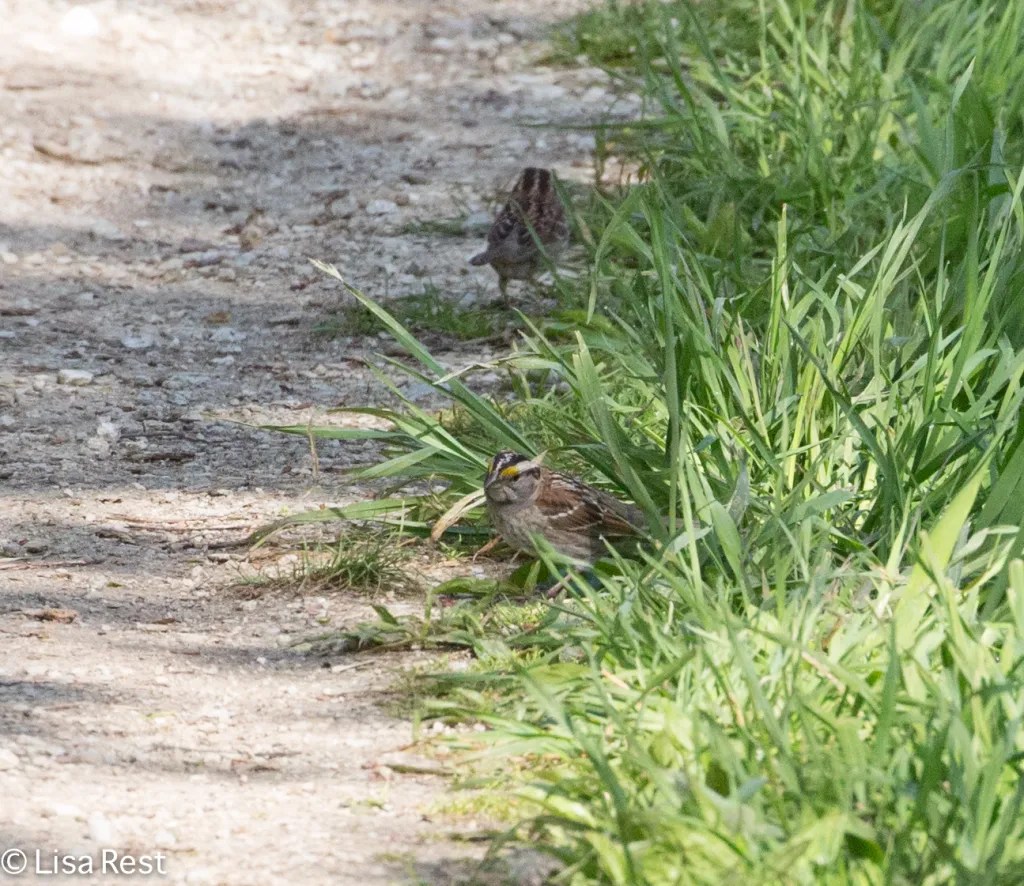
I’m always happy to see a White-throated Sparrow. It’s been even better to hear them sing lately.

Chipmunks are sometimes curious enough to sit still.

I don’t try to get photos of Red-winged Blackbirds too often now that they are everywhere but I happened to capture this one in flight.

Below is a Song Sparrow in a quieter moment.

The Portage is very green now, over the burn.

It’s wonderful to see swallows again. Tree Swallows are everywhere.

Somehow I captured this Northern Rough-winged Swallow. I like the reflections in the water.

Barn Swallows were swooping low over the water too.

It took the Palm Warblers just a little while to get here but they are quite comfortable showing up everywhere and taking their time about it, which the photographer greatly appreciates.

European Starlings do well at the Portage. Some are nesting in the mouth of the statue.

A Brown-headed Cowbird atop the statue

Meanwhile back at the bungalow, the indoor crowd is cheering me on. After the Spring Music Festival, suddenly I have several non-paying gigs, so to speak, for which I have begun to learn a lot of new music. I am accompanying a soprano for the choir talent show. Linda the flutist and I are playing for the first Sunday service in July and I am also playing for the second service. I blame it all on the birds. Now that they expect me to play piano every single day, they have convinced me I can play everything.

I am trying to look at this philosophically. If I started playing piano at 2, it’s only fitting I go out the same way I came in.

I will be back with Lots More Spring Migration Photos: I hope sooner than later.

End of September at the Chicago Portage – Part 2

I could have simply just done a blog post and called it Black-throated Green Warblers from the photographs I took on this day. Believe it or not this is only half of the ones I kept. But this is the best half. All photos were taken on September 29.

Yellow-rumped Warblers have been foraging in the duckweed for weeks.

I had a Blackpoll Warbler that day, and you can almost even see the field mark for which it’s named in the first photo below.

A Chipmunk was waiting for something on the first bridge.

Invariably American Robins in various molts were foraging on the front lawn, or going somewhere.

I had a glimpse of a Downy Woodpecker.

Another woodpecker, a Northern Flicker, was busy too,

And there was a third woodpecker, a Hairy Woodpecker, whose profile distinguishes it immediately.

I had one of my last juvenile Indigo Buntings – you can see a bit of blue at the tip of its tail.

Hermit Thrushes have been at the Portage all of this month. This one may have been the first I saw there this fall.

Two more Yellow-rumped Warblers – one in Boneset and the other in Goldenrod.

Below is an immature Red-winged Blackbird.

I barely captured the Chestnut-sided Warbler below, but I am glad I did.

Not to be overlooked, a Bay-breasted Warbler made an appearance.

Here are some more photographs of another Black-throated Green Warbler.

It was a pretty day at the Chicago Portage.

I am glad I am able to finish this post, such as it is, on my phone. I will be back in a few days when I can reconnect with all the photos on my laptop!

Riverside Wednesday and Today

Well, it looks like warbler migration has slowed down for the moment. I am hopeful that this is just a temporary blip on the radar, so to speak, but our “birdcast” has been uninspiring and it’s pretty quiet on the ground.

I was seeing a few warblers on Wednesday but practically none today. Indeed I had so few species today I have decided to combine both days into one post.

I was very happy to find a Chestnut-sided Warbler in my photos on Wednesday as I hadn’t seen one yet this fall.

And perhaps best of all for its confirming orange toes, a beautiful Blackpoll Warbler posed for several photographs. Indeed it could have been two different individuals or the same one, depending on the light.

A few more of the Blackpoll.

And now, for the More Confusing than Ever Fall Warbler, another Blackpoll.

After much deliberation, I have concluded this is indeed a Blackpoll Warbler

The only other warbler I was able to capture was a distant Magnolia Warbler.

I tend to think I will see Magnolia Warblers more regularly than I have this fall. Here’s one that was the only warbler I saw today. And not well, either.

There weren’t even Tennessee Warblers today, but I had them on Wednesday, however briefly.

The rest of them…

Red-eyed Vireos have been abundant the past week or two as well, and I got lucky again on Wednesday.

A scruffy-looking Red-eyed Vireo

So why did I start out with a female Northern Flicker? She was close enough to photograph well and she was preoccupied enough not to mind me clicking away.

The abundance of American Goldfinches seems to have calmed down.

This Rose-breasted Grosbeak was sitting still atop a tree.

Cedar Waxwings are moving around in flocks. Unfortunately all these individuals were quite backlit.

This is my favorite light on a Swainson’s Thrush.

An American Robin commanded attention

After weeks of shallow waters, the Des Plaines River is quite full again.

There was one Great Egret available for a photograph on Wednesday.

But this morning when I got out of my car and walked south of the Hofmann Tower to see if the Great Blue Egret was holding its ground, I found seven (yes, 7) Great Egrets.

As I started my walk in Riverside, I encountered more Great Egrets.

No. 8
No. 9
Could this be No. 10?

On land, there were Mourning Doves holding their perches.

Blue Jays were noisy and visible this morning.

And a Belted Kingfisher sat perched over the river not far from the Joliet Avenue bridge when I first started out.

Looking up into the trees for birds, I found a well-attended wasp nest.

The search for birds resumes tomorrow morning in Columbus Park, where I am responsible for showing up. I am going to turn in for the night so I can get up early enough to meet whoever else shows up.

Surprises Abound at Riverside

This is another 2-visit post – from September 2nd and a week later on the 9th. There was a lot more happening on September 2nd but yesterday’s visit to Riverside produced a surprise or two, so I’m including it. The American Goldfinch at the top of the post was in my front yard when I left the house, but maybe it’s surprising too as it didn’t leave but instead allowed me to take its picture.

Just as some birding acquaintances had mentioned they weren’t seeing Red-winged Blackbirds anymore, easily 100 or more blackbirds in a mixed flock of Red-wingeds and Common Grackles descended on Riverside that morning.

Blackbirds in an oak tree

Even more surprising later was a hail of acorns falling onto me, the trail, and everywhere when I was walking the trail in Riverside Lawn. Below is a video as I tried to capture some of the craziness of birds landing and hopping in two big oak trees, causing the acorns to fall. The birds – Red-winged Blackbirds and Common Grackles – don’t eat acorns, so I can only surmise they were having fun.

It was hard to get a decent shot of the acorns on the ground. But I managed to capture a chipmunk and its stuffed cheeks with my cell phone.

Apparently the acorns were scattered about more than it seemed

There was a small but nice selection of warblers on the 2nd. I was actually able to capture an American Redstart or two. One thing I like about the photograph below is that it shows off this bird’s rictal bristles, which I thought, like many others, had something to do with catching insects. However that assumption has been challenged and I found a brief article by Dr. Roger Lederer interesting. Still, it’s nice to see the bird’s whiskers.

I think I saw my last Golden-winged Warbler on the 2nd. Below are photos of what appears to be a female Golden-winged Warbler. Nice of her to show off her prize in the last photo.

I also saw a Wilson’s Warbler that morning close to the paved walk along the river. Wilson is one of my favorites.

Also in the Queen Anne’s Lace was a lovely Tennessee Warbler. After this fall I have become a big fan of Queen Anne’s Lace.

Wait – a few more warblers, and then back to surprises. Here’s a very nice Black-throated Green Warbler I saw that day. Another one of my all-time favorite subjects.

And a Cape May Warbler.

And a Magnolia Warbler…

And one more Tennessee Warbler.

Where were we? Mourning Doves like to pose as if they are part of a frieze.

Also on the 2nd, an Osprey made a brief appearance, the light playing with its backlit silhouette.

Congratulations for making it this far. I think we’re about halfway there. This looks like a brand new Northern Cardinal.

Swainson’s Thrushes have been easy to see now for a couple weeks.

Below is a Hairy Woodpecker. I don’t see these as often as the Downies so, hail Hairy.

Delighting to the song of an Eastern Pewee all summer but rarely seeing one, it was great to see this bird well, if briefly, on the 2nd.

And young Gray Catbirds are not shy.

The Common Grackles have been bathing and sipping water on the rocks all summer. I think I know how this feels when the pool is closed for a week – let’s get those last luxurious baths in before we have to leave.

When I went back to Riverside on the 9th, I was a little surprised to see several species other than the Common Grackles on the rocks. The water is a little shallower now.

At some point on the Riverside Lawn trail there’s a tree with these glorious Chicken of the Woods Mushrooms (Laetiporus sulphureus) growing. I am not tempted but I have read they are edible.

Perhaps the most surprising thing about this Magnolia Warbler yesterday is that it was the only warbler I saw well enough to photograph.

The Killdeer were still on the rocks by the former Hofmann Dam.

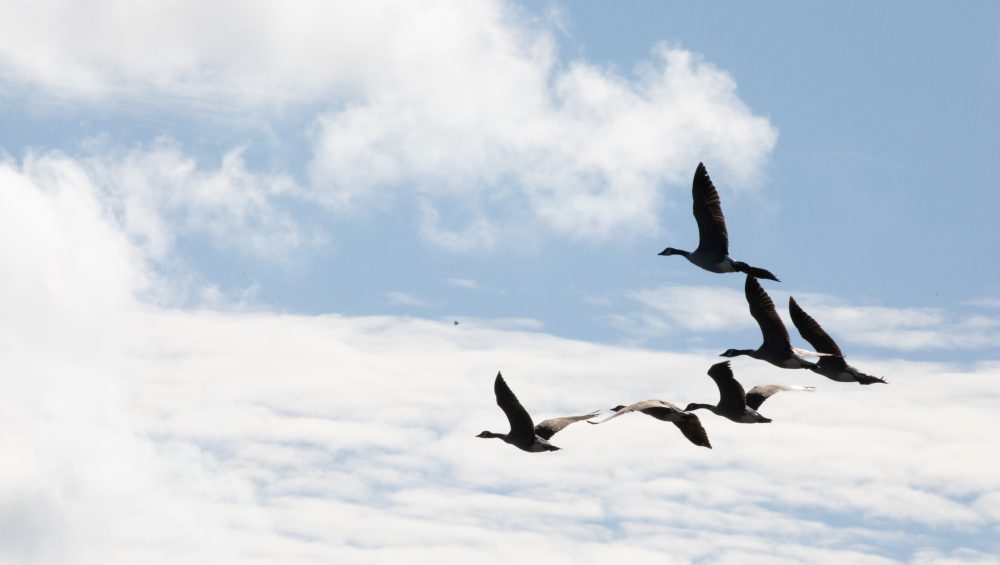
The biggest surprise yesterday was to see perhaps a dozen Double-crested Cormorants flying overhead in formation.

I’m sure the reason why I’m seeing more Mourning Doves lately is simply because there are more of them. I am quite fond of these birds, as it was one in particular who first alerted me to the fact that birds sing in key with music.

And the American Goldfinches are busy weaning their young. The juvenile on the left was begging for a handout but his dad held firm and eventually left him on the branch alone.

Monarch migration continues.

A pleasant surprise was to see a Belted Kingfisher well enough to photograph. I had just emerged from within the woods and had forgotten to adjust my exposure to sunnier conditions so these photos are a bit overexposed. I hear these guys a lot but don’t always see them well, so this was a treat.

I will be back with more. We have a choir party/rehearsal this afternoon and we sing tomorrow morning. I have been ripening avocados so I can use one of my serrano chiles to make guacamole for the party. It looks like we will have rain tomorrow and through Monday morning, so I will be busy indoors. We will cool off a bit too. Feeling more and more like fall.

One more of my front yard American Goldfinch

Fall Migration Continues…

It’s been a busy birding week and fall warbler migration is only getting started, but I’m already having a hard time keeping up. To add to my confusion, with the pool closed, the break in my routine is making it harder to figure out what day it is. But I have started getting up earlier to join bird walks and I will start leading Saturday walks tomorrow through the second week in October. It’s beginning to look like fall, even if it doesn’t feel like it just yet.

These photographs are from August 31st at Riverside, and I have also added the rest of the birds from August 26th at the same location.

I was happy to see a very cooperative Northern Waterthrush on Wednesday.

American Redstarts are the most numerous and well-distributed fall warbler species so far. I have seen them every day. The one immediately below looks like a first-year male.

Also fairly common are Magnolia Warblers like the one at the top of the post and below.

I discovered something about Blackpoll Warblers I never realized before. Apparently they all have orange toes – so when stumped by a decision between whether you are looking at a Blackpoll or a Bay-breasted, if you can see orange toes, that solves the problem. I was delighted to find photos showing beautiful orange toes. This is nearly impossible to see in the field, however.

I have also seen Golden-winged Warblers all week, starting on Tuesday morning at Columbus Park with Henry G.’s walk. They seem to have all come into the area at once and I have seen them everywhere I have been. I’m sneaking this photo in from Tuesday as it is the best one I have of the whole bird.

Below is another Golden-winged I just barely captured the next morning at Riverside.

Cape May Warblers seem to be numerous this season.

And not a day goes by without a Tennessee Warbler.

Below is a barely-captured Black-and-white Warbler

Thrushes are starting to appear as well. This is a Swainson’s Thrush.

Juvenile Gray Catbirds can’t get enough of the camera. They demand attention.

I don’t think this molting Northern Cardinal wanted to be seen like this but I couldn’t help myself.

In answer to the question, “Where have all the blackbirds gone?”, I have seen huge flocks all week at Riverside.

And Cedar Waxwings are on the move in flocks as well.

I have a feeling House Wrens will be gone soon but the youngsters are still around.

And Great Egrets are busy fishing. The water level has improved in the river.

I will try to come back sooner and more frequently, as the birds just keep coming. I also have some stored surprises still to share. We are starting out very warm going into the Labor Day weekend, with a promise of cooler weather after tomorrow. We could see a lot more warblers with winds from the north.

First Fall Warblers – and Green Ballerinas

I have seen some fall warblers, if sparingly, over the past week, so I have pulled the best images from birds seen at the Chicago Portage or Riverside Lawn, just to get a little warbler anticipation going here. Tomorrow morning might actually be a good day because we are experiencing a little storm activity tonight. And since I can’t swim this week – the pool is being cleaned – I will likely be walking a little farther and seeing more birds.

Right off the bat, the bird at the top of the post is a female Cape May Warbler seen at Riverside Lawn on August 24. The bird below, I am not sure but I think is a Blackburnian Warbler seen at the Chicago Portage on August 27. I didn’t get any other shots, oddly enough, to help me identify it.

It’s been a good year all around for Bay-breasted Warblers. They are coming through. And I think I’m getting used to their contact calls. This Bay-breasted Warbler was at Riverside Lawn on August 26.

I don’t remember taking the photos of these two Tennessee Warblers, oddly enough, the same day at Riverside Lawn, but it’s likely I was just too mesmerized by them.

Here’s another Bay-breasted Warbler from that day at Riverside Lawn.

And another Cape May female-type or juvenile, on August 24 at Riverside Lawn.

Yet another Cape May from the same day and location.

Not a great photo, but definitely a Bay-breasted Warbler I saw on the 24th. There have been many more warblers seen along the lakefront, but I will be out a lot this week and I expect to see more around here.

Meanwhile back in my yard, I have two female Ruby-throated Hummingbirds that usually show up individually but sometimes make chases through the yard together. I have taken to calling them my Green Ballerinas.

Over the past couple weeks I have been fortunate enough to capture them…somewhat.

But what really became fascinating to me was seeing them attracted to the Tall Ironweed – of all things. I can’t figure out why, exactly – it doesn’t look like a flower a hummingbird would enjoy – but they keep revisiting it and I can’t imagine it’s for nothing.

A view of the Tall Ironweed in the backyard jungle

So I set out trying to capture one of the birds in the Tall Ironweed.

At first, where I can sit in the middle of the yard, I was close to a hummingbird at the flowers but could barely see the bird on the other side. I decided to stand by the front gate instead and see if one would come to the flowers right by the back steps. Within a moment or two of standing there with the camera, a hummingbird obliged (the second and third photos below).

I am enjoying these little birds so much more now that I have the time to engage with them. Yesterday as I was refilling the birdbaths, the two of them flew right over my head, clicking away, in greeting. The other day when it was cool enough to have the windows open, one came and sat on a branch outside the kitchen window and we discussed refilling the feeders with fresh sugar water. I believe it was later that day, early evening, when I went out to clean and refill the feeders one by one. No sooner did I bring out the freshly refilled one that hangs from the dead Staghorn Sumac tree right by the kitchen window than one of these little charmers came to check it out. I am thrilled to be of service to such a grateful customer.

Now that fall warbler migration has begun, I expect to be back soon – not to mention all those other birds that are emerging, such as juvenile birds that are barely recognizable Needless to say, I am putting the book on hold for a while. But I am learning so much these days from the birds, it’s addicting. Well, something has to fill the swimming void for a week.

More and More Still

Spring passerine migration may be over, but I still have a lot of photographs left so maybe we can hang on to the memory of it a little while longer.

These are all from the Chicago Portage on May 12. I wonder if any of these Bay-breasted Warblers were the same individuals who looked quite different in the fall.

It was definitely nice to see them so well in their spring feathers.

Female Bay-breasted Warbler

There didn’t seem to be as many Black-throated Green Warblers as there were in the fall. But they are always special for me. They pose nicely, for example.

On the other hand, Chestnut-sided Warblers were early and everywhere.

I don’t want to take Yellow Warblers for granted, even though a few individuals remain at the Portage all summer. They are still lovely.

All it would have taken was a few more leaves and I would not have these photographs.

I got lucky with an action shot.

Below is a Veery. I’ve included the long view which shows how I first focused on the bird from afar. This is a less-often-seen thrush species so I was very happy to find it.

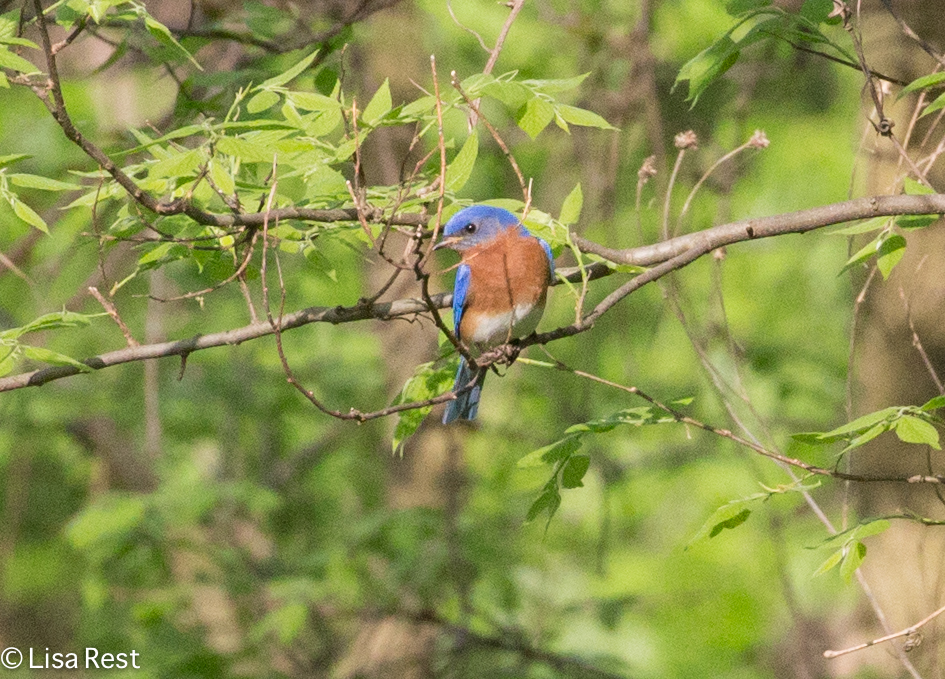
I probably took too many photographs of the male Eastern Bluebird but I am always so delighted to see him. I haven’t seen him in over a week, so I hope he is just busy but still on site.

The female Blue Grosbeak below turned out to be rare for this date. A week later, the same bird was no longer considered unusual. I sure would like to see a male here. It’s been a few years.

I don’t think I will ever get enough of Magnolia Warblers.

The bird below had me stumped – for a while. I determined it had to be a female Black-throated Blue Warbler. I later checked my bound copy of The Warbler Guide and sure enough, I was correct. Since I didn’t have a complete side view, it was a bit difficult, but her face spoke to me.

Baltimore Orioles are still around and will be all summer. This looks like a younger bird perhaps.

First-year male American Redstarts can be confused with females…

There was a Green Heron in flight that day.

Indigo Buntings are here to stay for the summer. I won’t get tired of them either.

Here’s how the Portage looked on that day. Now you can barely see the bridge through the growth.

I suspect there’s a lot more mossy stuff going on way off trail. I zoomed in on this with the telephoto lens.

There are a lot of Brown-headed Cowbirds at the Portage this spring. I usually see gangs of males following one or two females. This girl was on her own.

One more of the muted-looking Baltimore Oriole. I will be back with many more birds – now that I have a little more wiggle room on the laptop. Tonight I am happy to be attending the end-of-season choir party. I really missed singing a couple weeks ago for our last service, but it will be good to see everybody again before the summer break. We will return to rehearsals in mid-August. Wow, it’s June already.