I. Thatcher Woods Last Monday

The Oak Park Bird Walk group met twice this past week at Thatcher Woods and I took way too many photos on both days. We were there Monday morning and again on Saturday morning. Though fall warblers were our focus, we had some good looks at other birds. The warblers are quite challenging here as they can be too far away even for my long lens, so I often have to piece together some not-quite-in-focus parts of birds for identification.

Below is a case-in-point for a bird barely seen on Monday. It was a Northern Parula. You can click on the photos to get a better idea of where the bird is in the leaves.

I caught a glimpse of a Red-tailed Hawk moving through the woods.

We went out to the field and saw some deer running across it.

There were distant, backlit woodpeckers. Below, a Northern Flicker, a Red-headed Woodpecker and a Northern Flicker flying past a Red-bellied Woodpecker.

And then, capturing our attention for quite a while, a Merlin arrived and perched likely in the same tree, and may even be the same individual we saw last year.

White-breasted Nuthatches are more often heard than seen.

The same could be said for a Red-eyed Vireo except that they’re not singing in fall migration. We managed to see this one briefly.

Eastern Bluebirds were abundant that day.

Below, an Eastern Wood-Pewee, and then the same bird with a White-breasted Nuthatch to its right.

It was delightful to see a couple Chipping Sparrows.

Just when we had about given up on warblers, we started to see some more.

Tennessee Warbler

There was a Bay-breasted Warbler that wouldn’t stop posing.

I was going to attempt to do Saturday’s visit as well in this post, but it’s already long enough, so I’ll be back with Saturday’s photos right away, and then a subsequent visit to Riverside the same day. It’s hard to keep up, all of a sudden!

I will be back with more confusing fall warblers. These two are often mind-boggling to separate.

Bay-breasted Warbler

For comparison purposes, a Blackpoll below.

Blackpoll Warbler

Friday the 13th

I went to Riverside Friday morning as usual, not knowing what to expect with the absence of rain and any changes in the wind. The river is low enough to walk across in some places. I have arranged the photos in chronological shooting order simply because there turned out to be way too many of them to try to arrange them any other way.

I checked to make sure the Great Egret and Great Blue Heron were in their usual spots south of the Hofmann Tower. And then, by the location of the dismantled Hofmann Dam, I saw some Kildeer on the rocks.

I crossed the Joliet Avenue bridge and started walking the paved trail into Swan Pond slowly, knowing that warblers tend to like the trees. I found a Bay-breasted Warbler.

Then a Magnolia Warbler appeared.

…and another Bay-breasted Warbler…

And then, I took a huge number of what turned out to be a very confusing set of photos of a Bay-breasted Warbler which I had to determine from its eye arc, undertail, bill shape and general body color without the help of seeing its wing bars. If you click on the photos you should be able to see them enlarged and in sequence. The reason why I am putting up all these photos, and indeed, a copious amount of fall warbler photos in general, is so you can get an idea of what the camera is seeing as I follow these birds around through the foliage, and maybe, just maybe, some of these images will begin to make sense, fall warbler identification being what it is.

As for the bird above which I determined was a Bay-breasted Warbler, after both the Merlin app and I tried to make it into something else, there is no other logical option. The bill shape and face do not match a Tennessee Warbler. The bird is very yellow, but not yellow all over enough to be a Yellow Warbler. Having said all that, I have decided to tune into Cornell’s Fall Warbler Identification presentation tomorrow night, which could cast even more doubt and confusion into my identification skills. But I am hoping it will strengthen and confirm some of the things I think I know.

Here is yet another Bay-breasted Warbler. So much individual variation!

I’m not done yet. The bird below, another Bay-breasted, exhibits all the classic characteristics of this species in the fall.

And now, just to shake things up a bit, below is a Blackpoll Warbler. The wing bars tend to be less prominent than the Bay-breasted although they are arranged similarly, there is often faint streaking on the breast, and the bill shape is thinner.

I then found a Philadelphia Vireo, which is maybe not too surprising after seeing one a day or two earlier at the Portage.

Next in line was a Chestnut-sided Warbler. This time of year one cannot expect to see the chestnut sides. But this bird has a lot of other characteristics: greenish-yellow on the crown, clean white throat and belly, and a beautiful greenish-yellow pattern on the back if you are lucky enough to see it. I am also enamored of the tail feathers spread out in the next-to-last photo.

I think all that was before I crossed the swinging bridge and started walking in Riverside Lawn. I have to keep better track next time

You guessed it. Another Bay-breasted. I promise this is the last individual for this post.

I caught a glimpse of a Nashville Warbler with its prominent eye-ring, gray crown and bright yellow breast and belly.

Then I encountered a Magnolia Warbler. This bird is also at the top of the post. Another bird with an eye-ring. Most identifiable to me is the black and white tail pattern and the black streaking on its yellow sides.

Then I found an Eastern Wood-Pewee, a flycatcher I have seen several times this summer.

And another Magnolia Warbler.

Then a Downy Woodpecker posed for good measure.

Another Nashville Warbler.

Then came my biggest surprise. I saw a rather stocky-looking warbler sitting on a branch obscured by vegetation. It was hard to focus but I managed to take enough photos of it as it sat fairly still. It turned out to be a Connecticut Warbler! This bird is elusive and somewhat rarely seen. This is a first-year bird with what Sibley describes as a “complete brownish hood.”

Another Downy appeared, right at my feet.

Downy Woodpecker

And yet another Nashville Warbler.

A Black-and-White Warbler was briefly available.

And it has been impossible to totally ignore the flocks of American Goldfinches feasting on seeds.

Yet another Nashville Warbler. I think I made up for all the individuals that have been so difficult to capture this season. Note the individual variation.

Merlin says the bird below is a Least Flycatcher. I have checked The Crossley Guide and I can’t disagree. Empidonax flycatchers are often difficult to determine.

The last bird I photographed was a very pale Chestnut-sided Warbler. All that gorgeous greenish-yellow I was talking about isn’t there yet. So the other characteristics (eye-ring, wing bars, undertail) have to kick in.

Fall migration marches on. With no rain for too long and the temperatures too hot, the birds are still taking breaks from their migration flights to hang out with us for a day or two. With no northerly winds to help them, they may linger a bit longer.

This morning I joined the Oak Park Bird Walkers, led by its founder, Henry Griffin, at Thatcher Woods. I then walked through Riverside Lawn before swimming. When I came home I managed to go through the morning’s 454 photos and reduce their number to 340 in the first pass. Tomorrow morning I will be at Columbus Park with more Oak Park Bird Walkers. Depending on how that goes, I may extend my search for fall warblers to yet another location. All I can say is, beware, more photos to come.

Tuesday Morning at the Chicago Portage

I was planning on a post of visits to the Chicago Portage from last week, but I had some special birds Tuesday morning so this is an almost unusually current installment (I was trying to finish it same day and yesterday but didn’t manage it).

The morning started off inauspiciously enough with the American Goldfinches in the duckweed. They nearly match the color of the duckweed this time of year. And then they disappear into the goldenrod blooms.

As I walked beyond the bridge near Harlem Avenue, I began to see a little warbler activity in the vegetation running along the fence that separates the Portage from the Metropolitan Water Reclamation District. I tried to capture a Magnolia Warbler, but it outsmarted me. And then, I was suddenly looking at a male Black-throated Blue Warbler. This is a special bird in that we don’t see them as often as some other species. I have found them to be a bit more deliberate in their movement which can make them a little easier to photograph. My biggest challenge with this bird was the darkness of the leafy area and the bright sunshine behind it. He graciously moved out more into the open. I’d like to think we had a little conversation.

I next caught a brief glimpse of a Nashville Warbler.

Then along the trail I found a Red-bellied Woodpecker.

I caught up with a couple Magnolia Warblers before the break in the fence. They nearly eluded me but I managed a few furtive fotos.

Next I caught a glimpse of a Swainson’s Thrush. It turned to peer at me in the second photo.

A few young Indigo Buntings were present. I’ll never know if they hatched here or came in from somewhere else.

Tennessee Warblers have been coming through for a couple weeks now. Here’s one individual.

And another. I took way too many photos of this bird but it was close enough and successful catching an insect.

I found a first-year male American Redstart in an unusually quiet moment.

I barely caught a glimpse of an Ovenbird.

Young Red-winged Blackbirds all flew up from the abundant goldenrod and boneset to check me out as I took their class photo.

I spotted a Red-tailed Hawk perched on a tree by the water. The light was better when I got on the other side of it.

On my way back out the paved trail, a bird flew up into a tree in front of me and was not immediately recognizable. After perusing the photos, I was happy to find it turned out to be a Philadelphia Vireo.

Below, the Philadelphia Vireo especially looks like one in the last photo where it’s hanging upside-down.

Below is the last Tennessee Warbler I caught a glimpse of on the way out. It looks nothing like the other two.

Here’s another photo of the one Tennessee Warbler with its catch…down the hatch.

I’ve seen many more birds over the past few days, not to mention the ones from the last two weeks, so I will try to launch those photos soon. We are in the middle of another heat wave of sorts, we haven’t had any rain and there is none in the forecast, so now we are approaching a drought too. I’m refilling the water in the birdbaths twice a day. Luckily there’s still plenty of water in the rain barrels. I guess there is some small relief that the days are getting shorter, too.

Returning to Riverside

These are photos from two fairly recent visits to Riverside, on August 30 and September 2. I was happy to see more warbler activity in the treetops. There are likely too many photographs below. But here they are, in mostly chronological order.

I always start out by checking to see if the two fishing friends, a Great Egret and a Great Blue Heron, are by the remnants of Hofmann Dam.

Then a Merlin appeared briefly. I was still by the Joliet Avenue bridge.

I followed a rather distant Blackpoll Warbler in the trees on the Swan Pond side of the river. The warblers are particularly attracted to the black locust and oak trees.

An Osprey flew overhead.

I didn’t see much of anything in Riverside Lawn after almost not proceeding after I encountered hundreds (thousands?) of maggots on the trail off the Swinging Bridge. (I’m going to try to remember to capitalize this now as what I have invariably referred to on other times as the “footbridge” but have encountered enough Riverside habitants who refer to it by this name.)

I did not observe an animal carcass, but I didn’t look that hard either. I just walked through the rest of Riverside Lawn which was very quiet, and I checked behind the Hofmann Tower again to see if there were any herons. Here’s my last photo of three Great Egrets in the trees by the river in Indian Gardens.

I went back to the same location on September 2, Labor Day, and saw a lot more. This time, my first warbler after I crossed the Joliet Avenue Bridge into the paved Swan Pond trail was a Bay-breasted Warbler.

There was a Blackpoll too. I’m including all these photos for their identification points. You can see the bird’s orange feet in several of the photos.

Then I encountered three Blackburnian Warblers, but they were harder to capture. The bird below is the same one at the top of post.

I had a brief view of a Cape May Warbler.

Then I found a bird that defies definite identification from these views. I speculate it could be a female Black-throated Blue Warbler although I never got to see the white patch on the wing.

I found another Blackpoll Warbler.

When I finally got to the Swinging Bridge, I found it had a family fishing on it.

A Great Blue Heron was standing watch in a nearby tree.

The trail was clean where the maggots had been, but the skull remains of their likely host were off to the side. Later in the week, I encountered my friend Chris who walks his white dog Isabel and he told me she found a dead raccoon about 10 days earlier. That solved the mystery for me.

I spotted an American Goldfinch.

And now there were Tennessee Warblers.

Here’s another Tennessee Warbler in what unfortunately looks like buckthorn.

Another Blackpoll Warbler was also in the buckthorn. The fact that buckthorn doesn’t provide anything except a resting place could be why I was able to obtain these photographs.

A Swainson’s Thrush popped up.

And a Warbling Vireo made a rare appearance. I have still been hearing them singing.

I found a Bay-breasted Warbler.

And then a Gray-cheeked Thrush appeared.

A Magnolia Warbler nearly defied my ability to follow it.

Here’s another Gray-cheeked Thrush.

Birds have been showing up at the Chicago Portage too. Maybe I can take you there next.Yesterday morning was a very chilly one with the Oak Park Bird Walkers at Thatcher Woods. It’s been a busy weekend with a choir party last night and then our return to singing in Unity Temple this morning. We are back to singing two services like we did years ago, pre-Covid. It’s like reinventing the wheel.

I’ll try to be back soon. I already have too many photos and need to make room for more.

A Little Fallout

Wednesday morning was cloudy after some overnight storm activity accompanied by a measure of rain. I decided to put on my Wellies so I could walk through Riverside Lawn without worrying about the mud.

I started out walking the paved trail on the Swan Pond side of the river and didn’t hear or see much of anything until suddenly an adult Red-tailed Hawk landed on a branch of a big cottonwood tree. One of its likely offspring followed, flushing the parent, and then took off after it.

I don’t think I saw much of anything else until I crossed the swinging bridge and started walking into Riverside Lawn. I found a new dragonfly for me – a Russet-tipped Clubtail. Shortly after that, I started to see some warblers.

I puzzled later over this warbler that I think turned out to be a Pine Warbler. This is the confusing part of fall warbler migration.

I had a Bay-breasted Warbler for good measure. These were the earliest specIes I saw last week.

Then there were at least two Black-and-White Warblers.

A Swainson’s Thrush appeared on a branch, and later on the trail.

Through a tiny window I spotted a female Northern Cardinal with a wormy catch.

Four Cedar Waxwings were considering their options.

In the Riverside Lawn woods, I encountered a young Common Yellowthroat who seemed to be as glad to see me as I was to see it. This individual is also at the top of the post.

Then I began to see more Black-and-White Warblers.

A Red-eyed Vireo stopped moving just long enough.

And I found another Bay-breasted Warbler.

Tennessee Warblers have been showing up all week. These were a little harder to see.

I was delighted to find a glimpse of a Golden-winged Warbler in my photos.

And I barely captured a Chestnut-sided Warbler.

As I walked out of Riverside Lawn, I found an American Redstart foraging low.

And then coming out of the woods, a Red-tailed Hawk soared overhead, motionless.

Here are a couple more photos of my friendly Common Yellowthroat.

Fall migration doesn’t feel real until we start seeing warblers, so this was a good start. With winds coming from the north the next few days, I expect to see more birds and, with luck, more species. Keeping up with them all in the blog will be a challenge. I started this post three days ago… and I’ve seen more birds since.

On the home front, I need to do a lot of yard work to catch up on what I didn’t want to do in last week’s extreme heat. And of course everything has overgrown that much more. But this is turning out to be a blessed, beautiful weekend with cooler temperatures and sunshine. I treasure these fleeting moments when everything seems possible.

Here They Come

Fall warblers are starting to arrive here and there. These pictures were taken at the Chicago Portage. The winds were from the north the past few nights, making easier flights for the migrating birds and blissful sleeping weather for me. But we are going to have another warm spell which started today. I’m still coasting by with open windows and the standing oscillating fans, but we’ll likely go back to the air conditioning tomorrow.

This is a little roundup of a few warblers I’ve been able to photograph over the last week and a half. The first warbler I saw was on August 13, a first-year male American Redstart.

Then this past Tuesday just as I was leaving the Portage, having seen very little and being quite sure I wasn’t going to see anything more… I saw a little movement in the trees by the south entrance and found a couple Bay-breasted Warblers.

I also saw a Blackpoll Warbler.

Two days later, my camera found a Cape May Warbler.

And I spent some time with a Magnolia Warbler that didn’t seem to mind my attention. The same individual is at the top of the post.

I have seen Tennessee Warblers here and there, first one on the 18th…

and then one on the 22nd.

I’ll be back with more birds I’ve been seeing lately, but I just wanted to share the few warblers I’ve encountered in the past week and a half. Now that the winds have shifted and are coming from the south, things might slow down a bit, but absent strong winds or storms, more warblers, the jewels of migration, will likely start to trickle in.

Wishful Thinking

I was in Riverside the morning of May 13. It seemed like spring warbler migration should have been in full swing by that date. I found myself thinking about the Prothonotary Warbler I saw two years ago on May 10 right off the paved trail in Riverside. I thought it would be nice to see that bird again.

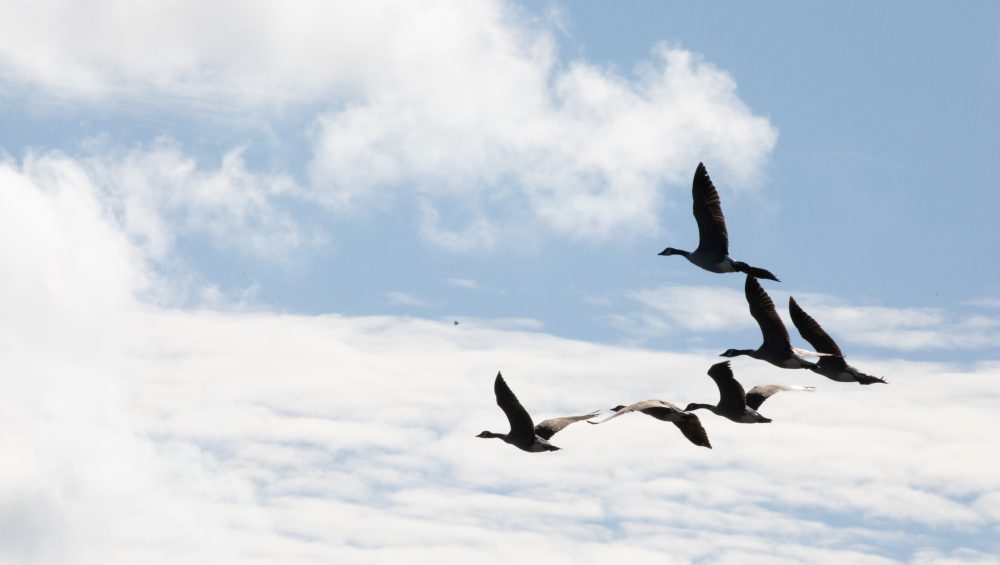
At first, the walk started with other birds. A family of Canada Geese was swimming by.

I encountered an Eastern Wood-Pewee. I have been hearing but not seeing them since.

The morning was good for water snakes.

I’m not exactly sure when I heard the Prothonotary Warbler, but he was singing and singing somewhere along the paved path and I couldn’t locate him. Then he flew over the river to Riverside Lawn. I wondered if I might find him there. I knew it was a long shot, but that’s birding.

A White-crowned Sparrow was foraging along the shortcut from the paved path toward the library. We have seen a lot of them this spring.

I saw a Rose-breasted Grosbeak high up in a tree.

In Riverside Lawn, I got brief backlit looks at a Northern Waterthrush.

Then I managed to find an American Redstart. It’s either a female or a first-year male, hard to tell with this one, although I’m leaning toward the first-year male.

Then I managed to find a Bay-breasted Warbler.

And a Song Sparrow…

I sat down on a big log that the trail has accommodated long enough to have carvings on it. After a moment or two, I heard the Prothonotary Warbler singing. He wasn’t far away. I got up and walked slowly in the direction of his song. Then he began to emerge through the leaf cover.

I couldn’t help myself. I wish I had recorded his song, but I was too busy capturing his image.

I was able to record an American Redstart and one of those noisy Tennessee Warblers that I never managed to see. Here’s a little sample.

After I let go of the Prothonotary Warbler, I spotted a Swainson’s Thrush that was somehow not too bothered by my attention.

The last bird I managed to photograph was a young-looking Red-bellied Woodpecker.

It occurred to me only a week later as things were slowing down so abruptly, that maybe I had jinxed the whole thing by getting my one wish – to see another Prothonotary Warbler – and thereby forfeiting my chance to see any more warblers. But I’m afraid that won’t stop me from my next bout of wishful thinking. Not everything happens for a “reason.”

Oh, I have seen a few warblers since then, but hardly any more species to add to my very feeble list of spring migrants. I’ll be considering a visit to the Magic Hedge if this happens again next year.

Of course it’s not all about warblers. There are other birds and creatures showing up, and I will be back with more.

Suddenly Spring at the Portage

As soon as the winds started coming from the south, birds I’ve been waiting to see since they left last fall started arriving. These photos are from April 30th at the Chicago Portage National Historic Site. I am already in photo-overload mode as more birds keep coming to the area. I’d like to find a better way to keep up with this, but everything else in my life has been springing into action lately. I can’t complain. It does help to have a new laptop with plenty of power and room to spare.

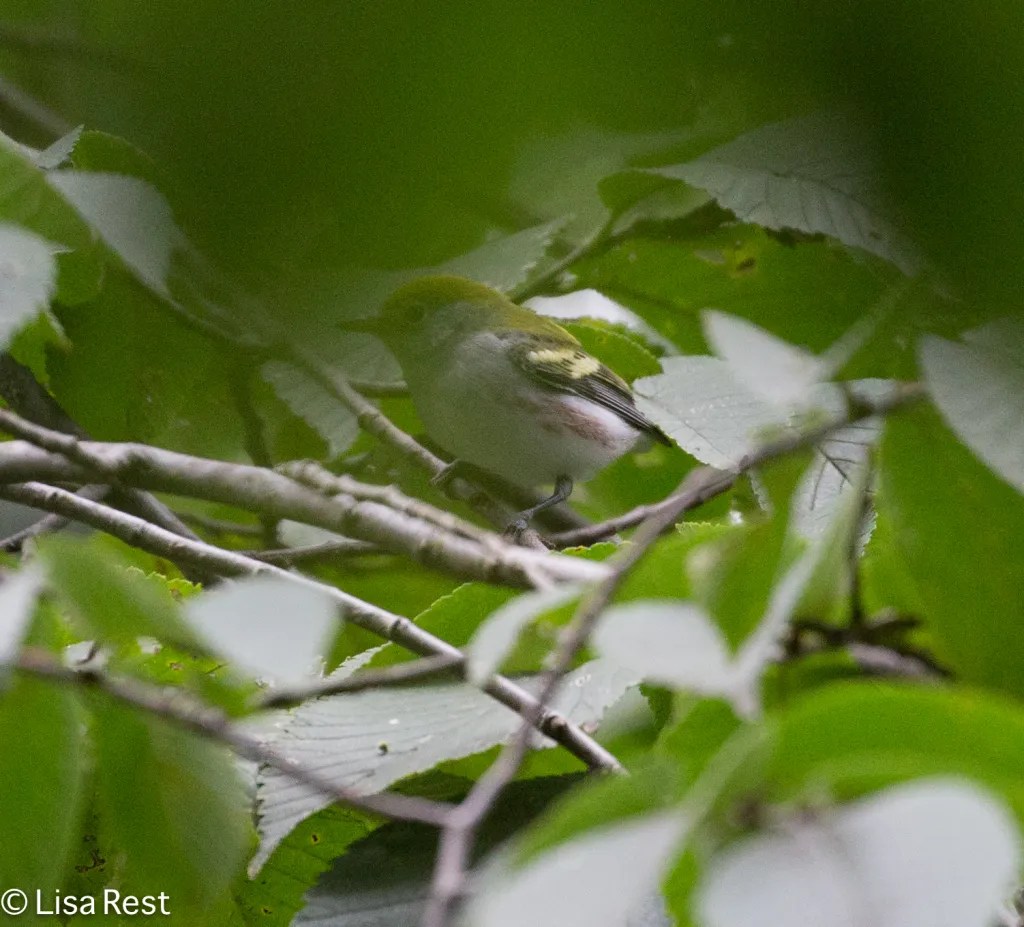
That’s a Chestnut-sided Warbler at the top of the post. I heard him sing clearly and then when I looked for him, he obliged by posing nicely on a branch.

My walk began with some male Brown-headed Cowbirds above, silhouetted against the blue sky.

The last few days, Palm Warblers have been Everywhere. For some reason we weren’t seeing them much in the fall, but they’ve made up for it on their return trip.

A glimpse of the Portage greening up

Yellow-rumped Warblers are still abundant.

I’ve been seeing a few Nashville Warblers over the last few days, but they have been up really high in the trees and far away, making them harder to capture.

Even the year-round birds look spiffier this time of year.

There were a number of White-throated Sparrows behind the opening in the fence. I managed to capture one.

And White-crowned Sparrows are showing up too.

Red-winged Blackbirds are getting down to business.

Red Admiral butterflies are everywhere too

There was a fetching Northern Rough-winged Swallow.

The Eastern Phoebe was available as well.

Most gratifying was to see my first Indigo Bunting of the season.

There’s a Mallard pair, though the female is harder to find most of the time, and turtles sunning themselves.

A Great Blue Heron flew over.

When the heron came to check things out, a Red-winged Blackbird was not very happy. The Great Blue left after a few minutes.

Here are two more of the Chestnut-sided Warbler.

It took a day or two to come down from the Spring Music Festival. It was a wonderful event. Now I have an early rise on Saturday to look forward to, so I can be in DuPage County at 6:30 in the morning for the Illinois Spring Bird Count. The Oak Park Bird Walkers will be counting in Columbus Park where I led a walk last Saturday. I just remembered I have photos from that day too. I even had a little flurry of migrants in my backyard this week. And now that we are safely at 50 degrees Fahrenheit or more, the yard is begging for maintenance. …I need to eat dinner and get some sleep!

In Riverside

It’s raining almost all day today and most of tomorrow, so I have no excuse not to finish this blog post I started a week ago.

These photos are from September 6 and September 8. I have returned to Riverside several times since. In my usual fashion, I hope to get around to that eventually.

There have been as many as 9 Great Egrets gathering just south (or is that west?) of the former Hofmann Dam. To illustrate this point I’ve borrowed a photograph from September 13, although I couldn’t get all 9 into the photo at once.

But back to the week before, when I saw only one Bay-breasted Warbler briefly on the 8th.

This Black-and-White Warbler was a little easier to photograph.

I had good looks at a Chestnut-sided Warbler.

Tennessee Warblers have been plentiful this migration, although it’s been hard to find one closer.

I feel like I have seen more Veerys this fall. Not a warbler, but a very special thrush.

I had seen a male Black-throated Blue Warbler at the Chicago Portage a day or two earlier, but was unable to get a good photograph. This one in Riverside Lawn made up for it.

I had some trouble figuring out the first bird below, but it seemed to suggest American Redstart to me. Now I have my doubts, though. Could it be an Orange-crowned? If so, it would be rare for the early date. I leave it up to conjecture. This is a never-ending challenge. In any event, the second bird is a first-year male American Redstart with no doubt about it.

Nashville Warblers started showing up and I have seen many more lately.

Magnolia Warblers don’t seem to be as plentiful this year. It’s been challenging capturing the ones I have barely seen. I used to consider them rather extroverted. The bird at the top of the post is a Magnolia Warbler.

So what about all those other birds?

I have seen one Double-crested Cormorant on virtually each occasion.

Mallards have begun to congregate in the river.

There have not been so many Great Blue Herons but I have seen at least two, maybe three on occasion, though they tend to be in solitary locations.

On the 6th, when I saw very few birds, I was treated to a Solitary Sandpiper flying by and then landing where I could get a few images.

Crossing the swinging foot bridge, I stopped to photograph this rather odd-looking spider.

Flocks of blackbirds – mainly Common Grackles and Red-wingeds – have begun to move around here and there.

And Gray-cheeked Thrushes seem to be in abundance this season as well.

Oh I have so many more photos to share with you. I will try to take advantage of the rain making me stay inside and not take anymore! But other inside activities, if you can call them that, beckon. It’s cool enough to catch up on some cooking. There’s the biweekly cleaning of the dining room and the weekly cage cleaning (both are to be accomplished today). Musical routines are always adhered to. I could go on. Perhaps most frustrating is the book I’ve been trying to write finally working out in my head. Finding the time in to get it written is the issue. If not on a rainy day, then when? Let’s see how loud the voices in my head become. To be continued.

A Warbler Here and There

Welcome to Fall Migration Warbler Identification Meditation. (I was inspired after reading an article about meditation going mainstream.) Warblers are starting to arrive, and I had more species in my photos than I realized while taking them. Since many of the warblers look quite different from their spring plumages, and are often hard to distinguish from others, it necessitates a review of wing bars, undertails, bill shape, and if you ask me, even a facial expression can sometimes play a role.

I had been seeing a warbler here and there over the last week or so and was planning to gather them all together in one post here, but my visit to the Chicago Portage on Tuesday morning – before the Heat Wave – proved too busy to ignore, so I am just going to consolidate what I saw on Tuesday and come back later with the rest.

My visit didn’t start out with warblers, of course. Except for a few American Robins, the birds were at quite a distance. This young Robin was enjoying some ripe pokeberries.

There were birds perched from time to time in the bare trees that border the water, and for the most part, I was just taking photos to identify them later. There were some interactions going on that I might not have bothered to notice.

An Eastern Kingbird is at the top, a Baltimore Oriole below

All I can figure is the Baltimore Oriole started moving toward the top of the tree where the Eastern Kingbird was perched and there was a bit of an upset. My last photo was of the Eastern Kingbird either going after prey or giving up on the challenge to its position.

Then I was following perhaps the same Eastern Kingbird with what looked like a cicada. It wasn’t having an easy time of it.

After all that, a quiet moment for the Eastern Kingbird.

Young and older Northern Flickers popped up here and there.

It was probably the first time I did not hear a Song Sparrow, but I did see this young bird at a considerable distance.

Quiet bird moments gave me opportunities to focus the lens on other things. I really like the way the foxtail grass looks with the sun shining through it. Then for butterflies, there was a Hobomok Skipper, a Monarch, and a Pearl Crescent.

A spider web off the trail was more challenging.

A view of the new trail from the south end of it

And now for the warblers. Just as I was pretty much on my way out, so to speak, but before I reached Tadziu’s bridge (by the way, I saw and head a couple adult male Indigo Buntings, but I do think Tadziu has left for his winter home), I noticed activity in the expanse of trees between the trail and the train tracks. At first, there were several Red-eyed Vireos.

I barely caught a clear glimpse of a Magnolia Warbler.

I was not aware until I developed my photos that one of the first birds I was following was actually a Chestnut-sided Warbler. There’s not much chestnut siding in this bird, but the greenish-yellow coloring on the crown and back, the eye-ring, and yes, its posture/expression tipped me off.

The Black-and-White Warbler was easy to see, however briefly, but difficult to capture. I managed one clear photo.

I had the feeling I was seeing more than one Bay-breasted Warbler.

This is likely a different individual below.

And the bird below is the same individual as the one at the top of the post.

With the mixed flock was a young-looking Blue-gray Gnatcatcher

I at first assumed the bird below was another Bay-breasted but changed my mind when I saw the photo of its back. I started going down the Blackpoll Warbler trail. It’s also very hard to see some vague orange coloring on the foot in these photos. But there is faint streaking on the breast in the first photo.

A couple Baltimore Orioles were in the mix as well, if a bit farther away.

The Baltimore Oriole below was intrigued by some dead leaves.

Here’s one of those not-in-focus photos I got of the Black-and-White as it escaped scrutiny.

Well, our 100 degrees Fahrenheit has given me the opportunity to sit inside and finish this post. We are due for cooler temperatures tomorrow. I will likely visit Riverside in the morning to see what migrants are appearing there, and then drive to my temporary swimming location. I’m looking forward to cooler temperatures on the weekend and into next week when I will be able to resume a more regular routine again. But I am already starting to make room for fall activities. Wednesday evening choir rehearsals have returned. The kids are back in school down the block. The Saturday morning bird walks begin on September 2nd at Columbus Park.

And somehow in spite of my efforts at population control inside the house, increasingly louder begging noises have me expecting to see a new Zebra Finch fledgling or two shortly. Somebody is getting better at building predator (me)-proof nests.

To be continued. 🙂