More Warblers, as Promised

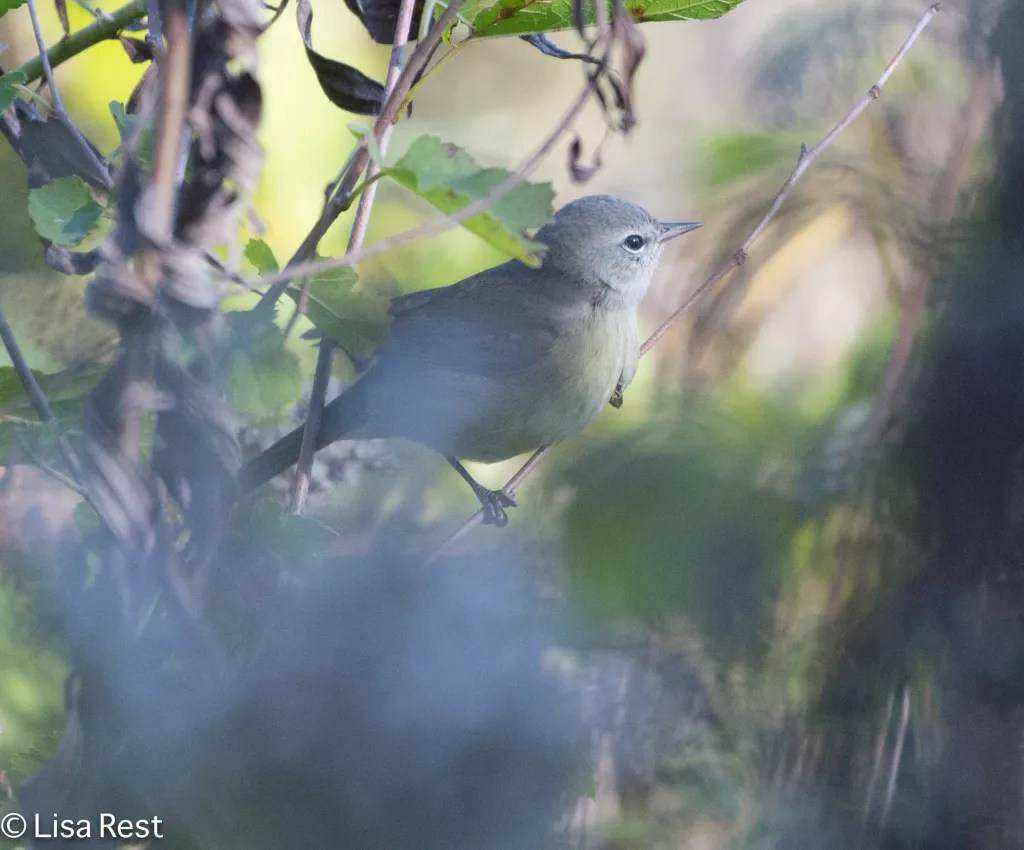
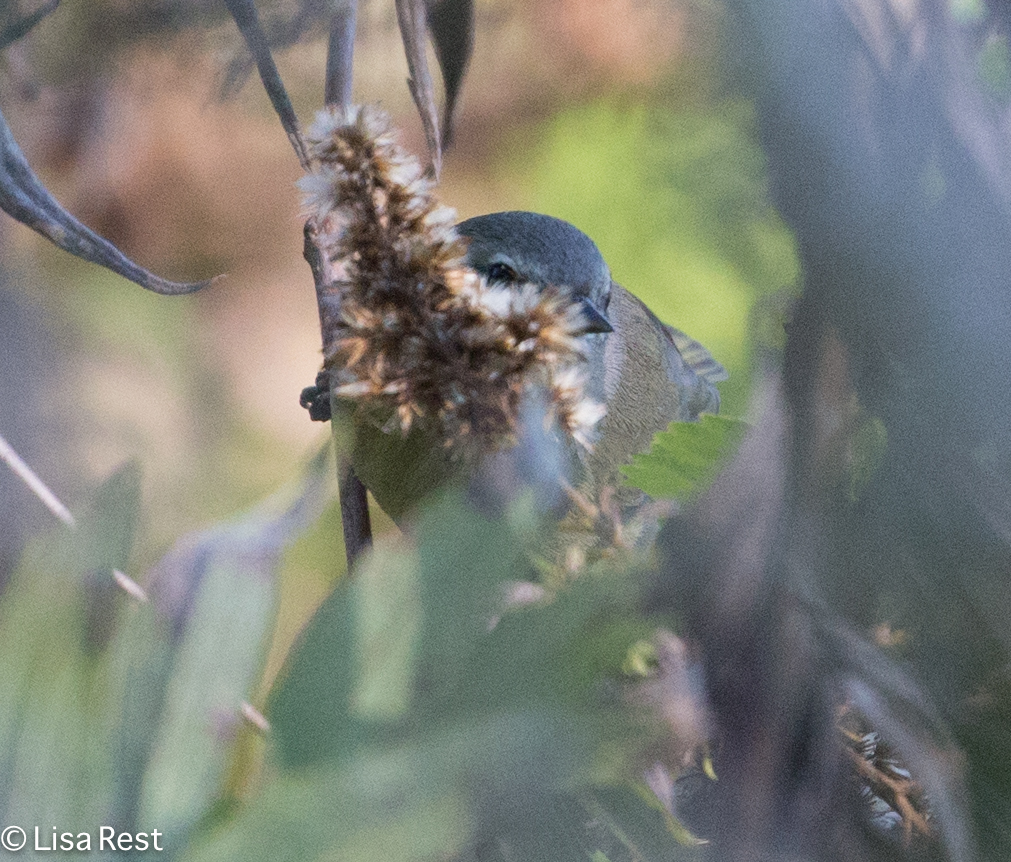
I’ve been trying to get caught up with the other warbler species I have seen this spring migration. Most exciting was the Hooded Warbler at the top of this post, which appeared at Columbus Park last Saturday. It had been seen by others, but I heard it still singing so I hung around where it likely was until I could find it with the camera. I haven’t seen one of these guys in some time, so I was really pleased.

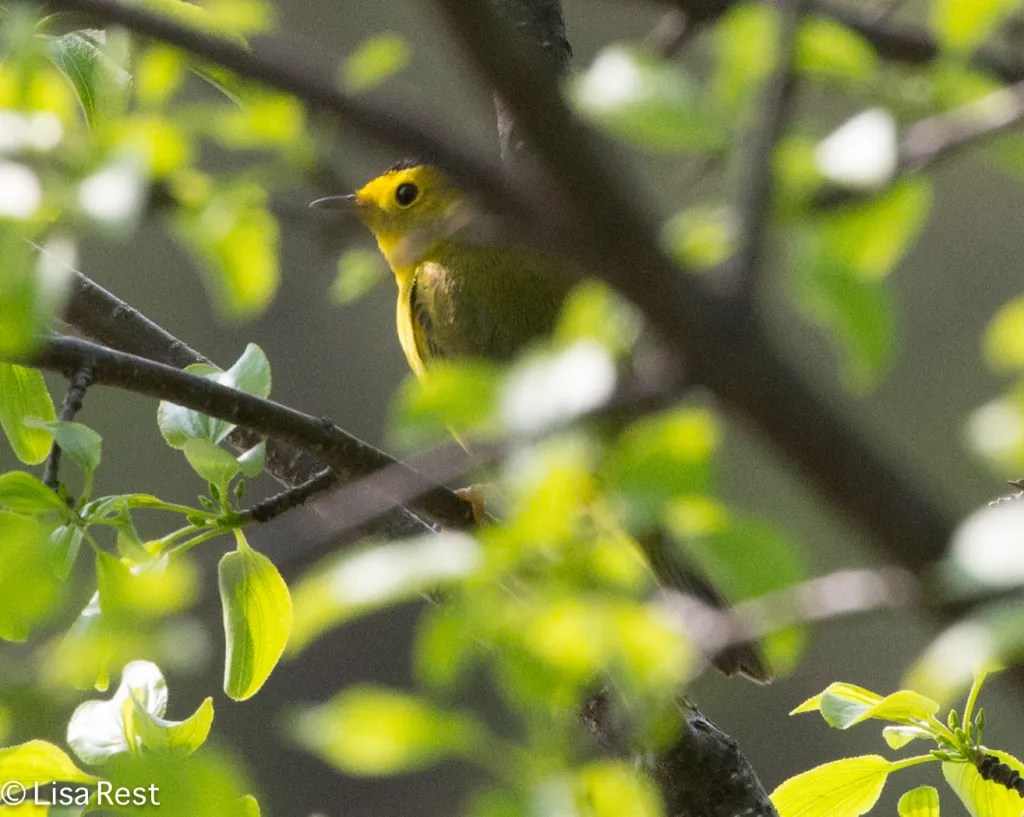
Also seen on Saturday was a Wilson’s Warbler, who finally let me get a good look at his signature black cap.

At the Chicago Portage earlier on May 9, there were Golden-winged Warblers, a Blue-winged Warbler, and more Nashville and Black-throated Green Warblers than I have seen since. They arrived right before the big windy warmup that caused the fallout the next day along the river.

Golden-winged Warbler

I took too many photographs of the Golden-winged. I apologize but this species is less frequently seen.

One bird was foraging along with a Nashville Warbler.

I think the bird below is a female.

Here’s one more with the Nashville and flowers still on the tree.

Nashville Warblers were common earlier but were way up in the tree tops.

The Nashvilles were in good numbers.

I managed to photograph a Blue-winged Warbler on the same day. I haven’t seen one since. I still have fond memories of seeing many of them a couple years ago.

There were some Black-throated Green Warblers at the Portage as well. I haven’t seen them too much this spring, but they were all over the place in the fall.

A few more…
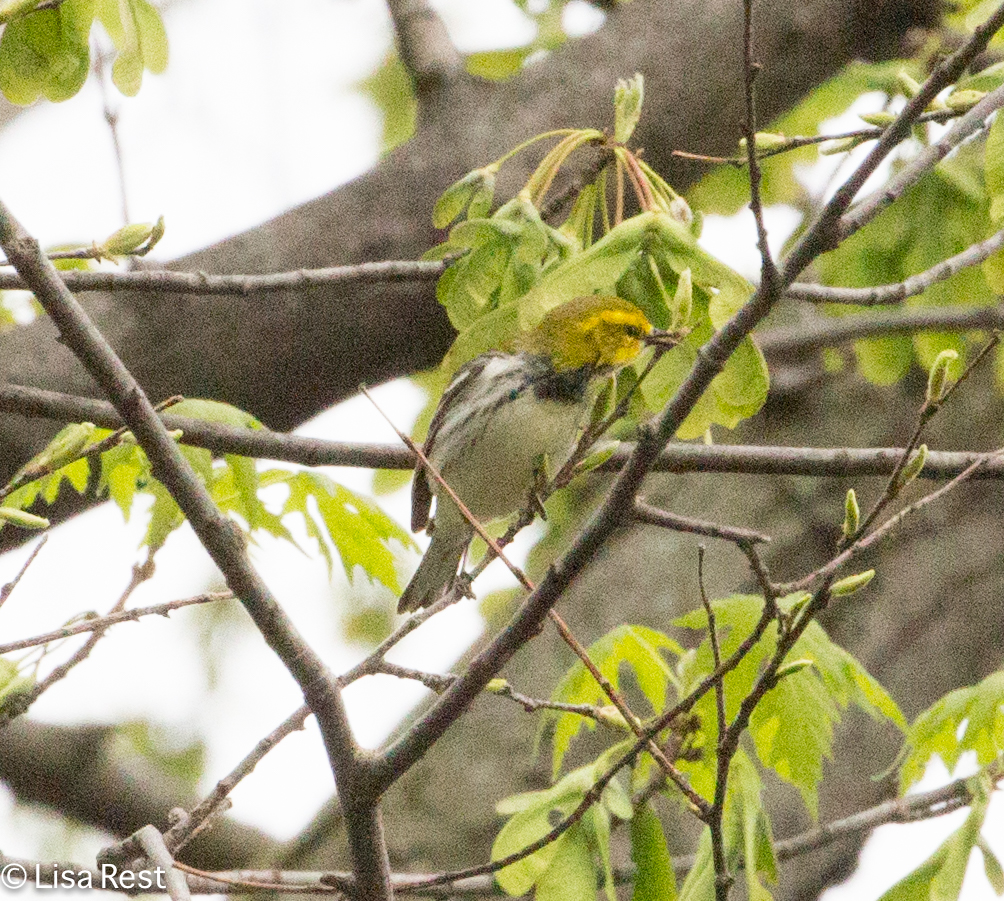
Lately the most prevalent species has been Blackpoll Warbler. It has been relatively easy to distinguish their calls and then find them.

I have seen a few of these again since last Saturday but these photos are all the same individual.

I nearly forgot the Nashville Warblers from May 9. They didn’t stand out too much in that light.

Apologies for being quiet on this page for a while. I have unwittingly succumbed to a breakthrough infection which I can’t trace, of course, to anything specific although I have my suspicions. After two plus years of doing what I was supposed to do, getting the vaccines and masking up and socially distancing etc., etc. this is almost an affront to my sense of self. On the other hand, why not me? As mutations continue to make the virus harder to resist and restrictions are lifted, I can only count my blessings: I am not very sick, I live alone with my birds and I feel better every day. My energy is returning rapidly. I can be well and still take too many photos and start to nod off processing them. I am extremely grateful I managed to take these photographs of spring warbler migration before I got sick. There are lots more photos of warblers and some other birds to come. I hope you are staying safe and well.

More Warblers and Others

This is the last of the fallout warblers from Tuesday morning but I have added a few more to my migration sightings, so I will have to round those up next. I suspect that after feasting most if not all the warblers I encountered on Tuesday resumed their journey to their breeding grounds, with no interruption from the weather to slow them down. And some of the Yellow Warblers will be staying.

There were only a few Black-throated Green Warblers.

Warbling Vireos are abundant but will not be so easy to see once the leaves take over.

The White-breasted Nuthatches have been noticeably quiet, so I can’t count them until I see them.

There was still enough water left in the fluddle for the two Solitary Sandpipers that were hanging out,

Scarlet Tanagers are always noticeable. I have seen them several times this season so I will be back with more captures.

Remember Palm Warblers? I think they are probably all gone but there were still several on Tuesday.

A few more of the last Palm Warblers…

Here’s the female Blackpoll Warbler that Vera identified after it snuck in with the Palms. Thanks, Vera!

A warbler I don’t see very often, a Northern Waterthrush, is a likely bird around the river.

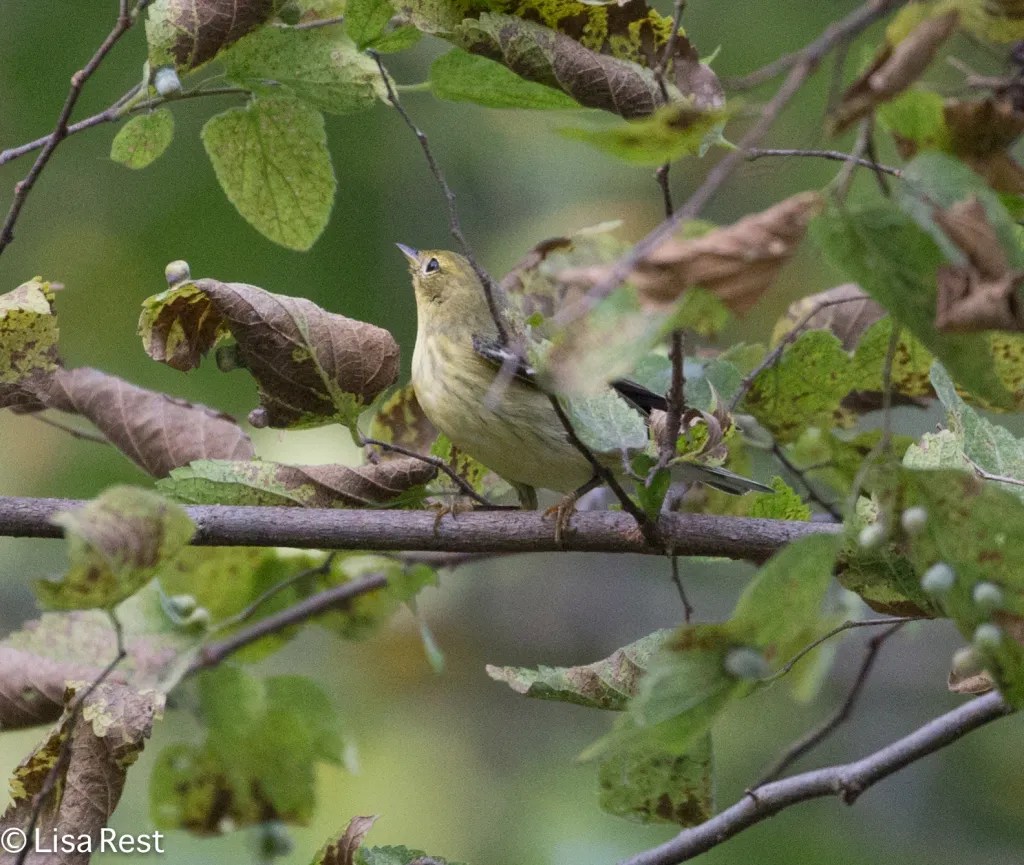
Below is the last Pine Warbler I saw. They were earlier than other species but now are considered late. According to my Sibley app this is a likely first-year female.

Gray Catbirds have been very easy to see this spring. They’ve been quite vocal too.

Finally there’s food for flycatchers.

Eastern Phoebe

There were two Eastern Kingbirds sallying for prey from high perches over the river that day.

It was nice to see a couple Cedar Waxwings. While I once say them kiting for insects in large numbers, more likely I will see them congregating in fruiting trees later.

I’m always up for a Blue Jay if it’s sitting still.

I will be back with more warblers and other species as spring migration continues. In a way I am thankful things have slowed down a bit.

Warbler Overload – Part III

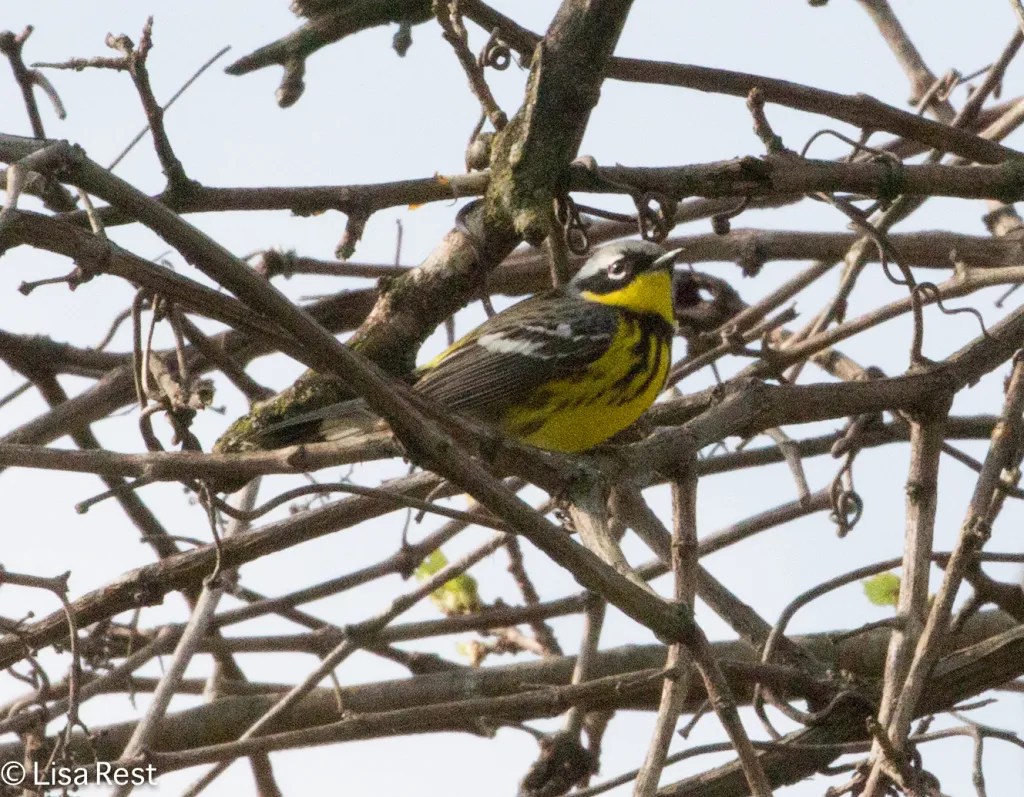
Warbler migration always seems to be defined by the appearance of “Maggies” and Redstarts. Magnolia Warblers are generally abundant in migration, and they always seem to cheerfully accept their fate as lens subjects.

The male Magnolia Warbler has that big bright white wing patch. The female Magnolias do not have the wing patch and their black streaks don’t form a “necklace” or thick black streaks.

More male Magnolias…

And some females…with one paler male snuck in below.

Just a couple more…

The American Redstarts are somewhat harder to capture. This is at least a two-year male. The first year males look a lot like the females in that they do not have the bold orange and black coloring.

These birds tend to forage more frenetically than some other species.

I think this is a first-year male. It’s sometime hard to tell, but the yellow on the breast is a bit orangey-er than the yellow on the females.

These birds may appear dull but they make up for it with their active foraging. Two days later when the leaves filled out on the trees, it was much harder to see them.

This bird lost its tail!

A few more of what I think is a first-year male American Redstart, sometimes affectionately referred to as a “yellowstart.”

There are still a few Yellow-rumped Warbers around and they have the same colors as the Magnolias, just arranged differently.

Wilson’s Warblers are among my favorites. But as of this outing they managed to hide their trademark black caps almost entirely.

If you click on the photos in the gallery below you might be able to see only a hint of a black cap in one or two of them.

So there are a few more warblers I have yet to cover – not as many photos of each species (whew!) – and some other birds seen as well, and then plenty more migration madness to continue. I am convinced the male Northern Cardinals are enjoying being basically ignored by us warbler-hungry photographers.

I am very tired from going out to hear a friend perform last night and then getting up early to do the spring migration walk in Columbus Park, so I may not have much to say for a little while. But I will be back with the review of Tuesday’s birds, and there are so many more I have seen since then.

Warbler Overload – Part II

Few warblers are as exciting to observe as the male Blackburnian Warbler in springtime. I keep asking myself why I took so many pictures of at least three individuals on Tuesday, but the only answer I can come up with is “because I could.”

I mean, this is truly a good reason to give in to obsession.

And with so many opportunities, I kept taking them…

Another beautiful bird is the Bay-breasted Warbler. If you remember my fall posts at all, I had several of these birds represented and they looked almost nothing like they do now.

The thing that made it so relatively easy to keep clicking away was the combination of hungry birds in numbers. I really think the birds were less concerned about me than they were with fueling up for their flights north. Also, the leaves were just starting to appear, so it was easier to see the birds than even a day or two later.

A few more of the Bay-breasted…

If you have made it this far, let’s go for a third species.

Black-and-white Warblers I had already seen and photographed this spring, but it’s always a challenge to get a good image.

Just to let you know I did not ignore the Robins…

I will be back with yet more warblers from Tuesday and other birds observed. Thanks for your patience and understanding.

Warbler Overload – Part I

Suddenly the weather is summer, and with the heat after a long, rainy prelude, the trees are leafing out and spring migration is in full force. I was contemplating two other posts of recent outings but Tuesday’s visit to Riverside and Riverside Lawn demands attention first. I didn’t go out yesterday because I was helping a friend, but it’s just as well as I needed some extra time to process nearly 1,000 photos to begin this series.

There was a tremendous fallout of warblers along the Des Plaines River. While I anticipated as much – this was the kind of thing I dreamt about previous years while stuck sitting in front of a computer at work – I just didn’t expect the magnitude of this fallout. I literally saw so many individuals of several species, it was almost maddening. It took me 3 hours to cover a little over a mile, which up until now has taken me two hours tops. I was moving slowly anyway, as the morning grew hotter, but I just kept seeing more and more birds. I counted 16 warbler species. They will not all be represented here, but I have even more species and photographs to come from the day before at the Chicago Portage. So hang on, here we go. (I have decided to split this up into three or more installments or it will never happen.)

I started seeing Chestnut-sided Warblers right off the bat, which made me happy because I had not yet seen them this year.

They ran the gamut, from brightly-colored individuals…

To drab birds…

And somewhere in between…

If I accomplish nothing else in this first of many installments, I must pay tribute to the beautiful Prothonotary Warbler that is at the top of this post and appears in more photos below.

Seeing the Prothonotary so well and having the opportunity to photograph it was breathtaking.

I would like to continue but it’s late and I have to get up early to beat the heat tomorrow morning, so I will be back as soon as possible with some more birds from my big warbler day. Because I have to make room for even more birds seen since then!

They’re Here

I saw some birds this week – in between practicing for the Spring Music Festival which will occur tonight. We had a rehearsal/run through last night and I survived. At least people like the song, so I guess that’s a good indication of something.

We canceled our scheduled walk at Columbus Park this morning because the weather was potentially threatening with the possibility of thunderstorms. We will more than likely have that kind of weather later tonight as we warm up to 70 degrees. But the overnight lows are still predicted to be in the 40’s for the coming week, which delays the yard cleanup even further.

These photos are from Monday at the Chicago Portage. I warn you, there are Way Too Many of them. The warm wave from the two days before brought migrants into the area. It was cooler on Monday so a lot of birds were foraging for food on the ground, like this Pine Warbler sampling seeds on the asphalt path.

Believe it or not these photos are of two separate individuals. I couldn’t capture them close enough to each other for a group photo.

The one Pine Warbler in the trees at first was not recognizable to me, but it turned out to be a Pine, albeit a drab one. The photo of the undertail helped me identify it.

A few more of this bird. Either way, it blends right in with the wood.

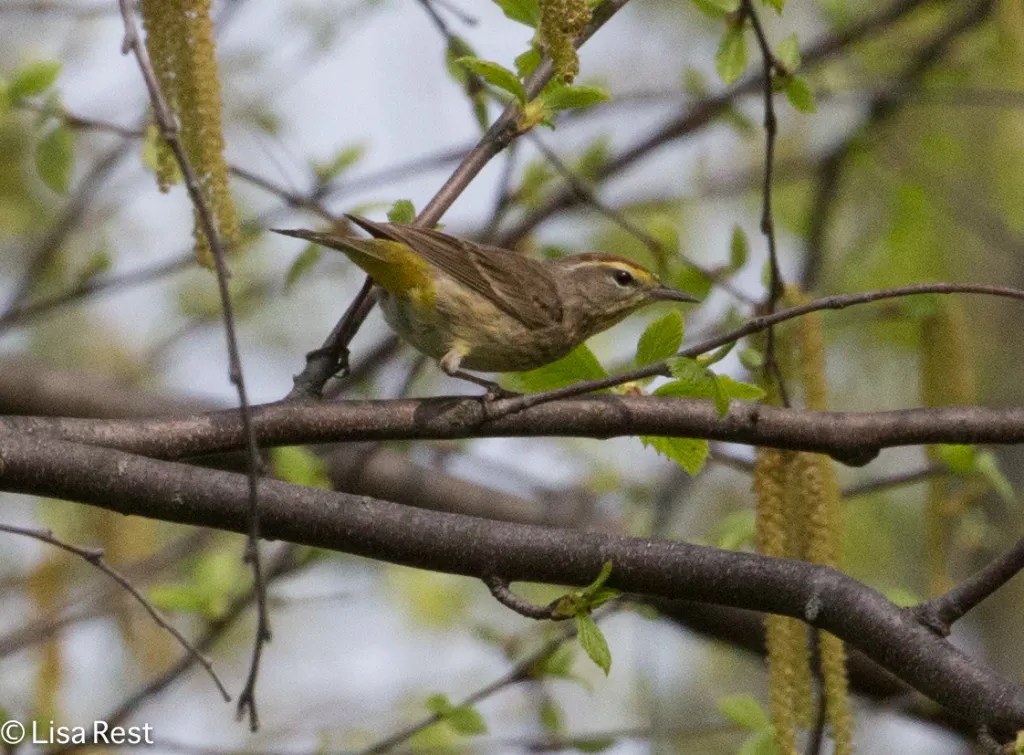
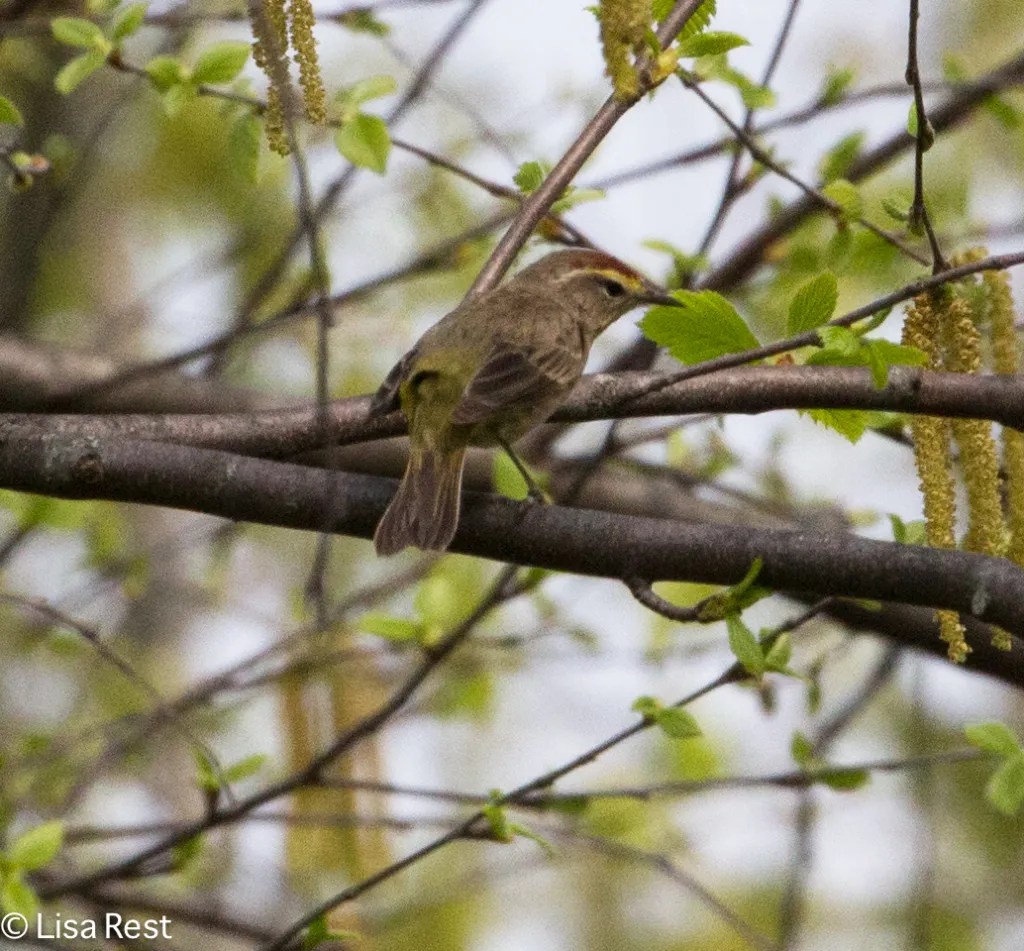
Palm Warblers have been all over the place in great numbers. it has gotten so that after taking all these pictures I haven’t bothered much with any of them the rest of the week.

I barely managed a few fuzzy photographs of the Black-and-White Warbler below.

it was delightful to see the return of a Yellow Warbler. One or two always stays the summer at the Portage so I expect to see this species again.

Warblers were not the only thing going on. There were lots of Chipping Sparrows, albeit most of them on the ugly asphalt.

There were a few group photo opportunities.

Palm Warbler and Chipping Sparrows
Chipping Sparrow and Field Sparrow

There were one or two Field Sparrows and then quite a number of White-throated Sparrows through the break in the fence.

Field Sparrow
White-throated Sparrow

I saw my first Baltimore Oriole of the year. My feeder will go up tomorrow. As you can see he wasn’t moving much.

Vocally and actively, the Blue-Gray Gnatcatchers are back. The lack of light emphasized the the Gray half of their name.

Here’s what the sky looked like that morning.

I had a cooperative White-breasted Nuthatch doing his thing.

Male Northern Cardinals are a little easier to photograph these days as they advertise their territories.

But the lack of light kept everything pretty cool-looking.

In her elusive stage, I managed half of a Red-bellied Woodpecker.

My volunteer American Robin. They are all over the Portage now.

The Yellow-rumped Warblers were the first to show up, but now their numbers are diminishing.

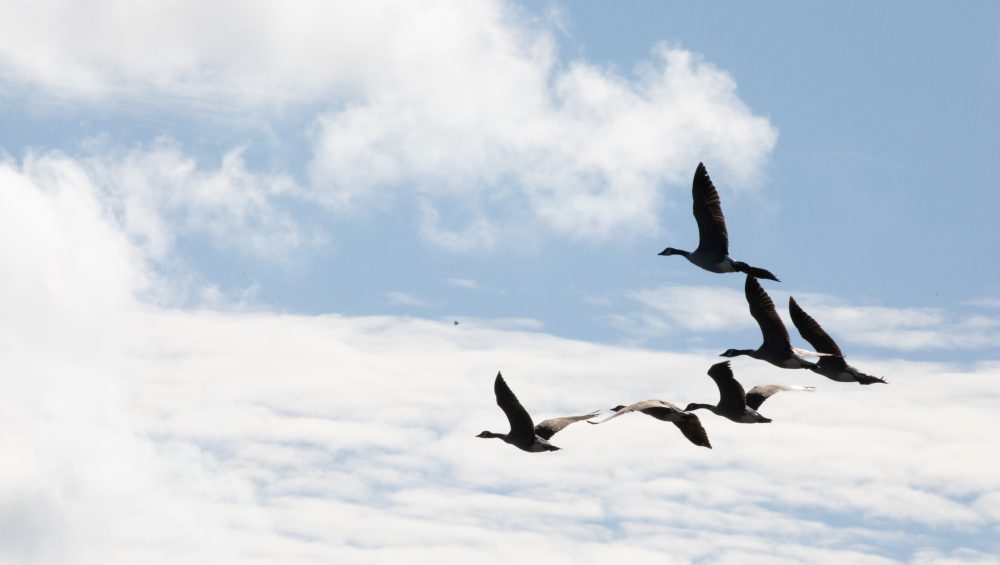
The return of water this year is making the place attractive to waterfowl again.

Blue-winged Teal and Canada Geese

It would have been nice to see the rest of the bird below, but I think after going back and forth between Hermit Thrush and Swainson’s Thrush, it’s the latter.

Northern Flickers are determined to not be seen and this one wasn’t any different.

The Great Egret stopped by to see if conditions were conducive to fishing. I can only assume the sight of me changed its mind. But it was back the next day, on the bank of the stream.

I can only imagine what these Mourning Doves were up to. If that’s the male on the right, his neck feathers are iridescent…

I think these are flowers of a Box-elder Maple Tree. I found them attractive.

So thanks to the canceled bird walk and my nap, I was able to finish this offering. If you made it all the way to the end of this post you are a rock star! I must go back to my chores and prepare for this evening’s performance. I hope to be back again sooner after all this. Thanks for checking in and Happy Spring!

Fall Warblers – Getting Ready for Spring

I had planned on this post days if not a week ago… This could be my last ancient fall warbler photos post. Even though we will still have some cold weather to deal with, spring and the longer days are gaining attention from the birds. It won’t be long before the trees leaf out and warblers start to arrive. Red-winged Blackbirds have already started setting up territories as of March 1.

So here are a few reminders of what the warblers looked like in the fall. Below and at the top of the post is a Bay-breasted Warbler.

Below is one quick capture I managed of a Northern Parula.

Yellow-rumped Warblers like the ones below will look quite different in the spring.

Male Nashville Warblers have a tiny red spot sometimes visible at the crown. If you click on the first image below you might be able to see a hint of red on this one.

One sought-after warbler that I saw a few times but didn’t manage to photograph until a later visit in October was this male Black-throated Blue Warbler.

There were a lot of Black-throated Green Warblers this past fall.

And many Blackpoll Warblers were available for observation.

I will never tire of Magnolia Warblers although they were ubiquitous this past fall. I really think they like to flirt with the camera lens.

Not a warbler, but there was a very well seen Cooper’s Hawk that day.

Things are getting a bit more interesting as spring approaches and I will be back as soon as I can with more photos and reflections. Life goes on. Sometimes surprisingly so.

Oops, I almost forgot the obligatory American Redstart.

Falling Back

Blizzard conditions are keeping me inside and I am tired of winter, so now I have some photographs from last September 16 at the Chicago Portage.

Before I continue, here’s what it looked like yesterday late afternoon in my yard. The birds quickly got over their spring fever and came back to the feeders in the driving snow.

The sun is shining almost too brightly this morning and the freshly-fallen snow is reflecting it. After putting the feeders back out and shoveling the accumulation that was left, I was not eager to go out for a walk in the bitter cold. I will get enough cold tomorrow at the Gull Frolic.

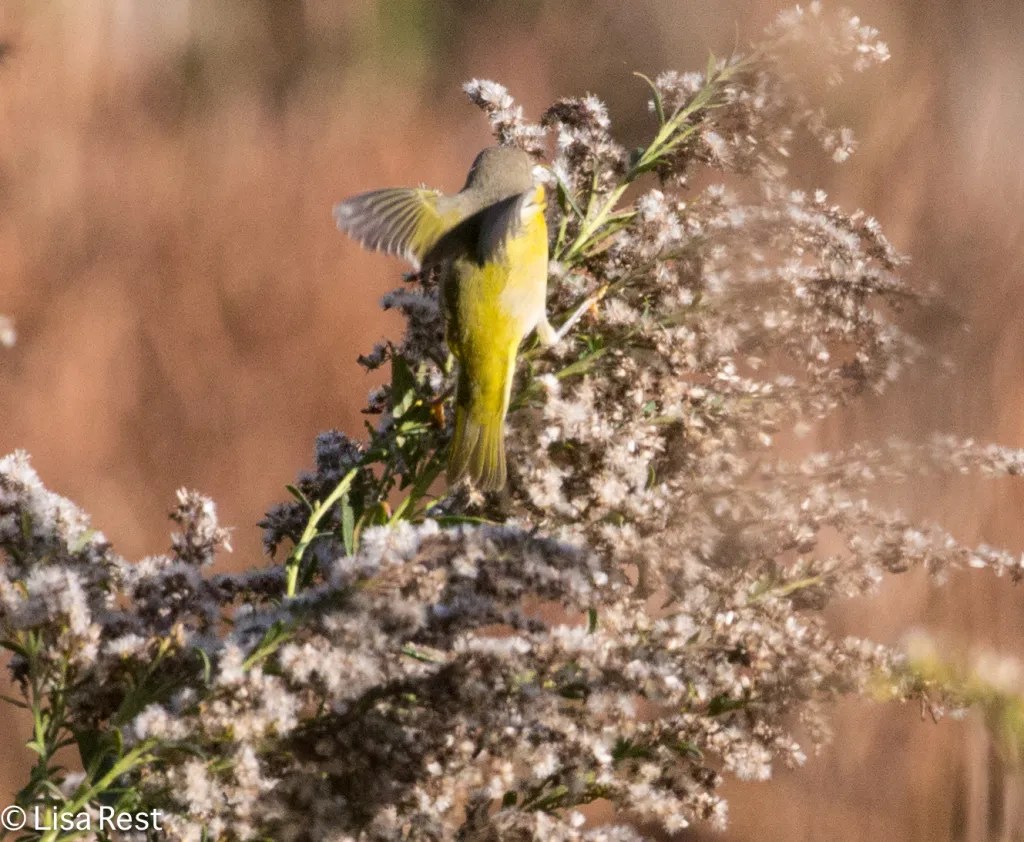
Back in September, there were some fall warblers, like the Nashville Warbler below complementing the Goldenrod.

Even the “regulars” looked better in September.

Cedar Waxwings were all over the pokeberries.

Looking forward to the transformation back into this below.

I was a bit amused by this Red-eyed Vireo who seemed to be contemplating making lunch out of what I think was a spider.

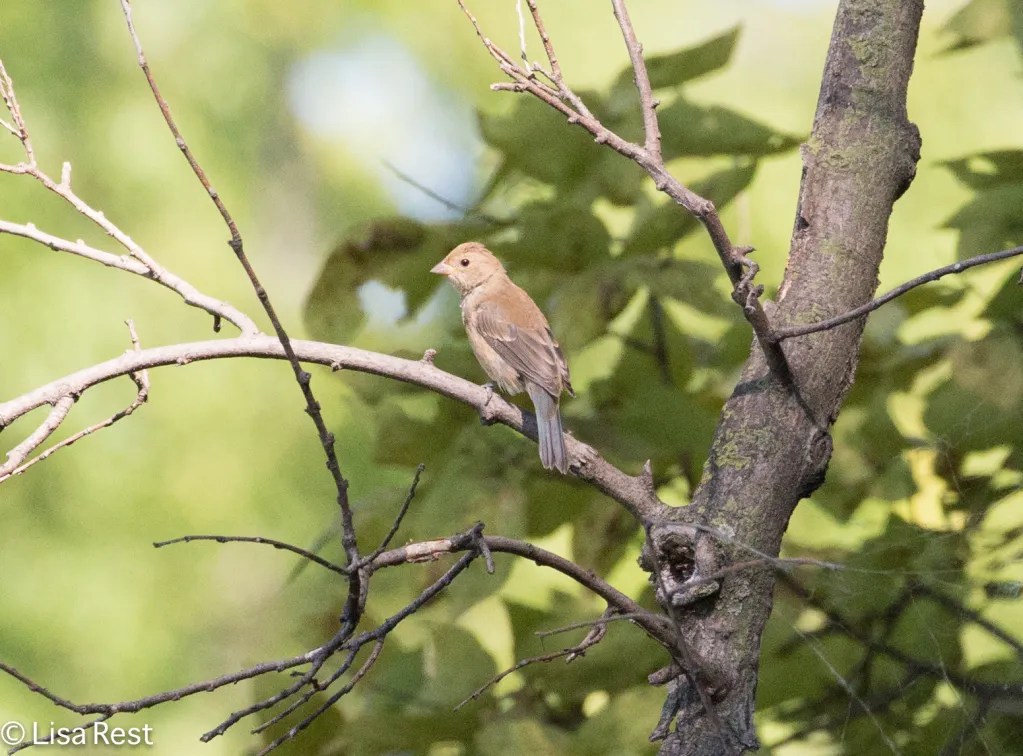
Indigo Buntings below – a female, and then what appears to be a transforming male.

I am curious to see what warbler species will predominate this year. There were a lot of Bay-breasted Warblers last fall.

I can expect to see American Redstarts this spring.

Swainson’s Thrush

After trying to no avail to convince myself that I should be feeling better, go out, brave the sunshine for a brief walk and maybe swim earlier, something seemed to be pulling me back. A few aches and pains? Maybe, but that hardly ever stops me. I sat down on the futon with some coffee to assess my mood and continue with this post. Then I heard a thud as a Zebra Finch fell out of a hut onto the top of a cage. This is not normal. Birds don’t fall. It was a hen who seems to be unwell and she will likely go quickly. It didn’t take the males long to figure out she was compromised and they tried to take advantage of her. I jumped up to rescue her and scooped her up easily enough by hand as she wasn’t really able to fly. I held her close to my heart for a moment and then put the poor girl in the bottom of the former budgie cage which is a smaller space for her to rest in peace, so to speak. Maybe my lack of resolve this morning was a response to her waning energy. Whatever it is, I was glad to save her from torture in her last hours. She has since left the cage but is defending herself against assault: I will keep my eye on her. My coffee is getting cold.

Fall Migration Retrospective

I stepped out Friday morning to go birding and right outside the door, my camera strap broke and dropped the camera and 100-400mm Canon L lens on my concrete porch floor. There was no way I could have foreseen this accident, but even with a newer strap I will more likely be holding onto the camera body when there is pavement underfoot.

I proceeded to go birding anyway. The camera seems to be fine. But the zoom ring on the lens is stuck somehow making it too tight to turn, so I am sending the lens for repair. I went back to my old lens yesterday, which has a manual push-me pull-you zoom on it – using it was a bit of an adjustment. But luckily I don’t have as many birds tempting me to photograph them as I did back in September, which is when I took the photos in this post. September 30, to be exact, at the Portage.

The lovely lady at the top of the post and in the gallery below is a female Common Yellowthroat.

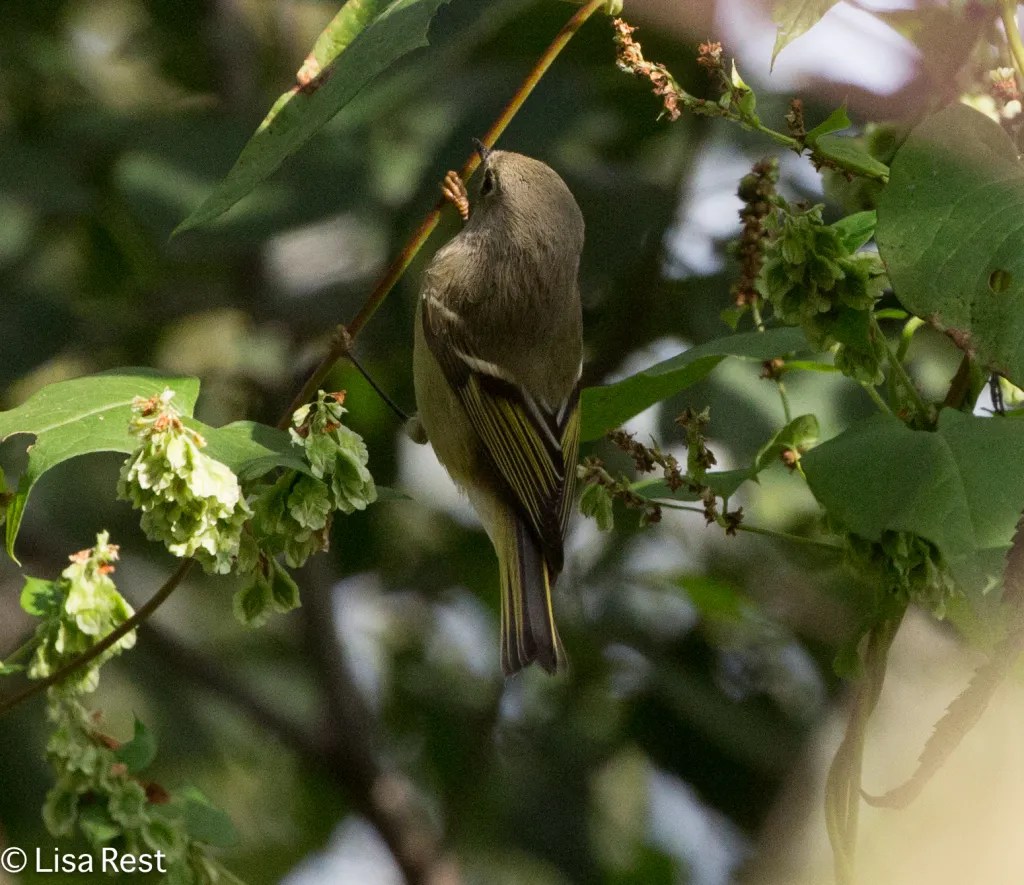
Kinglets were showing up too. The Ruby-crowned Kinglet below gave me plenty of looks at its crown without the red. Then I had barely one good shot of a Golden-crowned Kinglet, but there were many more in the days that followed.

Golden-crowned Kinglet

One bird I felt privileged to see a few times this fall was a Northern Waterthrush.

Not a warbler but a nice-looking Red-bellied Woodpecker…

Below is a Northern Parula.

Black-throated Green Warblers were abundant this fall.

In the I Took Way Too Many Pictures Department, the most cooperative bird of the season had to be Blackpoll Warbler.

Sunshine and greenery at the Portage … before the fall. And a pair of Canada Geese for good measure.

One more of the Common Yellowthroat

I will be back soon with another post, slipping in and out of real time … it feels almost normal these days anyway, to be slipping in and out of reality.

Going Back a Bit

I have been out locally the past two weeks and there is much to post about, but I thought it might be time to take a historical break. These pictures are all from October 19th at the Portage. Only a little over a month ago, there was still more color among the birds than the leaves. I spent a lot of time with this Nashville Warbler.

Perhaps in the instance below the leaves outshone the bird – a pretty drab-looking American Goldfinch.

The other late fall warblers were on hand. Below is a Yellow-rumped Warbler.

And the one I kept seeing later and later into the season, an Orange-crowned Warbler…

Barely visible but I would know that face anywhere (Orange-crowned Warbler)

Not a lot of sparrows on hand but I managed to capture these two.

White-throated Sparrow
Lincoln’s Sparrow

And the Kinglets – Golden-crowned and Ruby-crowned…

It’s been wonderful to see Brown Creepers on so many occasions.

Always glad to see a Black-capped Chickadee who seems to return the sentiment.

This could have been the only Great Blue Heron I saw here for months since the drought caused the water level to drop so drastically.

Not a wonderful place for a Hermit Thrush to pose but I was glad to see it.

It wasn’t quite woodpecker “season” yet but I managed to see this female Downy Woodpecker.

There are lots more historical visits to make sense of – indeed a flurry of fall warblers that I was so busy taking pictures of I barely have barely had time to go through them, so they may periodically provide a little visual warmup during the cold.

I am mourning the death of my beloved singer/songwriter/implacable musician Zebra Finch male to whom I gave the name of Arturo Toscanini. He died Thursday morning. I found him on his back, on the floor of the dining room by the windows. He was still warm when I picked him up. He had been singing a lot lately, and I think perhaps he had been telling me his time was coming because I found myself thinking about how old he had to be, even though he had no signs of aging or impairment, other than it seemed his little goatee was getting whiter and whiter. The blessing in all of this is that I have one of his offspring who is singing an abbreviated version of his Arpeggio Song and an even shorter memory of his TaTaTaTaTAH Song. Also, other birds have taken up the actual Toscanini Song that he used to sing a long time ago. And there are many more songs among them to catalogue and follow. At some point I hope to go through the years of recordings (I determined I must have gotten Arturo sometime in late 2014) to see if I can put together a timeline of his compositions. In the meantime, I am incredibly thankful for all the avian musicians I still have with me. Singing is their raison d’etre, and music is life.