Post in search of a title

Monarch McGinnis 09-17-17-8326

A last Monarch…

As I sat here last night trying to make sense of this random conglomeration of images before I went to bed, I wondered if we would indeed finally get some rain. It seems even our impending drought cannot ignore the possible impact of Nate, the current tropical storm. We have had some constant drizzly rain and it looks like we should eventually get some cloudbursts. But appearances on the radar can be deceiving. I will keep my hopes up.CEWA Portage 09-09-17-8040RWBL Ottawa Trail Portage 09-17-17-8112Continuing with last month’s visits to nearby Cook County Forest Preserves, young birds like the Cedar Waxwing and Red-Winged Blackbird above were getting ready to leave. It’s become evident to me over the past few years that European Starlings like the one below are not necessarily winter residents either. But the young Mourning Dove blending in with the dead stump below the it will likely stay.EUST Portage 09-09-17-7747MODO Portage 09-09-17-7734Hidden in the leaves about waist-length from the ground at Ottawa Trail was the Ovenbird below.OVEN Ottawa Trail 09-09-17-8061And there just seemed to be too many ways to capture Northern Flickers. They have likely pretty much disappeared by now too. For a last look you can click on the pictures below for larger images.


American Robins don’t disappear completely in the winter but they will be traveling in flocks soon searching for any fruit left on trees.

Another hardy winter resident is the Black-Capped Chickadee.BCCH McGinnis 09-17-17-8303A few more Red-Winged Blackbirds.RWBL Portage 09-09-17-7794

Iconic Tree Ottawa Trail 09-09-17-5262

Ottawa Trail’s landmark tree

Last year following my cataract surgery I got all turned around and could not find the trail that runs along the Des Plaines River at Ottawa Trail, but now I am finding it easily, and one reason why is because I have always located the landmark tree above.NOCA Ottawa Trail Portage 09-17-17-8074I am grateful for Northern Cardinals. They will be here all winter to brighten up the landscape.


I’ll be back soon with the last warblers… Still trying to find that work/bird-and-choir-life balance. I will bow deeply at the first thunder clap.


Late Summer in the Yard

AMGO 09-07-17-5224

American Goldfinch (female)

I had a couple extra days off last week after the holiday, in between jobs, which gave me more time to spend in the backyard. I think the wild birds were starting to get used to my presence, so it is with reluctance that I go back to being The Scary Human Who Fills The Feeders.

A female Ruby-Throated Hummingbird spent perhaps a week in the area, and she would generally show up just before sundown which made it difficult to take pictures of her. One morning early when I went out to fill the feeders I saw her sitting in the redbud tree so I suspect she came more often than I was aware. I did have a beautiful male show up one afternoon but he was gone by the time I got my camera.

The yard has a lot of yellow going on with several varieties of goldenrod which I planted, for the most part, last fall. There is also one almost terrifyingly humongous sunflower which is more like a tree than a plant. I think the reason why it is so huge and still going strong is because it’s very close to the compost heap. I may need an axe to cut it down but for the moment I still find it cheerful and entertaining as it spreads out onto the cement slab.

The goldfinches have been busy chowing down on seed heads. They are probably responsible for a lot of the echinacea taking over the back bed. But that’s the original reason why I started the wildflowers years ago anyway, to attract birds, so I’m happy my yard has now become a destination.

After years of trying to outsmart squirrels I have given up and they seem to be a bit less annoying as long as they get their daily peanuts.

House Sparrows never get much photographic attention from me, but they eat most of the birdseed and are such a presence I felt I should take a few pictures.

DOWP 09-07-17-5206WBNH 09-06-17-5110The two birds who capitalize most when the House Sparrows have left the yard are the Downy Woodpecker and the White-Breasted Nuthatch.

Above, two photos of a couple House Finches for the record. They were not in the best of light or feather.

Bees have been constant if not as numerous as previous years.

The Mourning Doves are usually very skittish and whenever I find a pile of feathers from one the local Cooper’s Hawk has made off with, I wonder how many are left.

Even after you click on the picture above, it may be difficult to see the spider web on the left. I saw the garden spider in the middle of it once, but it has proved to be camera-shy. The web spans the narrow sidewalk running along the south fence. I am not going to be the one to destroy it by walking through. On the right, a bee on a remaining purple coneflower.

Squirrel Yard 09-02-17-4054As long as the squirrels can drink upside down hanging from a tree, they won’t knock over the birdbaths. If I wake up tomorrow to overturned bird baths the yard was likely visited by a nocturnal creature.

NCA09-06-17-5137

Male Northern Cardinal finding his feathers

My first full week with my new employer starts tomorrow. The new job and choir commitments likely require me to tweak my schedule to figure out where and when I can fit the blog in. Fall migration also demands attention. Drum roll, please.

Wish Fulfillment

RTHU 08-19-17-2963I’ve had hummingbird feeders up since May. Three feeders in the backyard, and a couple weeks ago after a hummingbird hovered in my front yard, I added another feeder for the front porch. The best feeder for me is the one I can see while I’m standing at the kitchen sink looking out the window to the branch of the sumac tree it’s hanging from. And Saturday early evening my eye immediately followed that quick, darting flight of a hummingbird to that exact feeder. I grabbed the camera, went out the back door and waited. The hummingbird, a female Ruby-Throated Hummingbird, to be exact, decided she’d rather be at another feeder that hangs from the redbud tree, so that’s where I got these few pictures. But at last my wish was granted and hanging the feeders was no longer in vain.

I didn’t see a hummer on Sunday, but last night after work I did see a hummer come to the farthest feeder hanging from the crabapple tree.

Also in the yard late Saturday was a female Downy Woodpecker and a female cat that I often catch lounging on my back cement slab where once a tiny garage stood, but it seems she now has a new observation deck across the fence by the neighbor’s garage. She closed her eyes for the camera.

After all this excitement I figured my chances might be good for finding a hummingbird at the Portage Sunday morning. so I got there a little earlier than I have been (when I pulled in, there were no cars in the parking lot) and sure enough, right around the first bridge over the duckweed, I found this lovely individual.

RTHU 08-20-17-3018

Female Ruby-Throated Hummingbird

I should mention that I mustered up the courage to take the Tamron 100-600mm lens now that I’ve enabled the back button focus feature, so I was able to get more pictures from farther away after being frustrated by the distances last week. Below, a couple Indigo Buntings.

And juvenile American Robins in their ever-changing plumage are always interesting to see.

There seemed to be a lot of juvenile Blue-Gray Gnatcatchers too. I think I caught this one after a bath.

It wasn’t too difficult to find an obliging Cedar Waxwing. This one is enjoying Pokeweed berries and a staring match with the camera lens.

CEWA 08-20-17-3189I didn’t get great pictures of any individual American Goldfinches but they stand out against the duckweed palette below.

AMGO 08-20-17-3044Below, one very distant Tiger Swallowtail butterfly and another Indigo Bunting.

When I stopped by the second bridge, I heard a White-Breasted Nuthatch but saw this Black-and-White Warbler foraging like a nuthatch on a tree.

BWWA 08-20-17-3264I lost track of the warbler but then found the nuthatch, below.

I still had a little time so I decided to see if anything was up at McGinnis Slough.

McGinnis 08-20-17-3357There was not a lot of activity. The large numbers of swallows and swifts were gone and nothing else had noticeably replaced their activity. But I did get a couple interesting photographs of three of the same species I had at the Portage.

INBU 08-20-17-3314

Indigo Bunting

BGGN 08-20-17-3347

Blue-Gray Gnatcatcher

CEWA 08-20-17-3253

Cedar Waxwing

One more bird from the Portage…

SOSP 08-20-17-3111

Juvenile Song Sparrow

I have decided seeing hummingbirds at my feeders is appropriate consolation for not being able to view the partial solar eclipse yesterday. The safety glasses I ordered over a week ago never arrived, and I never received a reply to any of my email inquiries, so now I am digging in for a refund. Even if the glasses do finally arrive, I can’t plan to be around for the next eclipse, which is in 2024 and I’d have to travel to see it, let alone find the glasses 7 years from now. I did receive a camera filter in time for yesterday, maybe I can find another reason to play with it.

Where to Start? The Panama Pictures

Keel-Billed Toucan 3-13-17-0788

Keel-Billed Toucan

Finally getting around to those Panama Pictures! Life keeps getting in the way, and of course with spring migration just starting there have been other distractions. But I keep thinking there’s a better solution to my madness somewhere. Maybe that’s what keeps me going. The madness, I mean. If I find the solution, it might all come to a halt.

Ah the Tanagers. Above, probably one of the most common we saw, the Crimson-Backed Tanager, with the male lower left and the female on the right, showing her crimson back. Lucky for me there were only a few possibilities to worry about. The tanagers in some places, especially if they are traveling in a flock, can be confounding.

From gaudy to drab – below, the Plain-Colored Tanager on the left and the Palm Tanager on the right. But I think they have their own subtle beauty.

And below, a White-Shouldered Tanager and the ubiquitous Blue-Gray Tanager which always makes me have to decide whether to spell it Gray or Grey.

All these photos were from the first full day of the trip. Which means there are more days to come (and for me, more pictures to process). We did not travel far from either lodging location, spending four nights at the Canopy Tower and another two nights at the Canopy Lodge in El Valle, the days and locales having blended into a continuum in my head by now, so I won’t have a lot of commentary to contribute. Now that I’ve decided to leave the monster lens at home next time I travel, maybe my dream companion would be a scribe instead of a sherpa.

Both locations had feeders which made it easier to see some of the birds, particularly hummingbirds. White-Necked Jacobins dominated the feeders but you don’t always see the white neck they were named for, so there it is in the picture below. The hummingbird on the lower right is a White-Vented Plumeleteer. Unfortunately the white vent isn’t very easily distinguishable but I like the illumination on the throat.

Elusive antbirds are always a challenge to see. We got lucky with the two below. A Fasciated Antshrike and a Dot-Winged Antwren.

Black-Crowned Antshrike 3-13-17-1366

Black-Crowned Antshrike

The two puffbirds below look almost identical except on very close inspection, which likely kept me poring over the field guide for several minutes. On the left is the Pied Puffbird which I saw last year in the Amazon in Ecuador, and on the right, Black-Breasted Puffbird.

Two flycatchers, the Black-Headed Tody Flycatcher, which is a new one for me, and the Dusky-Capped Flycatcher.

Below is a Streaked Flycatcher, not usually seen from the back, but after 20 or more shots he still wouldn’t turn around so I gave up.

Streaked Flycatcher 3-13-17-1678

Streaked Flycatcher

The Rusty-Margined Flycatcher below can be confused with Greater Kiskadee, Social Flycatcher, until you get the hang of telling them apart.

Back to the elusive with a fairly common but hard-to-get-a-good-photo Squirrel Cuckoo. The picture on the lower right gives you more of an idea of how far away it was.

Green Honeycreepers below.

Blue Dacnis 3-13-17-0864

Green Honeycreeper

Blue Dacnis Female 3-13-17-0882

Green Honeycreeper Female

Below, a Red-Legged Honeycreeper is the bright blue guy, and the green bird is a Blue Dacnis female.  I’m starting to get these guys confused!

Below, a Pale-Vented Pigeon and a Gray-Headed Chachalaca. Click on the pictures if you want a better view, especially of pigeon colors. I love this pigeon. You will see it again in a later post.

Two more for the trying-to-be-elusive list. Cocoa Woodcreeper on the left and Cinnamon Woodpecker on the right.

There’s a lot more but I think I better give us all a break. Which means I can be back that much sooner! Thanks for stopping by!

Night Monkeys 3-13-17-1411

Night Monkey

Baby, It’s Cold Outside: Hangin’ Out in the Yard

blja-yard-1-29-17-7081

Blue Jay through the window

This grey, chilly day produced a few flurries and later in the afternoon, perhaps a sixteenth of an inch of snow. Whatever. I decided to stay home and see who came to the yard, instead of birding elsewhere.

I had to stand out in the cold for what seemed like a long time, I don’t know, maybe it was only 10 minutes but it felt longer, waiting for the birds to come back. Funny how the birds downtown will rush out to greet me, but the ones at home prefer to avoid me at all costs if possible.

But when they did finally come back, I counted at least 46 House Sparrows. Well, I didn’t count them all individually, I thought there were probably 50, but I decided to be conservative and enter the number “46” for ebird. Which makes it look like you did count them individually, I guess.

The cardinals were in the yard, which was nice of them, but the male didn’t want to show himself, so the best I could do was sneak a peek of him hiding behind a branch. The female was more accommodating. Or maybe hungry.

noca-yard-1-29-17-6994

A Blue Jay has been coming to the yard since I cut down my big tree. And this Blue Jay surprised me by showing up while I was still outside, but the light was so poor (below, left) I couldn’t get a good picture of him or her. Luckily it came back later in the afternoon when I was sneaking pictures through the windows (below, right).

A female Downy Woodpecker was easy to see outside, but the male pretty much eluded me until later I caught the back of his head through the window.

Not seeing so many Dark-Eyed Juncos this week, but there was one, below.

deju-yard-1-29-17-7176I put a new feeder up this week, and it’s apparent I didn’t assemble it too tightly so I’ll have to take it down one of these nights and see if I can make it more secure, but the House Finches seem to be enjoying it.

hofi-yard-1-29-17-7014

House Finches

Doesn’t look like there’s going to be a change in the weather for a while so we may as well get used to this.

bcch-dowp-yard-1-29-17-7147

Black-Capped Chickadee and Downy Woodpecker

I’ll be back in a few with some photos from the wilds of Chicago’s lakefront parks.

Fog Settles In

noca-home-1-22-17-6393

Northern Cardinal outside my house this morning

Inertia beckons. The fog was thick on Thursday when I visited Millennium Park, but it was even thicker this morning when Lesa and I decided to try birding the Palos area.

dowp-mcginnis-1-22-17-6398

Downy Woodpecker, McGinnis Slough

McGinnis Slough was fairly quiet except for Canada Geese that kept flying over. We did see the outline of perhaps 500 or so in the water except we could barely make out their shapes in the fog. There were American Tree Sparrows on the ground not far from the parking lot.

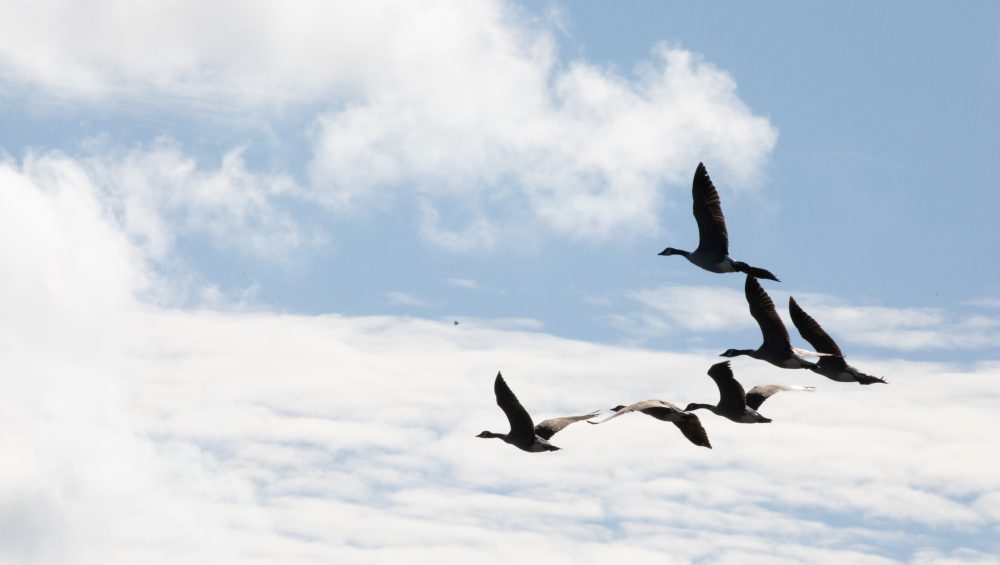
We did manage to see several Common Mergansers at the south end of the preserve. The shot of the geese flying overhead gives you an idea of how foggy it was.

We drove over to the Little Red Schoolhouse to see birds at the feeders, if nothing else, and true to Lesa’s prediction, there were two Tufted Titmice.

We also had our only White-Throated Sparrow at the Schoolhouse. There’s an American Tree Sparrow behind it.

wtsp-little-red-schoolhouse-1-22-17-6504Perhaps the brightest feature at the Schoolhouse was the fungus growing below.

fungus-little-red-schoolhouse-1-22-17-6520Here are a few pictures from Thursday, downtown at Millennium Park. There are perhaps 20 or 30 White-Throated Sparrows distributed in several areas. Below are two that came for the birdseed I had brought with me.

American Robins are starting to show up here and there. They never really go completely away but they associate loosely in flocks in the winter.

European Starlings are returning too. They used to overwinter but the last few years I have noticed their absence, so they must be migrating a bit for a while.

eust-millennium-1-19-17-6359Those tough year-round city natives, Rock Pigeons, are always somewhere in the Loop. Below, two pied pigeons.

Individually they’re really unique. But I have to be careful not to pay too much attention to them or they’ll think I’m going to feed them.

pied-pigeons-millennium-1-19-17-6380This Robin was interesting too. How much color can I get out of any bird in this light?

amro-millennium-1-19-17-6341The forecast is for cooler temperatures, rain turning to snow, winter isn’t over yet. But this week I heard some bird song from a Black-Capped Chickadee, an American Robin and a Northern Cardinal. That gives me hope.

Putzing Around the Portage

amgo-portage-10-23-16-3645amgo-portage-10-23-16-3474Yesterday morning was perfect fall weather, the sun was shining, it was cool but comfortable, and it seemed like I should walk around and get used to taking pictures looking through the camera lens with the right eye again. I have had the new prescription for a week.

mallards-en-scene-portage-10-23-16-3305

In any event I take back whatever I said last time I posted about the Chicago Portage. Perhaps absence does make the heart grow fonder. I noticed when I submitted my bird list to ebird that a month had passed since my last visit. Just seeing the old place in the beginning of its fall colors felt like coming home.

A lot of issues with shadows yesterday. The angle of the sunlight and its brightness made some of the photos almost useless. Above, one of two Cooper’s Hawks, a too-bright White-Throated Sparrow and a House Finch.

The Red-Tailed Hawk above appeared momentarily after the Cooper’s Hawks left. I was glad to have arrived at bird-of-prey time.

Most numerous of all species were Mallards, although there was a group of 26 Canada Geese too.

Above, a Red-Winged Blackbird and a Red-Bellied Woodpecker. As the days grow ever shorter, chances to see both species will diminish.

I was surprised to see so many House Finches, like the two above. Maybe the habitat change is taking effect.

sosp-portage-10-23-16-3525

Song Sparrow

I caught this Song Sparrow too busy eating something to flush, and thankfully for me, he was in better light.

Black-Capped Chickadee and Dark-Eyed Junco… the Junco is proof that winter is on the way.

cawr-portage-10-23-16-3625

Carolina Wren

I heard the Carolina Wren while I had stopped to talk to a fellow Portager, and was very glad to find it later, even if it was somewhat hidden from view. I haven’t seen or heard Carolina Wrens here for at least 2 years. But migration being what it is I shouldn’t get my hopes too high.

Even though I missed the raptors flying, I did get a helicopter. Maybe I scared it away with my lens… The photo on the right is just some marshy overgrowth.

amgo-portage-10-23-16-3580

American Goldfinch

The Goldfinches were numerous and busy eating. I’ve been busy too planting more for them to eat this time of year in my yard, since they seem to have turned their beaks up at the niger seed. But if I can’t attract the flocks I used to with that stuff at least it’s good to see them happy at the Portage.

I’ll be back with Part 3 of the Galapagos.

Back to the Amazon

Gilded Barbet 7-5-2016-4578

Gilded Barbet

These pictures are from two days at Sacha Lodge in the Ecuadoran Amazon. The first day we spent time at the wooden tower. There were two towers available to us, the wooden and the metal. The wooden tower was the oldest and construction had already begun to replace it while we were there. The climb up the narrow steps all the way to the top was excellent physical therapy. This tower was built around a huge tree, part of which you can see in the pictures below. A canopy view is a mixed blessing sometimes. While you can see birds on the very tippy-tops of trees, they are often too far away to photograph well. So generally the more detailed photographs were taken on the ground either on the way to the tower or on the boardwalks. Below pictures are one of the entire tower from the bottom, and what it was like to be on the top.

I added two new parrot species to my life list that first day we spent at the wooden tower. Below, on the left is a Black-Headed Parrot, Scarlet-Shouldered Parrotlets on the right.

Here’s the only Attila of the trip.

Cinnamon Attila 7-5-2016-4493

Cinnamon Atrila

You never know who’s perched on a branch but in this case it was a lot easier to see the birds below: a Straight-Billed Hermit and a Russet-Backed Oropendola.

Trogons are so amazing. We saw both of these on the same day. I think a Two Trogon Day is exceptional.

Green-Backed Trogon 7-06-2016-5113

Green-Backed Trogon

Black-Throated Trogon 7-06-2016-5231

Black-Throated Trogon

We saw some other creatures too, of course, but the Squirrel Monkey was much more difficult to capture than the snake. Squirrel Monkey and Anaconda. Click on the picture to see the monkey a little better. I think our guide told us the Anaconda was a youngster…

The little bird below is a Slender-Footed Tyrannulet. Whatever possessed them to give it this name is beyond me. Slender-footed as compared to what? But it’s a lovely little bird. And you can see his feet.

I had an opportunity to try to capture the Black-Bellied Cuckoo below both days, first from the tower on the left, and the photo on the right was taken from a closer vantage point.

Below on the left is a Yellow-Tufted Woodpecker, and on the right, a Spot-Winged Antshrike.

It was very exciting to get a good look at a King Vulture, below. Although I think I have seen this bird before, I have never seen it so well.

King Vulture 7-5-2016-4871Tanagers were tough to get photos of on this trip. On the left, Silver-Beaked Tanagers which we saw almost daily, and on the right, a glimpse of a Paradise Tanager from the canopy tower.

You have to work a little bit at finding the bird below.

Speckled Chachalaca 7-5-2016-4961

Speckled Chachalaca

The bird below was not shy, and I am just now noticing how lovely his throat complements the fruit on his chosen plant perch.

Pink-Throated Becard 7-5-2016-4778

Pink-Throated Becard

Blue-Gray Tanagers look different in this part of the world, but they haven’t been split from the other I have been so used to seeing.

Blue-Gray Tanager 7-5-2016-4820

Blue-Gray Tanager

Birds by the water…the Blue-and-White Swallows that hung out around the restaurant by the Napo River and a Striated Heron.

Below is the female counterpart to the bird at the top of my post. She’s lovely too.

Gilded Barbet Female 7-5-2016-4770

Gilded Barbet (female)

I will be back soon with more from this trip! I still have some unidentified captures but none of them were great photos, so I can spare you the agony. 🙂

Breeding Birds

PRWA IDSP 05-29-2016-2349Passerine migration is over for all practical purposes. Birds have taken to their breeding grounds and are getting down to business. Here are some photos from the last couple weekends, starting with the Prothonotary Warbler above, seen at Indiana Dunes State Park.

Yellow Warblers are common summer residents around here. The one on the left above was hanging out at IDSP and the one on the right was the first bird I encountered at the Chicago Portage last Sunday on a late, gloomy morning.

Even with a lot more light going on at the Indiana location, backlighting was a constant challenge. Above, compare an adult male Scarlet Tanager on the left with what was determined to be a first-year male of the same species.

There were several Red-Headed Woodpeckers at IDSP. I don’t see them too often so they were a nice surprise.

Perhaps the most exciting find was the hardest to photograph. Above is a male Acadian Flycatcher, not far from where his mate is sitting on a cleverly positioned nest underneath a leaf.

Two looks at Eastern Wood-Pewees above.

We had two Pileated Woodpeckers, and the one above was in the best light but this species still eludes my camera, monster lens and all.

Cedar Waxwings above, at IDSP on the left and the other one from the Chicago Portage.

The Portage had at least four male Baltimore Orioles, and I was able to spot a female not entirely hidden on the right, above.

To add to my list of not-often-seen woodpeckers, I had a Hairy Woodpecker at the Portage. Usually I see Downies everywhere, but this was the only woodpecker that I was able to photograph.

Tree Swallows were abundant. And below, it was a good day for turtles at the Portage.

And for Mallard ducklings…looking almost full grown.

Below, a newly fledged American Robin and an adult.

One more look at the Red-Headed Woodpecker.

RHWP IDSP 5-29-2016-2453I’ve been busy writing silly songs, working, gardening and starting to get ready for a trip that will begin on July 1. I am now glad I inadvertently planned to be away before the Democratic National Convention. I’m growing weary of the daily drama and it will be good for my head to be totally oblivious to politics for a couple weeks.

I’ll try to get back to this page a few times before I go. Thanks for stopping by!


Secrets of the Chicago Portage

Portage 5-1-2016-8019The fact that this place always looks like it may have started on another planet never escapes me, and now I may have some insight into why.

BAOR Portage 5-1-2016-7997

Baltimore Oriole

But first I’d like to share a few photos from last Sunday, just as the rain was stopping. I managed to count 40 species, some of which I never saw but recognized by their vocalizations. So spring migration, in spite of whatever weather challenges the birds face, goes on regardless.

Spoted Sandpiper Portage 5-1-2016-7644

Spotted Sandpiper

My first bird willing to pose was this Spotted Sandpiper. I can’t recall ever seeing one so true to its name. Later I encountered two other common shorebird species, the Killdeer and Solitary Sandpipers below.

Waterfowl was present but not much worthy of a photo except for a solitary Blue-Winged Teal.

Blue-Winged Teal Portage 5-1-2016-7661The only warblers willing to engage with the camera were Yellow-Rumped and Black-Throated Green Warblers. All the warblers I saw were in the same tree. I had a Blackburnian Warbler which is always a treat, but the poor light just wouldn’t do him justice.

Still here’s the Blackburnian on the left and a Palm Warbler on the right.

And for a blue-gray day, a Blue-Gray Gnatcatcher.

Below is a Brown Thrasher who was singing enthusiastically. I neglected to take my recorder with me but shot the video beneath his picture which recorded some of his song. This is a mimid species, which means he imitates other calls and recites them, singing each call twice. Toward the end of the video a Red-Winged Blackbird sings.

BRTH Portage 5-1-2016-7945

So I have to hand it to the woodpeckers for keeping things lively.

DOWP Portage 5-1-2016-8273

I was a bit surprised to see a male Belted Kingfisher land and sit still.

BEKIPortage 5-1-2016-8052And this Red-Tailed Hawk became a bit annoyed with me when I noticed him sitting very still and trying to blend in with the tree.

Close to the end of my outing I found the female Scarlet Tanager below.

SCTA Portage 5-1-2016-8444

But now for the surprise. As I was almost leaving, a cyclist stopped on the bridge where I stood to talk about the Portage. He said he had been visiting this place for 40 years. He didn’t look a day over 52 so I guess he’s been visiting since he was a youngster. Anyway, he told me years ago companies were dumping chemicals here and the water turned numerous bright colors. He also said he had talked to some of the Cook County foresters who were removing trees and they told him they had never seen such strange decay in some of the trunks.

I tried to find some documentation about what he told me but so far I have been unable to find anything specific to the Chicago Portage. I suspect the Environmental Protection Agency postdates the dumping, of course. This explains a lot to me about this strange little oasis in development. It’s sad, but then it’s also encouraging to see how nature rebounds, I guess.

It remains to be seen what the county’s plans are for this place. The cyclist also mentioned something about a commuter train going all the way to Joliet running along I-55 and a transportation hub at Harlem. Just a stone’s throw from the Portage. I can wait.

YRWA Portage 5-1-2016-7891