Raptor Reminiscence: Hawks on the Move

Turkey Vulture, IBSP

Turkey Vulture, IBSP

Two Sundays ago, I joined a field trip organized through the Evanston North Shore Bird Club to the hawk watch at Illinois Beach State Park (“IBSP”). I have known about the hawk watch for years but never managed to get there until now (it’s an hour-and-a-half drive, which usually discourages me). But it’s a treat to visit IBSP altogether. The expanse of fairly undisturbed habitat along the lakefront is restorative.

IBSP Hawk Watch 1I2A3583

The hawk watch is a special, different kind of bird watching. Basically it’s sitting or standing around and waiting for raptors to fly over. And when the raptors are too far away to identify by field marks, it’s great to have the counters available to help you identify them by shape and flight pattern. Luckily not all the birds were that far away.

Red-Tailed Hawk, IBSP

Red-Tailed Hawk, IBSP

Red-Tailed Hawk, IBSP

Red-Tailed Hawk, IBSP

Northern Harrier, IBSP

Northern Harrier, IBSP

Then this past Sunday I birded much closer to home. My friend Lesa met me at Miller Meadow and we walked around there for a couple hours.

American Kestrel, Miller Meadow

American Kestrel, Miller Meadow

From the beginning, we kept running into this American Kestrel who was hunting the preserve. Eventually we were treated to our own miniature hawk watch. As we started to turn back, we counted a Cooper’s Hawk, four Red-Tailed Hawks, a Northern Harrier, a Golden Eagle and fifty-five Turkey Vultures.

Northern Harrier, Miller Meadow

Northern Harrier, Miller Meadow

Turkey Vultures kettling, Miller Meadow

Turkey Vultures kettling, Miller Meadow

Turkey Vulture, Miller Meadow

Turkey Vulture, Miller Meadow

I did not manage to get pictures of all the birds that flew over but considering that most of the year you feel lucky to see one or two raptors on an outing, seeing so many fly overhead was quite exciting.

Juvenile Black-Crowned Night Heron

Juvenile Black-Crowned Night Heron

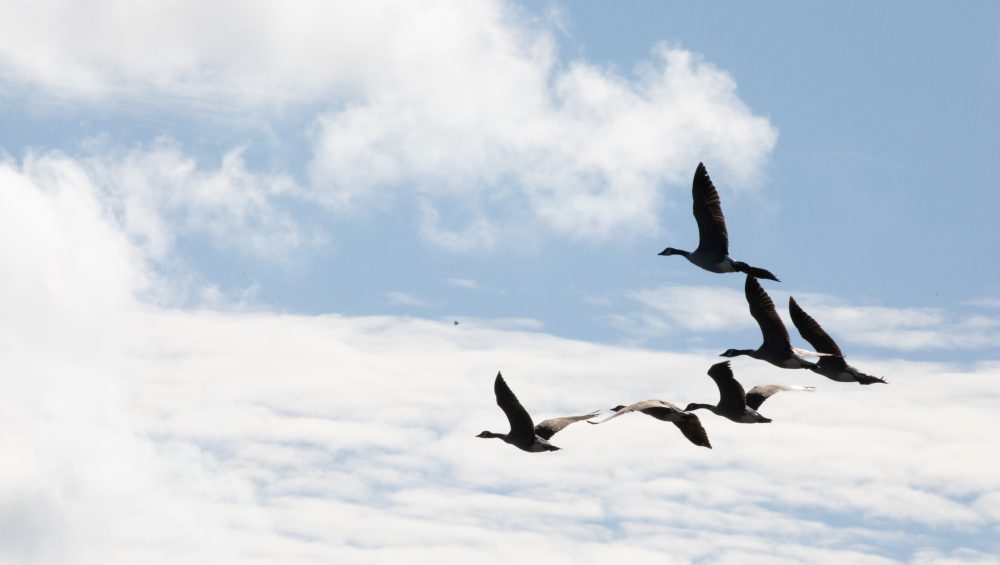
Earlier in the day, we also had a migrating juvenile Black-Crowned Night Heron… sometime before the 200 or so Canada Geese that had been feeding in the fields took to the air.

Geese 1I2A3696

Canada Geese

From Loons to Parakeets

Common Loon, Saganashkee Slough

Common Loon, Saganashkee Slough

I’d been thinking all week about where to go on Easter Sunday. My friends had been to various haunts all week while I was at work, and I was tempted by their destinations. While I had a general idea where these places were, I had never found some of them on my own before. It was fun to get out the maps Saturday night and plan my “trip.”

My main focus was bodies of water in the Palos area of the Cook County Forest Preserves, where Common Loons had been seen. I started out at Tampier Lake, which is positively sprawling. My first bird there was a Song Sparrow, doing what Song Sparrows do best.

Song Sparrow, Tampier Lake

Song Sparrow, Tampier Lake

There were a couple loons and dozens of other waterfowl, too distant to photograph, so after I got satisfying scoped views, I headed toward my next stop: Saganashkee Slough, where I was close enough to a Common Loon for the opening photo. Ring-Billed Gulls were everywhere; this one caught a fish.

Ring-Billed Gull, Saganashkee Slough

Ring-Billed Gull, Saganashkee Slough

Saganashkee is a long, strung-out body of water that covers a large area. After I counted all the birds I could see, I headed to Maple Lake, a smaller, contained lake surrounded by woods. I saw two more Common Loons there and distant views of Redheads and Scaup. Mentally, I was taking notes for future visits to all these places.

I stopped at The Little Red Schoolhouse which has a nature center. Families were out in the cool but sunny weather. After walking part of a short trail, I found this Red-Headed Woodpecker near the parking lot.

Red-Headed WP Little Red Schoolhouse IMG_3826_1

Though he gave me many excellent poses when he was exposed on the open limb above, I like the way he looks best behind the few twigs below. The twig cover is probably when, and why, he let me get closer to him.

Red-Headed WP Little Red Schoolhouse IMG_3838_1

There were a couple Brown-Headed Cowbirds strutting their stuff too.

Brown-Headed Cowbirds, Little Red Schoolhouse

Brown-Headed Cowbirds, Little Red Schoolhouse

My last destination was a power company substation in northwest DuPage County where Monk Parakeets had taken up residence. We used to have a flock locally but I haven’t seen Monks for quite a while in my neighborhood. Time to see some green birds.

I didn’t find them immediately, so I took a walk into a small section of Churchill Woods that runs next to a nearby open space. Besides a Red-Tailed Hawk,

Red-Tailed Hawk Churchill Woods IMG_3868_1

and a Turkey Vulture,

Turkey Vulture Churchil Woods IMG_3877_1

I had my first-of-year Eastern Phoebe.

Eastern Phoebe Churchill Woods IMG2_3900_1

Eastern Phoebe

The section of Churchill Woods below reminds me a little bit of the Portage.

Churchill Woods IMG_3881_1

The Red-Bellied Woodpecker below reminds me of the first time I ever saw one of them. The scarlet shade of red on its head is so distinctive.

Red-Bellied WP Churchill Woods IMG_3892_1

Churchill Woods had its own number of Song Sparrows, this one foraging in dried stalks.

Song Sparrow Churchill Woods IMG_3940_1

As I headed back toward my car, I heard the Monk Parakeets. They were flying into the trees along a dirt road that runs between the substation and the forest preserve. At first they came to taunt me, and then when I told them my friend had sent me, they flew in closer to check me out.

Monk Parakeet, DuPge County

Monk Parakeet, DuPage County

Except for the guy behind me in a monster SUV–whose foot must have slipped off the brake pedal as we were waiting for the stop light to change, jolting my bumper (except for a little lost paint, car and driver are okay)–it was a pretty perfect day.

Goose Lake Prairie

Compass Plant

I finally managed to go through the rest of my photographs from my visit to Goose Lake Prairie last weekend. I’d had no particular target species or agenda in mind. I had hoped to maybe see a Grasshopper Sparrow, but I can’t say I even heard one, that was my only disappointment. A bit ironically, I first heard about Goose Lake Prairie on Cornell’s “More Birding By Ear” CDs, for the recorded songs of birds found there.

The most common species last weekend was probably Eastern Meadowlark.They were no longer singing, but they were chattering everywhere.

This parched version of the prairie is different from the last time I visited maybe three years ago. Rattlesnake Master, one of my favorite native prairie plants, seemed to be the only thing that thrived on the hot, dry weather.

The Wild Bergamot was almost spindly.

Wild Bergamot

Song Sparrows were predictably common. And still singing.

Song Sparrow

I heard a few Field Sparrows before I finally saw one.

Field Sparrow

I walked a long way before I finally started hearing Henslow’s Sparrows and then it seemed like they were everywhere. But they were singing hidden in the tall grass, until finally I managed to see and hear one sitting up. They were more cooperative a few weeks ago at Springbrook Prairie, but I don’t think I have ever heard so many of them as I did at Goose Lake Prairie. I simply adore Henslow’s Sparrows. Once gravely endangered, they have been making a real comeback in Illinois, due in large part to prairie restoration.

Henslow’s Sparrow

There were not too many butterflies or dragonflies, maybe just a few of the more common species.

Monarch Butterfly

Common Whitetail

And of course my photographic nemesis, Indigo Bunting, made a brief appearance.

Indigo Bunting

Sometime after hanging out with the Northern Harrier that dominated a previous post, a Turkey Vulture came to take up the slack…

Turkey Vulture

proving that even vultures can be beautiful.

My Cerulean Warbler Quest

I rode with three friends to Hastings, Michigan last Thursday for Michigan Audubon’s  Cerulean Warbler Weekend. The goal was to get good looks at Cerulean Warblers, and we did after several tries.

“Rainstart”

However, Friday’s weather was miserable. The rain was constant and temperature below normal. This shot of an American Redstart leaving was a typical view.

Cerulean Warbler

And here is a typical look at a Cerulean Warbler high up in the canopy. About all you can tell is that Ceruleans are white underneath. Fortunately, the looks would improve the next day when the weather did.

Red-Eyed Vireo

The rain never stopped the Red-eyed Vireos from singing. I stood under this bird’s tree and listened to him sing for a long time. In the background, my brain was playing the Bach I’m learning, and the Vireo’s song fit perfectly over it. I wished I could have played for him, we could have had a great jam session.

“Drowny” Woodpecker

This Downy Woodpecker was pretty well-soaked.

Saturday started out cloudy but when the sun came out around 11:00 a.m., the birds woke up and we started to get our first really good looks at Cerulean Warblers. Unfortunately I had few photo opportunities. The birds like to stay up high in the canopy, and just when you think you’re on them, they fly. Rather than stay in one area, they  move from limb to limb or tree to tree. So my best shots turned out to be extremely backlit.

Cerulean Warbler

But now that I have had great looks, I plan to concentrate more on the photography next time.

This Chestnut-Sided Warbler was backlit too, but he had a bit more color to show.

Sunday morning we got up very early to take a bus tour of some birding hot spots of Barry County. I finally managed to get a few pictures.

Acadian on Nest

This Acadian Flycatcher was on her nest right by the road. Still pretty dark in the woods.

Turkey Vultures

Out in a field later, there were six Turkey Vultures in the sky at one point. Here’s two of them.

Eastern Phoebe

Eastern Phoebes win my award for This Spring’s Most Cooperative Bird.

Indigo Bunting

This Indigo Bunting was so busy singing, he sat still.

There were a lot more birds than pictures, but that’s okay. We had a good time.

You know you’re on a birding trip when everyone in the bus yells “Dickcissel!” simultaneously.

Dickcissel

We got great looks.