Down by the River

My visits to Riverside last Wednesday and Friday were quiet but interesting. On Friday, I found myself at eye-level with a Great Blue Heron perched in a tree near the paved trail in Riverside. Returning in the opposite direction on the trail, I encountered the heron fishing by the shore.

Leaves starting on the trees

I was so happy to see the footbridge without scaffolding, I didn’t look closely enough to realize that it was still under rehabilitation. After I turned away, a woman passing by said it would be closed for two months! Right in time for warbler migration, I thought. But there are still plenty of places to walk without crossing the bridge.

The Golden-crowned Kinglets were first to show up, and now the Ruby-crowned Kinglets, like the one below, seem to be prevalent. You have to look really close at the bottom photo to see a sliver of red on the crown.

The unusual way the light struck this American Robin made it look almost like another species.

Everything seems transformed by spring.

A White-breasted Nuthatch on my favorite Hackberry tree bark
A Boxelder Maple
Lichen or fungus and moss underneath

Walking in Riverside Lawn, I spotted two Eastern Phoebes near the water. They were both singing slightly different songs.

It’s nest-building season and this female Northern Cardinal was on a mission.

This Song Sparrow was curious, but not singing.

In the fluddle that occurs below street level in the field by the paved path, I found a pair of Rusty Blackbirds.

There was a Common Grackle, for comparison.

Ring-billed Gulls are returning
A very young buck
This was the last time I saw this pair of Red-breasted Mergansers

I am not seeing Red-bellied Woodpeckers as often lately, but I always hear them.

When I got back to my car parked by the Hofmann Tower, the Great Blue Heron was standing in the water by the former dam.

On a whim, I stopped by Zoo Woods on my way to the pool. This is another wooded area that runs along the Des Plaines River and is directly across First Avenue from Brookfield Zoo. It has no trails, only a long, winding drive full of parking spaces. I got out of my car and walked the periphery. I had heard there were nesting Great Horned Owls here. I didn’t find any owls, but there were some other birds. Below is one of the Northern Flicker photos that didn’t manage to make it into the last post.

There was a Yellow-rumped Warbler.

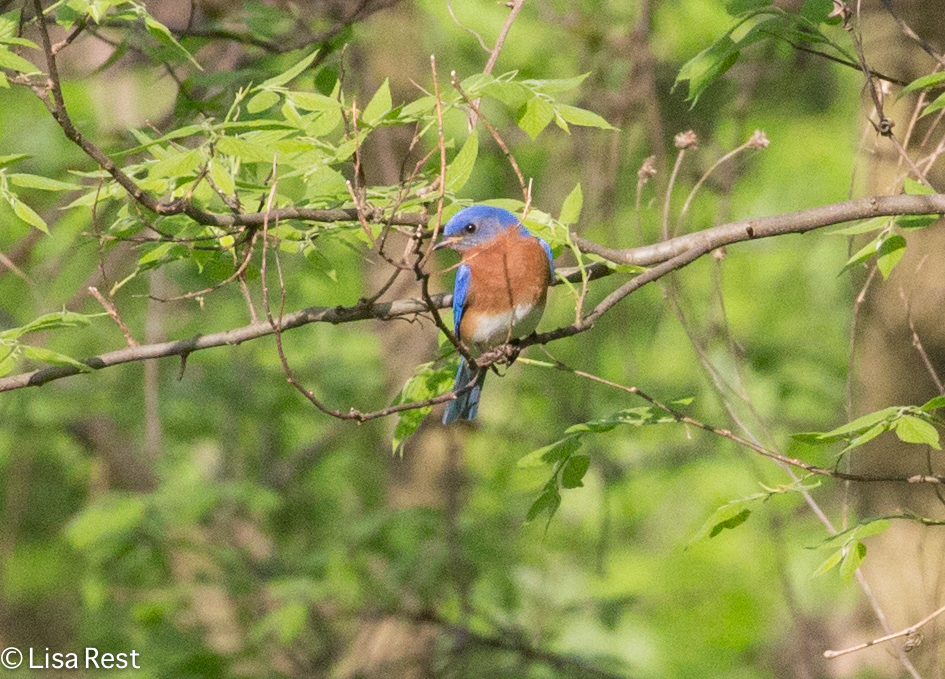
I was delighted to see my first Eastern Bluebird of the season.

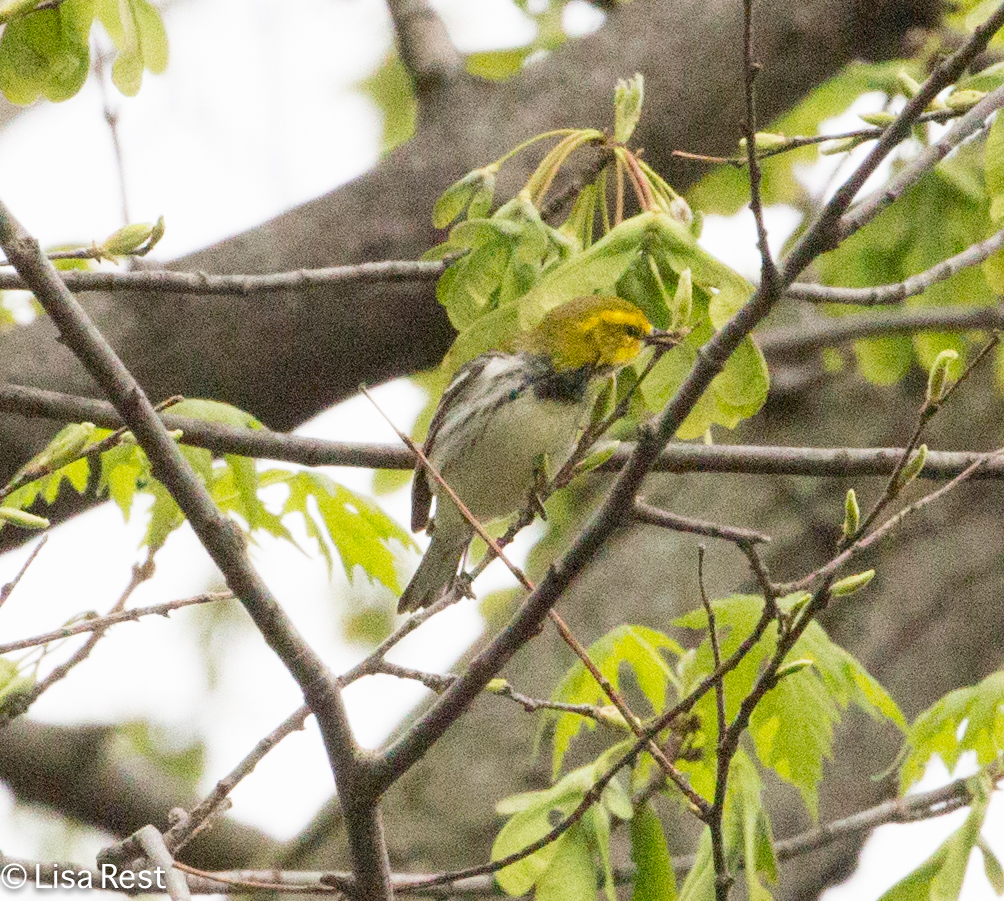
And then right before I left, a bright yellow bird caught my eye. It turned out to be a Pine Warbler.

We have now had two cold days with rain and snow. Mostly it has been cold and windy and barely enough precipitation. I am looking forward to sunny weather tomorrow morning, even though it will be on the chilly side. I hope to be back soon.

Flicker Mania

There has been an abundance of Northern Flickers – also known as “Golden-shafted” – just about everywhere I have been lately. I often wind up struggling to get one or two decent photographs of one in flight, but this spring I have been a bit more successful, so I am devoting an entire short post to a beautiful bird.

Sometimes they are not hard to capture doing a woodpecker thing on the side of a tree, but all too often I will unknowingly flush one and see nothing but its white rump trailing into the distance. The bird below gave me the opportunity to capture its departure.

Often enough I see one anting in the grass.

The individual below was just sitting facing me – but I could not resist taking too many photos.

Here’s a view of the back with the red chevron marking on the head, for comparison with other woodpecker species.

Some more of those golden shafts…

So the Northern Flickers have been very busy lately and they will likely be visible off and on through the summer.

I may be back to this page again soon, as it looks like I will have a morning or two off from birding if the forecasts for rain and snow come true. Almost every day I have seen another first-of-year (FOY) species, so it would be good to get caught up now, before the warblers take over.

Blackened Ground and Blue Sky

What a surprise to visit the Chicago Portage Tuesday morning and find that there had been a controlled burn last Saturday. I had gone to McGinnis Slough that morning and remember passing by the Portage on the way back home and seeing a lot of vehicles in the parking lot. Although I think the intervention was long overdue, the timing couldn’t have been more precarious. The ground was still somewhat damp from all the earlier rain. But the subsequent hot, dry and windy forecast would have been prohibitive. Below are some views of the charred ground.

A Red-winged Blackbird perched on some remaining vegetation

The female House Sparrow below was the first bird I noticed when I started walking from the parking lot. I thought the buds on the tree and the blue sky background made her look extra special.

An American Robin was by the first bridge, fluffing its feathers as if it had just taken a bath,

It was a beautiful day for photos of the regulars.

Later, when I was on the inside trail, the Belted Kingfisher saw me and took off.

But he soon surprised me by hovering and flying over the water, as if he was happy to give me a little demonstration of his technique.

A male Brown-headed Cowbird caught my eye,.

By the second bridge, a Yellow-bellied Sapsucker put on a little show.

One Yellow-rumped Warbler paused just long enough for me to capture his image.

Two Canada Geese were flying back and forth.

Earlier the geese shared a log island with the turtles.

The turtles are ready for this weather. The Blue-winged Teal have been around for the last couple weeks, but I don’t always see them if they are tucked in to the vegetation by the shore.

I met a friendly White-throated Sparrow.

And I saw my first Eastern Phoebe.

I had gone to sit on a log by the shore off the inside trail, when a Bald Eagle flew over briefly.

We continue with hot, dry weather until late tomorrow night when the forecast is for cooling off, rain (I hope!) and then – wait, there’s more! – we are supposed to get some snow on Monday. I don’t think it will be with us for long because the temperatures are not likely to hit freezing, but this is really messing up with my plans to clean up my yard. All those insects that are starting to emerge will need a place to take shelter. In the meantime, however, I have been removing invasive Lesser Celandine from the backyard.

The Portage is already starting to come back through the ashes. I have much more to report and I will try to keep up the next few days.

Spring Arrivals in Riverside

After a lot of rain, we have settled into a warm, dry spell. Now we are under a “fire weather watch” as strong winds will accompany the high temperatures and lack of humidity.

These photos are from three visits to Riverside within the last week and a half. Perhaps most unusual was seeing this very early Palm Warbler as it was rare for last Friday’s date.

On a gloomy and likely chillier visit about a week before, I saw a Rusty Blackbird, which was not rare but a less-common occurrence for me.

And on the same day the footbridge was closed for painting, so I could not proceed on my usual loop.

Conditions were good for the American Robins with all the rain.

As far as I could go one-way into Riverside Lawn, the flooding in parts of the trail was more than I wanted to deal with anyway.

I have still seen a pair of Red-breasted Mergansers in the river as late as yesterday. I managed to get close enough last Friday for a decent photo of the male.

Blue Jays are usually heard but not seen so when this one volunteered, I complied.

Friday was sunny. I liked this White-breasted Nuthatch’s choice of wood.

And Friday was the first – and so far only – time this spring that I have seen a Great Blue Heron in the river. The water has been rather deep and the current strong, making it harder for a heron to hunt.

More progress has been made on the bridge painting, I guess.

No sign of the water receding any time soon on the trail. Although I suspect with the hot, dry weather we have now, most of it will be gone by tomorrow.

In the hollow of that big, fallen log I noticed a dead raccoon a couple weeks ago. It is still there.

Friday was a good day for Golden-crowned Kinglets. This one was in low enough branches to visit with.

I have seen a few Yellow-rumped Warblers, although they haven’t been particularly easy to capture yet. I’m confident that will change soon.

This Red-winged Blackbird is definitely accustomed to suburbia.

Back in Riverside Monday morning, on my way in, I met a Chipmunk. On my way out I encountered two Hermit Thrushes.

Beyond that, I had a somewhat cooperative Northern Cardinal, and a singing Song Sparrow. The Song Sparrow wasn’t all that visible, but I decided to see if I could capture him singing with the video switch on my camera, in spite of the fact that hand-holding heavy lenses is not a logical way to go about making videos. The audio is quite clear, however, so I am including it.

I will try to be back sooner, because every day there’s a new bird or two and pretty soon I will be really struggling to keep up with it. Much more to come. Happy Spring.

Spring Rolls Out Slowly

It’s been a weird week and a half. I have gone for walks off and on, weather has been iffy at best. More threat than actual thunder. This will be a little bit of a catch-up post, but I can’t promise any focus or real theme as my life for the moment is taken up with the choir’s imminent performance for our Choir Sunday.

I won’t get into any details, but I have been immersed in the story behind the story upon which Considering Matthew Shepard, by Craig Hella Johnson, is based. The oratorio not only tells a story but reflects upon the idea of story telling as central to our lives. We had an electrifying dress rehearsal with the soloists and chamber orchestra Sunday night. The choir has one last rehearsal tonight to smooth over the rough edges before the performance.

Back to the birds. Two Sundays ago now, I decided to visit the zoo, to see if there were any interesting ducks in the man-made lake. It was a cold day, but sunny. And the first bird I noticed was a tagged Canada Goose with whom I am not familiar. I haven’t filed a report – yet – for H60.

Walking the trail around “Swan Lake,” I encountered a few curious White-breasted Nuthatches.

Black-capped Chickadees were not far behind.

There were only two ducks in the water – and they weren’t Mallards. But they were so far away it was hard to get good images of them. They were Ring-necked Ducks.

American Robins are everywhere again, but they only started singing a couple days ago.

Four rescued American Pelicans were hanging out near another water feature.

I was in Riverside the next morning. There was even less going on there.

I managed to see one male Red-breasted Merganser in the Des Plaines River.

Then I went to the Portage on the 21st. A couple first-of-year birds for me: a Turkey Vulture, and two Brown-headed Cowbirds.

I spent the 22nd at home and tried to get a few photos of birds in the yard. It never goes well through the back porch windows. But I have more American Goldfinches in the yard now than I have had all winter. And they are starting to transform.

I spent a while with the Song Sparrow who’s been happy to hang out in the yard lately.

A few other likely characters showed up.

A Gray Squirrel enjoying a likely peanut
Ring-billed Gulls are coming back to the burbs

Just one Mourning Dove posed, but I caught a glimpse of a Eurasian Collared Dove as it flew in and landed in a tree. Years ago I used to have a pair that visited the yard quite often. I have been looking for them ever since.

The light was too poor to capture these birds well. But it was still nice to be outside altogether.

I have more dribs and drabs to report, but it will be a busy remainder of the week. Still I’ll try to come up for air a little sooner. It does look like April will be starting right off the bat with showers and more. I hope I can get the rain barrels installed and start capturing the gallons.

Sandhills!

After a beautiful but somewhat uneventful morning walk in Riverside, I went swimming. By the time I got to the gym, the temperature was probably around 54 degrees F. I had a good swim, walked out to my car and heard Sandhill Cranes. I have heard Sandhills but not seen them the last few days. This time, I looked up, and saw about 30 flying northwest, but they were too far away to photograph. Or so I thought. I took out my camera anyway, and then as if on cue, more cranes kept coming. They dropped their elevation and swirled around in a kettle, joining each other with exuberance. I couldn’t help but feel it was just for me. I kept looking around for someone to share the glorious experience, but there was no one to witness this moment but me. I tried to capture it best I could.

Below is a Very Short Video I took with my phone which at least gives you a glimpse – and a little soundtrack.

And here are some of the many photos I took of various groups and configurations.

It occurred to me that the Sandhills were dancing in the air, their choreography as precise as when they perform their courtship dances on the ground.

I’ll be back with some of Riverside later, but I just had to share this now. Birders on the Illinois Birders Exchanging Thoughts (IBET) list serve have been posting about Sandhills for the last few days. If you’re in the Chicago area and outside between 10:30 AM and 2:30 PM you just might get lucky and hear and see some of this spectacle.

Before the Leaves

April was cold and rainy, to the best of my recollection. But there were a few bright spots. On April 9, I heard a sound I couldn’t place, until I realized I had just not heard it for a long time. A Monk Parakeet was staring down at me from its perch at the Chicago Portage.

These birds used to visit my feeders years ago after I moved into my house, but when their nearby nest in a cellphone tower was removed, they disappeared. There must be another colony nest somewhere in the general area. This is the first time I have seen a Monk Parakeet at the Portage. Below are two recordings. First, the call I heard, and then, the second recording is almost like a little song he’s singing.

That was a sunny day with a clear, blue sky. Ten days later at the Portage it was quite overcast and the earliest migrants were appearing. Red-winged Blackbirds are always first heard and seen.

Brown-headed Cowbirds came in with the Red-winged Blackbirds.

Song Sparrow

Blue-winged Teal were around for weeks.

Kinglets were among the first insect-eaters to come through, with Golden-crowned Kinglets outnumbering the Ruby-crowneds.

Ruby-crowned Kinglet

Golden-crowned Kinglets below.

There were several very young deer.

Somehow the cloudy sky over the naked trees seemed worth noting.

Here’s one last photo of a Ruby-crowned Kinglet.

I have been birding lately and will be back with some reports eventually. I had planned to stay in today due to the forecast of 100 degrees Fahrenheit, but because I could not swim last night due to a tornado-force storm that moved through the area around 7:00 PM, I did not go swimming and decided to swim this morning instead. All my trees are standing, and miraculously I suffered no damage save a few shingles on my roof: I filed a claim with the insurance this morning. As it turned out there was a massive power outage close to us which my neighborhood escaped, but the gym closed early because of it last night and then as I drove there and back this morning, every other traffic light was out and some were not even flashing which made it even more difficult and dangerous. There were crews everywhere working on power lines, but the damage must be extensive. Since tomorrow’s forecast isn’t any better. I will choose to stay safe and inside for the most part.

These weather events are now so predictably unpredictable. The original forecast for rain and storms vanished earlier in the day from the weather app on my phone to predict clear and sunny in the afternoon and evening, until suddenly the National Weather Service was blasting alerts on the radio about a tornado warning which then turned into a tornado watch. My birds always complain collectively when they hear the test of the alarm system as it happens once a week or so, but after so many alerts last night they finally gave up on their comments.

More and More Still

Spring passerine migration may be over, but I still have a lot of photographs left so maybe we can hang on to the memory of it a little while longer.

These are all from the Chicago Portage on May 12. I wonder if any of these Bay-breasted Warblers were the same individuals who looked quite different in the fall.

It was definitely nice to see them so well in their spring feathers.

Female Bay-breasted Warbler

There didn’t seem to be as many Black-throated Green Warblers as there were in the fall. But they are always special for me. They pose nicely, for example.

On the other hand, Chestnut-sided Warblers were early and everywhere.

I don’t want to take Yellow Warblers for granted, even though a few individuals remain at the Portage all summer. They are still lovely.

All it would have taken was a few more leaves and I would not have these photographs.

I got lucky with an action shot.

Below is a Veery. I’ve included the long view which shows how I first focused on the bird from afar. This is a less-often-seen thrush species so I was very happy to find it.

I probably took too many photographs of the male Eastern Bluebird but I am always so delighted to see him. I haven’t seen him in over a week, so I hope he is just busy but still on site.

The female Blue Grosbeak below turned out to be rare for this date. A week later, the same bird was no longer considered unusual. I sure would like to see a male here. It’s been a few years.

I don’t think I will ever get enough of Magnolia Warblers.

The bird below had me stumped – for a while. I determined it had to be a female Black-throated Blue Warbler. I later checked my bound copy of The Warbler Guide and sure enough, I was correct. Since I didn’t have a complete side view, it was a bit difficult, but her face spoke to me.

Baltimore Orioles are still around and will be all summer. This looks like a younger bird perhaps.

First-year male American Redstarts can be confused with females…

There was a Green Heron in flight that day.

Indigo Buntings are here to stay for the summer. I won’t get tired of them either.

Here’s how the Portage looked on that day. Now you can barely see the bridge through the growth.

I suspect there’s a lot more mossy stuff going on way off trail. I zoomed in on this with the telephoto lens.

There are a lot of Brown-headed Cowbirds at the Portage this spring. I usually see gangs of males following one or two females. This girl was on her own.

One more of the muted-looking Baltimore Oriole. I will be back with many more birds – now that I have a little more wiggle room on the laptop. Tonight I am happy to be attending the end-of-season choir party. I really missed singing a couple weeks ago for our last service, but it will be good to see everybody again before the summer break. We will return to rehearsals in mid-August. Wow, it’s June already.

Beauty Beyond Warblers

The big push of migrants that began a couple weeks ago just as the leaves were finally starting to emerge on the trees brought some lovely birds to the Chicago Portage along with the anticipated warblers. These photographs are mostly selected from May 9 and May 12 visits.

There’s nothing quite like the sight of a Scarlet Tanager. Below are photos of both sexes.

The trees were still just beginning to get heir leaves, which made seeing the first migrants a lot easier. Below is a Great-crested Flycatcher that just sat while I clicked away.

I saw a female Eastern Towhee at a distance on May 8, four days before I saw a male.

The male Eastern Towhee was quite striking.

A Swainson’s Thrush barely stands out against a muddy-looking background.

It was about the last time I was going to see a Blue-Gray Gnatcatcher well. They are still around but busy nesting.

I can almost count on seeing male Baltimore Orioles but the females are less visible, so it was nice to capture this one.

Yellow Warblers are still around, those that stay to breed here, but now that they have established their territories they have all but vanished.

Indigo Buntings, the summer show-offs at the Portage are back in good number. I will have a lot more photos of these guys.

Most rewarding has been the return of Green Herons now that there’s some water.

Northern Flickers aren’t always easy to see.

Here’s one more of this stunning male Scarlet Tanager.

I am pretty much over my breakthrough Covid infection, but even though it was fairly mild, it’s not something I want to repeat, so I am not considering myself invincible from this latest “booster”. I am more determined than ever to wear a mask in any indoor setting.

It’s raining this morning and cool. But we will be heating up just in time for the Memorial Day holiday. I still have a lot of photos from the last couple of weeks to share and I hope to be back soon.

More Warblers, as Promised

I’ve been trying to get caught up with the other warbler species I have seen this spring migration. Most exciting was the Hooded Warbler at the top of this post, which appeared at Columbus Park last Saturday. It had been seen by others, but I heard it still singing so I hung around where it likely was until I could find it with the camera. I haven’t seen one of these guys in some time, so I was really pleased.

Also seen on Saturday was a Wilson’s Warbler, who finally let me get a good look at his signature black cap.

At the Chicago Portage earlier on May 9, there were Golden-winged Warblers, a Blue-winged Warbler, and more Nashville and Black-throated Green Warblers than I have seen since. They arrived right before the big windy warmup that caused the fallout the next day along the river.

Golden-winged Warbler

I took too many photographs of the Golden-winged. I apologize but this species is less frequently seen.

One bird was foraging along with a Nashville Warbler.

I think the bird below is a female.

Here’s one more with the Nashville and flowers still on the tree.

Nashville Warblers were common earlier but were way up in the tree tops.

The Nashvilles were in good numbers.

I managed to photograph a Blue-winged Warbler on the same day. I haven’t seen one since. I still have fond memories of seeing many of them a couple years ago.

There were some Black-throated Green Warblers at the Portage as well. I haven’t seen them too much this spring, but they were all over the place in the fall.

A few more…

Lately the most prevalent species has been Blackpoll Warbler. It has been relatively easy to distinguish their calls and then find them.

I have seen a few of these again since last Saturday but these photos are all the same individual.

I nearly forgot the Nashville Warblers from May 9. They didn’t stand out too much in that light.

Apologies for being quiet on this page for a while. I have unwittingly succumbed to a breakthrough infection which I can’t trace, of course, to anything specific although I have my suspicions. After two plus years of doing what I was supposed to do, getting the vaccines and masking up and socially distancing etc., etc. this is almost an affront to my sense of self. On the other hand, why not me? As mutations continue to make the virus harder to resist and restrictions are lifted, I can only count my blessings: I am not very sick, I live alone with my birds and I feel better every day. My energy is returning rapidly. I can be well and still take too many photos and start to nod off processing them. I am extremely grateful I managed to take these photographs of spring warbler migration before I got sick. There are lots more photos of warblers and some other birds to come. I hope you are staying safe and well.