A Little Migration Music, Please

After seeing some fall warblers here and there, things remained slow until the middle of last week when a cold front finally pushed through. I had hoped to be more timely with this post but I’ve been busier than I thought.

At the Portage on Tuesday, September 5, things were still slow, with most of the birds being nearly too far away to photograph except for identification purposes. Still there were a few. Like this Tennessee Warbler.

American Redstarts are often hard to capture. Most have been females or first-year males.

Bay-breasted Warblers showed up early and persisted.

Another Bay-breasted Warbler, acting more like any old bird in that it wasn’t busy looking for insects but instead sat perched on a dead tree over the marsh. The next few photos were taken from somewhat far away, as I stood on the bridge closest to Harlem Avenue.

Not a warbler, but an American Goldfinch in the same tree
American Robin
Black-capped Chickadee
Cedar Waxwings

Back on the trail, I was trying for everything.

Gray Catbird
Northern Waterthrush
Blue Dasher (female) Dragonfly

It’s always exciting to see an Osprey fly over. This one was carrying its prey, but it was too far away to get a good enough look at what it was.

A Downy Woodpecker and a Song Sparrow shared the same dead bush.

Ruby-throated Hummingbirds seem a bit more relaxed lately.

Below is perhaps the last time I saw an Indigo Bunting. This is either a female or an immature male.

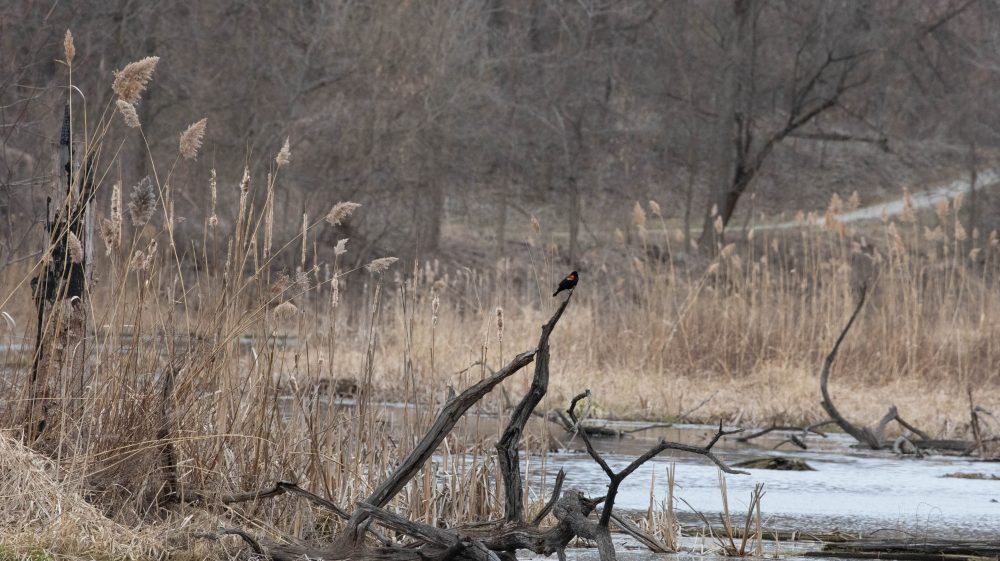
A few Red-winged Blackbirds were still around.

And some American Crows flew over.

On the 7th, just two days later, the cold front ushered in more birds.

Below is a female American Redstart.

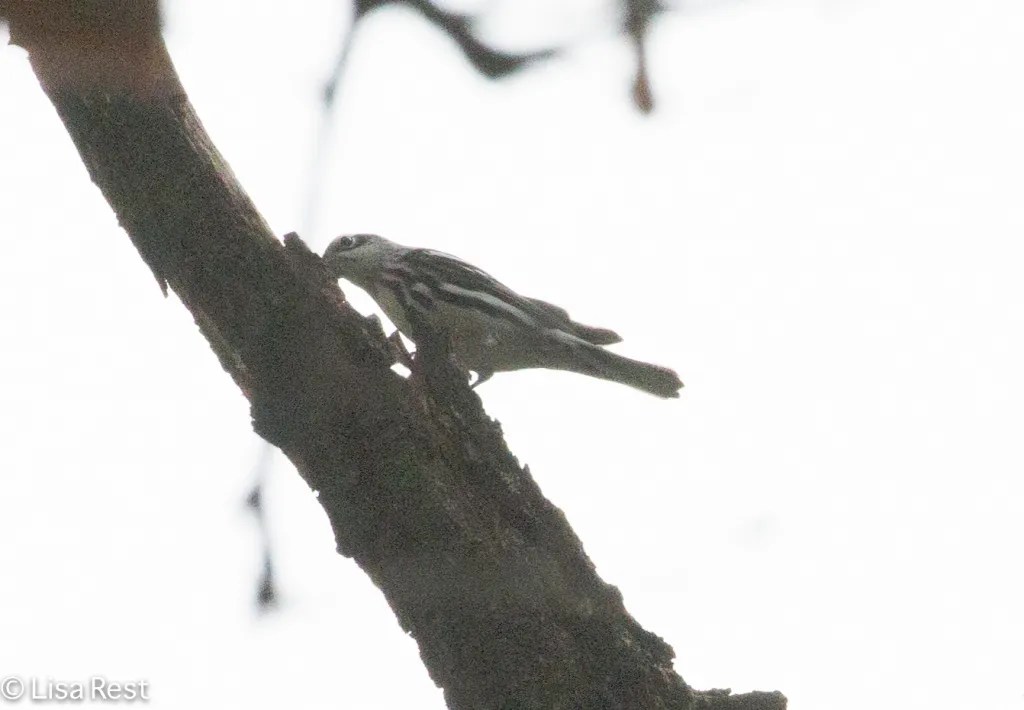
Black-and-White Warblers are easy to identify.

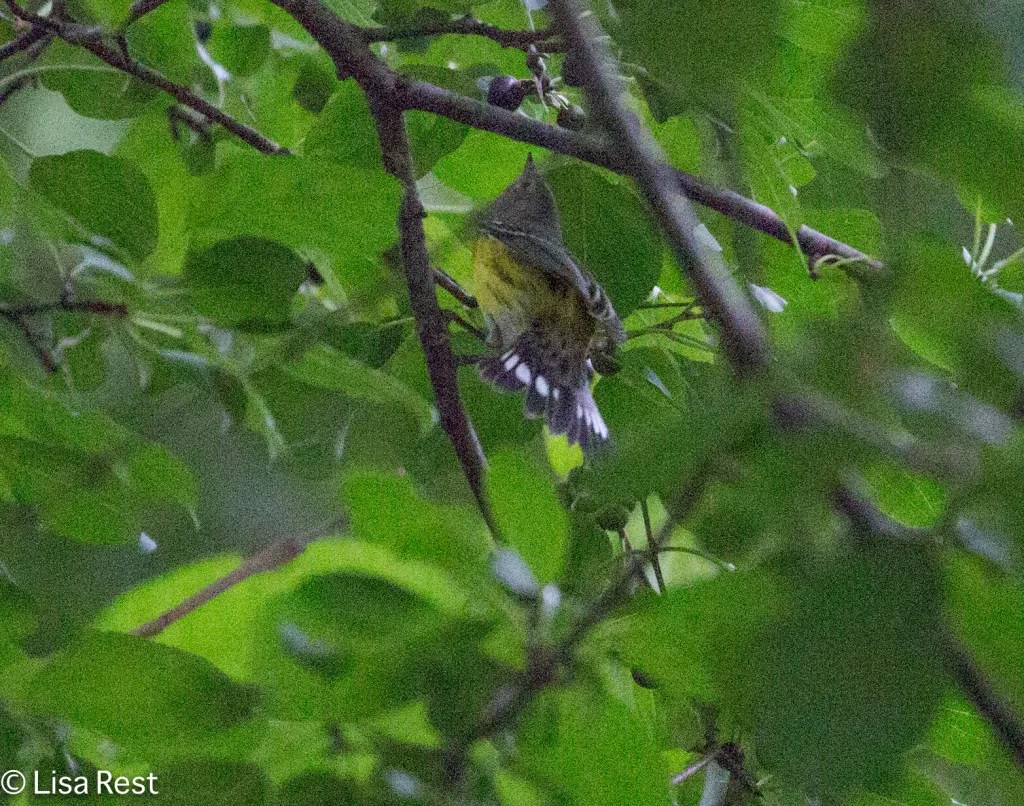
There were a couple Blackburnian Warblers. The warbler at the top of the post is also a Blackburnian.

Magnolia Warblers were in the flock.

I barely captured the Golden-winged Warbler below.

Tennessee Warblers really blend into the green leaves.

Below is a distant Cape May Warbler.

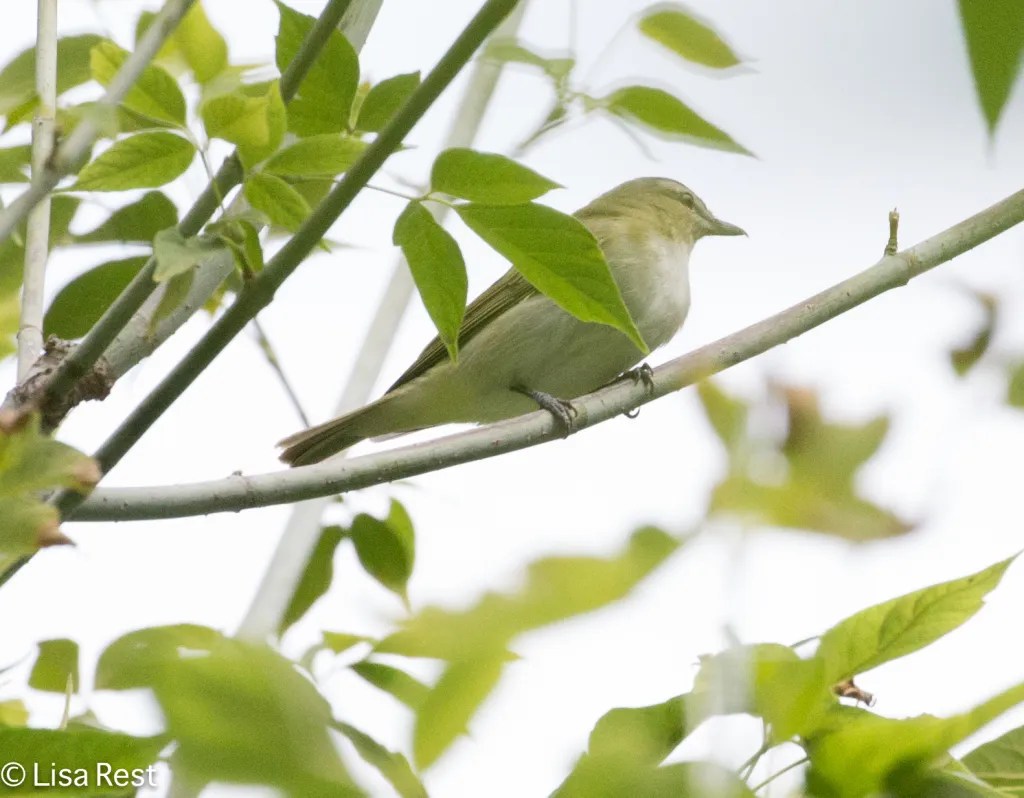
Then there were all those other birds. Red-eyed Vireos were also present.

Mourning Doves

American Goldfinches are busy now that there are a lot of seeds available.

I caught a couple views of a goldfinch family.

There was a Great-crested Flycatcher.

And a few Red-winged Blackbirds…

Gray-cheeked Thrushes have been abundant. The first picture below might be a bit confusing as it suggests a Swainson’s Thrush if you go with the somewhat more-prominent eye-ring, but its face has that more pinched look of a Gray-cheeked to me.

This was just the beginning. Earlier this week brought more warblers to my lens. I hope to be back a lot sooner with those photos. For now, I’m getting up early to “lead” a walk at Columbus Park tomorrow morning. It seems likely to be difficult birding. The last couple days have been rather slow. The forecast is for cloudy and cool. Then on Sunday, the forecast is for rain all morning. So it might not be too birdy a weekend… But the show must go on.

A Warbler Here and There

Welcome to Fall Migration Warbler Identification Meditation. (I was inspired after reading an article about meditation going mainstream.) Warblers are starting to arrive, and I had more species in my photos than I realized while taking them. Since many of the warblers look quite different from their spring plumages, and are often hard to distinguish from others, it necessitates a review of wing bars, undertails, bill shape, and if you ask me, even a facial expression can sometimes play a role.

I had been seeing a warbler here and there over the last week or so and was planning to gather them all together in one post here, but my visit to the Chicago Portage on Tuesday morning – before the Heat Wave – proved too busy to ignore, so I am just going to consolidate what I saw on Tuesday and come back later with the rest.

My visit didn’t start out with warblers, of course. Except for a few American Robins, the birds were at quite a distance. This young Robin was enjoying some ripe pokeberries.

There were birds perched from time to time in the bare trees that border the water, and for the most part, I was just taking photos to identify them later. There were some interactions going on that I might not have bothered to notice.

An Eastern Kingbird is at the top, a Baltimore Oriole below

All I can figure is the Baltimore Oriole started moving toward the top of the tree where the Eastern Kingbird was perched and there was a bit of an upset. My last photo was of the Eastern Kingbird either going after prey or giving up on the challenge to its position.

Then I was following perhaps the same Eastern Kingbird with what looked like a cicada. It wasn’t having an easy time of it.

After all that, a quiet moment for the Eastern Kingbird.

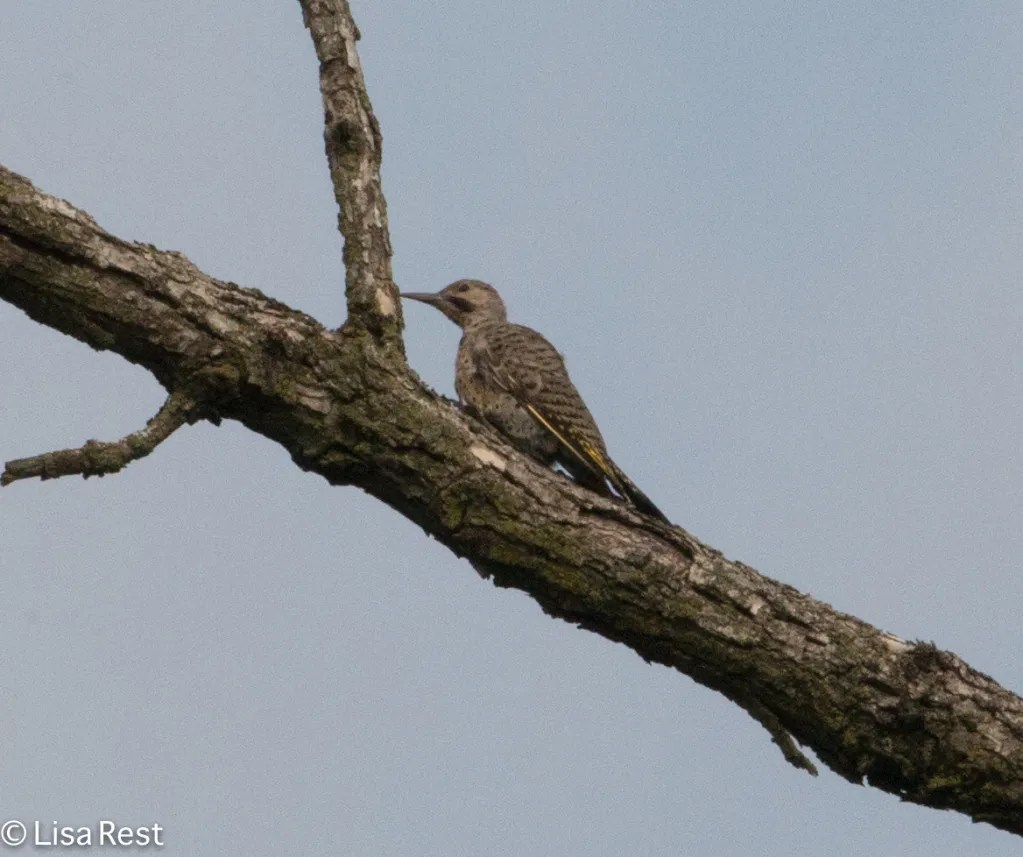
Young and older Northern Flickers popped up here and there.

It was probably the first time I did not hear a Song Sparrow, but I did see this young bird at a considerable distance.

Quiet bird moments gave me opportunities to focus the lens on other things. I really like the way the foxtail grass looks with the sun shining through it. Then for butterflies, there was a Hobomok Skipper, a Monarch, and a Pearl Crescent.

A spider web off the trail was more challenging.

A view of the new trail from the south end of it

And now for the warblers. Just as I was pretty much on my way out, so to speak, but before I reached Tadziu’s bridge (by the way, I saw and head a couple adult male Indigo Buntings, but I do think Tadziu has left for his winter home), I noticed activity in the expanse of trees between the trail and the train tracks. At first, there were several Red-eyed Vireos.

I barely caught a clear glimpse of a Magnolia Warbler.

I was not aware until I developed my photos that one of the first birds I was following was actually a Chestnut-sided Warbler. There’s not much chestnut siding in this bird, but the greenish-yellow coloring on the crown and back, the eye-ring, and yes, its posture/expression tipped me off.

The Black-and-White Warbler was easy to see, however briefly, but difficult to capture. I managed one clear photo.

I had the feeling I was seeing more than one Bay-breasted Warbler.

This is likely a different individual below.

And the bird below is the same individual as the one at the top of the post.

With the mixed flock was a young-looking Blue-gray Gnatcatcher

I at first assumed the bird below was another Bay-breasted but changed my mind when I saw the photo of its back. I started going down the Blackpoll Warbler trail. It’s also very hard to see some vague orange coloring on the foot in these photos. But there is faint streaking on the breast in the first photo.

A couple Baltimore Orioles were in the mix as well, if a bit farther away.

The Baltimore Oriole below was intrigued by some dead leaves.

Here’s one of those not-in-focus photos I got of the Black-and-White as it escaped scrutiny.

Well, our 100 degrees Fahrenheit has given me the opportunity to sit inside and finish this post. We are due for cooler temperatures tomorrow. I will likely visit Riverside in the morning to see what migrants are appearing there, and then drive to my temporary swimming location. I’m looking forward to cooler temperatures on the weekend and into next week when I will be able to resume a more regular routine again. But I am already starting to make room for fall activities. Wednesday evening choir rehearsals have returned. The kids are back in school down the block. The Saturday morning bird walks begin on September 2nd at Columbus Park.

And somehow in spite of my efforts at population control inside the house, increasingly louder begging noises have me expecting to see a new Zebra Finch fledgling or two shortly. Somebody is getting better at building predator (me)-proof nests.

To be continued. 🙂

Back to September

In defiance of dreary days, I started going back to revisit photographs taken on September 1 of this year. Now I wish I could time-travel back to September 1 as we are sliding deeper and deeper into an Arctic Blast that will be with us through Christmas. Please bear with me while I reminisce.

Fall passerine migration was in full swing that Saturday. I went to Thatcher Woods with some of the Oak Park Bird Walkers led by Henry Griffin, and then continued on to the Chicago Portage. The photos are arranged by location if not exact chronological order.

Right off the bat Henry spotted a Red-headed Woodpecker perched at a distance and I managed to get some faraway photographs.

The other exciting bird later that morning was a Black-billed Cuckoo which came to the edge of the forest to check us out.

Below may be the only Chipping Sparrow I saw last fall. On a picnic bench.

There are bluebird boxes at this location and in the spring we saw Eastern Bluebirds (and Tree Swallows) around the boxes. On time visit, we saw a juvenile Eastern Bluebird, below.

Flycatchers ruled the day. Below is an Eastern Wood-Pewee.

Then there was a Least Flycatcher.

And in my photos much later, I discovered an Olive-sided Flycatcher.

Just a couple other birds were available for identifiable photos. Below is a juvenile Rose-breasted Grosbeak.

I didn’t capture any warblers at Thatcher save the one below. It’s a distant Palm Warbler.

After we parted at Thatcher Woods, I continued on to visit the Chicago Portage. A juvenile American Goldfinch caught my eye.

American Goldfinch (juvenile)

In the nuthatch department, I was fortunate enough to see both White-breasted and Red-breasted nuthatches, the latter being less frequently seen and more elusive.

I managed to grab a few images of what looks to be a juvenile Red-bellied Woodpecker.

I puzzled over the identification of the Confusing Fall Warbler (CFW) below until I finally settle on a Pine Warbler.

The bird below could also be a CFW if it had not confirmed in the very last photograph with its orange feet that it was indeed a Blackpoll.

Here are a few more Cedar Waxwing shots.

And as you may know by now if you follow this blog, I never turn down a Northern Cardinal.

Also considered a warbler species, I had a Northern Waterthrush that day.

Below is what little I managed to capture of an elusive Magnolia Warbler.

This hoverfly would not go unnoticed.

Either I saw a lot of thrushes this fall or it was just because I was out more often. Or maybe a little of both.

Gray-cheeked Thrush
Swainson’s Thrush

Three more warblers. Below is a Bay-breasted Warbler.

Then below, an American Redstart.

And below, a Yellow Warbler. I don’t think I saw very many this fall.

One more of the immature American Goldfinch.

As I go back to reality and the cold: we had fun singing in the choir this morning, and we managed to coax the sun to come out after it has been behind the clouds all week. It was shining through the clerestory windows once we sang “Hail o Sun”.

At home with the birds this afternoon I am resting up before I undertake afternoon and evening activities. Since Saturdays are so busy this month I’ve moved the big cleanup to Sunday night, so we will celebrate by vacuuming, swapping out dirty cages for clean ones and putting clean papers on the floors. In the meantime, some birds are taking advantage of my quieter moments. Greetings from the Hand-warmer Finch.

I’ll be back in a little while with a little recap of my participation in a Very Cold Christmas Bird Count yesterday.

Wherever you are, I hope you are safe, warm and comfortable heading into the Winter Solstice.

Looking Back on October 23rd

Not yet a month ago, I stepped out of my front door on October 23rd with the intention of visiting the Chicago Portage and was immediately summoned to action by the calls of American Crows. Crows make a racket whenever there’s a predator around, and sure enough, a Red-tailed Hawk was perched on my neighbor’s radio antenna across the street.

What ensued was Crows chasing the hawk, which gave me some lovely images against a cloudless sky.

When the three Crows had dispensed of the Red-tailed Hawk, they perched on the antenna for a moment, perhaps reflecting on their successful mission.

I got into my car and drove over to the Portage to savor one of those last beautiful fall days.

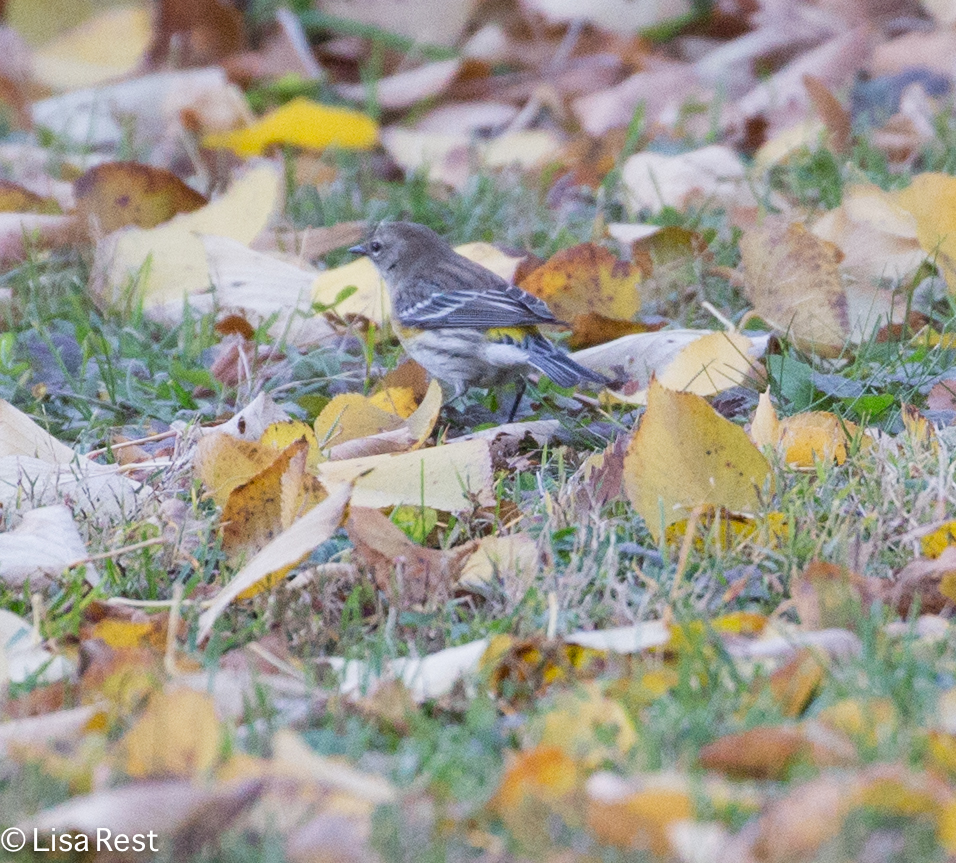
Yellow-rumped Warblers hadn’t left yet. It was a challenge to pick one out from the fallen leaves on the grass off the parking lot.

An American Goldfinch blended in with the dried up foliage.

It’s been a difficult season to capture a White-throated Sparrow well. I became more intrigued with the pattern on the back of this one.

White-throated Sparrow

I think this was the last time I saw a Gray Catbird.

I reported 16 Golden-crowned Kinglets but barely captured this one.

It was still possible to see Yellow-rumped Warblers foraging in the duckweed-covered stream, and of course Mallards were making their way through the muck of it all.

I counted four Hermit Thrushes that day as I found them all over the preserve. Later going through my photos I thought I had a Gray-cheeked Thrush, but it came up rare on ebird and I didn’t feel like arguing the point when the Hermit Thrush I was also photographing had distinctly dark spotting on the breast.

One thing I did notice a lot this year was Hermit Thrushes standing flicking their tails upward.

So here’s the bird I think was a Gray-cheeked Thrush. It seems crazy to report it almost a month later. I think I’ll pass on this enigma.

More American Goldfinches blending in with the fall colors.

All these leaves and their colors have left us by now.

Perhaps my biggest surprise that day was seeing an Eastern Phoebe. As far as I could tell, there wasn’t a pair at the Portage all summer, but it was nice to see this one coming through so late. I couldn’t stop taking photos of it.

And the birds I will be seeing all winter were becoming more visible, like this male Downy Woodpecker.

I always hear and generally see Black-capped Chickadees but they don’t always give me great opportunities for photographs, so I took this one up on its offer.

I will be back soon with photos from more recent local expeditions. I just wanted to share this before it got too far away from me.

We are feeling winter’s grip this week. Snow is in the forecast for tomorrow and Wednesday. I guess it’s only fitting that the temperatures match the ever-diminishing hours of daylight. Even though I bought a nice little lamp to light up my music, I think I’ll have to start playing piano just a little bit earlier. Maybe the best thing about all this is comfort food, particularly soup and bread.

Meandering at McGinnis

I went to McGinnis Slough once last month and then again on November 1. This post covers both outings, neither with an abundance of bird species in the water. But I was lucky to see some different land birds.

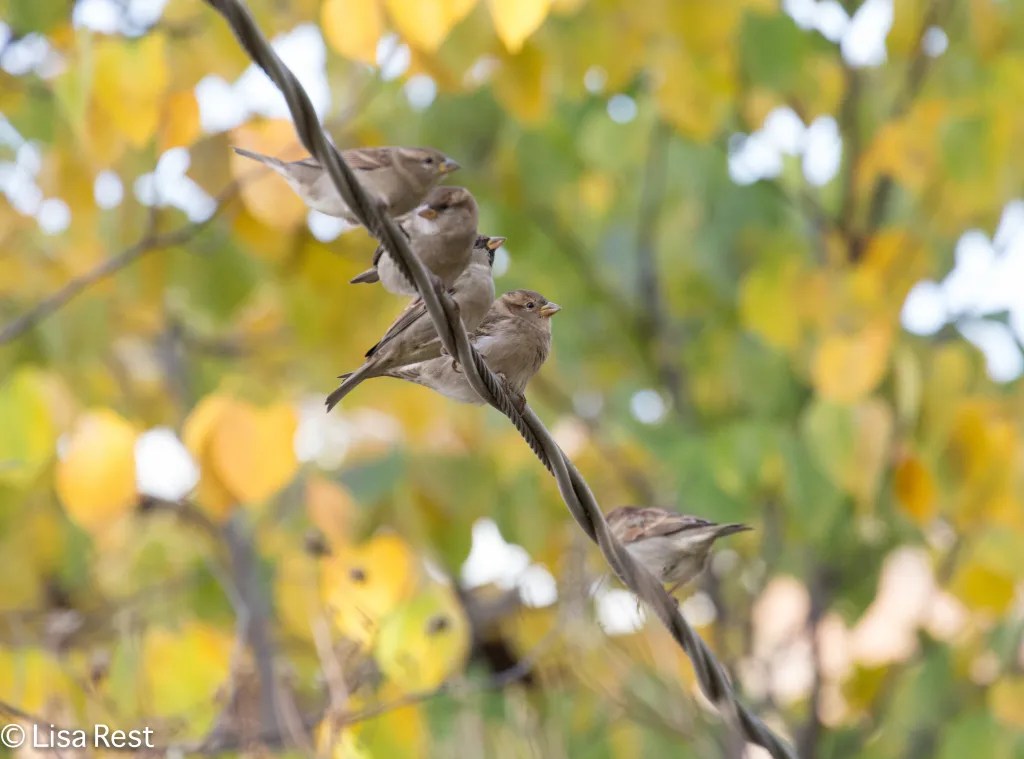
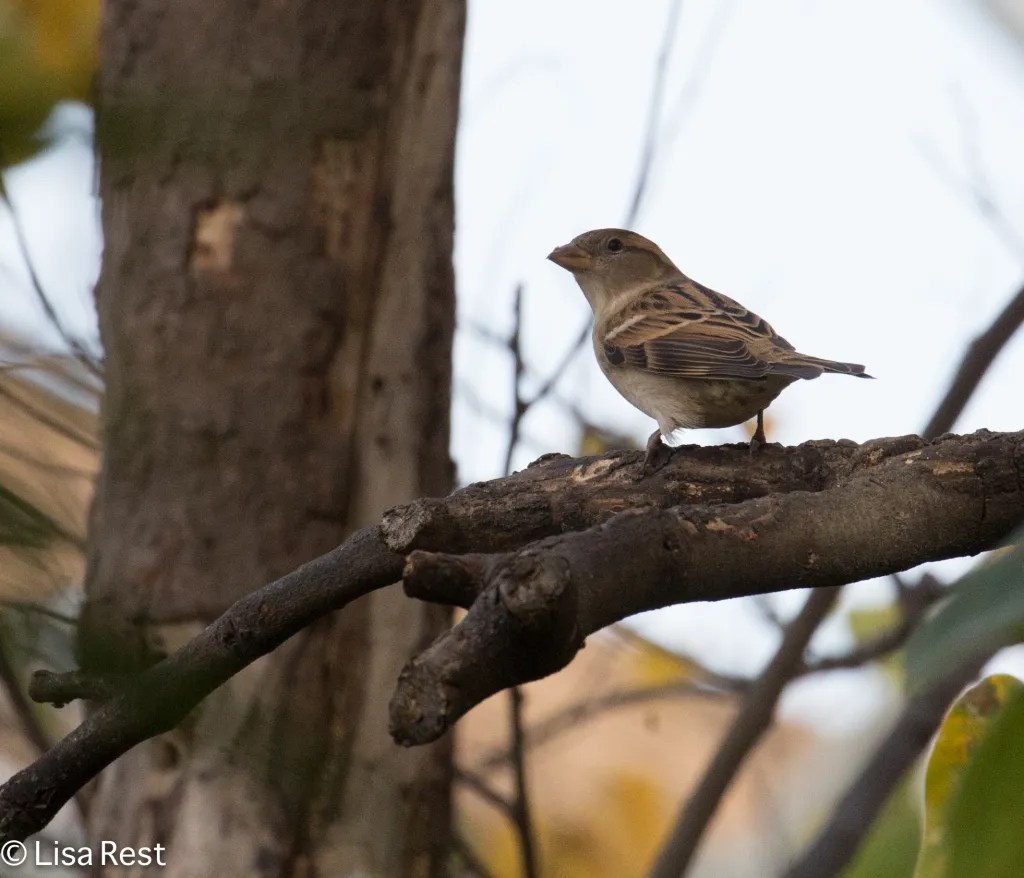
A word about today… I was grounded by the weather. We really needed the forecasted rain, but there was not enough of it. Instead we had high winds with gusts up to 60 miles per hour and it was scary enough being inside watching my trees swaying and holding their own against the gusts. There were some intrepid, likely disgruntled House Sparrows in the yard, but I removed all the feeders last night in anticipation of the rain, and I am sure they were perfectly capable of foraging for food for a day.

The first visit to McGinnis on October 11 was low on water and waterfowl species but there were at least three dozen Great Egrets on the far side. The trees were just starting to turn color.

The closest I could get to a photograph of a Great Egret was at a distance, with one set against a couple hundred American Coots. Coots were the water bird of the day, but they were all far away.

There was a Great Blue Heron wading in the shallow water.

Very early on I saw a Blue Jay swoop down into the grass like it was looking for something. It put the leaf back after picking it up.

Later I caught a Blue Jay in flight.

Here are a few more photographs of the male House Finch at the top of the post. House Finches have been more visible than they were all spring and summer lately.

Instead of the usual group of Wood Ducks, I saw only this one.

I did capture the distinctive silhouette of a Great Blue Heron in flight.

There was a Palm Warbler. I still can’t get over how strange this fall has been, seeing only one or two Palm Warblers here and there.

A Northern Cardinal was easy to spot in the diminishing leaves.

And a Yellow-rumped Warbler was pretty predictable for October 11.

I was trying to capture the enormity of the coot congregation but it was hard to do with all the reeds in the way.

Shortly before I left, two Sandhill Cranes flew over.

Just this past Tuesday, on November 1, the slough looked like this. Not a lot of birds of any kind in the water although thousands had been reported a few days earlier. So most of the birds I saw were on land.

I did manage to sort of get a distant photo of a Great Blue Heron.

American Goldfinches have been busy taking advantage of seeds and blending in well with them.

A Dark-eyed Junco posed for me.

European Starlings aren’t what you expect to see at McGinnis Slough.

There were a couple Song Sparrows.

I fussed over these next photos a lot. I kept thinking it was a Clay-colored Sparrow, but I wasn’t sure enough because it came up rare for the date and location. Now a few days later I am convinced it was a Clay-colored Sparrow. The clean gray nape and pale lores confirm it, but I felt originally just the gizz of the bird, as they say, was Clay-colored. And the body of the bird is uniformly buffy.

There were fewer Great Egrets this time.

I am not sure I realized I was photographing a Rusty Blackbird but this was definitely a nice surprise to find in my photos from Tuesday.

One more view of the slough. The trees are now fading and losing their leaves.

All the house cleaning I normally start on Saturday is done for the week and out of the way before tomorrow morning. We are singing for Choir Sunday, which means the Unity Temple Choir will be featured throughout the entire service. I’m looking forward to the repertoire, in particular the Ola Gjeilo pieces. The weather will be much improved after today. The sanctuary will be beautiful with sunlight pouring through the clerestory windows. A moment of calm to be had after the storm and, I suppose, before the next.

Columbus Park: 2 Extracurricular Visits

We Oak Park bird walk people got together twice more to visit Columbus Park on October 15 and 29 respectively. The 15th was definitely birdier with plenty of Golden-crowned Kinglets showing off.

A rather familiar sight in the pond at Columbus Park is a gaggle of Canada Geese and that day was no exception.

You may remember the Great Blue Heron at the back door of the Refectory from the last time we were there. It was back in the same spot again.

The leaf color was a factor on that sunny morning, making nice backgrounds for the birds.

Yellow-rumped Warbler

I was delighted to find this series of photos of a Golden-crowned Kinglet.

We had several sparrow species that day too. Unfortunately they weren’t always that easy to see. Below is a Swamp Sparrow and then beneath it, a Clay-colored Sparrow.

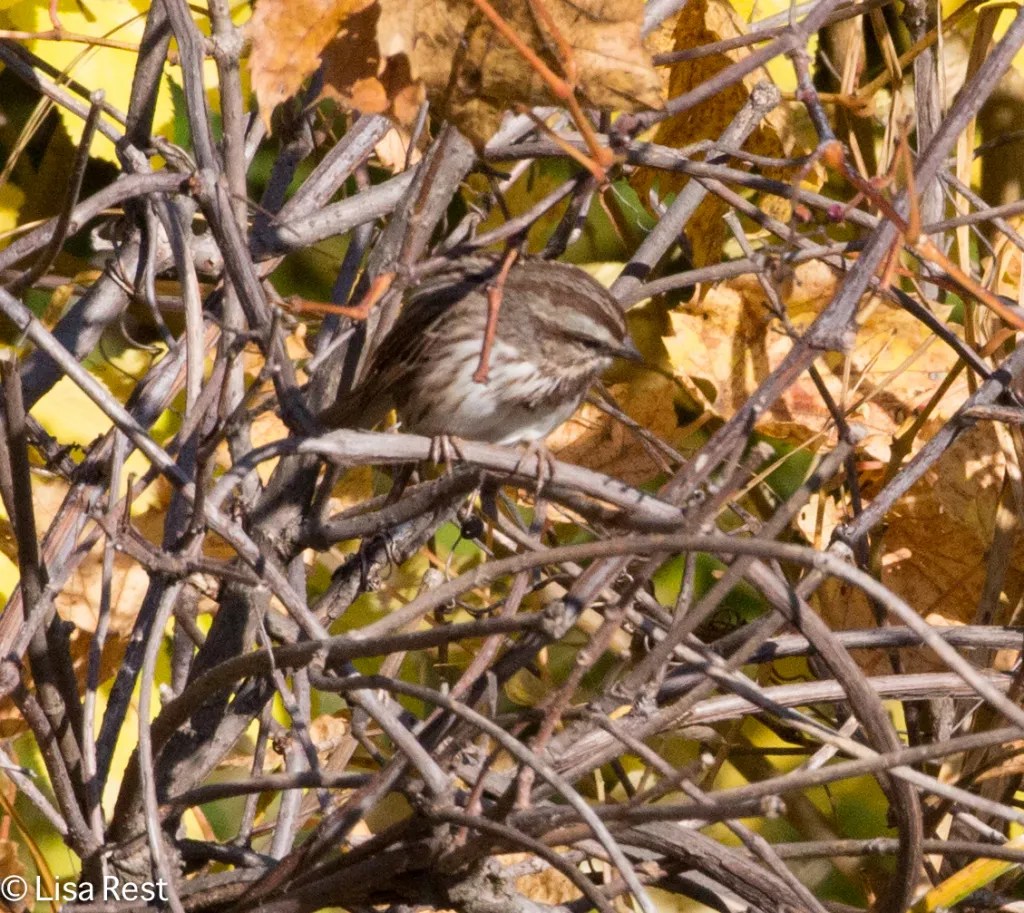
I got several photos of a Song Sparrow in a thicket trying hard not to be seen.

And I nearly missed photographing this Fox Sparrow.

There were Dark-eyed Juncos, with this one being the only one I managed to capture. Sometimes all you see of a Junco is its white tail feathers flashing.

We also had a Brown Creeper. I think it’s the last one I have seen this fall.

At some point perhaps over 200 Canada Geese flew overhead and then landed in the water.

Here are some more photos of the Golden-crowned Kinglet at the top of the post.

A Palm Warbler was present in the wildflower garden.

Sometimes an American Robin can be interesting, as I found this one flying over the water.

The next time we met on October 29, the water looked like this. It’s a beautiful reflecting pool. Notice there were no birds in it.

We saw hardly any birds at all that morning after covering our usual bases. However, a Great Blue Heron did us a favor and landed right in front of us.

It was only around 9:15 AM when we decided to call it quits. I had an errand to run and then decided to go over to the Chicago Portage to see what was happening there. Being the last Saturday of the month, the volunteer crew was on hand, noisily sawing trees somewhere off the inside trail. So that part of the preserve was off limits. But logic told me the birds might be somewhere else and I did find quite a few on the outside trail.

There were White-throated Sparrows.

And a few American Goldfinches.

And some House Finches were present too.

One of several busy Downy Woodpeckers.

A Dark-eyed Junco was foraging on the second bridge.

Milkweed seed pods caught my eye.

I found another late Nashville Warbler.

Of course there were some Golden-crowned Kinglets. This was the only one I managed to capture in a pensive moment. There were other species as well, but the photos aren’t worthy of your attention.

The weather kept me reluctant to walk the trails the last two mornings. This morning was a study in fog and drizzle. I look forward to going a bit farther tomorrow. We are promised sunshine. And we are still well above freezing. I will be back.

Reconnected – Two Days Later

My two days without Internet service are over. With enough access on my phone, I confess I hardly missed it. But now that I am able to publish photos from the camera again, I want to get this post out of my system.

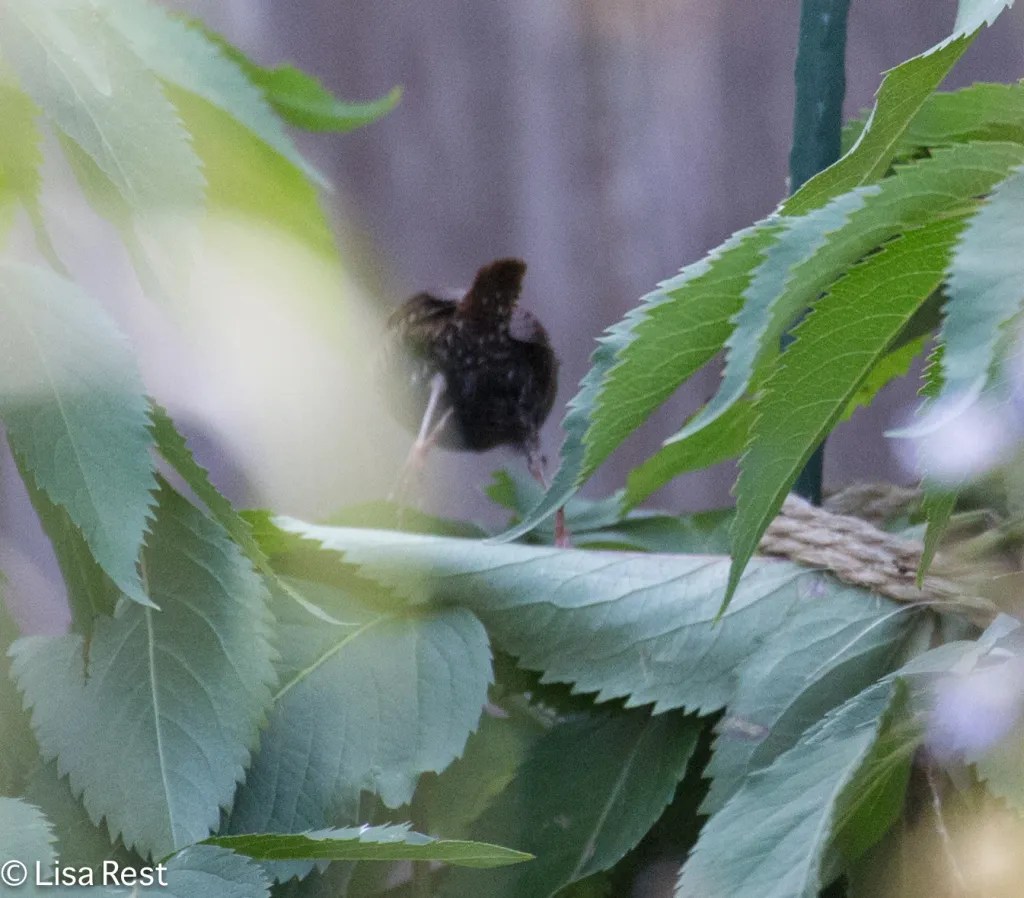
I was thrilled to find a Winter Wren in my backyard on Thursday afternoon. I had been to the Chicago Portage in the morning seeing very little. And after about a week of seeing or hearing Winter Wrens every day I was not encountering them anymore. Then this little delightful creature showed up in my yard. My messy, full of trees, leaves and spent tall native flowers and grasses yard – just the place for a fall migrant. I think the wren was actually attracted to the remaining mess by the back fence where the tree stumps had been removed. When I have encountered Winter Wrens they often seem to be messing around in dead wood.

Fallen leaves from my Hawthorn Tree

Here are a couple more fleeting photos of the Winter Wren.

I had first seen the wren when I went out to refill the birdbaths, so I went back in the house and grabbed the camera. It was a nice enough day to sit in the yard for half an hour or so and observe whatever activity was available. There was a predictable, endless stream of House Sparrows.

But then I saw something moving in the clump of spent flowers that had planted themselves just off the back porch stairs. It turned out to be a Nashville Warbler, which is late and therefore “rare” for this date. It wasn’t easy to see all that clearly but it is definitely a Nashville with that white eye-ring, gray cap and yellow body.

It occurred to me that, after all these years, this is exactly what I had in mind when I moved into my house and began by replacing the lawn with trees and native plants. I just wanted to attract birds. It seemed obvious to me at the time, but it was not initially very popular with City Hall or some of my neighbors. Perhaps awareness of the climate crisis and species extinction is tilting the scales more in my favor lately. I may even be participating in another garden walk next year. I hope so – it will motivate me to work in the yard more than I have been lately!

So was anything happening at the Chicago Portage on Thursday morning besides leaves?

There were a few – very few – birds. I am always excited to see an American Crow, of course.

And there were a few well-camouflaged American Goldfinches.

But in general, flora and colorful leaves provided the most interest. There was a small stand of some late-blooming Evening Primrose out in the middle of the marsh.

It would probably be enough to stop here, but I am going to move on to the next morning’s visit to Riverside, which produced more birds, and by the time I reached the health club to go swimming, a message on my phone saying my new router had arrived.

It is always good to see a familiar face in Riverside. This Great Blue Heron was present again just off the Hofmann dismantled-dam location.

Here’s a view of the Des Plaines River from the Joliet Avenue bridge, looking north.

As I stood on the bridge, I heard and then saw two Belted Kingfishers rise up and fly over. I was able to capture one of them.

The bird species of the morning, though, was definitely Golden-Crowned Kinglet – they were everywhere, in numbers.

By the time I reached the spot where I was about to cross the footbridge, just past the police and fire station, there were Golden-crowned Kinglets hugging the trees lining the path.

Walking along the river, it was hard to ignore Mallard males gleaming in the sunshine.

A couple more photos of the river and trees, which were hard to resist.

At Riverside Lawn, there weren’t a lot of birds, but enough to make a morning. I saw a distant but brightly-lit Red-bellied Woodpecker.

Dark-eyed Juncos were easier to see when they were preoccupied on the ground.

White-throated Sparrows were here and there.

And it’s always special to see a Fox Sparrow.

When I got back to where I park my car by the Hofmann Tower, I was happy to see a Great Egret in the river. As you can see, the water level is low.

Here are a couple more images from Friday morning.

It’s a season of change, from day to day. I will be back soon with more scenes from what has been an exceptionally beautiful autumn of birds and their surroundings.

Disconnected

I woke up yesterday morning to no internet connection. After spending an hour or so on the phone with my service provider it was determined that I need a new gateway router. It was shipped this morning so with luck I will receive it soon.

I birded Riverside Lawn yesterday and this morning I was at the Chicago Portage. There were plenty of birds yesterday, but today at the Portage was exceptionally quiet. The entire focus switched to leaves. I met two fall enthusiasts on their way out and we admired leaf colors.

I will see if I can manage to finish what was to be my next post with my cellphone and if so, it will follow shortly. Alternatively I can do more work in the yard and maybe read a good book.

The Zebra Finch that was just singing perched on my head left when I tried to record a video of him so that’s out. Either way I hope to be back soon.

End of September at the Chicago Portage – Part 2

I could have simply just done a blog post and called it Black-throated Green Warblers from the photographs I took on this day. Believe it or not this is only half of the ones I kept. But this is the best half. All photos were taken on September 29.

Yellow-rumped Warblers have been foraging in the duckweed for weeks.

I had a Blackpoll Warbler that day, and you can almost even see the field mark for which it’s named in the first photo below.

A Chipmunk was waiting for something on the first bridge.

Invariably American Robins in various molts were foraging on the front lawn, or going somewhere.

I had a glimpse of a Downy Woodpecker.

Another woodpecker, a Northern Flicker, was busy too,

And there was a third woodpecker, a Hairy Woodpecker, whose profile distinguishes it immediately.

I had one of my last juvenile Indigo Buntings – you can see a bit of blue at the tip of its tail.

Hermit Thrushes have been at the Portage all of this month. This one may have been the first I saw there this fall.

Two more Yellow-rumped Warblers – one in Boneset and the other in Goldenrod.

Below is an immature Red-winged Blackbird.

I barely captured the Chestnut-sided Warbler below, but I am glad I did.

Not to be overlooked, a Bay-breasted Warbler made an appearance.

Here are some more photographs of another Black-throated Green Warbler.

It was a pretty day at the Chicago Portage.

I am glad I am able to finish this post, such as it is, on my phone. I will be back in a few days when I can reconnect with all the photos on my laptop!

End of September at the Chicago Portage – Part I

I am trying to take advantage of a rainy day to get caught up with fall photos and give my laptop some space. It’s almost a daily challenge to manage enough room for photographs and now that the oscillating fans have been relegated to the basement for storage until next summer, it’s quiet enough to record the inside birds with music again, which means inevitably taking up more digital space somewhere.

I realized that there were leftovers from the end of September which was not all that long ago, but before the cold snap and the leaves changing. These photos are from September 27. I will follow very shortly with those from two days later. I just couldn’t manage them all in one post.

Below is a native plant, White Snakeroot or Ageratina altissima, which began to suddenly explode everywhere. It took me a while to stop confusing it with Boneset. If nothing else, the broad, heart-shaped leaves set it apart from Boneset.

White Snakeroot

The clouds were interesting that morning.

Bay-breasted Warblers come in a variety of subtle color variations in the fall and this year was no exception.

The Ruby-crowned Kinglets were higher up in the trees.

Black-capped Chickadees always announce their presence to me, whether they make themselves visible or not. This visit I had a couple opportunities to photograph them.

Here are two more Bay-breasted Warblers.

A brief look at a Rose-breasted Grosbeak gave me two images I can’t decide between.

Perhaps the highlight of that morning was hearing and then seeing a Red-shouldered Hawk. Actually, the Red-shouldered was in the sky at the same time two Red-tailed Hawks were flying around as well, and the Red-shouldered was interacting with one of them, which gave me an opportunity to compare. The Red-shouldered is smaller and darker-appearing of the two in the photos below. But perspective is everything as in the last photograph where the Red-shouldered is somewhat in the foreground it appears to be the same size.

I’ll be back very soon with photos from two days later – September 29. Gotta be good to my hard drive and give it space for everything else it does.