
It’s been such a mild winter on the Des Plaines River, with no ice to speak of. I am going to post a few photos from February because things are starting to change rather rapidly, These are from the first half of February, more or less.
The only photos worth keeping from February 7 were of the Brown Creeper at the top of the post and a fairly close male Common Goldeneye. The river at this point has not been full of ducks this year, I suspect due in large part to the lack of ice.


On February 12, there were a few more opportunities. I could count on seeing Brown Creepers for quite a while.


I noticed a Dark-eyed Junco preening after a bath.


Downy Woodpeckers were barely visible.

I started seeing a few Red-breasted Mergansers.


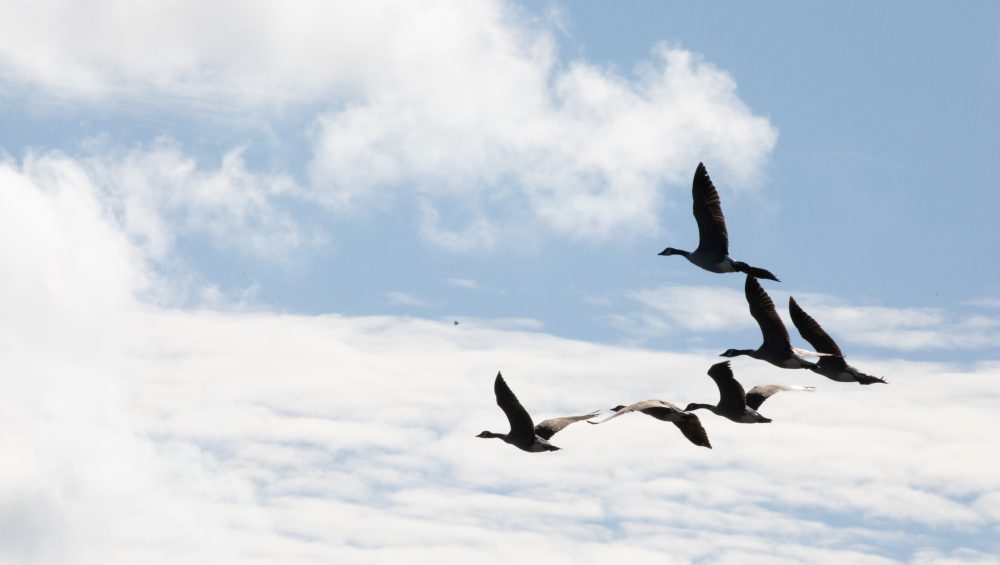
On the 14th, Mallards and Canada Geese were on the move.

The light on the Mallard’s head below turned it purple, in contrast to the bright green on the drake in the photo above,

The Canada Geese were getting into it.


And then there were some scuffles upon arrival.


The odd man out was 68B. I have seen him frequently ever since, sometimes alone.

The Red-breasted Mergansers were still present. The females were diving.


Here are a few photos from February 19. In Part 2, I will be back with the rest of February when things started to warm up.
Try to locate the Brown Creeper in the first photo below. It blends in so well with this tree trunk.


Thank you for bearing with me while I try to make room for spring warbler migration on my newer laptop. Having less room is forcing me to clean up my act sooner!
I like it. You are rocking the oldies. Thanks for letting us relive that uniquely warm February.
Apparently it was the warmest February on record for the planet. The winds switch to southerly overnight and into tomorrow for a while. I’ll be interested to hear or see if there are any Sandhills left to migrate.
We’ve also seen some unusual movement, with the snow and Canadian geese coming through much earlier than normal. I’ve enjoyed the warm weather, but hopefully the garden and its inhabitants also approve!
Yes, the warm weather is very seductive.
I just noticed that my Shubert Chokecherry by the front steps of the house is leafing out! I have been digging up Lesser Celandine for a week (it always seems hopeless): that which I cannot remove is growing right inside the roots of some natives.
I know we’re supposed to get more freezing temperatures but they may not last long enough to do much harm. We are all confused!
Oh no, lesser celandine? I found a plant in my front bed last spring and it sent me into panic mode to think one managed to sneak in! A seed in the soil of a plant given to me years ago and finally it gave away it’s presence with those yellow flowers. I think it spent the last few years making a mass of tubers because they were already spreading 🙁
I’m glad you found it before it took over. I have been battling this evil invasive for several years now. Nothing short of a controlled burn would get rid of it but I can’t resort to that. The first time I saw a lot of it was years ago in LaBagh Woods which borders the Chicago River. I think they have managed to get rid of it but I keep looking to see where it starts elsewhere.😟
I’d be curious as to how they got rid of it. It took me several tries to eliminate a single plant but there’s a park on Long Island which used to have it everywhere and on my last visit I didn’t notice much at all. Maybe I was too early, but none? I was surprised!
You have piqued my curiosity enough to make me visit LaBagh Woods this spring to see if in fact the lesser celandine is really gone. 🙂