In Riverside

It’s raining almost all day today and most of tomorrow, so I have no excuse not to finish this blog post I started a week ago.

These photos are from September 6 and September 8. I have returned to Riverside several times since. In my usual fashion, I hope to get around to that eventually.

There have been as many as 9 Great Egrets gathering just south (or is that west?) of the former Hofmann Dam. To illustrate this point I’ve borrowed a photograph from September 13, although I couldn’t get all 9 into the photo at once.

But back to the week before, when I saw only one Bay-breasted Warbler briefly on the 8th.

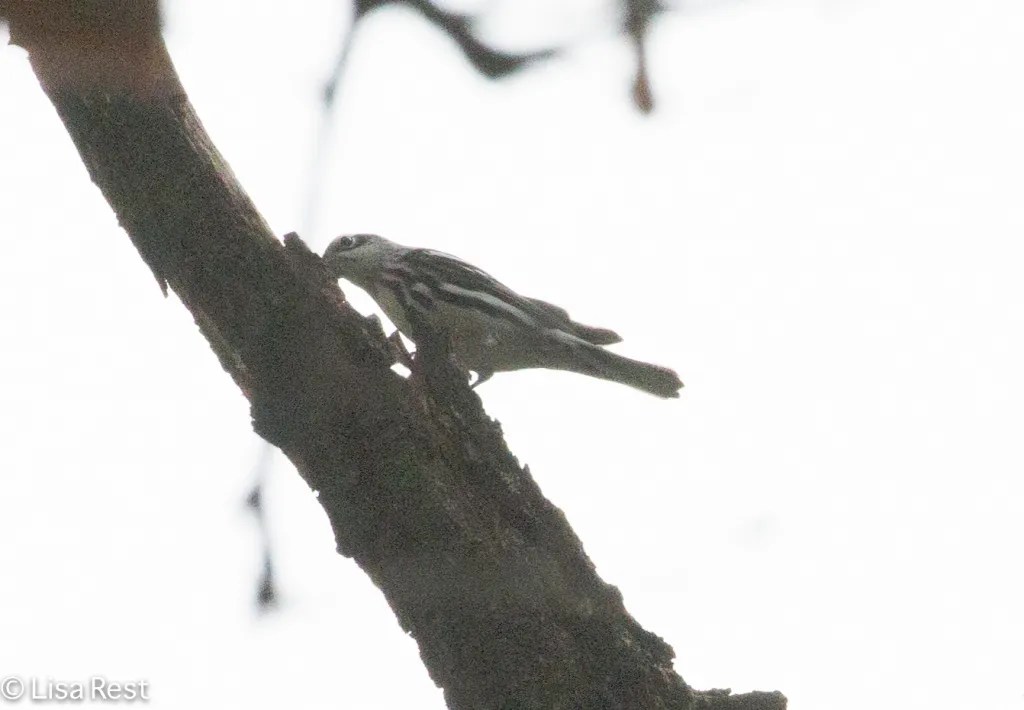
This Black-and-White Warbler was a little easier to photograph.

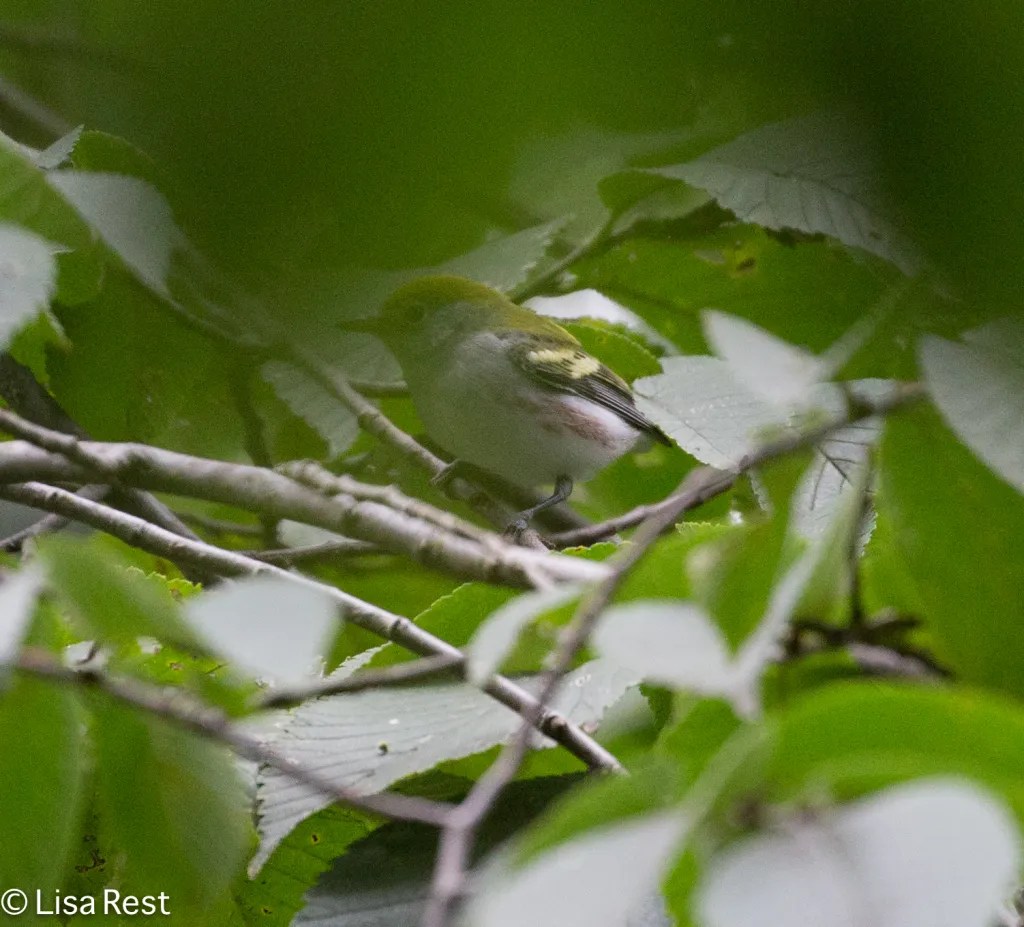
I had good looks at a Chestnut-sided Warbler.

Tennessee Warblers have been plentiful this migration, although it’s been hard to find one closer.

I feel like I have seen more Veerys this fall. Not a warbler, but a very special thrush.

I had seen a male Black-throated Blue Warbler at the Chicago Portage a day or two earlier, but was unable to get a good photograph. This one in Riverside Lawn made up for it.

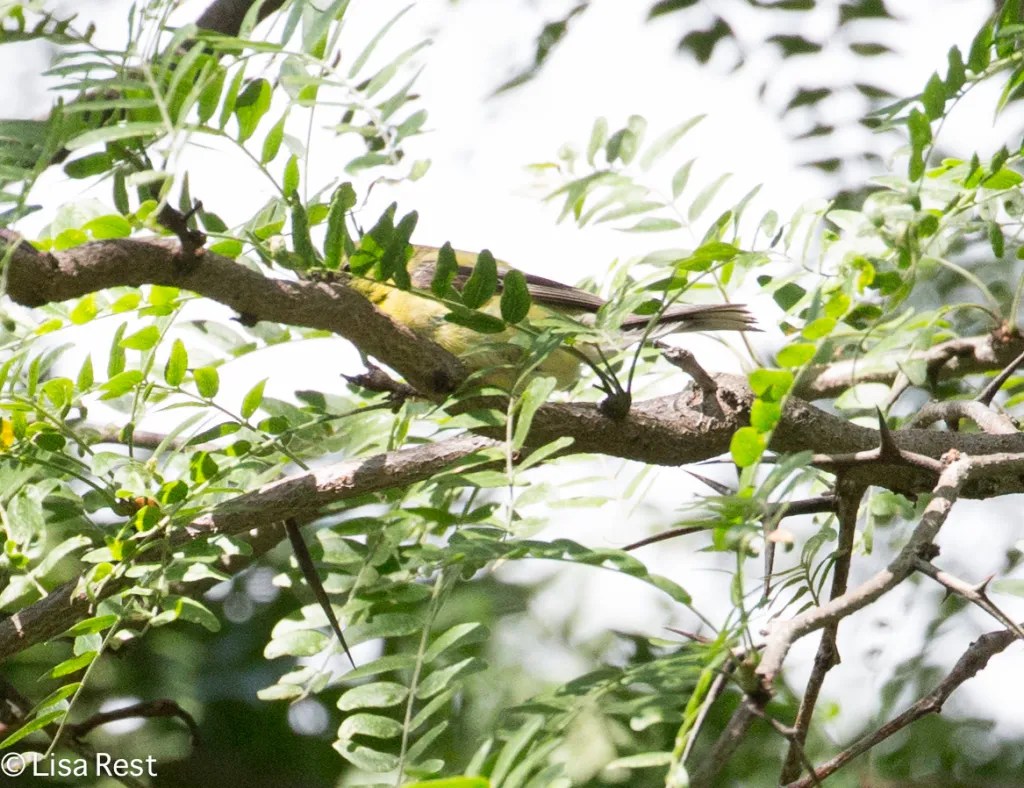
I had some trouble figuring out the first bird below, but it seemed to suggest American Redstart to me. Now I have my doubts, though. Could it be an Orange-crowned? If so, it would be rare for the early date. I leave it up to conjecture. This is a never-ending challenge. In any event, the second bird is a first-year male American Redstart with no doubt about it.

Nashville Warblers started showing up and I have seen many more lately.

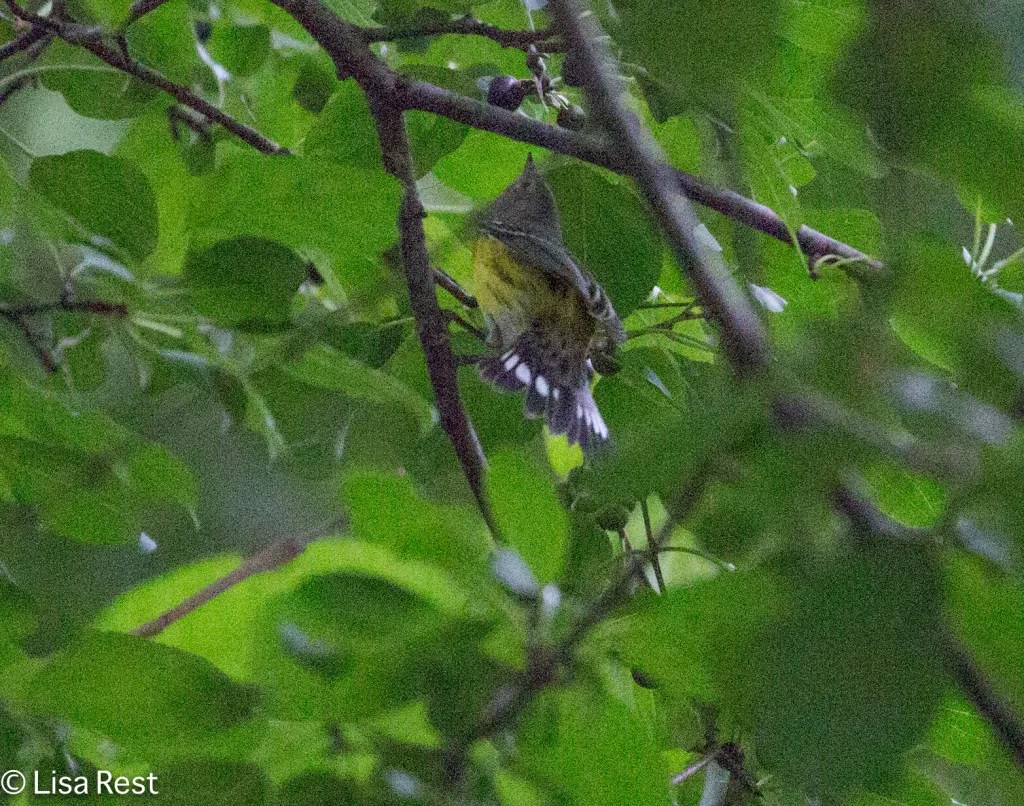
Magnolia Warblers don’t seem to be as plentiful this year. It’s been challenging capturing the ones I have barely seen. I used to consider them rather extroverted. The bird at the top of the post is a Magnolia Warbler.

So what about all those other birds?

I have seen one Double-crested Cormorant on virtually each occasion.

Mallards have begun to congregate in the river.

There have not been so many Great Blue Herons but I have seen at least two, maybe three on occasion, though they tend to be in solitary locations.

On the 6th, when I saw very few birds, I was treated to a Solitary Sandpiper flying by and then landing where I could get a few images.

Crossing the swinging foot bridge, I stopped to photograph this rather odd-looking spider.

Flocks of blackbirds – mainly Common Grackles and Red-wingeds – have begun to move around here and there.

And Gray-cheeked Thrushes seem to be in abundance this season as well.

Oh I have so many more photos to share with you. I will try to take advantage of the rain making me stay inside and not take anymore! But other inside activities, if you can call them that, beckon. It’s cool enough to catch up on some cooking. There’s the biweekly cleaning of the dining room and the weekly cage cleaning (both are to be accomplished today). Musical routines are always adhered to. I could go on. Perhaps most frustrating is the book I’ve been trying to write finally working out in my head. Finding the time in to get it written is the issue. If not on a rainy day, then when? Let’s see how loud the voices in my head become. To be continued.

First Fall Fallout

Last Tuesday morning at the Chicago Portage was a beautiful day. The heat of the past week vanished with a cool front and with that front fall warblers.

A warbler fallout is described as some weather event that causes birds to stop flying on their migratory route (they migrate at night) and come down to earth. While this may not have been a true fallout in the sense that it was only a cold front, there seemed to be a significant number of warblers feeding busily that morning.

There were several Tennessee Warblers.

Tennessee Warblers can appear green or yellow or even white, depending on the light and their surroundings.

Bay-breasted Warblers seemed to be some of the first to show up this fall. I was still seeing a few.

Black-and-White Warblers also seemed to be in numbers.

One first-year male American Redstart that actually sat still long enough for a photograph. I often see only a flash of tail feathers.

I have seen a lot of Blackpoll Warblers for at least a week now. I think they are starting to replace the Bay-breasted Warblers in sightings, but that of course can make things more confusing. It’s helpful to see Blackpolls’ streaking on the breast and orange feet.

Chestnut-sided Warblers are immediately recognizable by their bright greenish-yellow caps.

In the Colorful Woodpecker Department, Northern Flickers provided a distraction for a while.

Palm Warblers are just starting to arrive.

And Magnolia Warblers are here and there, though not in great numbers.

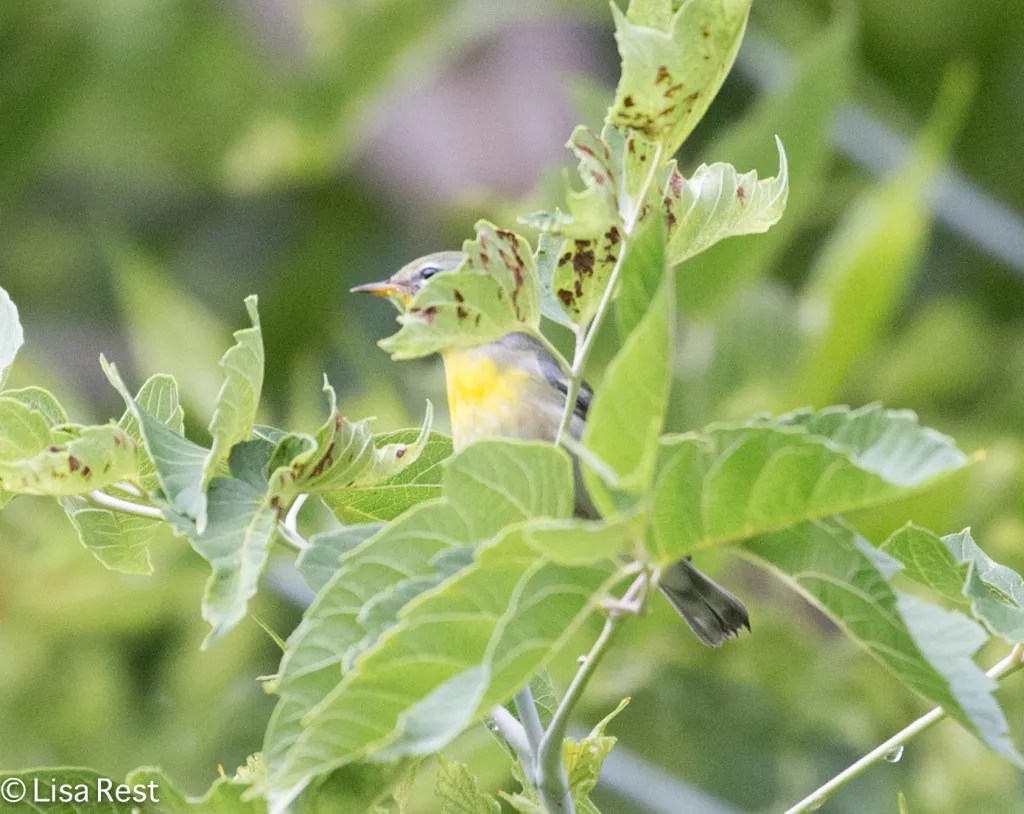
Most exciting was to come across a Northern Parula. This is a warbler I don’t see all that often. I was dismayed that it was not considered a Northeastern species by my Warbler app, but I did find it in the Southeastern classification later. We are carved out somewhat south, north and west outside their breeding range, so I suppose it’s possible we may see more of them with climate change. The photo at the top of the post is of this bird.

And then there was the yellow bird who was not a warbler, but a female Scarlet Tanager. I always seem to see one here in the fall, but never the male of the species.

There was a young Red-tailed Hawk on board that morning. I have recently discovered that the juvenile Red-tailed Hawks tends to be darker in plumage color and the iris eye color is also darker than the adults.

I was lucky to see a Wood Thrush that morning.

And the White-breasted Nuthatch below is obscured by leaves but interesting anyway.

Here’s a young American Robin for good measure.

It turns out I did have one more Indigo Bunting.

Here are a few more photos of the first-year Northern Parula. There’s just a very faint suggestion of an orange necklace to come.

I have more photos for future posts and I am likely to take even more. One never knows what a migration season will be like, but so far there have been some high points to this one.

A Little Migration Music, Please

After seeing some fall warblers here and there, things remained slow until the middle of last week when a cold front finally pushed through. I had hoped to be more timely with this post but I’ve been busier than I thought.

At the Portage on Tuesday, September 5, things were still slow, with most of the birds being nearly too far away to photograph except for identification purposes. Still there were a few. Like this Tennessee Warbler.

American Redstarts are often hard to capture. Most have been females or first-year males.

Bay-breasted Warblers showed up early and persisted.

Another Bay-breasted Warbler, acting more like any old bird in that it wasn’t busy looking for insects but instead sat perched on a dead tree over the marsh. The next few photos were taken from somewhat far away, as I stood on the bridge closest to Harlem Avenue.

Not a warbler, but an American Goldfinch in the same tree
American Robin
Black-capped Chickadee
Cedar Waxwings

Back on the trail, I was trying for everything.

Gray Catbird
Northern Waterthrush
Blue Dasher (female) Dragonfly

It’s always exciting to see an Osprey fly over. This one was carrying its prey, but it was too far away to get a good enough look at what it was.

A Downy Woodpecker and a Song Sparrow shared the same dead bush.

Ruby-throated Hummingbirds seem a bit more relaxed lately.

Below is perhaps the last time I saw an Indigo Bunting. This is either a female or an immature male.

A few Red-winged Blackbirds were still around.

And some American Crows flew over.

On the 7th, just two days later, the cold front ushered in more birds.

Below is a female American Redstart.

Black-and-White Warblers are easy to identify.

There were a couple Blackburnian Warblers. The warbler at the top of the post is also a Blackburnian.

Magnolia Warblers were in the flock.

I barely captured the Golden-winged Warbler below.

Tennessee Warblers really blend into the green leaves.

Below is a distant Cape May Warbler.

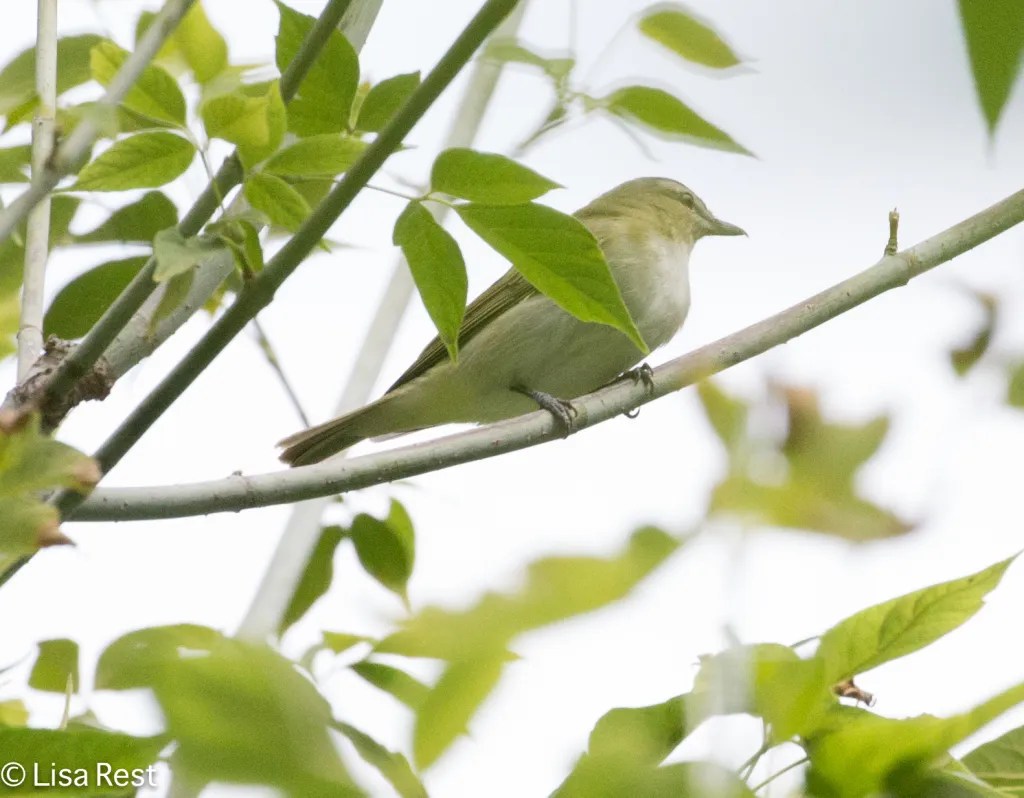
Then there were all those other birds. Red-eyed Vireos were also present.

Mourning Doves

American Goldfinches are busy now that there are a lot of seeds available.

I caught a couple views of a goldfinch family.

There was a Great-crested Flycatcher.

And a few Red-winged Blackbirds…

Gray-cheeked Thrushes have been abundant. The first picture below might be a bit confusing as it suggests a Swainson’s Thrush if you go with the somewhat more-prominent eye-ring, but its face has that more pinched look of a Gray-cheeked to me.

This was just the beginning. Earlier this week brought more warblers to my lens. I hope to be back a lot sooner with those photos. For now, I’m getting up early to “lead” a walk at Columbus Park tomorrow morning. It seems likely to be difficult birding. The last couple days have been rather slow. The forecast is for cloudy and cool. Then on Sunday, the forecast is for rain all morning. So it might not be too birdy a weekend… But the show must go on.

More from McGinnis

I returned to McGinnis Slough on 8/11, 8/17 and 8/21. The Snowy Egret and/or Little Blue Heron were still being seen around the earlier dates by others, but I was never able to locate either one. I went back on the 21st in large part because it was on my way to the pool in Orland Park where I swam for a week while my pool was being cleaned.

On the 11th, only large birds caught my attention. The first was an Osprey.

There were far fewer Great Egrets, and therefore fewer to try and make into Snowys.

One Great Blue Heron offered a view in flight.

On August 17, I noticed two Blue-winged Teal swimming with a Wood Duck. The Blue Dasher dragonfly at the top of the post was also present on that day.

Instead of the Sandhill Cranes seen on the 9th, there were several Trumpeter Swans.

A Red-tailed Hawk flew over and put on a show.

On the 21st, all my subjects were smaller.

Mourning Dove

There were more ducks inhabiting the spot usually taken up by Wood Ducks.

There were Blue-winged Teal among the Mallards and Wood Ducks

There were more Wood Ducks than previous visits. One was hiding in the second photo below.

There were small, but cooperative butterflies. I’ve seen several of these two species this summer. Enough so that I recognize them now, but by next summer I’ll no doubt have to look them up again.

There haven’t been as many dragonflies this year. That probably has something to do with the weather and climate change.

Eastern Pondhawk Female

The Rose Mallow is always in bloom here. I found this white one to be easier to photograph than the pink ones.

And as a little footnote, as I stepped out the front door of my house on the 17th, I noticed this American Goldfinch male chowing down on purple coneflower seeds. The seed bonanza season has begun for goldfinches. I will leave everything to them for the fall and winter and not clean up until spring.

As I am sitting here writing this post I just noticed the Snowy Egret was seen again yesterday at McGinnis Slough. I am not driving back out there in this heat to see if I can find it. There are some things one has to just let go. That said, I may visit McGinnis Slough again later in the week in cooler weather, because even if I don’t see the Snowy, something else could be interesting.

Missing at McGinnis

I had a run of no Internet access over a few days, but I’m up and running again… A few weeks ago, there were several reports of a Little Blue Heron and a Snowy Egret at McGinnis Slough, and since it’s a place I’ve visited often enough I rearranged my schedule, such as it is, and decided to have a look. I wound up going a total of four times. I never saw either of the reported rare birds, but I did see something different on every visit.

On August 9, the most amazing thing to me was the number of Great Egrets. Years ago when I first visited this place I felt like I could always count on seeing a lot of egrets, but in recent years I have never encountered such numbers as I did on this date. I estimated, conservatively, 110.

When I first got arrived, everything was engulfed in fog. I was too early!

As the fog began to lift, creatures started to appear.

A Damselfly – it might be a Sedge Sprite
A juvenile male Rose-breasted Grosbeak

Wood Ducks were present where they usually are located, but barely visible save for the whites of their eyes.

A Great Blue Heron flew directly overhead in the fog.

A break in the vegetation revealed two distant Sandhill Cranes. You can click on the gallery images for slightly better views.

There were Wood Ducks in the aquatic plants.

I have no idea how I captured this Killdeer in flight.

Then the Sandhill Cranes flew right by me.

Farther away, an Osprey appeared, for good measure.

Below is a view after more fog cleared, revealing the overgrown marsh.

European Starlings were flying around and then landing to feed.

But really the visit was spectacular because of all the Great Egrets and the Great Blue Herons flying by. All those little distant white dots in the second photo below were likely all Great Egrets.

And closer were several in the trees.

There were not nearly so many Great Blue Herons but I did get some nice looks.

After the fog lifted, I managed to find a juvenile male Wood Duck perched.

There were American Goldfinches enjoying the seed heads of some spent flowers.

We are in the midst of what I hope is our last heat wave of the season. I will try to make the best of it by swimming and blogging. I also have to practice my choir parts, as we are singing songs in Swahili and Italian next Sunday.

I’ll be back with the rest of the McGinnis visits shortly. There are fewer photographs so I can wrap them all up into one post.